

The Quiet Revolution Inside the Formation Hall
A Hidden Ritual in Every Battery’s Life
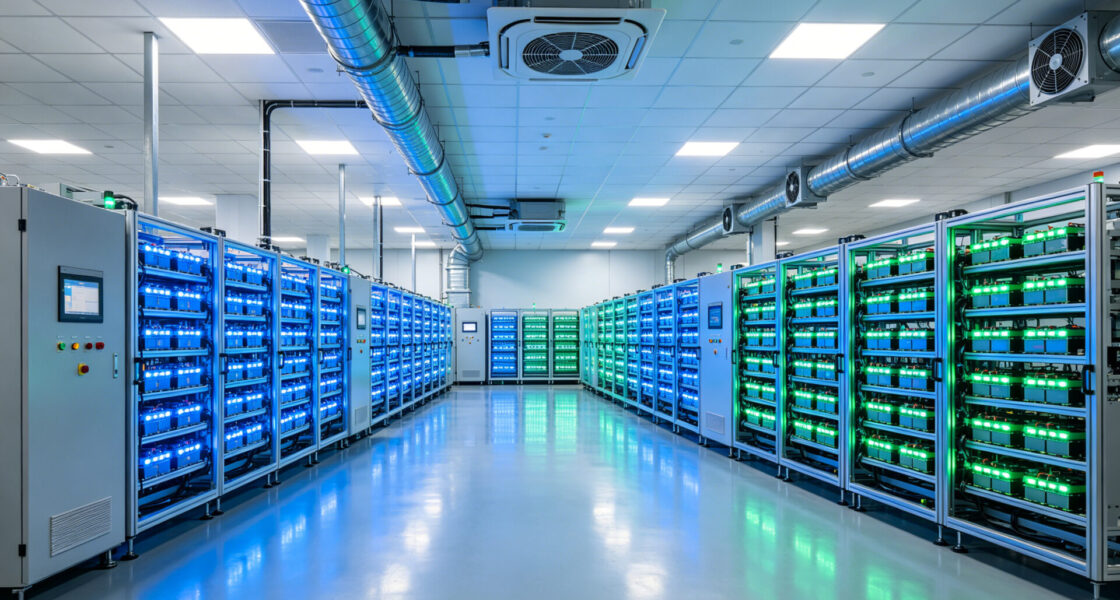
Every lithium battery passes through a hidden ritual that most people never witness. First, workers coat the electrodes. Then machines stack or wind the layers. Finally, the electrolyte flows in and the case seals shut. The cell—still naked, still anonymous—rolls into a hall packed with towering racks of metal and wire. Engineers call this the formation hall.
For the next several hours or even days, this newborn cell charges and discharges repeatedly. In fact, the industry has performed this ritual since its earliest days. The goals remain noble: form the solid electrolyte interface, stabilize the chemistry, and grade the capacity. As a result, these steps guarantee that the cell will perform as promised in an electric vehicle or a grid storage system.
The Wasteful Secret of Traditional Formation
Yet for years, this ritual has hidden a wasteful secret. When a cell discharges during testing, its energy does not flow back into the grid. It does not charge another cell. Instead, it simply burns away as heat. Resistor banks—glowing warm under the load—convert precious kilowatt-hours into thermal waste.
Then the factory air conditioning system works even harder to pump that heat outdoors. Consequently, the operator pays twice: once on the electric bill for the wasted energy, and once on the cooling budget to remove it. For all its high-tech sophistication, the formation hall has long served as a graveyard for perfectly usable electrons.
A Quiet Technological Shift Begins
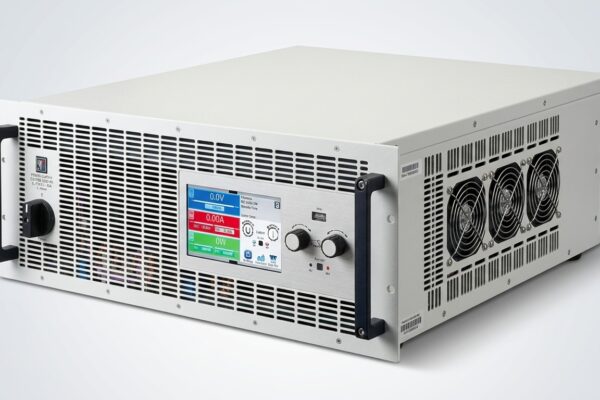
But that picture is changing. Quietly, without any fanfare, a new device has begun appearing inside modern formation cabinets. It does not look dramatic. Picture a compact metal box with ventilation grilles. It hums softly as intelligent cooling algorithms adjust its fan speed.
Inside that modest enclosure, however, sits a technology that rewrites the energy economics of battery manufacturing. Welcome to the age of the bidirectional dc-dc converter. Its job sounds deceptively simple: stop the bleeding. Catch the discharge energy before resistors burn it. Send that energy back into the building’s DC bus. From there, it can charge the next cell waiting in line.
The formation hall transforms from an energy incinerator into a true circulatory system. Electrons no longer flow one way toward their doom. Instead, they circulate continuously in a regenerative loop. This vision has already left the drawing board. You can find it operating today inside the energy recyclable aging equipment and battery test equipment racks that fill gigafactories worldwide.

From Burning to Borrowing: The Energy Equation Inside a Gigafactory
The Scale of the Waste Problem
To grasp the scale of this shift, consider the energy flowing through a modern lithium battery formation equipment line. A single cabinet may hold hundreds of cells. Each cell follows a precise charge-discharge profile that lasts for hours. A large facility consumes megawatts continuously—not only to charge batteries but to drain them on purpose.
The Hidden Cost of Resistor-Based Discharge
In a traditional setup using passive battery test equipment, the discharge cycle sends current through resistor banks. As a result, energy that took hours to meter carefully into the cell becomes heat in mere seconds. The numbers tell a stark story. For instance, for every gigawatt-hour of battery capacity produced, factories may burn 0.3 to 0.5 gigawatt-hours as heat during formation and aging.
Consequently, at industrial electric rates, this waste costs millions of dollars each year. Moreover, that figure excludes the extra cooling load. The forced air cooling system runs overtime. It pulls hot air away from glowing resistors and vents it outside. Then the HVAC must condition fresh replacement air. In short, this cycle of inefficiency has long passed as a normal cost of battery production.
How Regeneration Flips the Equation
Capturing Discharge Energy
Now consider the regenerative alternative. A high-performance dc-dc converter—equally capable as a dc dc converter, a dc power converter, and a dc to dc inverter—changes the equation entirely. Instead of burning energy, a dc to dc convertor designed for precise dc to dc voltage conversion captures the current leaving the cell.
An integrated dc to dc transformer and a tightly regulated converter dc stage step this current up to a common high-voltage DC bus. This bus, running within a voltage range of 513-627VDC, forms the factory’s internal energy backbone. Therefore, energy that leaves Cell A during discharge travels along this bus. Moments later, it charges Cell B, which is just starting its formation cycle.
The Heart of the Circulatory System
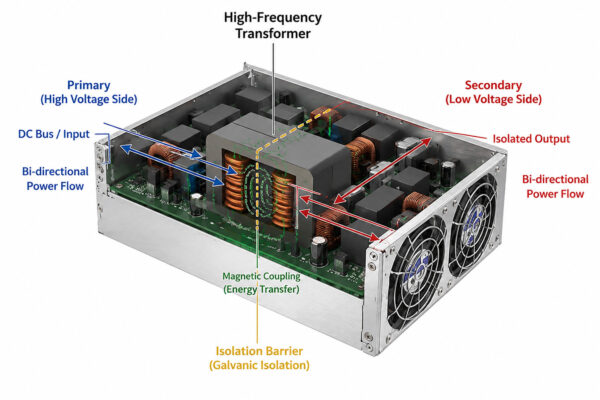
The module enabling this feat is a genuine Bidirectional DC-DC converter built around Bidirectional energy flow. At its core sits an Isolation transformer that provides not just voltage scaling but also critical Bidirectional isolation. As a result, a fault in one channel cannot spread to the rest of the system.
Think of it like a heart pumping blood through arteries and veins in a closed loop. This High efficiency bidirectional converter pumps electrons through the DC bus. Consequently, energy gets reused, not discarded. Furthermore, the benefits reach beyond the formation line. The same technology anchors any advanced Bidirectional testing system and scales to serve an entire industrial Energy storage system microgrid.
The Technology Beneath the Lid: Soft Switching and High Frequency Isolation
Why Soft Switching Changes Everything
What makes this seamless energy recirculation possible? The answer begins with Soft switching technology. Specifically, in a traditional hard-switched converter, power transistors turn on and off while carrying both voltage and current. Each transition wastes a small but meaningful amount of energy as heat.
At the high switching frequencies needed to shrink magnetic parts—tens or hundreds of kilohertz—these losses add up fast. As a result, efficiency drops and heatsinks grow larger. Soft switching takes a different path. It uses resonant tank circuits to shape the voltage or current waveform.
Efficiency and Density Gains
The transistor switches only when the voltage across it or the current through it hovers near zero. This elegant trick slashes switching losses. The converter now operates as a true High efficiency bidirectional converter. Peak efficiency exceeds 94% and often approaches 97%.
Less waste heat means a smaller, lighter cooling solution. This principle enables the module to earn genuine High power density module status. It packs kilowatts of bidirectional power handling into a compact, rack-mountable enclosure.
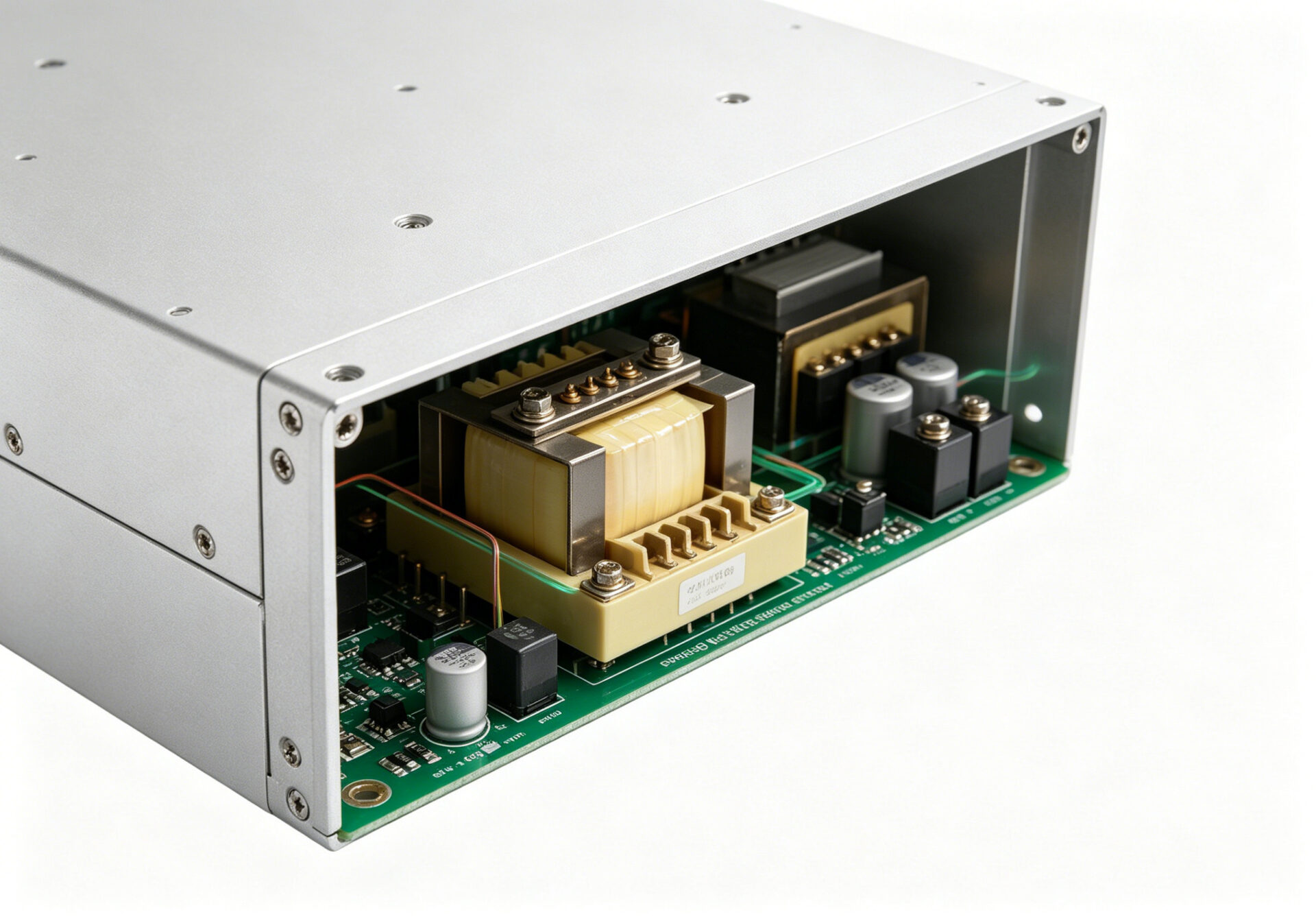
And because the design incorporates High frequency isolation through a planar transformer, the magnetic core shrinks dramatically. Compare it to a bulky 50Hz or 60Hz transformer of similar rating. The new module processes substantial power while using a fraction of the space. In crowded formation halls, where every square meter costs money, this compact footprint provides a critical edge.
Precision Control and Layered Protection
Real-Time Command and Response
A galvanically isolated CAN communication interface lets the converter receive real-time commands from the master battery test equipment controller. During discharge, the module works as a dc to dc inverter. It pulls current from the low-voltage cell and boosts it to the 513-627VDC bus.
Conversely, when the cell needs charging, the module reverses. Now it acts as a precise dc to dc voltage converter. It draws from the high-voltage bus and feeds a carefully shaped current profile to the cell. Throughout both modes, onboard sensors track critical parameters.
Fault Protection and Thermal Management
The unit carries a continuous Current <24A rating on the high-voltage side. This limit keeps the dc to dc transformer and semiconductors safely within their operating margins. If an unexpected load surge or a fault in the Energy recyclable aging equipment pushes current toward that threshold, protection engages instantly.
Cycle-by-cycle limiting kicks in within microseconds. This forms the bedrock of the module’s Power module fault protection strategy. Thermal oversight adds another layer. An Intelligent cooling control algorithm constantly reads temperatures from key components.
It adjusts the fan speed of the Forced air cooling system in response. The airflow path follows a deliberate Front inlet rear outlet airflow pattern. This design aligns perfectly with standard 19-inch rack cabinets. Cool air enters from the cold aisle. Warm air exhausts into the hot aisle. Facility infrastructure then extracts it efficiently.
Beyond the Formation Hall: A Foundation for the Electrified Factory
Peak Shaving and Industrial Energy Storage
This technology shines brightest inside Lithium battery formation equipment and Energy recyclable aging equipment. However, its potential reaches further. The same bidirectional building block that recycles discharge energy in a gigafactory can also support an industrial Energy storage system. Factories use these systems for peak shaving.
They store cheap off-peak electricity and discharge it during expensive daytime hours. In this role, the module draws on its certification as an EN55032 compliant power module. It operates without disrupting sensitive measurement and control gear nearby.
Global Certifications and Reliability
Global credentials back this performance. The module carries certification as a UL certified power module, a CE certified power module, and a CCC certified power module. These approvals serve as a universal passport. Equipment destined for markets worldwide can integrate it without added compliance hurdles.
Such certification reflects a deeper design philosophy. Compliance is not an afterthought. It defines the High reliability DC-DC converter pedigree that industrial users demand. Unplanned downtime is simply not an option.
A Philosophical Shift in Manufacturing
The shift from passive burning to active regeneration marks more than an efficiency upgrade. It signals a philosophical change. In the age of energy transition, every electron must pull its weight. Heat that once radiated uselessly from resistors now stays inside the copper and silicon of the formation line. It performs real work.
The factory breathes easier. Its forced air cooling systems no longer battle deliberately generated waste. An operator watching the dashboard sees the net energy consumption of the formation hall drop by double digits. Grégoire’s grape harvester showed that technology can honor tradition while boosting efficiency. It relieved workers of repetitive, exhausting tasks.
In that same spirit, the bidirectional dc voltage converter honors the rigorous ritual of battery formation. But it strips away the most wasteful part. The battery engineer—the winemaker of the energy transition—can now focus on quality and consistency. Meanwhile, an invisible circulatory system of electrons hums quietly behind the scenes. No grape is lost. No kilowatt-hour goes to waste.
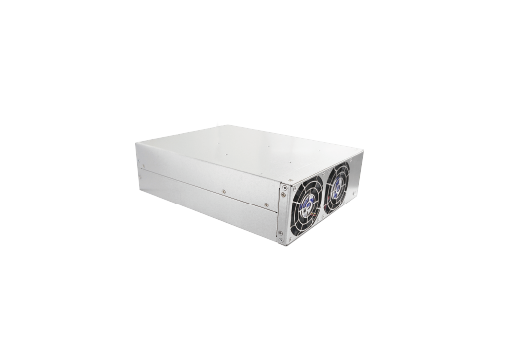
Key Features
- Regenerative Bidirectional Energy Flow: Functions as a seamless dc to dc converter and dc to dc inverter, enabling energy recyclable aging equipment and battery test equipment to redirect discharge energy back to the factory DC bus instead of dissipating it as heat.
- High-Frequency Isolation and Soft Switching: Incorporates an integrated isolation transformer with high frequency isolation and soft switching technology, achieving high efficiency bidirectional converter performance while ensuring robust bidirectional isolation and a compact high power density module footprint.
- Comprehensive Protection and Thermal Management: Includes multi-layered power module fault protection with cycle-by-cycle limiting for current <24A, plus an intelligent cooling control algorithm managing a forced air cooling system with a defined front inlet rear outlet airflow path.
- Global Compliance and Communication: Certified as a UL certified power module, CE certified power module, and CCC certified power module, with an EN55032 compliant power module EMI profile. An isolated CAN communication interface provides real-time telemetry and command integration for the bidirectional testing system.
- Optimized for Industrial Environments: Designed for a nominal voltage range 513-627VDC, this high reliability DC-DC converter serves as a scalable building block for lithium battery formation equipment, industrial energy storage system microgrids, and demanding dc power converter applications where efficiency and uptime are paramount.
With peak efficiencies exceeding 94% enabled by soft switching technology, continuous high-side current ratings under 24A, and a robust forced air cooling system featuring intelligent cooling control and front inlet rear outlet airflow, this platform delivers the performance required to turn the formation hall from a place of energy waste into a closed-loop circulatory system. In the end, it is not just about saving kilowatt-hours. It is about recognizing that in the quiet, humming aisles of a gigafactory, every electron deserves a second act.