

For system integrators, panel builders, and procurement teams in industrial automation, the structural frame of a machine is not just a support structure—it is the foundation upon which precision, repeatability, and reliability are built. A frame that is too heavy increases material costs and limits machine dynamics. A frame that lacks rigidity compromises accuracy and accelerates wear. And a frame that is poorly machined introduces misalignment that cascades through every downstream assembly.
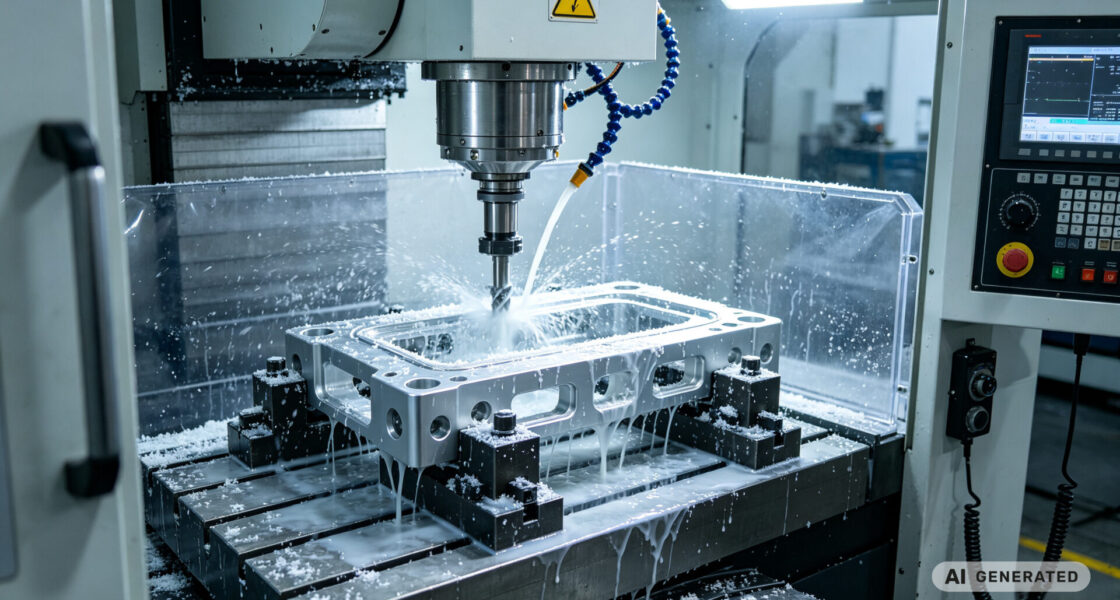
TPS Elektronik’s ISO 9001 CNC machining service delivers lightweight and rigid aluminum frames for industrial automation equipment—from robot cells and machine bases to custom gantries and inspection stations. With 5-axis milling capabilities, ±0.01–0.05 mm typical tolerances, ISO 9001-certified quality management, and full material traceability, TPS produces aluminum frames that meet the demanding requirements of modern factory automation—from prototype validation to series production.
1. Why Aluminum Frames for Industrial Automation Equipment
Industrial automation equipment—robotic cells, CNC machine bases, gantry systems, inspection stations, and custom handling systems—demands structural frames that balance two competing requirements: lightweight for dynamic performance and energy efficiency, and rigid for accuracy and vibration damping.
Aluminum has emerged as the material of choice for automation frames for several compelling reasons:
- Excellent strength-to-weight ratio: Aluminum alloys such as 6061-T6 and 7075-T7351 offer strength comparable to mild steel at approximately one-third the weight, enabling faster machine movements and reduced energy consumption
- Corrosion resistance: Aluminum’s natural oxide layer provides protection against corrosion without the need for heavy coatings
- Machinability: Aluminum is readily machinable on CNC milling equipment, enabling complex geometries, integrated features, and tight tolerances
- Thermal stability: With proper material selection and stress-relief processing, aluminum frames maintain dimensional stability across operating temperature ranges
- Surface finishing options: Aluminum accepts a range of finishes including anodizing, bead blasting, and painting for durability and aesthetics
For industrial automation applications, the frame must also accommodate mounting interfaces for linear guides, servo motors, sensors, and end effectors—all of which require precise hole patterns, flat mounting surfaces, and accurate reference datums.
TPS Elektronik’s ISO 9001 CNC machining service is engineered to deliver aluminum frames that meet these requirements with repeatable accuracy, documented quality, and full traceability.

2. ISO 9001: The Foundation of Quality in CNC Machining
ISO 9001 is the internationally recognized standard for quality management systems, representing a commitment to consistent quality, continuous improvement, and customer satisfaction. For CNC machining of industrial automation frames, ISO 9001 certification provides assurance that every process—from material receiving through final inspection—is documented, controlled, and continuously optimized.
TPS Elektronik has successfully passed its annual ISO 9001 certification, confirming the highest quality standards in EMS services. TPS’s Shanghai factory holds ISO 9001 certification alongside IATF 16949 and ISO 13485, covering quality management across automotive, medical, and industrial applications. The company is also certified according to ISO 14001 for environmental management.
For ISO 9001 industrial CNC applications, certification ensures:
- Clearly defined processes: All company processes—from development and production to customer service—are clearly defined, regularly monitored, and continuously optimized
- Consistent quality: Independent auditors confirm that procedures meet the strict requirements of the standard, guaranteeing a sustainable level of quality
- Customer confidence: For customers, ISO 9001 certification means trust and security, with EMS services delivered in line with internationally recognized standards
- Continuous improvement: TPS is committed to continuously improving processes and identifying opportunities for greater efficiency, sustainability, and customer satisfaction
When sourcing aluminum frames for industrial automation equipment, ISO 9001 certification provides the documented quality evidence that procurement teams and system integrators need—reducing project risk and ensuring that every frame meets the required specifications.

3. Lightweight and Rigid: Design Strategies for Aluminum Frames
Designing an aluminum frame that is both lightweight and rigid requires careful attention to geometry, material selection, and machining strategy. TPS Elektronik’s engineering team provides design-for-manufacturability (DFM) feedback during the design phase to optimize frame performance while ensuring manufacturability.
Topology Optimization and Lightweighting:
Modern aluminum frames incorporate topology-optimized geometries that remove material where it is not needed while adding material where structural loads are highest. Features such as pocketed aluminum frames and ribbed structures reduce weight while maintaining or improving stiffness.
TPS’s 5-axis CNC machining capability enables complex lightweighting geometries that would be impossible with 3-axis machining. By machining from solid aluminum billets, TPS can produce monolithic frames with integrated mounting features, eliminating the need for multiple components and fasteners.
Integrated Features Reduce Assembly Time:
A well-designed aluminum frame integrates mounting features directly into the structure—eliminating the need for separate brackets, spacers, and adapter plates. TPS has successfully consolidated 17-part assemblies into single, precision-machined aluminum frames, reducing assembly time from over 16 hours per unit and eliminating over 100 fasteners.
Precision Flatness and Parallelism:
For automation applications, frame flatness directly impacts the alignment of linear guides, servo motors, and precision sensors. TPS achieves typical flatness tolerances through fly-cutting and in-process probing, with critical features held to ±0.01–0.05 mm. For demanding applications, TPS has demonstrated the ability to achieve 5-micron flatness on aluminum components.
For custom machine frame CNC applications, the combination of topology optimization, 5-axis machining, and precision flatness ensures that frames meet both the structural and dimensional requirements of modern automation systems.
4. TPS ISO 9001 CNC Machining Capabilities
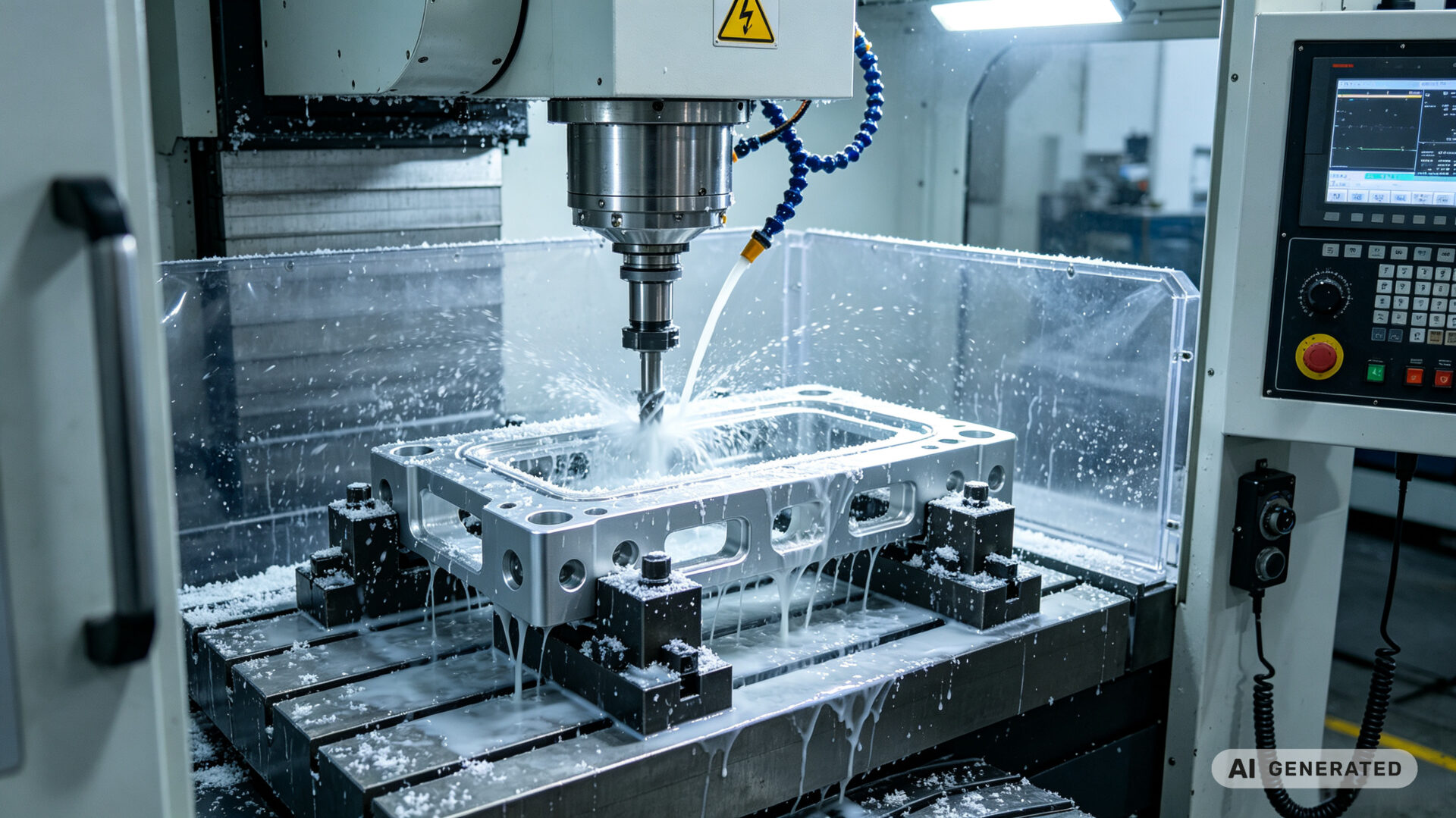
TPS Elektronik’s ISO 9001 CNC machining service for aluminum frames combines advanced machine technology, engineering expertise, and integrated quality management in a single workflow—delivering production-ready frames from prototype to series.
Machine Technologies:
- 5-axis CNC milling: Complex geometries with undercuts, angled holes, and integrated features machined in a single setup
- 3- and 4-axis high-speed milling: Prismatic parts and light 5-sided (3+2) machining
- Mill-turn centers: Combined milling and turning for parts requiring both prismatic and cylindrical features
- EDM and grinding: Tight internal corners and precision surface finishes
- In-process probing: Real-time verification of critical dimensions during machining
Typical Tolerances and Finishes:
- General machining: ±0.01–0.05 mm depending on geometry and material
- Flatness: Controlled via fly-cutting and in-process probing
- Surface finish: Typical Ra 0.8–3.2 µm on milled faces; optical faces improved by fly-cutting
- Surface treatments: Bead blasting, anodizing (Type II and Type III), plating, and painting
Materials for Automation Frames:
- Aluminum 6061-T651: Industry standard for automation frames—excellent machinability, strength-to-weight ratio, and stability after thermal treatment
- Aluminum 6082: Similar to 6061 with slightly higher strength, commonly used in European designs
- Aluminum 7075-T7351: Higher strength for thinner sections or higher-loaded frames
- Additional materials: Steels and stainless steels (304/316, tool and alloy), plastics (POM/Delrin, PEEK, PTFE), copper, brass, titanium as required
For ISO certified industrial machining applications, TPS’s integrated approach means that aluminum frames are manufactured with the same quality standards as the electronic and mechanical components they support—ensuring consistent fit and function across the entire automation system.
5. Materials Selection: Aluminum Alloys for Automation Frames
Selecting the right aluminum alloy is critical for automation frame performance. TPS Elektronik provides material selection guidance based on application requirements, with full material traceability and certificates available on request.
Aluminum 6061-T651:
6061-T651 is the industry standard for automation frames, offering excellent machinability, good strength-to-weight ratio, and excellent stability after thermal treatment. It is readily available, cost-effective, and accepts a wide range of surface finishes including anodizing and bead blasting. 6061 is suitable for most industrial automation applications including robot bases, inspection frames, and machine enclosures.
Aluminum 6082:
6082 offers slightly higher strength than 6061 with comparable machinability. It is commonly specified in European designs and is suitable for applications requiring higher load capacity without significant weight increase.
Aluminum 7075-T7351:
7075-T7351 provides the highest strength among common aluminum alloys, approaching that of some steels at approximately one-third the weight. It is used for thinner sections or higher-loaded frames where weight reduction is critical. 7075 is more challenging to machine than 6061 and requires specialized tooling and process control.
Stress-Relief Processing:
For all aluminum frame applications, TPS applies stress-relief processing to minimize residual stresses that could cause distortion during machining or over the service life of the frame. This is particularly important for large automation frames where dimensional stability is critical for long-term accuracy.
For industrial equipment frame machining, the choice of alloy—combined with proper heat treatment and stress-relief—determines the frame’s long-term stability and performance. TPS provides material certificates with full traceability, ensuring that the specified alloy and heat treatment have been verified.
6. Quality Assurance: From FAI to Series Production
Quality assurance is embedded throughout TPS’s CNC machining process—not added at the end. For ISO 9001 industrial CNC applications, this integrated approach ensures that every aluminum frame meets the required specifications, from first article through high-volume production.
Design for Manufacturability (DFM):
TPS provides DFM feedback during the design phase, identifying opportunities to optimize geometry for manufacturability, reduce cost, and improve quality. This early engagement prevents costly design changes later in the production cycle.
In-Process Inspection:
- In-process probing: Critical dimensions are verified during machining, allowing real-time adjustments
- Tool wear monitoring: Consistent dimensional accuracy maintained through active tool management
- Thermal compensation: Machining centers equipped with thermal compensation maintain accuracy across temperature variations
Final Inspection:
- First Article Inspection (FAI): Comprehensive dimensional reports for the first part of each production run
- CMM verification: Coordinate Measuring Machine inspection of all critical dimensions including flatness, hole positions, and parallelism
- Dimensional reports: Documented verification of all critical features
- Material certificates: Full traceability of material provenance
Documentation and Traceability:
- First Article Inspection (FAI): Comprehensive dimensional reports
- Material certificates: Full traceability with material certificates
- PPAP (Production Part Approval Process): Available on request for customers requiring the highest level of production validation
- Inspection reports: Documented quality evidence for audits and quality records
For industrial machinery CNC components, this quality framework provides the confidence that every aluminum frame meets the required specifications—reducing project risk and ensuring consistent performance across production volumes. TPS’s ISO 9001 certification, combined with IATF 16949 (partner) quality standards, ensures that quality is built into every step of the manufacturing process.