

For system integrators, fuel cell engineers, and procurement teams in the hydrogen energy industry, the bipolar plate is not just a component. It is the structural and functional backbone of the fuel cell stack. Graphite bipolar plates, in particular, offer exceptional electrical conductivity and corrosion resistance but present a formidable manufacturing challenge. They are brittle, difficult to machine with traditional methods, and demanding of precision that conventional CNC milling cannot consistently deliver.
TPS Elektronik’s precision laser cutting service for graphite bipolar plates engineered to address these challenges. It including fiber laser cutting with ±0.1-0.2 mm tolerance, minimal heat affected zone (HAZ), clean edges without burrs, and documented quality assurance—from prototype validation to series production.
1. The Graphite Bipolar Plate Challenge: Brittle Material, Demanding Precision
Hydrogen fuel cells are at the forefront of the global energy transition, with proton exchange membrane fuel cells (PEMFCs) powering everything from heavy-duty trucks to stationary power generation. At the heart of every fuel cell stack is the bipolar plate. Which a critical component that separates individual cells, distributes reactant gases, collects current, and manages heat and water.
Graphite has emerged as the preferred material for bipolar plates in many applications due to its exceptional electrical conductivity, excellent corrosion resistance, low density, and long service life. However, graphite presents significant manufacturing challenges:
- Brittleness: Graphite is fragile and prone to chipping, cracking, and breakage during conventional machining
- Tool wear: Traditional CNC milling suffers from rapid tool wear. Which leading to inconsistent quality and high tooling costs
- Slow processing: Mechanical milling of graphite is slow and inefficient, limiting production throughput
- Precision limitations: Milling precision compromised by tool wear and vibration. Which making it difficult to achieve the tight tolerances required for modern fuel cell designs
- Dust contamination: Graphite dust from milling can contaminate the manufacturing environment and pose health risks
For fuel cell engineers and system integrators, these challenges translate to high production costs, inconsistent part quality, and limited scalability—barriers that have historically constrained the commercialization of fuel cell technology.
TPS Elektronik’s precision laser cutting service addresses each of these challenges. Which delivering graphite bipolar plates that meet the demanding specifications of PEM fuel cell stacks.
2. Why Laser Cutting Outperforms Traditional Milling for Graphite
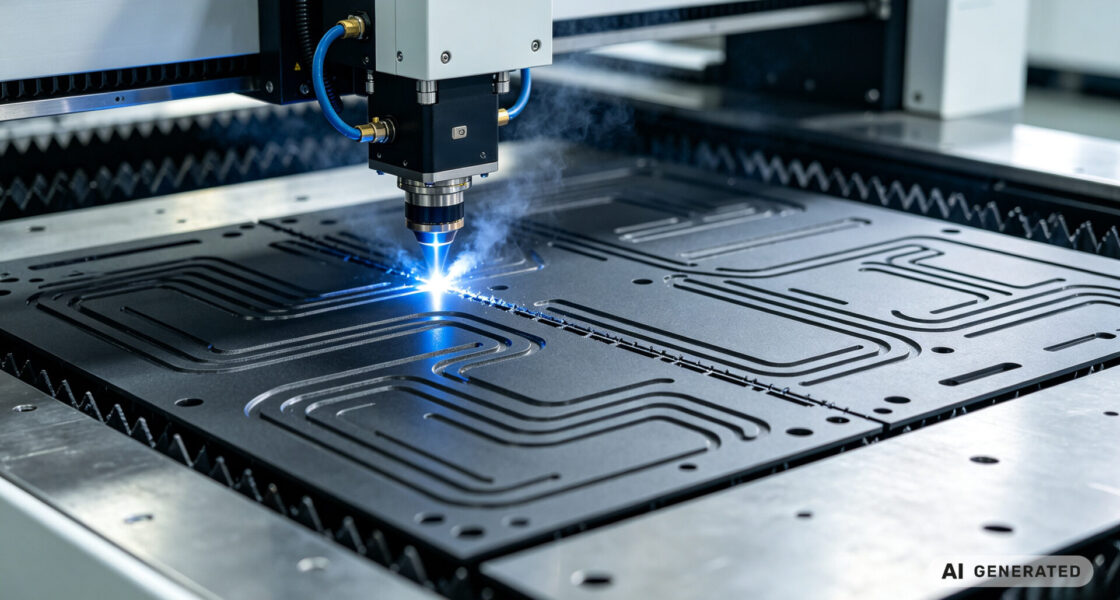
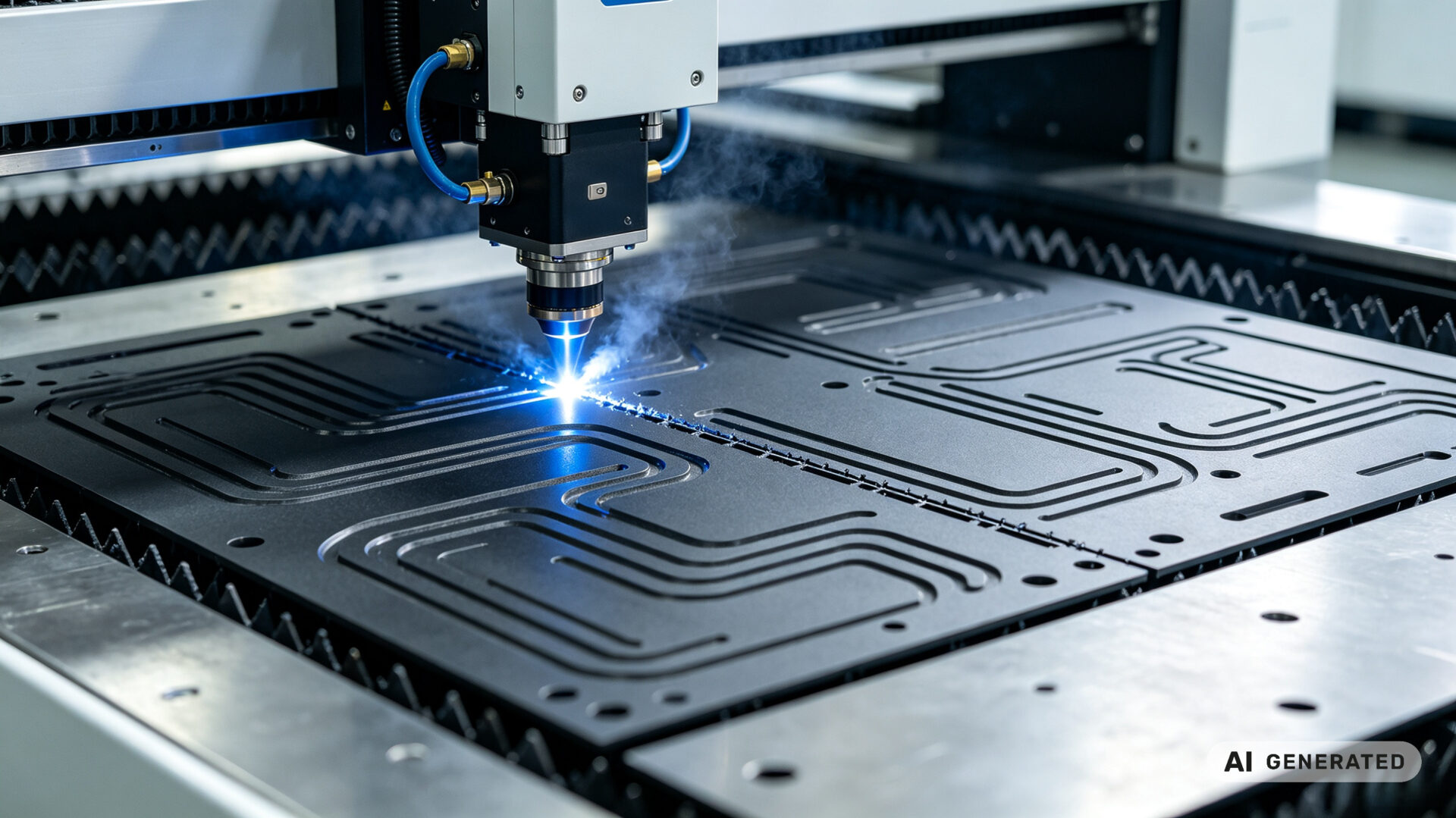
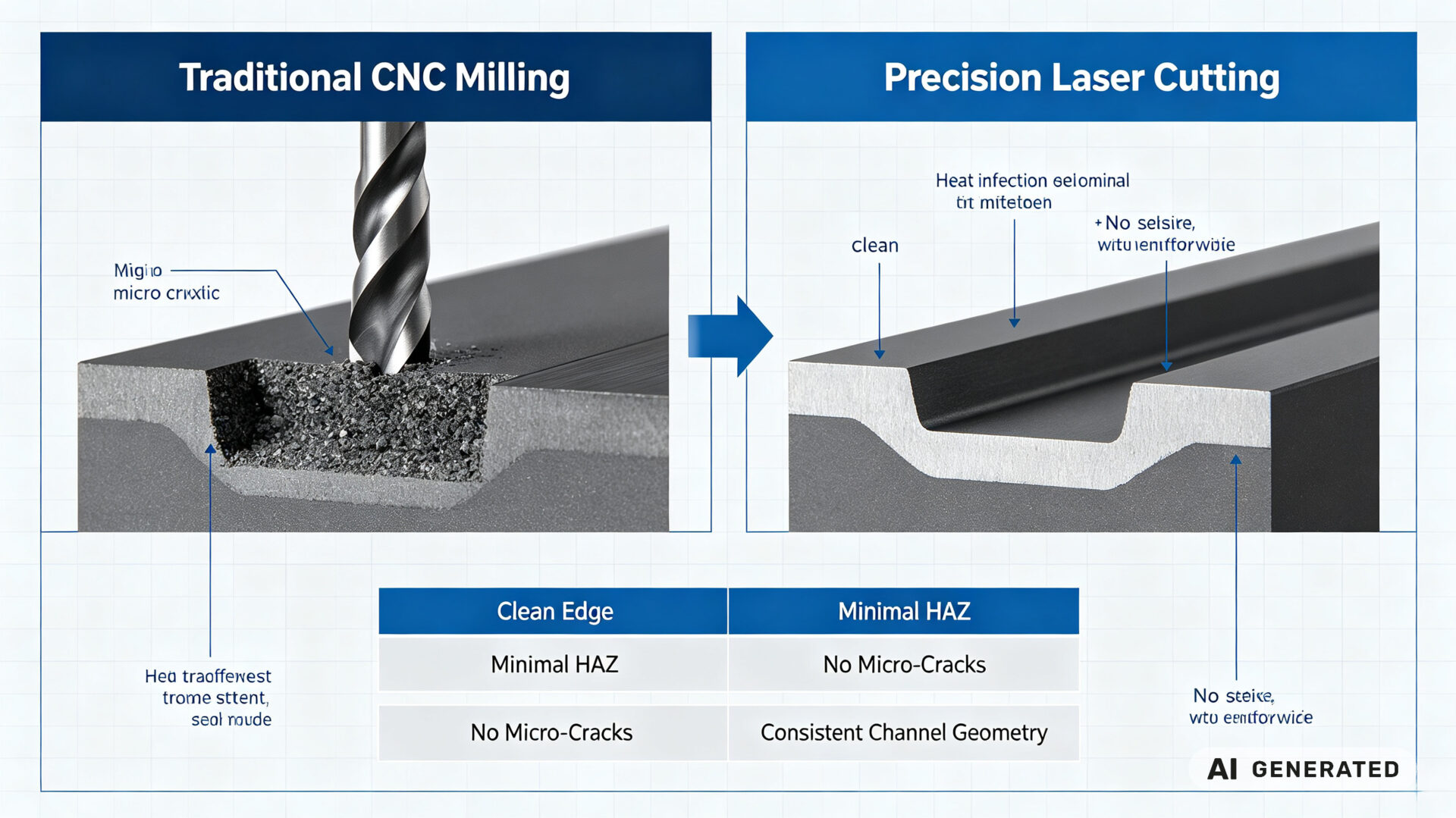
Laser cutting represents a fundamental shift in how graphite bipolar plates can manufactured. Unlike mechanical milling. Which relies on physical contact between a cutting tool and the workpiece, laser cutting uses a focused beam of light to vaporize material with no mechanical force. This non-contact approach offers several decisive advantages for graphite processing.
Superior Edge Quality: Laser cutting produces clean, burr-free edges that are essential for proper sealing and gas distribution in fuel cell stacks. The laser beam creates a narrow kerf with minimal material loss and no mechanical stress on the surrounding material. Which eliminating the micro-cracks and edge chipping that plague milled graphite parts.
Consistent Precision: Fiber laser cutting achieves typical tolerances of ±0.1–0.2 mm, with exceptional repeatability across production batches. This consistency is critical for fuel cell applications where every plate must meet the same tight dimensional requirements.
No Tool Wear: Unlike milling cutters that wear and degrade over time, the laser beam does not experience wear. This eliminates the quality drift that occurs as tools wear, ensuring that the first plate and the thousandth plate are identical.
Higher Throughput: Laser cutting processes graphite significantly faster than mechanical milling. Combined with automated material handling and nesting software. The laser cutting enables production volumes that are simply not achievable with traditional machining.
Design Flexibility: When design changes are required—whether to optimize flow field geometry or adjust manifold hole locations. Only the digital cutting program needs to updated. There is no need for new tooling, dramatically reducing lead times for design iterations.
For fuel cell plate laser machining applications, TPS Elektronik’s fiber laser cutting capability delivers the precision, speed, and consistency that fuel cell manufacturers require.
3. TPS Precision Laser Cutting Capabilities for Bipolar Plates
TPS Elektronik’s precision laser cutting service for graphite bipolar plates backed by advanced fiber laser technology, rigorous quality control, and decades of experience in precision manufacturing.
Core Capabilities:
- Fiber laser cutting: Clean edges and fine contours ideal for graphite bipolar plate geometries, with typical tolerances of ±0.1–0.2 mm.
- Thickness range: 0.8 mm to 8 mm, covering the full range of graphite bipolar plate thicknesses
- Complex profiles: Precision cutting of flow field channels, manifold holes, and complex contour geometries
- Micro-tabs and engraving: Fine feature cutting for identification and assembly alignment
- Nesting optimization: Maximizing material utilization to reduce waste and lower costs
Engineering and Design Support:
- DFM feedback: Design for manufacturability optimization during the design phase. Which ensuring that bipolar plate geometries are optimized for laser cutting
- Material selection guidance: Recommendations on graphite grades and thicknesses for specific fuel cell applications
- Prototype development: Rapid prototyping with quick turnaround for design validation
- Series production: Scalable manufacturing capacity from initial production runs to high-volume series
Integration with EMS:
TPS’s sheet metal processing service is part of a broader EMS workflow, integrating laser cutting with bending, welding, finishing, and assembly. This integration ensures that graphite bipolar plates manufactured with the same quality standards as the electronic and mechanical components they will interface with in the final fuel cell assembly.
For graphite plate laser cutting service applications, TPS provides end-to-end manufacturing from drawing to inspected series. Which including First Article Inspection (FAI) and optional PPAP documentation.
4. Minimal Heat Affected Zone: Preserving Material Integrity
The heat affected zone (HAZ) is one of the most critical considerations in laser cutting of graphite bipolar plates. Unlike metals, where the HAZ may acceptable with post-processing, graphite’s properties significantly affected by thermal damage. A large HAZ can compromise electrical conductivity, increase contact resistance, and create stress concentrations that lead to premature failure.
TPS Elektronik’s fiber laser cutting process optimized to minimize the HAZ through several key factors:
- Precise energy control: The laser power and pulse duration precisely controlled to deliver just enough energy to vaporize the material without excessive heat spreading into the surrounding graphite
- High cutting speed: Faster cutting speeds reduce the time that heat applied to any given area, limiting thermal diffusion
- Assist gas optimization: The right assist gas and pressure helps remove molten material efficiently while providing cooling to the cut zone
- Advanced beam delivery: High-quality beam optics maintain a small, focused spot size for precise energy delivery
The result is a cut edge with minimal heat affected zone, clean surface finish, and no micro-cracks or carbonization that could compromise the plate’s performance in the fuel cell. For low HAZ graphite cutting applications, this preservation of material integrity is essential for maintaining the electrical and mechanical properties that make graphite the preferred bipolar plate material.
For PEM fuel cell bipolar plate manufacturing, the minimal HAZ achieved through TPS’s laser cutting process ensures that the plates meet the stringent requirements for electrical conductivity, corrosion resistance, and dimensional stability.
5. Precision Flow Channel and Manifold Hole Cutting
The performance of a fuel cell stack depends critically on the precision of the bipolar plate’s flow field—the network of channels that distribute reactant gases across the membrane electrode assembly. Flow channel geometry, including width, depth, and pattern, directly affects gas distribution, water management, and overall cell performance.
For flow field plate laser cutting applications, TPS’s precision laser cutting capability delivers:
- Narrow channel widths: Capable of cutting flow channels with widths of 1 mm or less for high-performance fuel cell designs
- High aspect ratios: Depth-to-width ratios exceeding 1:1, enabling optimal gas distribution
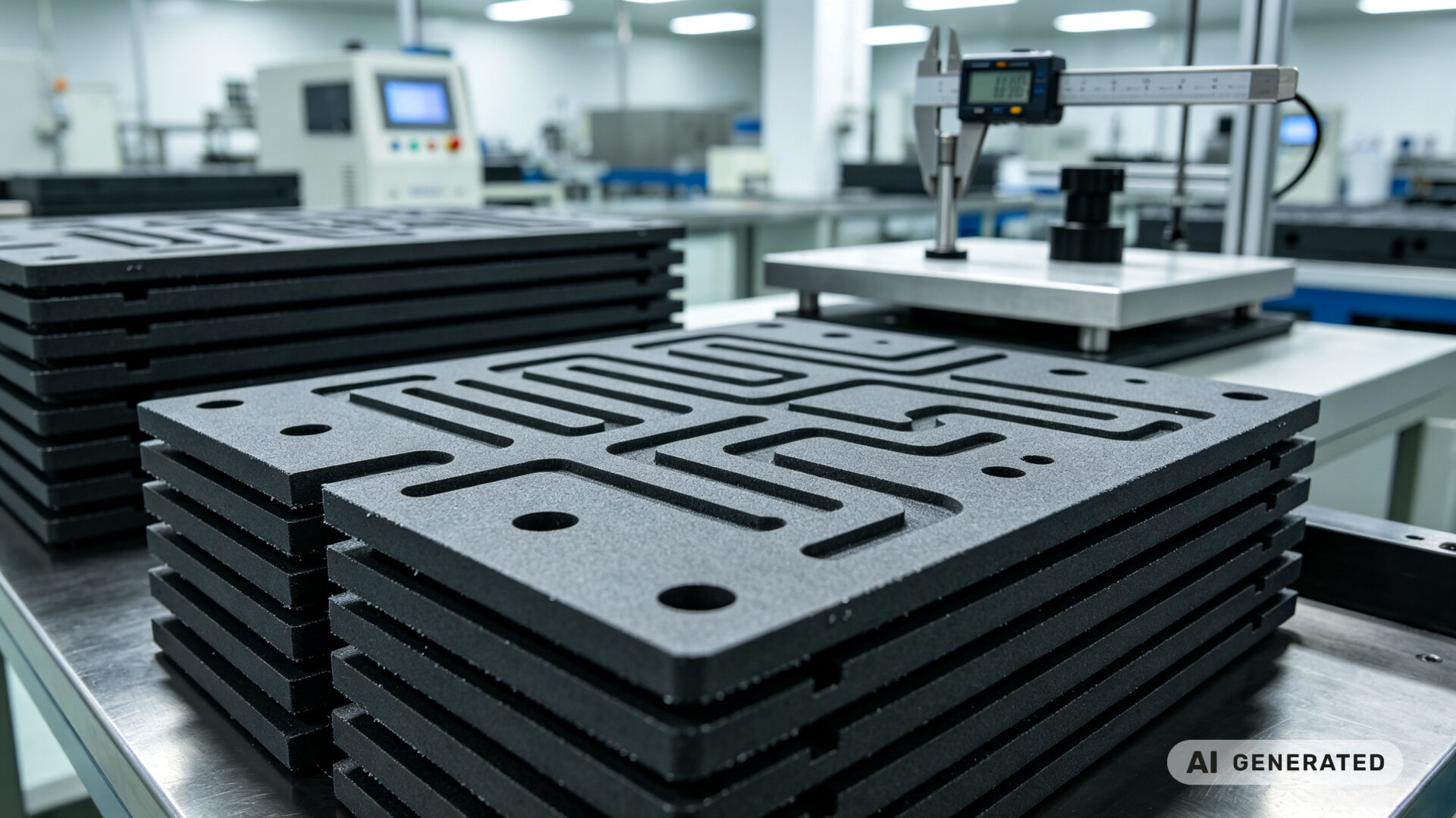
- Consistent channel geometry: Uniform channel dimensions across the entire plate, ensuring even gas distribution
- Complex patterns: Capability to cut serpentine, parallel, and interdigitated flow field patterns
Manifold holes—the openings that distribute gas and coolant to and from the flow field. Which are equally critical. These holes must precisely positioned and free of defects to ensure proper sealing and prevent leaks.
For fuel cell stack component cutting, TPS’s laser cutting process delivers manifold holes with:
- Precise positioning: Hole locations held to ±0.1–0.2 mm tolerance for proper stack alignment
- Clean hole walls: Smooth, burr-free holes that seal properly against gaskets and seals
- No thermal distortion: Minimal HAZ ensures that holes maintain their roundness and position
For thin graphite laser machining applications, the precision and control of the laser cutting process are essential for achieving the fine features and tight tolerances required in modern fuel cell designs.
6. Quality Assurance: From FAI to Series Production
Fuel cell components operate in demanding environments where quality is not negotiable. A single defective bipolar plate can compromise the performance of an entire stack, making rigorous quality assurance essential for every production run.
TPS Elektronik’s quality assurance for precision graphite cutting includes:
First Article Inspection (FAI): Comprehensive dimensional inspection of the first part of each production run, verifying all critical dimensions against the customer’s specifications. FAI reports are provided for quality records and customer approval.
In-process inspection: Critical dimensions are verified during production to ensure consistency across the entire batch. Any deviation identified and corrected before it affects finished parts.
Measurement reports: Dimensional reports documenting all critical measurements, including channel width, channel depth, hole positions, and overall plate dimensions.
Material certificates: Full traceability of graphite material provenance, ensuring that the material meets the specified grade and quality requirements.
PPAP (Production Part Approval Process): Available on request for customers requiring the highest level of production validation and documentation.
For fuel cell plate fabrication applications, this quality assurance framework provides the confidence that every graphite bipolar plate meets the required specifications—from prototype validation through high-volume series production.
TPS Elektronik’s precision laser cutting service operates under ISO 9001 and IATF 16949 quality management systems, ensuring that quality is built into every step of the manufacturing process.