

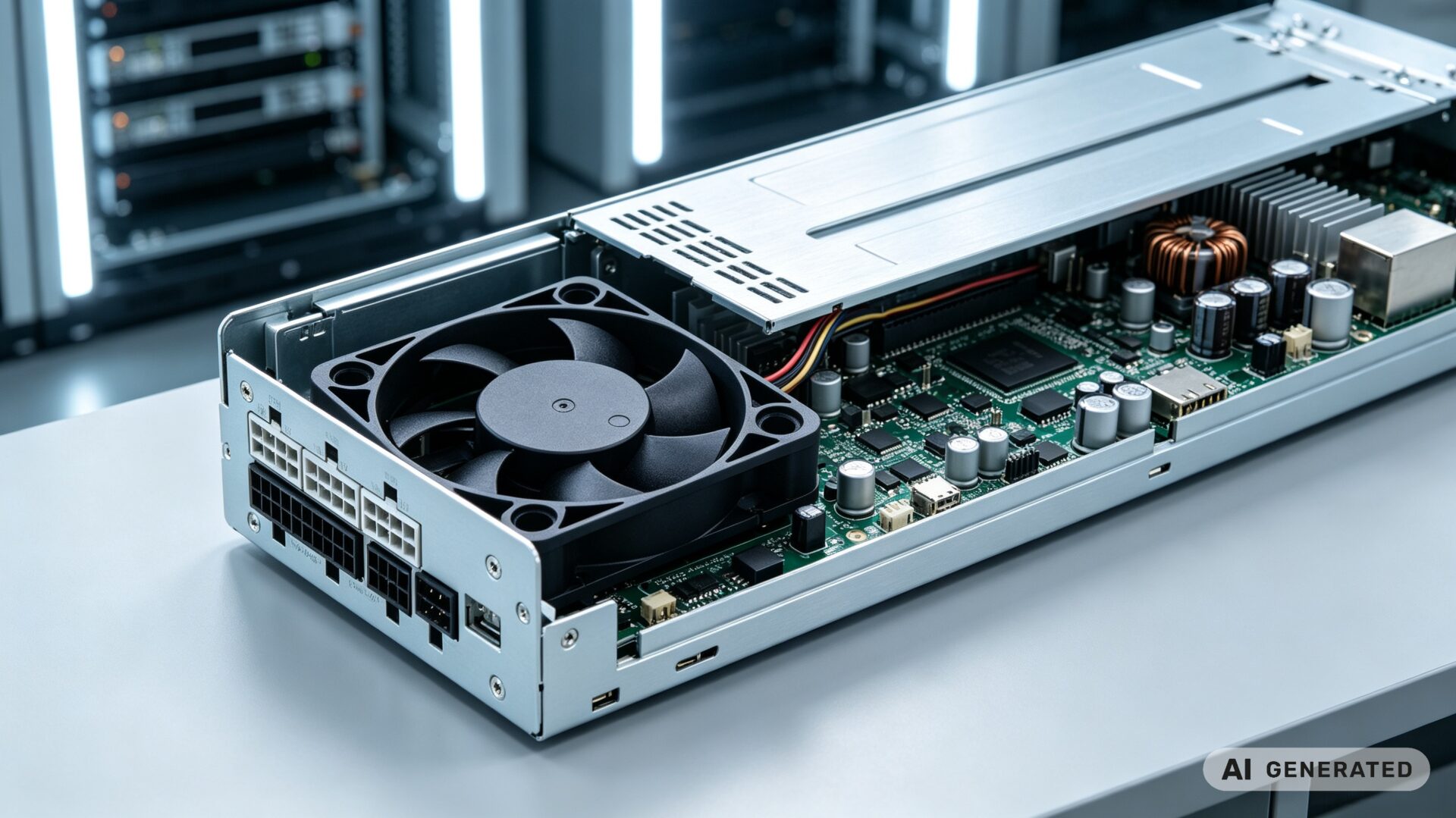
For system integrators, panel builders, and electrical engineers working with high-density data center infrastructure, thermal management of 1U server power supplies is not a secondary concern—it is a primary constraint that determines power density, reliability, and total cost of ownership. The 1U form factor (1.75 inches / 44.45mm height) leaves virtually no margin for bulky heatsinks or low-pressure fans.
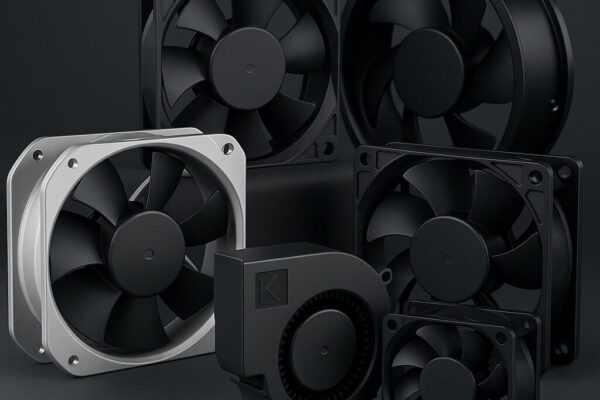
TPS Elektronik’s high static pressure 40mm and 56mm DC axial fans are engineered specifically for this challenge: delivering concentrated airflow through dense heatsink fins, with dual ball bearing construction for 24/7 reliability, PWM control for dynamic speed adjustment, and compact form factors that fit the tightest server power supply envelopes—from prototype to field replacement.
1. The 1U Server Power Supply Thermal Challenge
Modern data center power supplies are packed into increasingly dense form factors. The 1U server power supply—typically 40mm (1.57 inches) in height—must deliver hundreds or even thousands of watts of power while maintaining component temperatures within safe operating limits. A 2400W CRPS (Common Redundant Power Supply) power supply in a 1U form factor generates significant heat that must be evacuated efficiently.
The thermal challenge is compounded by several factors:
- Limited heatsink volume: The 1U height constrains heatsink fin height, reducing surface area for natural convection
- High component density: Power semiconductors, transformers, and capacitors are packed tightly, creating localized hotspots
- High ambient temperatures: Data center racks often operate at 35°C or higher, reducing the temperature delta available for cooling
- Continuous operation: Server power supplies run 24/7/365, with no tolerance for fan failure or degraded cooling performance
In this environment, the cooling fan is not an accessory—it is a critical system component. The fan must generate sufficient static pressure to push air through dense heatsink fins while maintaining adequate airflow to carry heat away from power components. This is precisely where high static pressure DC axial fans excel.
2. Why Static Pressure Matters More Than Airflow
When selecting a fan for power supply cooling, many engineers default to comparing airflow (CFM) specifications. This is a mistake. In dense electronics cooling, static pressure is often the more critical metric.
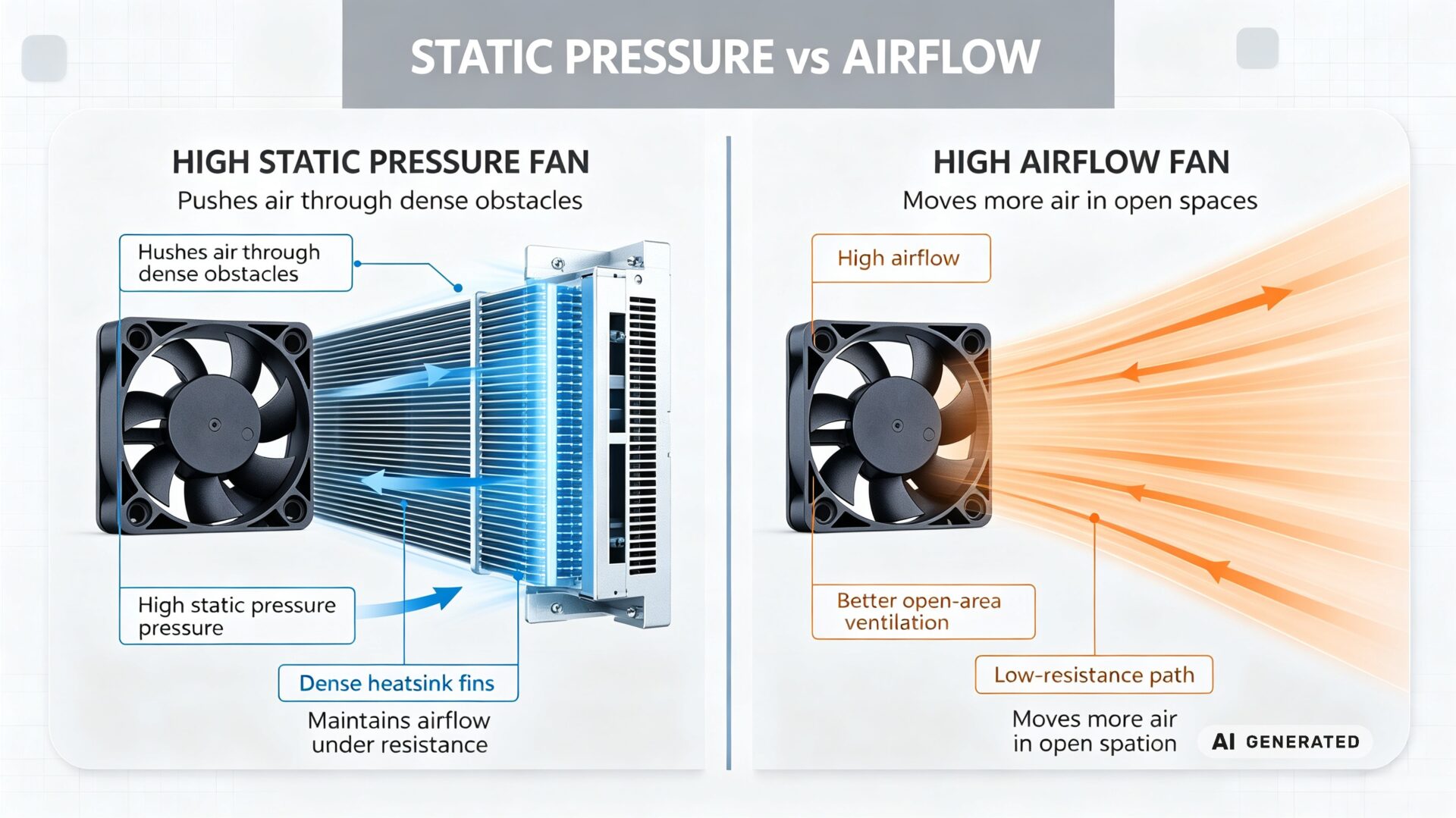
Static pressure is the fan’s ability to push air against resistance. A server power supply presents significant airflow resistance: heatsink fins, closely spaced components, cable bundles, and the power supply enclosure itself all create backpressure that opposes airflow.
Consider the difference:
- High airflow fans move large volumes of air in open spaces with minimal resistance—they are ideal for case ventilation where the airflow path is clear
- High static pressure fans are designed to “push” air through resistance—they maintain airflow even when the fan is mounted against a heatsink or through a restricted intake
In a 1U server power supply, the fan is typically mounted directly against a dense heatsink. A high airflow fan with low static pressure will “stall” when faced with this resistance, moving far less air than its CFM rating suggests. A high static pressure fan, by contrast, maintains its airflow performance even under high backpressure.
The relationship follows fan laws: airflow scales roughly with RPM, static pressure scales with RPM squared, and power scales with RPM cubed. This means that a small increase in fan speed delivers a significant increase in static pressure—but at the cost of higher power consumption and noise.
For server power supply cooling applications, the optimal fan balances static pressure, airflow, noise, and reliability. TPS’s 40mm and 56mm high static pressure fans are designed to achieve exactly this balance.
3. 40mm High Static Pressure Fans for CRPS and Standard PSUs
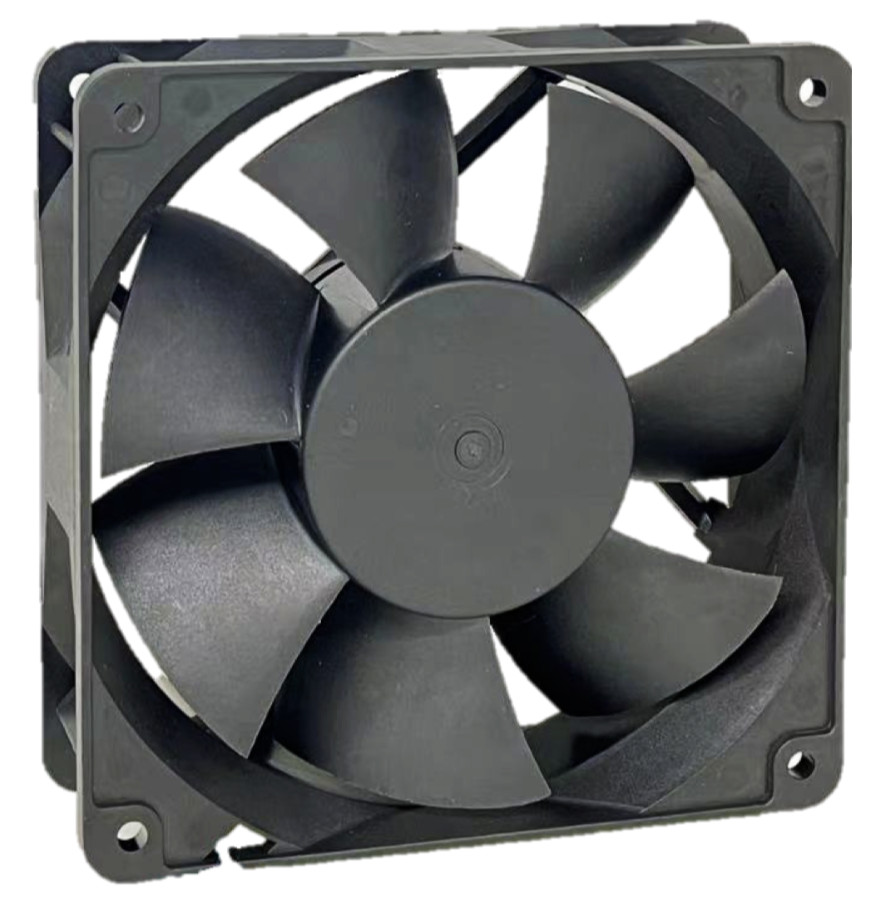
The 40mm form factor (40×40mm) is the industry standard for 1U server power supplies. CRPS (Common Redundant Power Supply) units—the dominant standard for enterprise and hyperscale data centers—almost exclusively use 40mm fans for forced-air cooling.
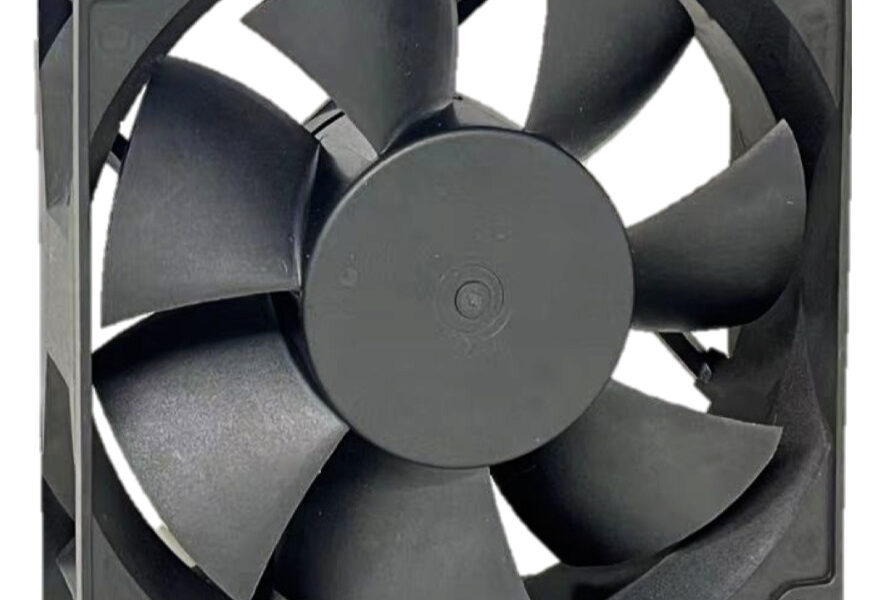
TPS offers a range of 40mm high static pressure DC axial fans designed specifically for power supply applications:
- Compact footprint: 40×40mm fits standard CRPS and 1U PSU mounting locations
- 28mm depth: Provides space for high-performance motor and impeller design while fitting within the 1U height constraint
- High static pressure: Capable of generating static pressure up to 26.5 mm/H2O for dense heatsink penetration
- High-speed options: RPM ratings from 6,000 to 15,000 RPM to match cooling requirements
- Dual ball bearing construction: Ensures long life in continuous operation
For lower-power PSUs where airflow requirements are moderate, 6,000 RPM variants provide a balance of cooling performance and acoustic output. For high-power PSUs exceeding 1000W, higher-speed variants deliver the static pressure needed to maintain component temperatures under full load.
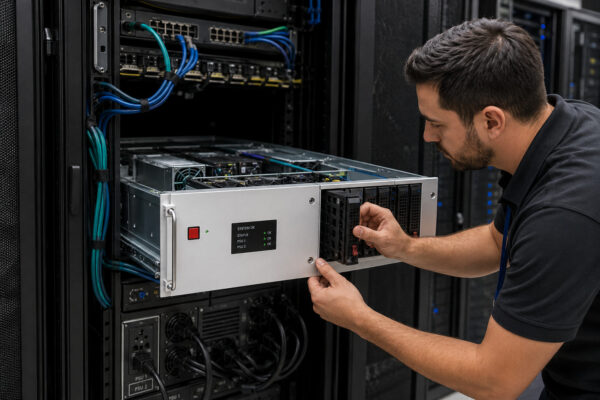
The 40mm fan’s compact size also makes it suitable for field replacement. Data center maintenance teams can quickly swap failed fans without removing the entire power supply, minimizing downtime. TPS’s power supply cooling fan portfolio includes both standard and high-performance variants to match different PSU power ratings and thermal requirements.
4. 56mm Counter-Rotating Fans for High-Power PSUs
For high-power server power supplies exceeding 2000W, single-stage 40mm fans may not provide sufficient cooling capacity. The solution is the 56mm counter-rotating fan—a dual-motor design with two impellers mounted back-to-back in a single housing.
Counter-rotating fans, also known as dual-rotor or contra-rotating fans, feature two independent motors driving two impellers that rotate in opposite directions. This configuration delivers several advantages:
- Higher static pressure: Two stages of compression generate significantly higher static pressure than a single-stage fan—up to 2400 Pa in some designs
- Stable airflow: The counter-rotating design reduces turbulence and provides more consistent airflow through the PSU
- Redundancy: If one motor fails, the other can continue operating (at reduced capacity), providing fault tolerance
- Compact footprint: 56mm depth fits within the 1U form factor while delivering performance comparable to larger fans
The 56mm form factor (40×40×56mm) is increasingly common in high-power CRPS units and custom 1U power supplies. These fans typically operate at speeds exceeding 25,000 RPM and can generate static pressures above 1000 Pa (10.2 mmH₂O).
For server PSU replacement fan applications, the 56mm counter-rotating fan offers a direct replacement option for high-power units where standard 40mm fans cannot provide adequate cooling. TPS’s DC axial fan server PSU portfolio includes both 40mm and 56mm options to cover the full range of power supply cooling requirements.
5. PWM Control and Smart Thermal Management
Modern server power supplies require dynamic fan speed control to balance cooling performance with acoustic output and energy efficiency. Pulse Width Modulation (PWM) is the standard method for achieving this balance.
PWM control works by rapidly pulsing the fan’s power supply on and off, effectively regulating the average voltage and speed of the fan. This allows the power supply’s controller to adjust fan speed based on real-time thermal conditions:
- Low load / low temperature: Fan runs at low speed, minimizing noise and power consumption
- High load / high temperature: Fan ramps up to maintain component temperatures within safe limits
- Emergency thermal events: Fan runs at full speed to prevent catastrophic overheating
Modern PSUs integrate digital fan control through PMBus, enabling host systems to read fan RPM, temperature sensors, and even override the fan curve in real time. When the rack ambient temperature exceeds 35°C, PSU fans preemptively increase speed even if internal thermals remain stable, preventing sudden thermal runaway.
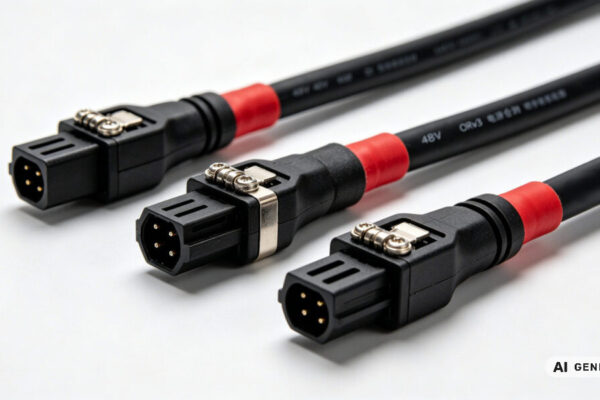
TPS’s 40mm and 56mm high static pressure fans support PWM control with a wide speed range, enabling precise thermal management. The 4-pin connector provides power, ground, tachometer (speed feedback), and PWM control signal, ensuring compatibility with standard server power supply fan headers.
For PWM controlled power supply fan applications, the combination of high static pressure and PWM control enables power supplies to achieve optimal cooling across the full range of operating conditions.
Shop TPS PWM-controlled DC axial fans →
6. Dual Ball Bearing Construction for 24/7 Reliability
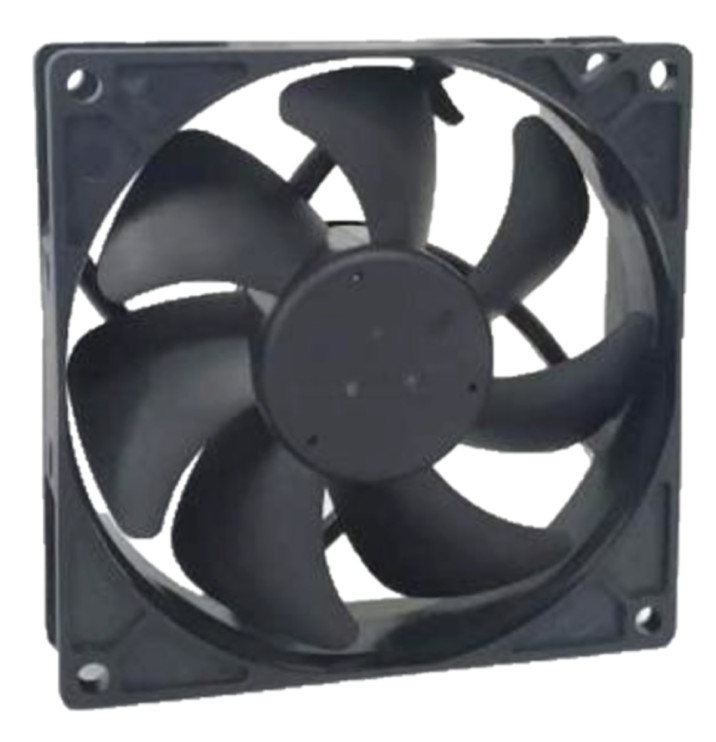
Server power supplies operate continuously—there is no “off” switch in a data center. The cooling fan must therefore be designed for extreme reliability. Dual ball bearing construction is the gold standard for server fan reliability.
Dual ball bearings offer several advantages over sleeve bearings or fluid dynamic bearings:
- Longer service life: Ball bearings can operate for 50,000 to 70,000 hours at elevated temperatures
- Temperature tolerance: Ball bearings maintain performance at temperatures up to 70°C or higher
- Orientation flexibility: Ball bearings work in any mounting orientation—critical for power supplies mounted in different rack positions
- Resistance to dust and contamination: Ball bearings are less sensitive to particulate ingress than sleeve bearings
TPS’s high static pressure fans use dual ball bearing construction as standard. The impeller is held in place by two ball bearings, making it particularly durable and less sensitive to external influences like heat and dust. This ensures that the fan maintains its performance over the entire service life of the power supply—typically 5 to 7 years in a data center environment.
For dual ball bearing server fan applications, the reliability advantage translates directly to lower total cost of ownership. Fewer fan failures mean fewer service calls, less downtime, and lower maintenance costs.
7. Technical Specifications at a Glance
| Parameter | 40mm High Static Pressure | 56mm Counter-Rotating |
|---|---|---|
| Dimensions | 40×40×28 mm | 40×40×56 mm |
| Rated Voltage | 12V DC | 12V DC |
| Speed Range | 250–15,000 RPM | Up to 25,000+ RPM |
| Max Static Pressure | Up to 26.5 mm/H₂O | Up to 2400 Pa |
| Max Airflow | Up to 32.7 m³/h | Up to 57 m³/h |
| Bearing Type | Dual Ball Bearing | Dual Ball Bearing |
| Control | PWM / Voltage | PWM |
| Connector | 4-pin fan header | 4-pin / 8-pin |
| Expected Life (L10) | 50,000–70,000 hrs @ 40°C | 40,000+ hrs @ 60°C |