

They lose it when the thermal part is treated too late: the profile does not match the real mounting space, the finish is not aligned with the environment, machining comes too late, or the heat sink supplier cannot support drawing-based customization once the power design is already frozen.
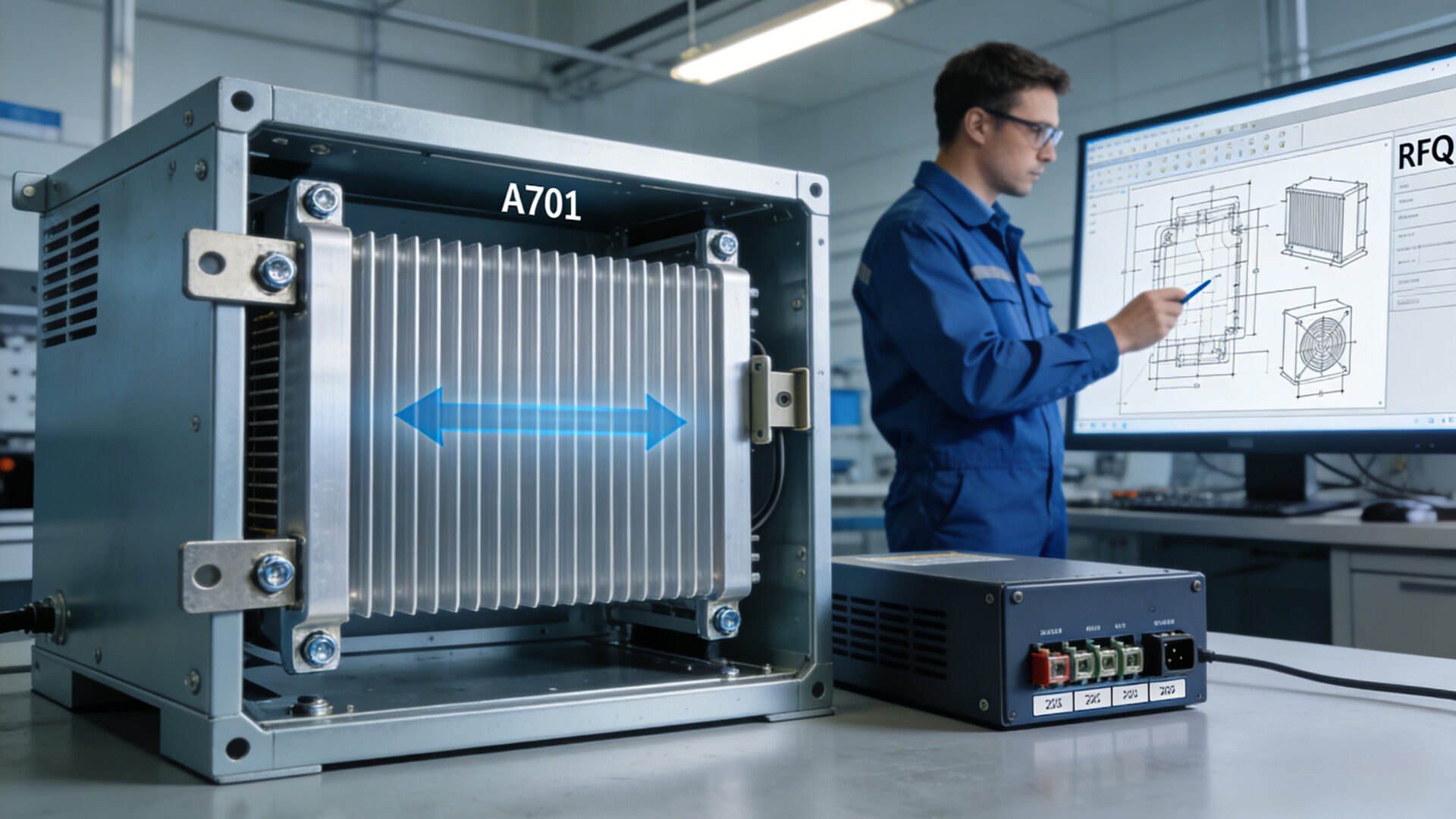
That is exactly where the TPS Aluminum Profile Heat Sink A701 becomes relevant for BoFu buyers: a documented AL6063-T5 extruded profile with 55*25 mm profile size, anodized surface, CNC milling, and customized length according to drawings for real thermal management work in power equipment cooling.
1. Why the A701 heat sink affects RFQ outcomes
In BoFu sourcing, a heat sink is not just a metal accessory. It is part of the mechanical-thermal interface between the heat source, the enclosure, the airflow path, the mounting hardware, and the service life expectation of the final system.
That matters especially in projects involving switching power supplies, UPS systems, inverters, and chargers, where thermal load is continuous rather than occasional. In those applications, buyers are usually not asking only one question: “Can this aluminum profile heat sink dissipate heat?” They are asking a more practical set of RFQ questions:
- Can the profile fit the actual mechanical envelope?
- Can it be machined and supplied in the exact required length?
- Can procurement compare it cleanly across sample, pilot, and volume stages?
- Can the finish and material remain stable in the target operating environment?
- Can engineering avoid rework after the power design is already locked?
The A701 is commercially useful because it helps move that discussion from generic heat sink sourcing to drawing-driven thermal integration. Instead of treating the heat sink as a last-minute commodity, it can be evaluated as a profile with known material, known nominal size, known finish path, and known customization logic.
That also makes the part relevant when TPS customers are pairing thermal hardware with compact or higher-density power architectures. For example, teams working around DIN rail power stages can review related TPS power references such as the TPS010-100W GP Series compact switching power supply, the TPS030-130W PRO Series, or the TPS100-320W Peak DR Plus series when discussing enclosure density, airflow, and thermal headroom.
2. What the A701 actually is: profile, geometry, finish, and supply logic
2.1 Published A701 specs
For BoFu decision-making, clarity beats vague performance language. The A701 product information gives buyers a useful baseline:
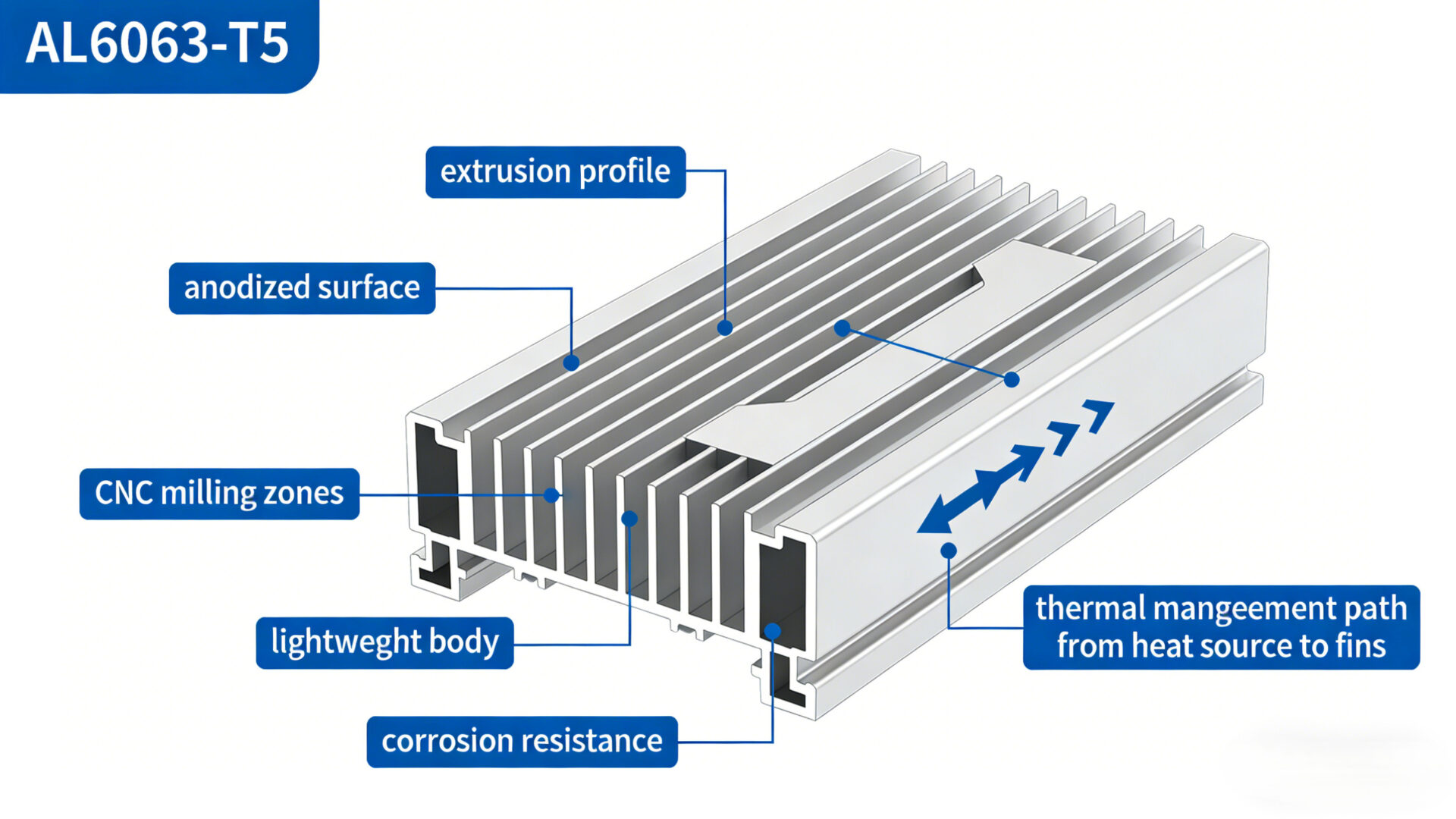
- Material: AL6063-T5
- Manufacturer code: A701
- Profile size: 55*25 mm
- Surface: anodized / CNC milling
- Supply note: length customized according to drawings
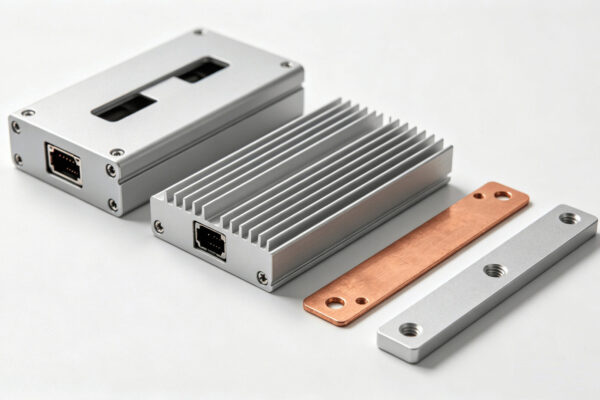
That combination is important because it tells engineering and procurement that A701 is not positioned as a one-size-fits-all stock block. It is positioned as an extruded aluminum profile heat sink that can be adapted to the actual assembly requirement.
Check the A701 product page here →
2.2 Why profile geometry matters before release
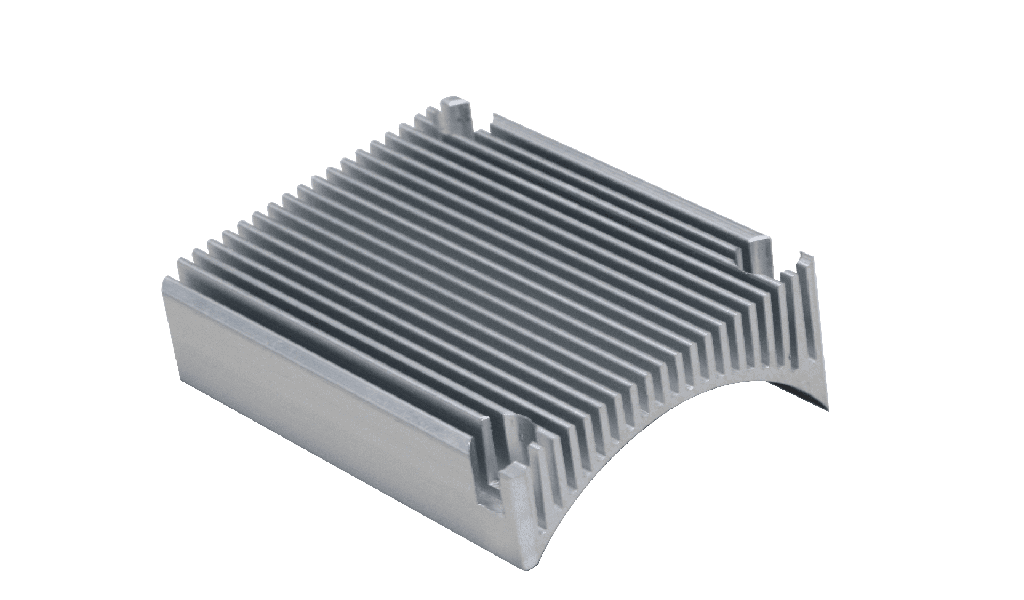
Many RFQ problems start when teams assume all aluminum heat sinks behave like flat-base universal extrusions. The published A701 drawing suggests a more application-oriented profile geometry, including a finned upper structure and a shaped underside that may suit a defined mounting or contact scenario rather than a generic flat plate assumption.
That means the right workflow is not to buy the part name first and ask geometry questions later. The right workflow is to compare the A701 profile against the actual design stack-up:
- heat source outline and contact area
- mounting direction and clamping method
- available clearance above and below the profile
- airflow direction relative to fin orientation
- machining operations needed after extrusion
For electrical engineers, that reduces thermal surprises. For procurement, it reduces the risk of ordering a correct alloy but an incorrect interface. For panel builders, it reduces the chance that the cooling part works on paper but collides with wiring, brackets, or enclosure features during assembly.
3. Why AL6063-T5 is a practical material choice for thermal management
In power equipment cooling, AL6063-T5 is often attractive not because it is the most exotic material on the market, but because it is a practical manufacturing choice for extruded profiles that need a balance of thermal performance, machinability, weight control, and finish quality.
For A701, that balance matters in several ways. First, an aluminum profile heat sink needs to be manufacturable in a repeatable extrusion format before it can be a stable procurement item. Second, once it reaches machining, the part must still support the required CNC milling operations without making the RFQ process unnecessarily complex. Third, the final surface condition needs to fit the target environment and appearance expectations of the finished assembly.
This is why the material and finish combination is commercially stronger than a generic “aluminum heat sink” label. The product information emphasizes the familiar engineering advantages buyers look for in a BoFu comparison:
- high thermal conductivity for heat transfer and dissipation
- lightweight construction for easier system integration
- excellent machinability for custom features and assembly adaptation
- corrosion resistance supported by the anodized surface
When the conversation becomes more formal, buyers may also want to align part selection with recognized external frameworks. For extrusion-related material discussions, ASTM B221-21 is a relevant reference point for aluminum and aluminum-alloy extruded bars, rods, wire, profiles, and tubes. For corrosion-related verification of coated or anodized surfaces, ISO 9227:2022 is commonly referenced at the test-planning stage. These references do not replace the actual project drawing and validation plan, but they do help teams define a more disciplined RFQ discussion.
The procurement lesson is straightforward: do not approve an aluminum heat sink only on profile size. Approve it on the full material-finish-machining package. That is what determines whether the part remains easy to source at sample stage and still practical at repeat order stage.
4. Where A701 fits in real power equipment
The product information already points to the right application family: switching power supplies, UPS systems, inverters, chargers, and adapters. That is not random. These are the exact categories where buyers tend to need a compact, machinable, thermally useful aluminum profile that can be aligned to a project-specific housing or mounting concept.
In switching power supply designs, the thermal issue is usually not just the hot component itself. It is the combination of semiconductors, magnetics, enclosure space, and airflow restriction. When engineering teams are evaluating compact power formats, references such as the TPS010-100W GP Series, the TPS030-130W PRO Series, and the TPS-GSH180S 180W open-frame power supply help frame the real design context in which a customized heat sink may be needed.
In industrial IPC and ATX-related assemblies, thermal density and mechanical packaging often become even more critical. Relevant TPS references for adjacent system discussion include the FSP300-70PFL-SK 300W ATX industrial power supply, the FSP700-80PSA-SK 700W industrial IPC power supply, and the FSP500-50FDB 500W 1U server PSU. In those environments, the value of a customized aluminum profile heat sink is less about catalog convenience and more about dimensional control, mounting adaptation, and repeatable machining.
In inverter, UPS, and charger programs, the same logic applies. The heat sink must fit the actual power path, not merely the purchasing category. That is why the TPS A701 page is most useful when treated as the start of a technical RFQ conversation rather than the end of one.
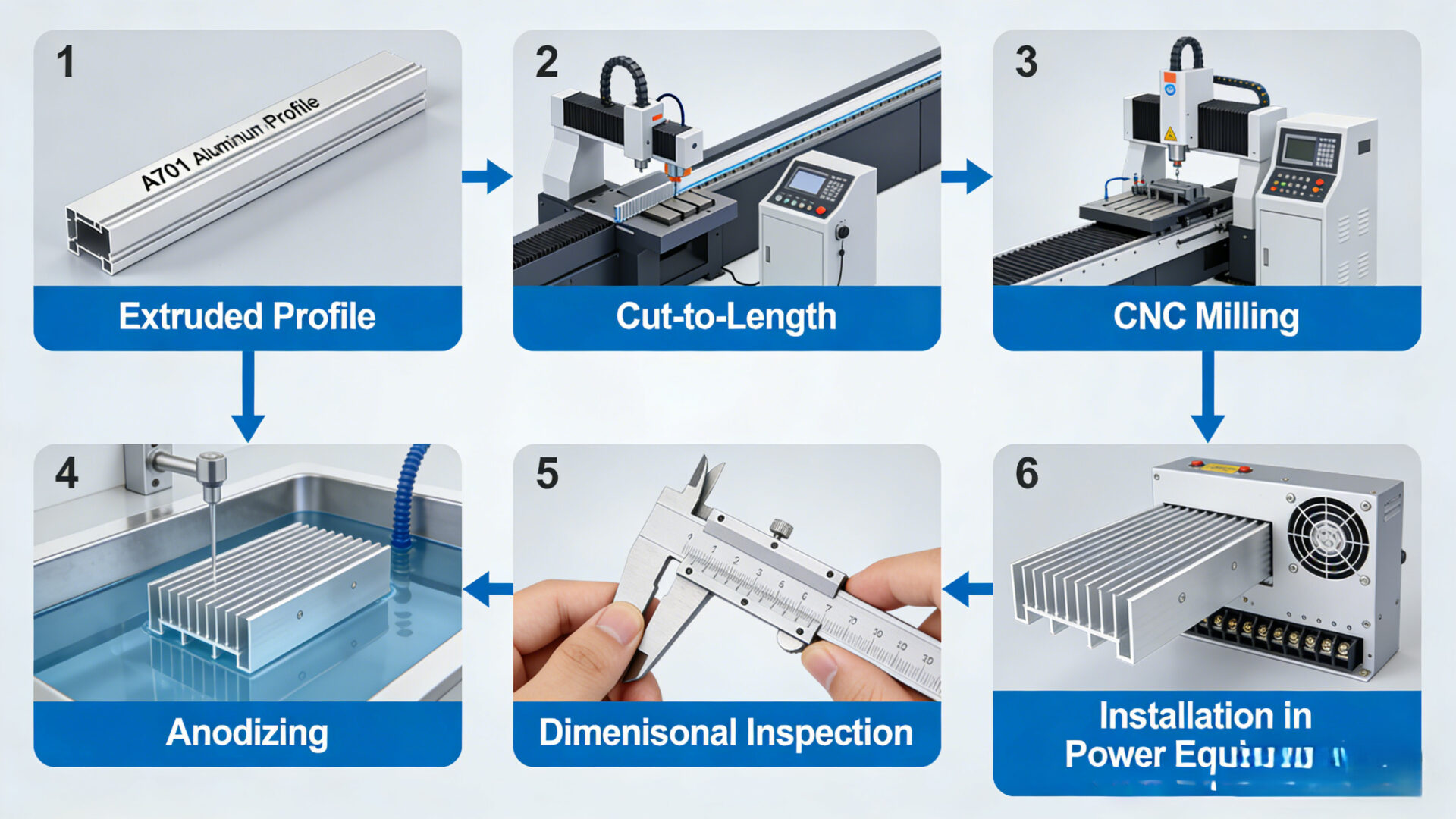
5. Customization, CNC milling, and drawing-based integration
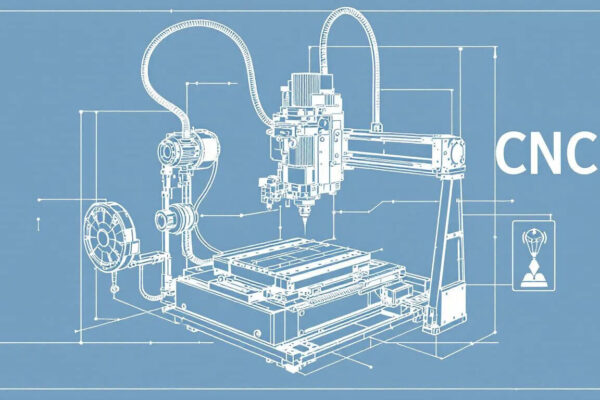
One of the strongest BoFu signals in the A701 information is the note that length can be customized according to drawings. That changes the buying conversation immediately. It means the profile can be evaluated as part of a real assembly workflow, not only as a shelf part with a fixed commercial length.
For engineering, custom length is only the first step. The second step is deciding what must happen after the extrusion is cut:
- face milling for contact surfaces
- mounting hole machining
- clearance features for brackets or housings
- end preparation for defined fit-up
- surface sequence planning between machining and anodizing
For procurement, those are not secondary details. They are the difference between comparing quotes accurately and comparing them badly. A low unit price on the raw profile means very little if machining assumptions are missing or if the supplier is not quoting the same post-processing scope as engineering expects.
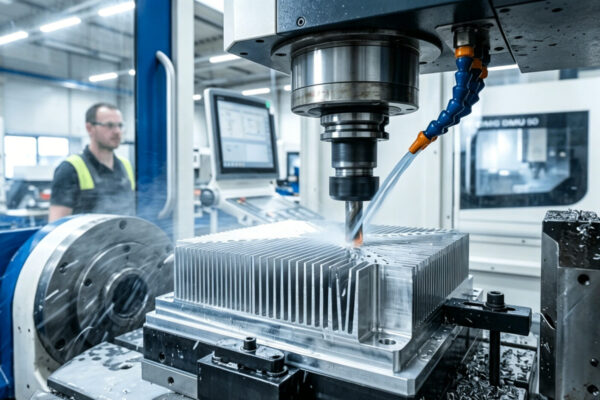
This is also where “excellent machinability” becomes commercially useful language rather than generic brochure language. If a heat sink must be adapted to a charger frame, an inverter assembly, or a compact power housing, good machinability reduces the friction between standard profile sourcing and project-specific integration.
That is why experienced teams align these items early: drawing revision, target length, critical machined faces, cosmetic expectations after anodizing, and the exact inspection points needed before pilot approval. Once those are agreed, the A701 becomes much easier to buy, qualify, and reorder.
6. How to evaluate the heat sink in the real assembly
A701 should not be approved on profile name alone. It should be evaluated in the real thermal and mechanical context of the end product. That means engineering and procurement should review the same checklist, even if they focus on different risks.
Engineering should confirm:
- actual heat source footprint and contact path
- required interface flatness and pressure concept
- airflow direction relative to the fin structure
- enclosure restrictions around the 55*25 mm profile envelope
- whether the final design needs only custom length or also custom machining
- whether validation must include environmental heat testing
Procurement should confirm:
- drawing revision control
- finish definition and visual acceptance rules
- sample, pilot, and repeat-order consistency
- whether the quote includes CNC milling scope
- packaging protection for machined and anodized surfaces
- inspection deliverables required at incoming stage
If the project needs structured environmental verification, teams often use external frameworks such as IEC 60068-2-2 dry heat testing to align test planning for heat-dissipating equipment. The important point is not to overstate what a single heat sink profile guarantees. The important point is to connect the heat sink choice to the system-level validation plan.
7. What to include in your RFQ
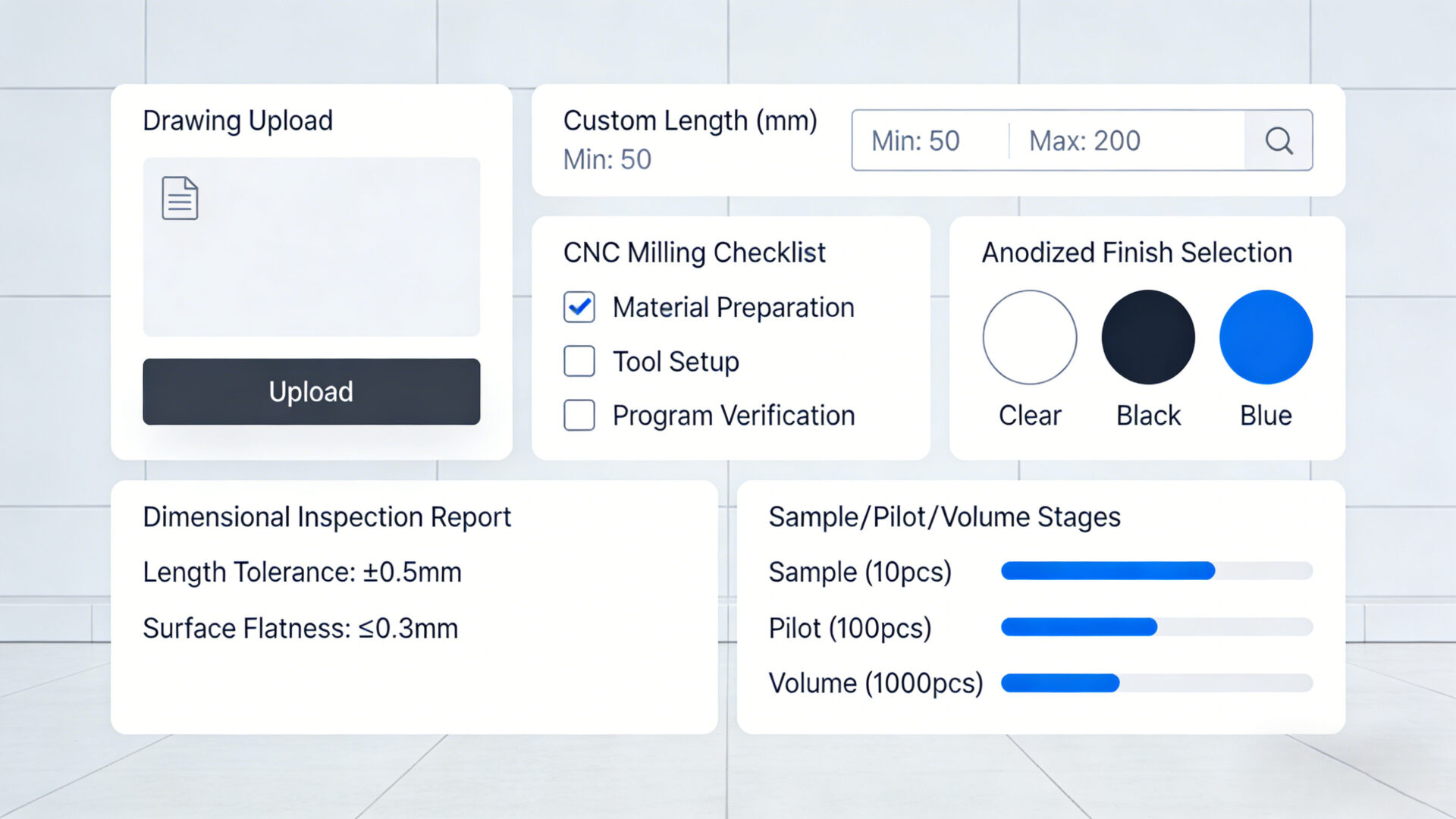
A good RFQ for the A701 aluminum profile heat sink should remove ambiguity before quotation. Recommended content includes:
Files and references
- 2D drawing and 3D model if available
- explicit reference to A701 and required revision state
- target assembly context: PSU, UPS, inverter, charger, or other
Profile and machining scope
- required cut length
- CNC milling operations
- critical contact surfaces
- hole, slot, or clearance requirements
Finish and quality
- anodized surface expectations
- cosmetic class if visible in the final product
- inspection points for critical dimensions
- packaging requirements to avoid transport damage
Commercial structure
- sample quantity
- pilot quantity
- expected repeat-order volume
- target timeline and approval milestones
The more precisely these items are defined, the easier it becomes to compare supplier responses and move faster from sample to production release. That is particularly important in power equipment programs where the heat sink is tied directly to reliability and service life expectations.
FAQ
What is the A701 aluminum profile heat sink best suited for?
A701 is best suited for power-equipment thermal management projects where buyers need an extruded aluminum heat sink profile with known material, known nominal size, anodized surface, CNC machining potential, and drawing-based custom length rather than a purely generic off-the-shelf block.
Why is AL6063-T5 relevant for a heat sink?
Because it offers a practical combination of extrusion suitability, lightweight construction, good machinability, and reliable use in thermal management applications. In real RFQ work, that balance is often more valuable than chasing material labels without considering manufacturability.
Can A701 be supplied in custom length?
Yes. The published product information explicitly states that the length can be customized according to drawings, which is a strong advantage for assembly-specific integration.
Why does CNC milling matter for an aluminum profile heat sink?
Because many heat sinks need more than a cut-to-length operation. Mounting faces, holes, end features, and interface details often require machining to match the real mechanical design.
What should buyers send before asking for a quote?
At minimum: drawing or model, required length, machining scope, finish expectation, quantity split by sample/pilot/volume, and any critical inspection points. That produces faster and more comparable RFQ feedback.