

Key Takeaways
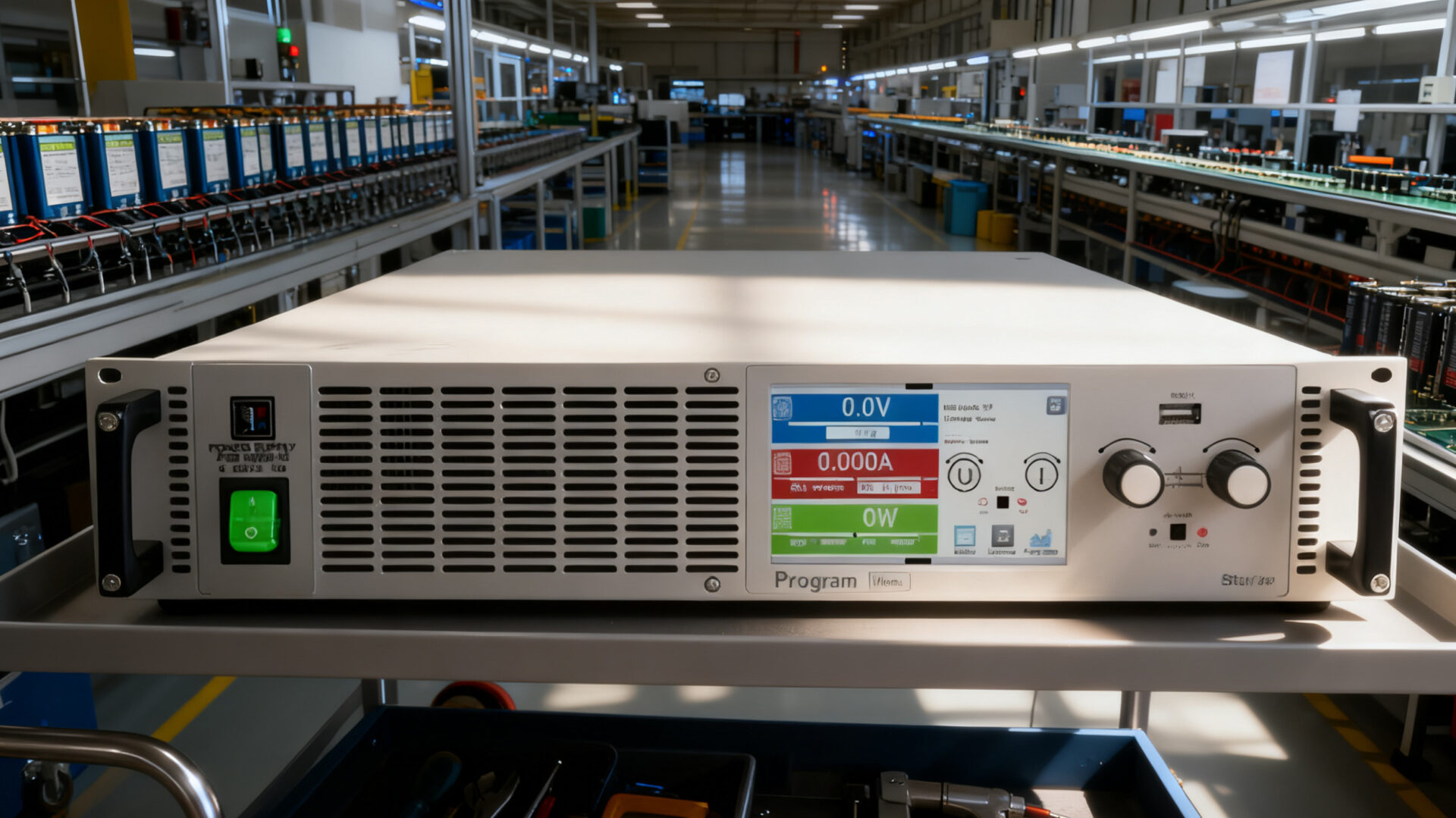
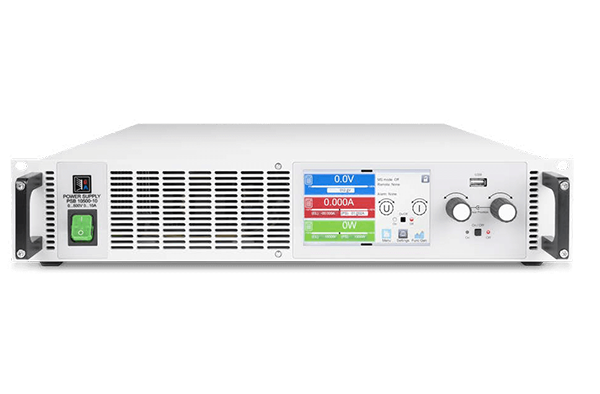
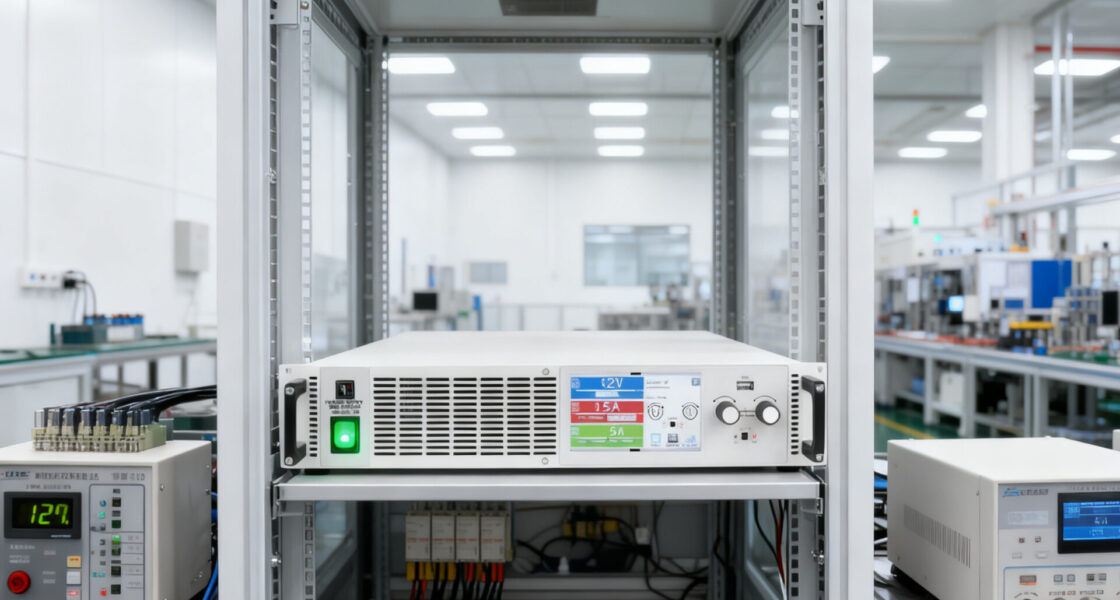
2U programmable DC power supplies combine high power density with 19-inch rackmount installation—ideal where rack and floor space are limited.
Parallel operation with leader–follower control (master/slave) enables power scaling by adding units without increasing footprint.
Programmability and precision (low ripple/noise, tight tolerances) support repeatable testing and stable production processes.
Configurable protection (OVP/OCP/OPP) and standard interfaces (LAN/Ethernet, USB, RS-485/Modbus) simplify system integration.
Applications: electronics manufacturing, automotive components, model-/norm-dependent medical devices, and R&D.
Why 2U Matters in Medium-Scale Production
Medium-scale environments such as electronics assembly, automotive component testing, and industrial equipment manufacturing face two main challenges: high power demand and limited rack or floor space. Large stand-alone systems occupy valuable U-space, while small benchtop supplies often can’t sustain continuous loads.
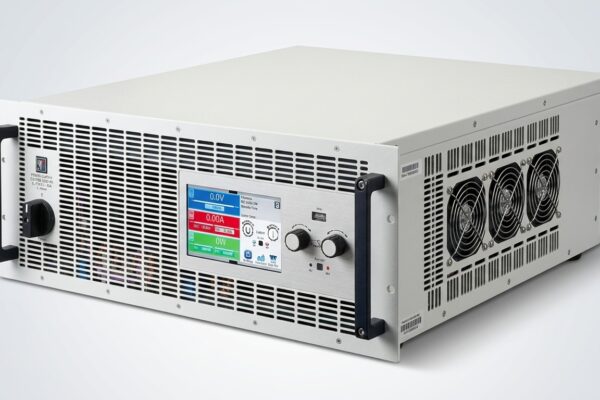
2U rackmount supplies strike the balance—offering 3.5-inch (2U) height in a 19-inch rack for both power density and space efficiency.
What Is 2U Programmable DC Power Supply?
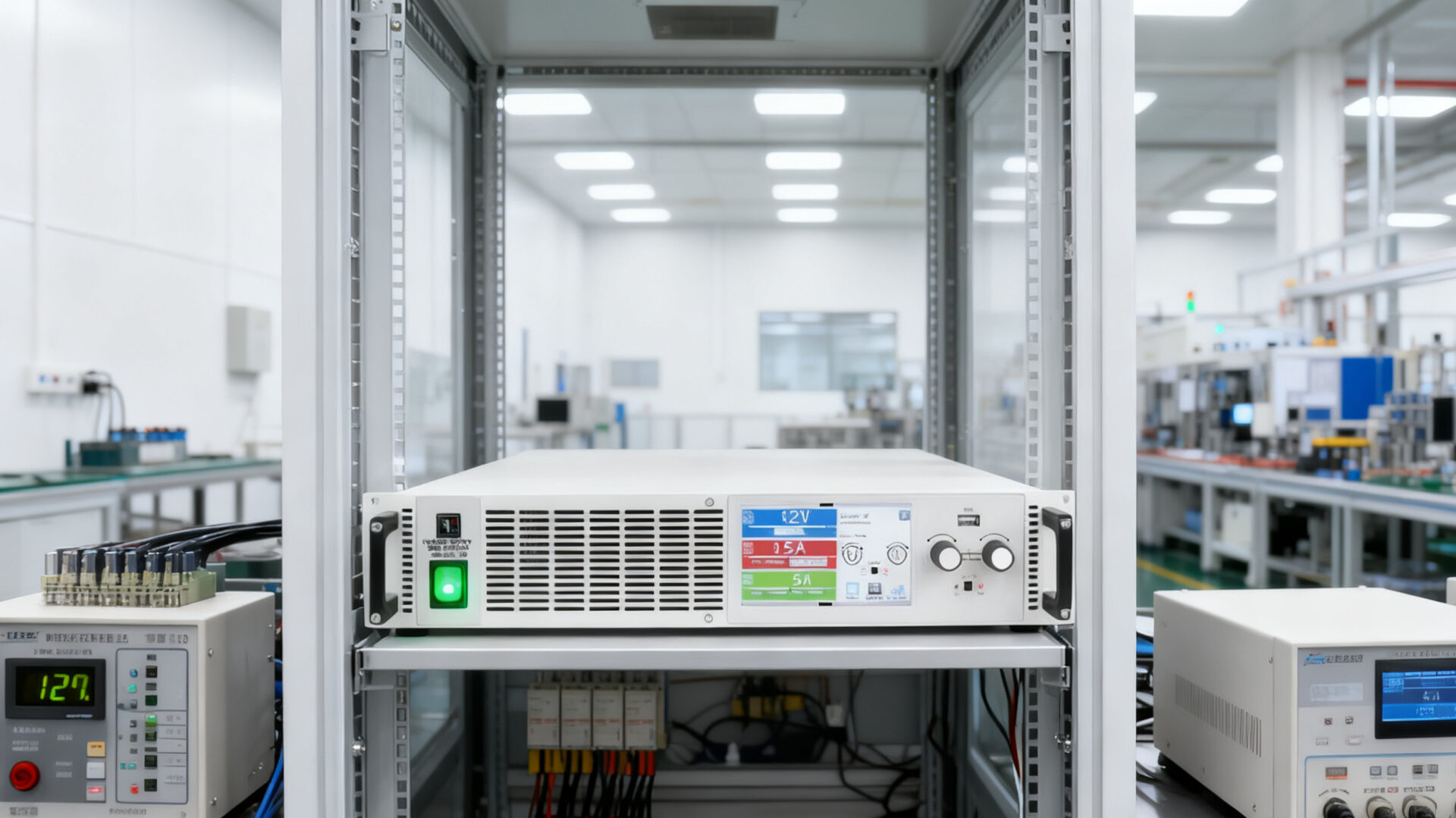
“2U” refers to the rack height (1U = 1.75 in; 2U = 3.5 in). These units fit directly into 19-inch racks, integrating seamlessly into existing setups. They combine three essential capabilities:
1) Programmability — for dynamic requirements
Digital configuration of voltage, current, and limits via front panel, software, or remote interface.
Automated sequences handle test profiles (e.g., 12 V/5 A PCB test → 24 V/2 A burn-in).
Optional dual-channel models power devices with multiple rails.
Adjustable protection settings (OVP/OCP/OPP) and controlled slew rate align precisely with DUT parameters.
2) Precision — Consistency for Quality-Critical Processes
Typical (model-dependent) specifications:
Voltage accuracy: ±0.1 % of full scale
Stability/drift: < 0.05 % per hour
Ripple & noise: < 10 mVpp
Such precision minimizes interference in low-voltage circuits and ensures reproducible test results.
3) Power Density — Maximum Output in Minimal Space
Most 2U models provide 1–5 kW in just 2U.
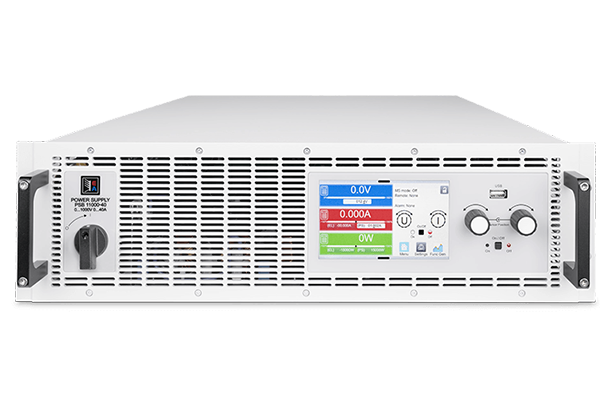
For example, two 3 kW units can deliver 6 kW in only 4U, often more space- and cost-efficient than a single large 6U unit.
Parallel Operation (Leader–Follower / Master–Slave): Scaling Without Replacement
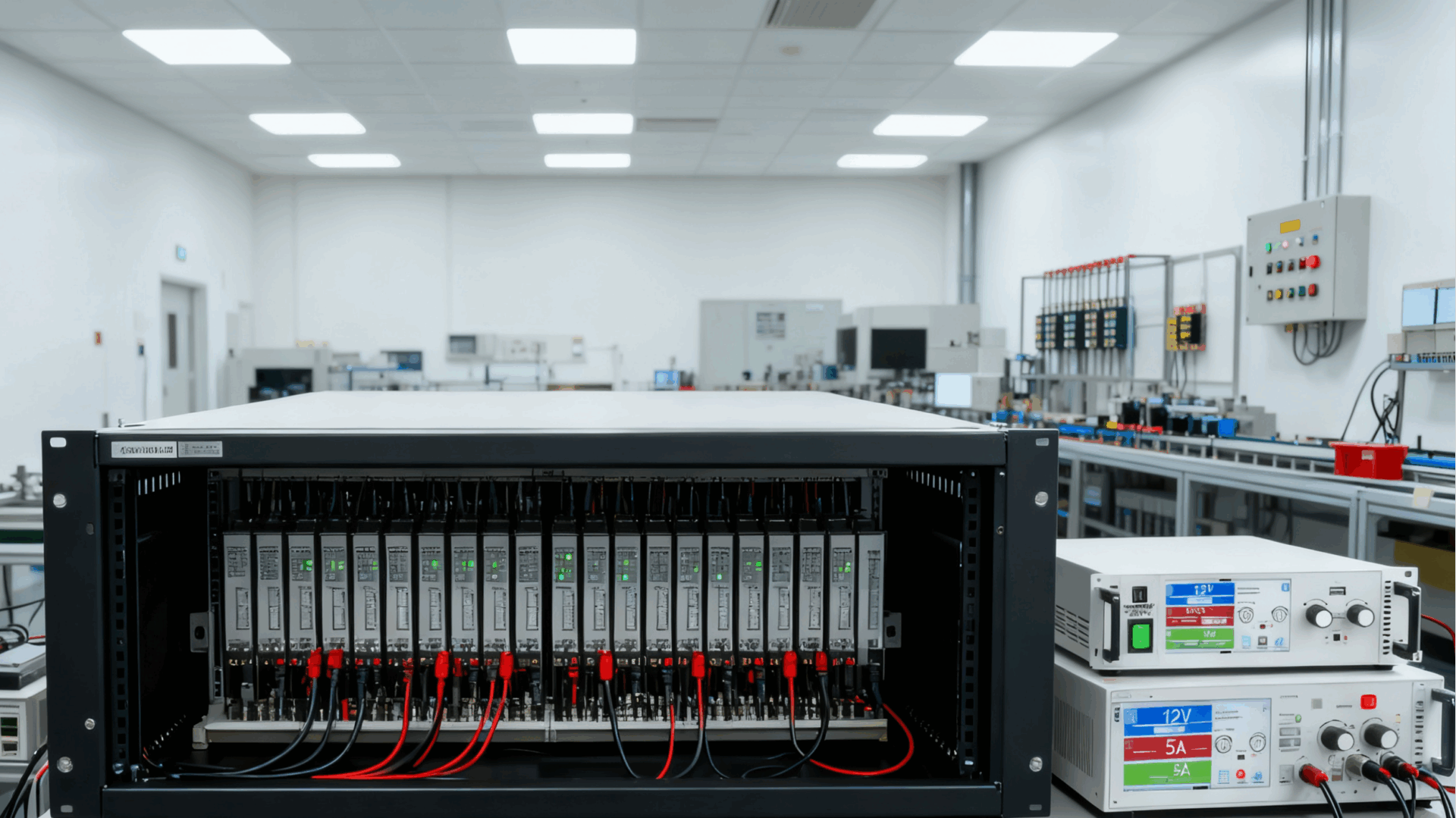
As production expands, capacity can grow modularly—add more 2U units instead of replacing existing hardware.
How it works
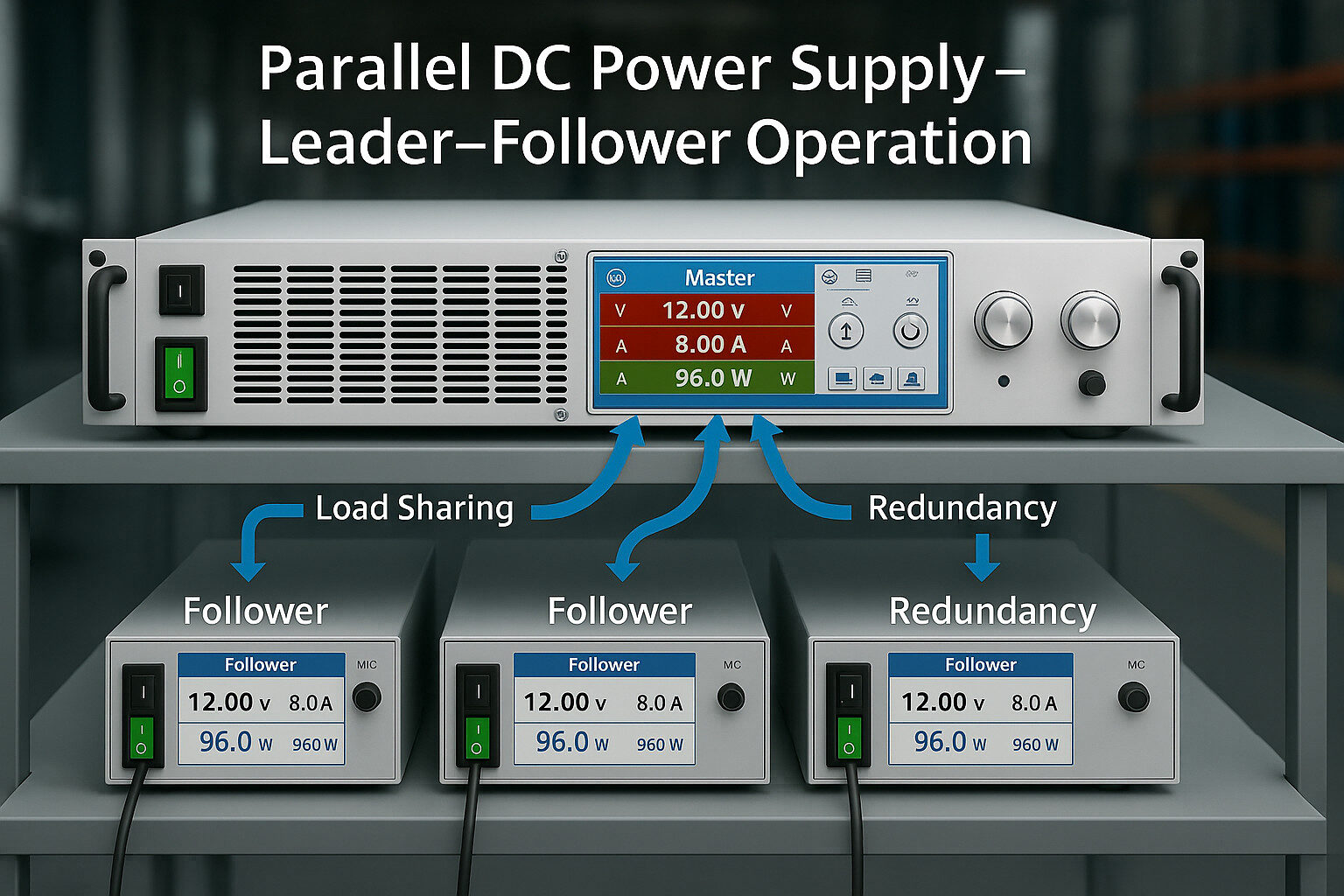
The leader (master) defines voltage/current targets; followers (slaves) mirror them precisely.
Active load sharing distributes current evenly to prevent overloads.
Fault tolerance: If one unit fails, others maintain operation (model-dependent).
Advantages over a single large supply
Scalable in 2U increments
Gradual investment (“grow-as-you-go”)
Lower downtime risk due to redundancy
Flexible relocation across racks or lines
The 2U Sweet Spot: Cooling and Space Efficiency
1U designs often hit thermal limits (≈ ≤ 1 kW).
≥ 4U offers more output but consumes valuable rack space.
2U balances cooling capacity and power density (1–5 kW)—ideal for medium-scale production lines.
In a 42U rack, numerous 2U modules fit without compromising test or control equipment.
Applications
Electronics Manufacturing & Testing
PCB functional testing at 5/12/24 V
Long-duration burn-in tests with low current drift
Semiconductor-related processes requiring high precision
Automotive Components
EV battery testing via parallel operation
ADAS sensor calibration with low-noise outputs
Motor and actuator simulation under variable load
Med-Adjacent Manufacturing*
Ultra-low ripple/noise for sensitive circuits
Voltage/current logging for full traceability
*Use only within applicable standards; compliance is model-dependent.
R&D / Laboratories
Dual-channel prototyping setups
Electrochemistry or materials testing
University and research projects where rack space is limited
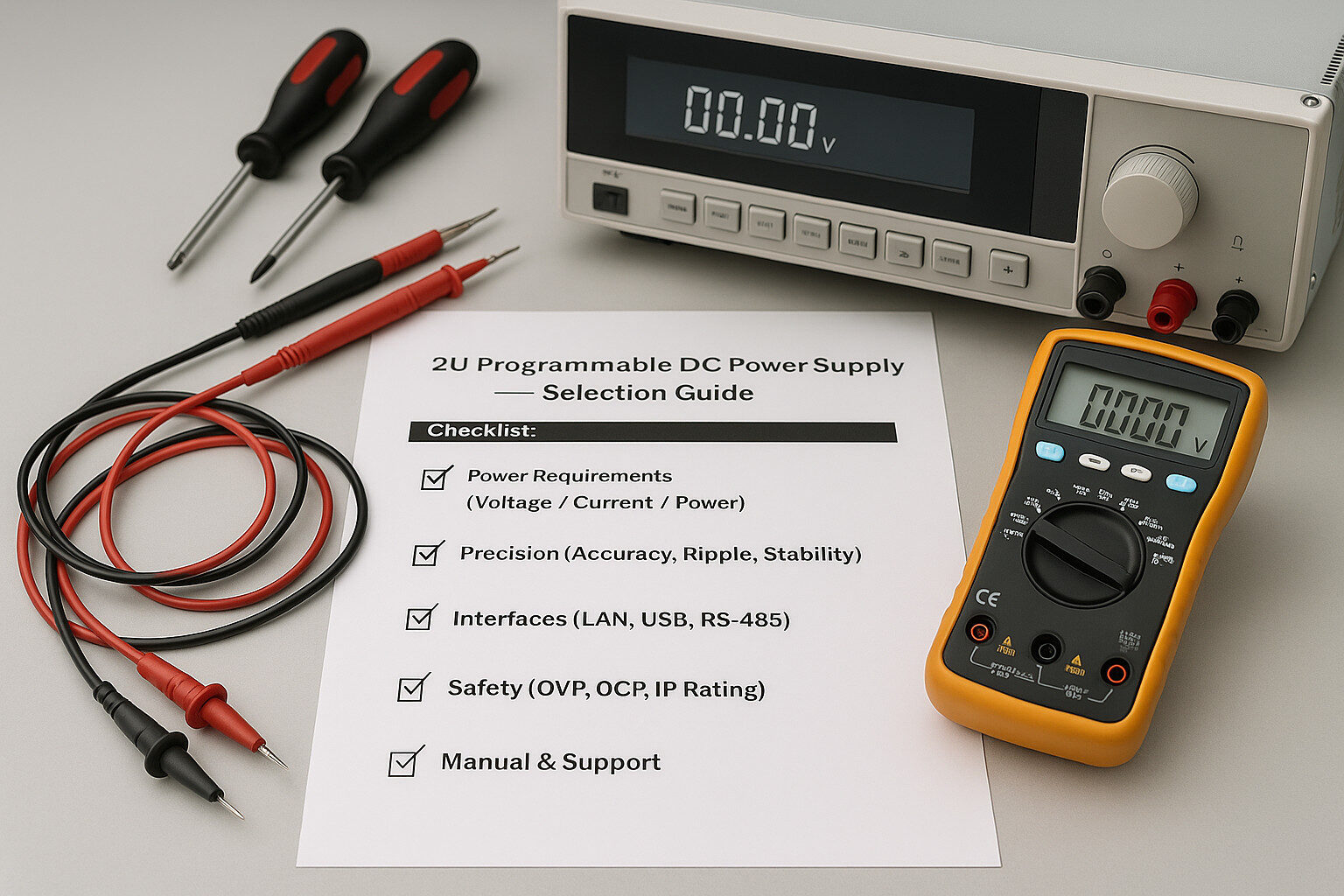
Choosing the Right 2U Supply
Define power needs: determine required voltage, current, and growth potential.
Prioritize precision: look for ±0.1 % accuracy, < 10 mVpp ripple, < 0.05 % drift.
Check integration: ensure support for Ethernet, USB, RS-485/Modbus, PLC, and compatible software (e.g., LabVIEW).
Assess environment: cooling method, protection modes, EMC/IP rating.
Select a reliable manufacturer: proven experience, fast support, and custom options.
Compliance Note
Compliance (e.g., IEC or medical norms) is model- and configuration-dependent. For regulated use, always verify official datasheets and certificates. References to IP ratings, medical suitability, or industrial standards apply only where explicitly stated by the manufacturer.
Conclusion
2U programmable DC power supplies combine power density, precision, and compact 19-inch integration—a proven solution for medium-scale production and R&D. With leader–follower parallel operation, they scale seamlessly while conserving space. For teams seeking reliable, flexible, and reproducible testing, 2U systems deliver an ideal balance of performance and efficiency.
How TPS Elektronik Can Help
TPS Elektronik offers 1–5 kW 2U models (model-dependent), supporting parallel operation and smooth system integration.
Share your application requirements, interface needs, and power range—our engineers will recommend suitable models and configurations.
Contact: TPS Elektronik