

System integrators and panel builders know that a robust enclosure or machine frame is fundamental, yet sourcing precisely cut steel plates often disrupts project timelines. When a standard fabrication shop delivers parts with rough, heat‑affected edges, requiring excessive post‑cut machining to meet even basic dimensional tolerances, the result is lost time and wasted budget. This is especially true for heavy‑gauge applications demanding the simultaneous cutting of intricate geometry on 40 mm structural steel.
TPS Elektronik’s CNC steel plate cutting services designed to directly address this challenge. By maintaining a dedicated network that provides access to advanced CNC steel plate cutting machines. From high‑speed fiber lasers for precision thin‑gauge work to powerful oxy‑fuel and plasma systems for heavy‑gauge fabrication. TPS delivers parts that require less grinding, fit better in the welding fixture, and arrive with documented quality checks. This represents a critical refinement in high‑precision industrial manufacturing, seamlessly integrated within TPS’s broader EMS‑driven approach to sheet metal processing.
1. How CNC steel plate cutting fits into modern industrial manufacturing
Modern industrial manufacturing, particularly in sectors like heavy machinery and automotive, demands components that are both robust and precise, a requirement that CNC laser cutting machines excel at fulfilling. A CNC steel plate cutting machine is a computer‑controlled tool that uses a laser, plasma arc. Or oxy‑fuel flame to cut various thicknesses of steel. Laser cutters are ideal for intricate parts in thin steel (up to 8 mm). While plasma and oxy‑fuel systems are essential for heavy‑gauge fabrication of steel plates up to several inches thick.
In professional practice, the shift away from traditional methods is accelerating because these advanced CNC cutting processes consistently deliver a more precise cut than manual flame cutting or shearing. Using a high power laser steel cutting process for a 6 mm mild steel bracket, for example, yields a part that fits directly into the assembly fixture with minimal post‑processing. This precision capability is why TPS maintains a dedicated network of manufacturing partners. Which ensuring the most appropriate process is always available for the job. This fits directly into a comprehensive CNC steel cutting service approach that sees CNC cutting as a core capability for achieving overall project success. For an overview of the full mechanical production capabilities, see the TPS EMS CNC milling service overview.
2. Achieving high precision in heavy gauge steel fabrication
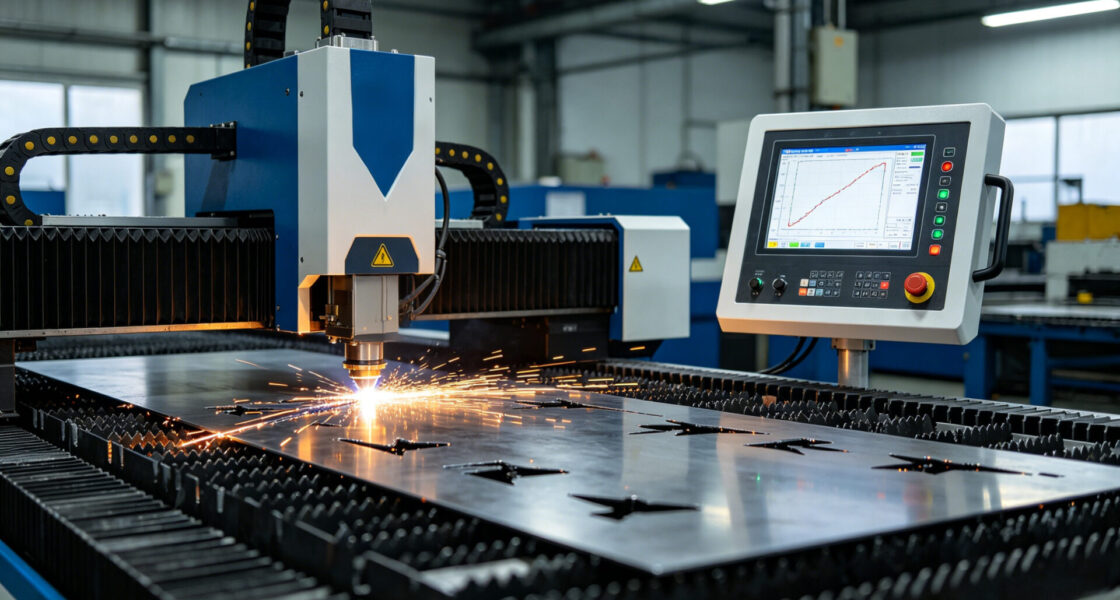
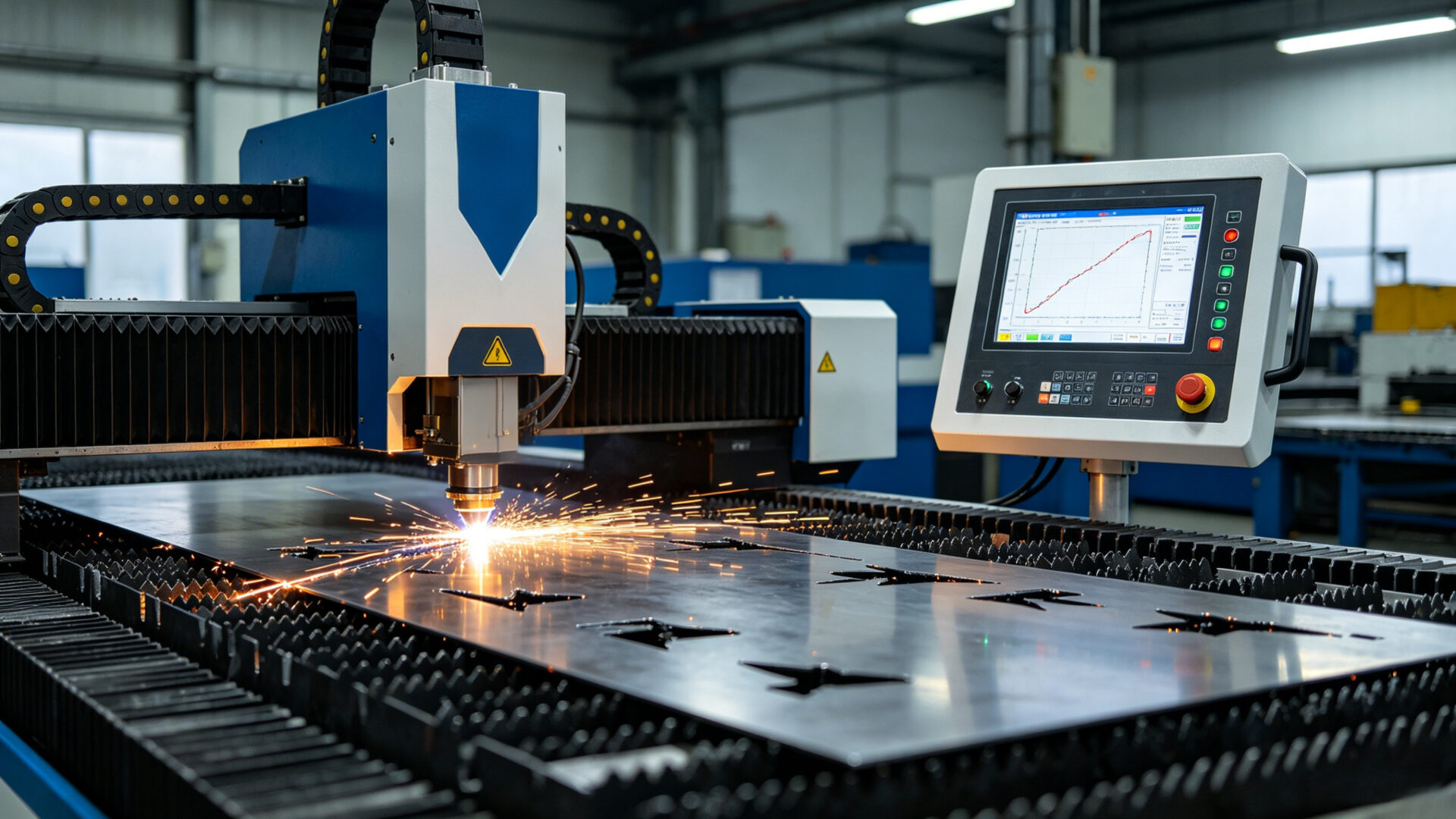
High precision in heavy gauge steel fabrication achieved by selecting the correct technology for the specific material thickness. A gantry CNC cutting machine gives equipment manufacturers the flexibility to handle everything from thin panels to massive structural plates on a single bed. This minimizes setup and accelerates throughput for large‑scale projects. The key technologies for this include:
2.1 Fiber laser cutting
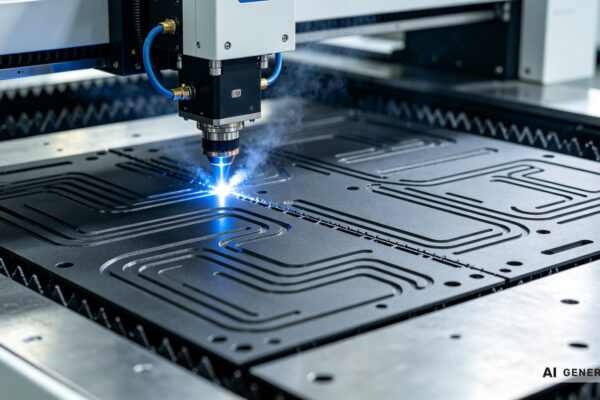
For thin‑gauge applications, typically 0.8 mm to 8 mm in mild steel, fiber laser cutting provides the highest precision (±0.1–0.2 mm) and the best edge quality with minimal heat‑affected zones. TPS leverages this for complex electronic enclosures, brackets, and high‑repeatability parts.
2.2 Plasma cutting
In the mid‑range, up to about 30 mm, plasma cutting delivers a good balance of speed and accuracy. It’s particularly effective for processing stainless steel and aluminum plates at lower operating costs compared to laser.
2.3 Oxy‑fuel cutting
For the heaviest structural work, CNC oxy‑fuel steel cutting remains the standard for low‑carbon steel thicker than 30 mm, capable of handling plates over 200 mm. The cut edges are vertical and smooth, ideal for parts that will be subsequently welded. By orchestrating these technologies, TPS ensures the concept of a precision plate cutting machine is fully realized, delivering parts that meet exact specifications. More details on related manufacturing capabilities are available in the overview of top CNC milling machine options.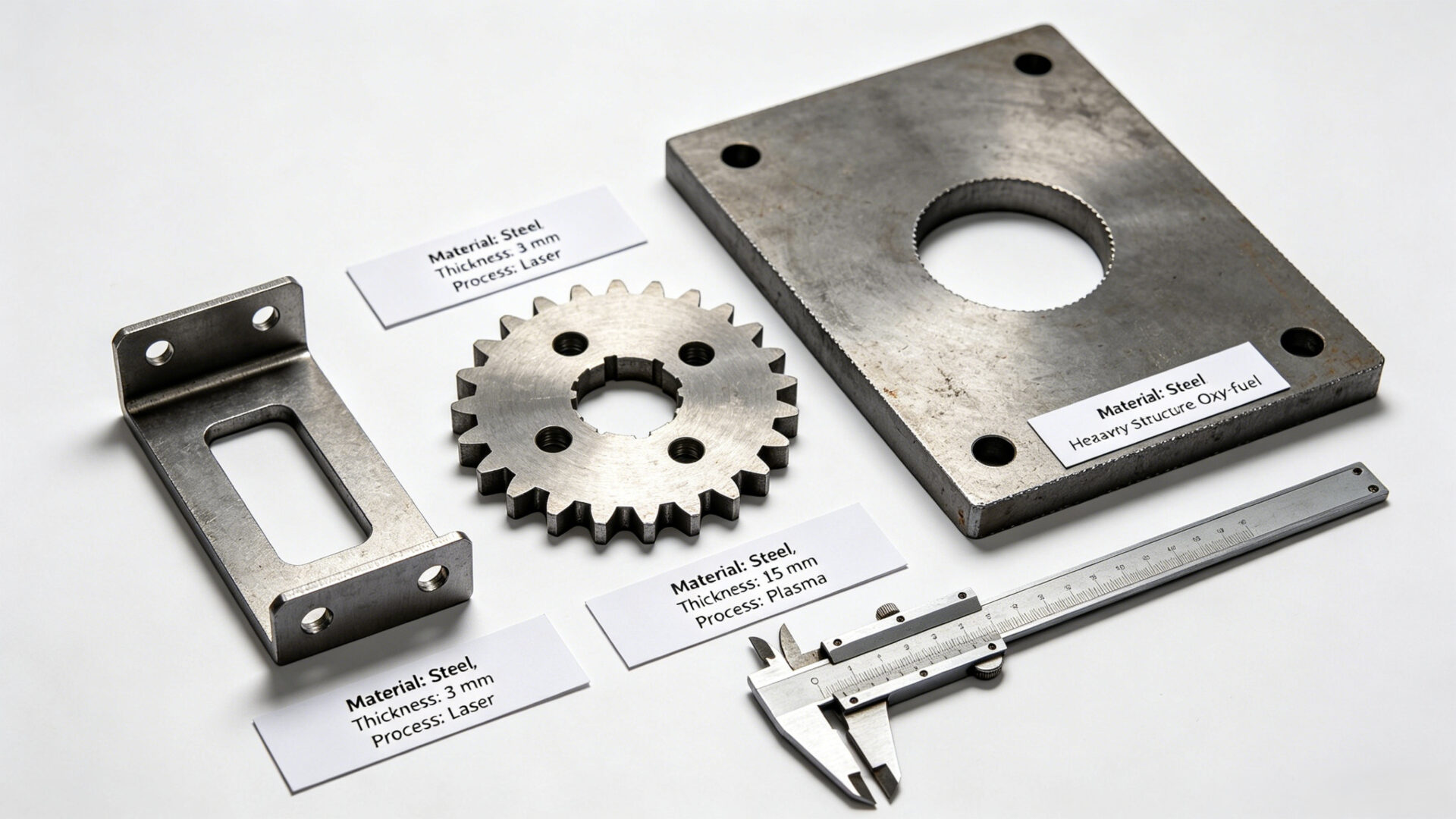
3. Safety and compliance for industrial CNC cutting machines
Within any steel plate fabrication service, adherence to machine safety standards is paramount. A modern CNC profile cutting steel machine integrates numerous safety features as mandated by international standards like IEC 60204‑1, which covers the general requirements for the safety of electrical equipment on machinery. For organizations procuring equipment, verifying that a service provider’s systems are designed in compliance with IEC 60204‑1 is a non‑negotiable aspect of pre‑qualification.
Compliance with these standards ensures that the machine’s control systems, emergency stops, and protective interlocks are correctly designed to protect both the operator and the product. For high‑stakes industries like power generation or shipbuilding, this assurance is critical and allows procurement teams to focus on part quality and lead times. For more on maintaining high‑accuracy standards, see the article on precision CNC machining for high accuracy.
4. RFQ checklist
- Required part: Drawing or CAD model (STEP preferred).
- Material specification: Steel grade (e.g., S235, S355), thickness, and any special coating requirements.
- Quantities: Prototype volume and series target quantity.
- Tolerances: General dimensional tolerances required, or specific GD&T callouts for critical features.
- Post‑processing needs: Deburring, surface finishing, heat treatment, or welding requirements.
- Documentation: Material certificates, FAI reports, or PPAP as needed.
- Target lead time: Desired delivery date.
5. FAQ
What is the main advantage of a CNC steel plate cutting service?
It offers superior precision and edge quality compared to manual cutting, reducing the need for secondary machining on heavy structural parts.
How does CNC oxy‑fuel cutting differ from a laser process?
Laser is used for intricate profiles in sheet metal up to around 8 mm, while oxy‑fuel is a thermal process specifically for low‑carbon steel plates of 30 mm and above, excelling at thick plate cutting.
Is plasma or laser cutting better for industrial steel fabrication?
The choice depends on thickness and precision needs. Fiber laser offers the highest precision for thin to medium plates, while plasma offers a cost‑effective solution for thicker, non‑critical parts.
Where can I learn more about the full scope of TPS manufacturing technologies?
Visit the main EMS CNC milling precision machining page for a complete overview.