

10 W | 12–15 VDC | 0.85 A | 23 mm wide
A compact, globally compatible 12 V supply for low-power control loads—and a clear path from technical evaluation to a project-specific TPS quotation.
TPS010-GP12V decision summary
The TPS010-GP12V 10 W DIN rail power supply is intended for compact 12 VDC control circuits where cabinet space, low standby consumption and straightforward global mains compatibility matter. Its regulated output is adjustable from 12 to 15 VDC, the rated output current is 0.85 A, and the unit accepts 90–264 VAC at 47–63 Hz or 120–370 VDC. At only 91 × 23 × 60 mm, it is especially relevant to panel builders who need to power a small controller, sensor group, communication gateway, alarm module or other modest load without reserving the rail width of a larger supply.
For a purchasing decision, however, the headline “10 W” is not enough. Engineers should confirm continuous current, startup and switching peaks, ambient temperature, conductor size, upstream protection, output-voltage tolerance and the approval scope of the complete machine. The TPS010-GP12V is a strong candidate when the calculated worst-case continuous load remains below 0.85 A with adequate engineering margin. If the application has a higher inrush demand, operates above 50 °C, or may gain additional loads later, move to a higher-power GP, Pro or Peak DR+ model rather than reducing the safety margin.
Key specifications—and their purchasing relevance
| Parameter | TPS010-GP12V | Evaluation point |
|---|---|---|
| Output | 12–15 VDC adjustable, 0.85 A, 10 W | Verify the nominal voltage and maximum simultaneous current of every connected load. |
| Input | 90–264 VAC, 47–63 Hz; 120–370 VDC | Supports broad deployment without manual range selection; confirm local protection and installation rules. |
| Efficiency | 80% at 220 VAC and maximum load | Use the actual loss in the cabinet heat budget, especially in sealed enclosures. |
| No-load consumption | <0.3 W | Useful for systems with long standby periods and fleet-level energy targets. |
| Mechanical | 91 × 23 × 60 mm; approx. 114 g | Reserve width plus airflow and wiring access—not only the device footprint. |
| Environment | 0–50 °C; derating to 70 °C; 5–95% RH, non-condensing; up to 3,000 m | Qualification must use the enclosure temperature at the supply, not the room temperature. |
| Protection and service | Overload, overvoltage and overtemperature protection; 5-year warranty | Confirm fault behavior and current warranty terms for the order. |
The data sheet specifies ripple and noise below 1% of output voltage, a 20 ms hold-up time at full load and 230 VAC, convection cooling, IP20 double insulation and a flame-retardant PC-110(+) UL94 V-0 enclosure. These details support a compact, fanless cabinet design, but they do not replace system validation. Ripple sensitivity, transient response and hold-up requirements should be checked against the connected electronics and the expected mains disturbance profile.
Selection logic for a 12 V control load
1. Build a worst-case load table
Add the maximum steady-state current of all loads that can operate at the same time. Then document startup, charging, relay, valve and radio-transmission peaks separately. A nominal total of 0.60 A, for example, leaves about 0.25 A before the 0.85 A rating; whether that is sufficient depends on temperature, duty cycle, tolerances and future expansion. Do not size from average consumption alone.
2. Confirm the usable voltage window
The 12–15 V adjustment range can compensate for permitted cable drop or a load that requires a slightly higher setpoint. It should not be used to “force” extra power from the supply. Validate the voltage at the furthest load under maximum current and keep the setpoint within every device’s input tolerance. TPS can review the voltage-drop calculation when conductor length, remote distribution or mixed loads complicate the design.
3. Decide whether 10 W is the right platform
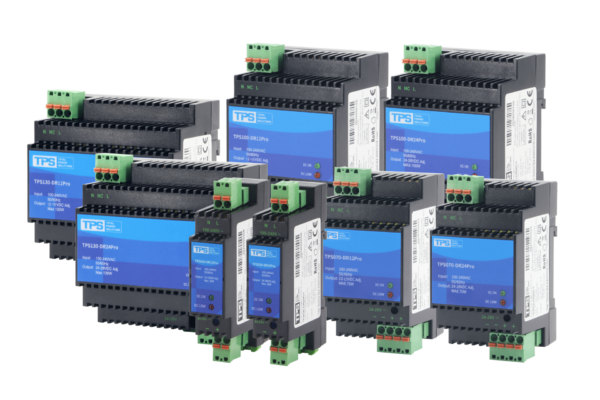
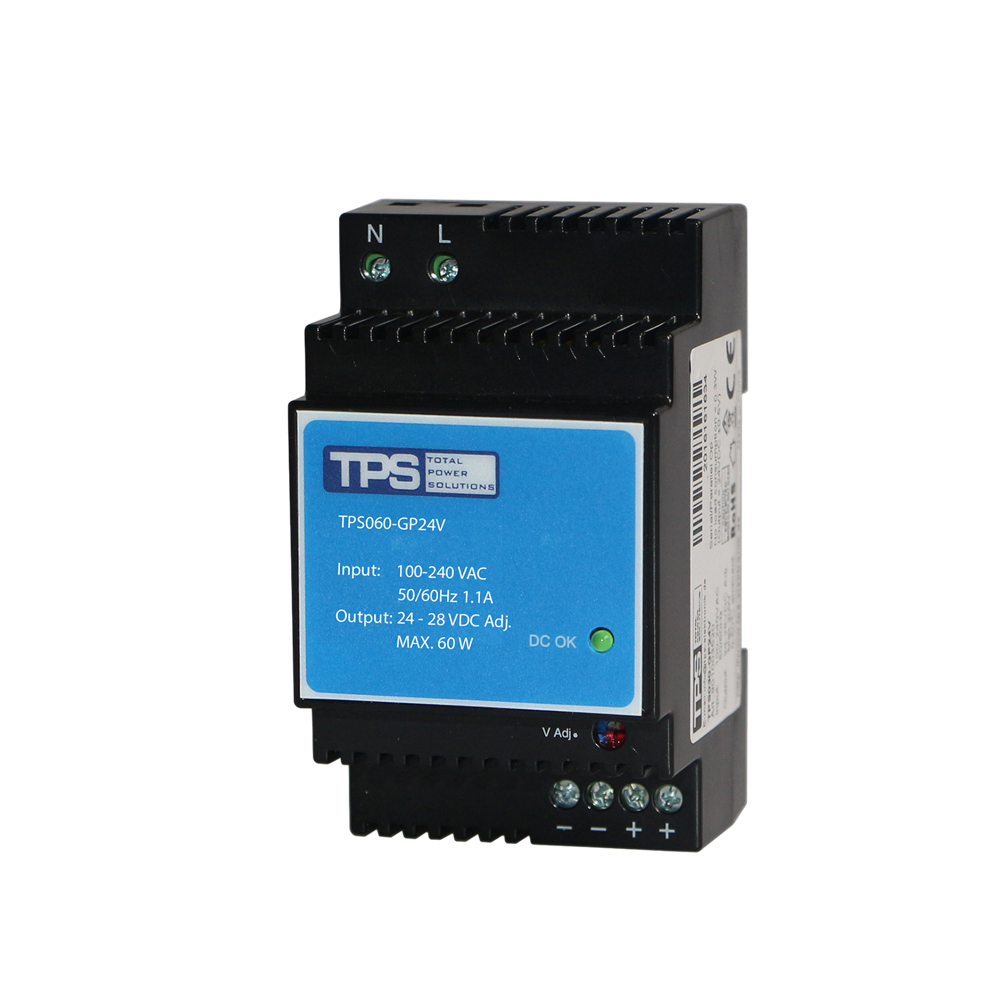
Choose the TPS010-GP12V when small size and modest load are the priorities. If the design needs more continuous power, compare the broader 10–100 W GP Series. For higher efficiency or different industrial requirements, evaluate the TPS030–130W Pro Series. Where short peak loads dominate, the Peak DR+ DIN rail platform offers a different design path. TPS can help select across these families instead of treating one model as a universal answer.
Integration, thermal design and wiring
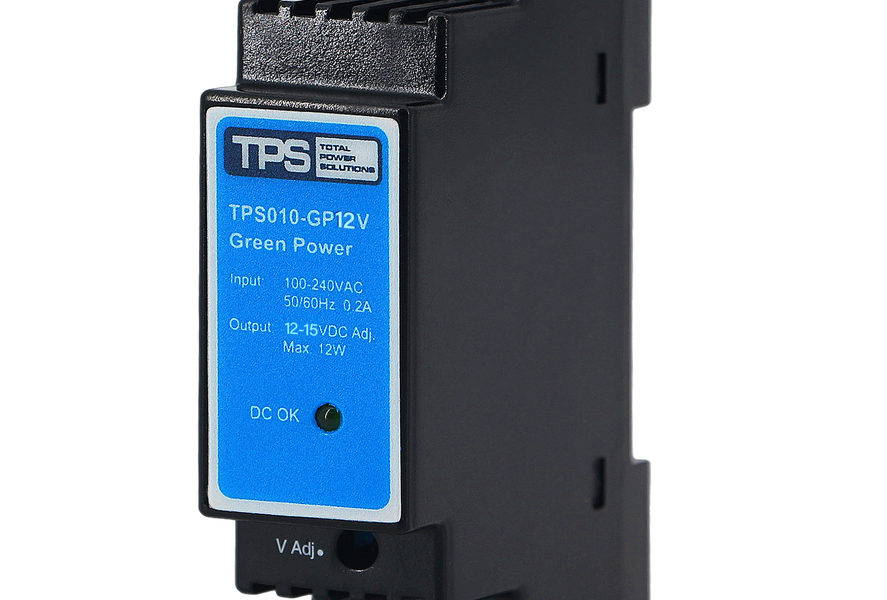
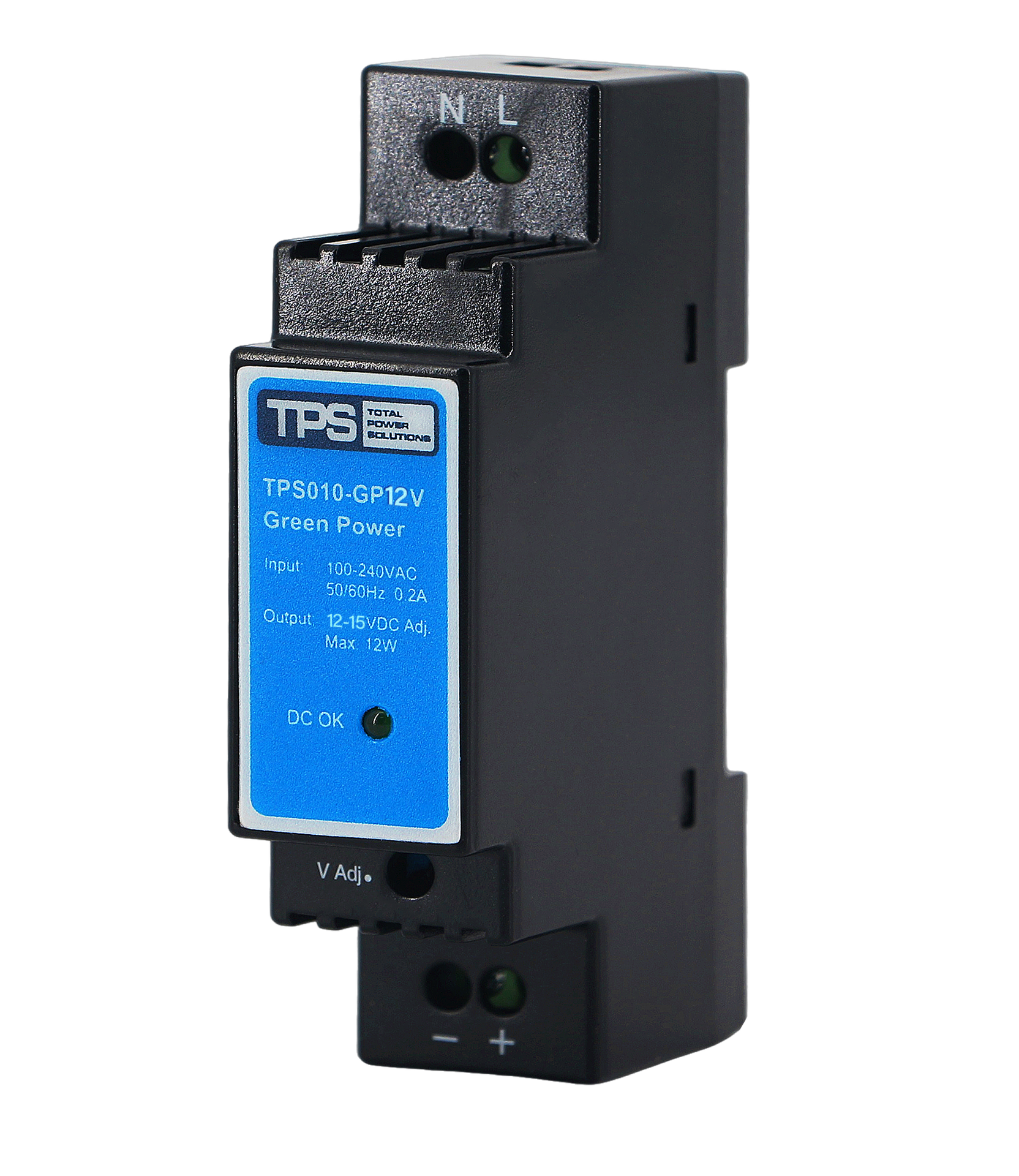
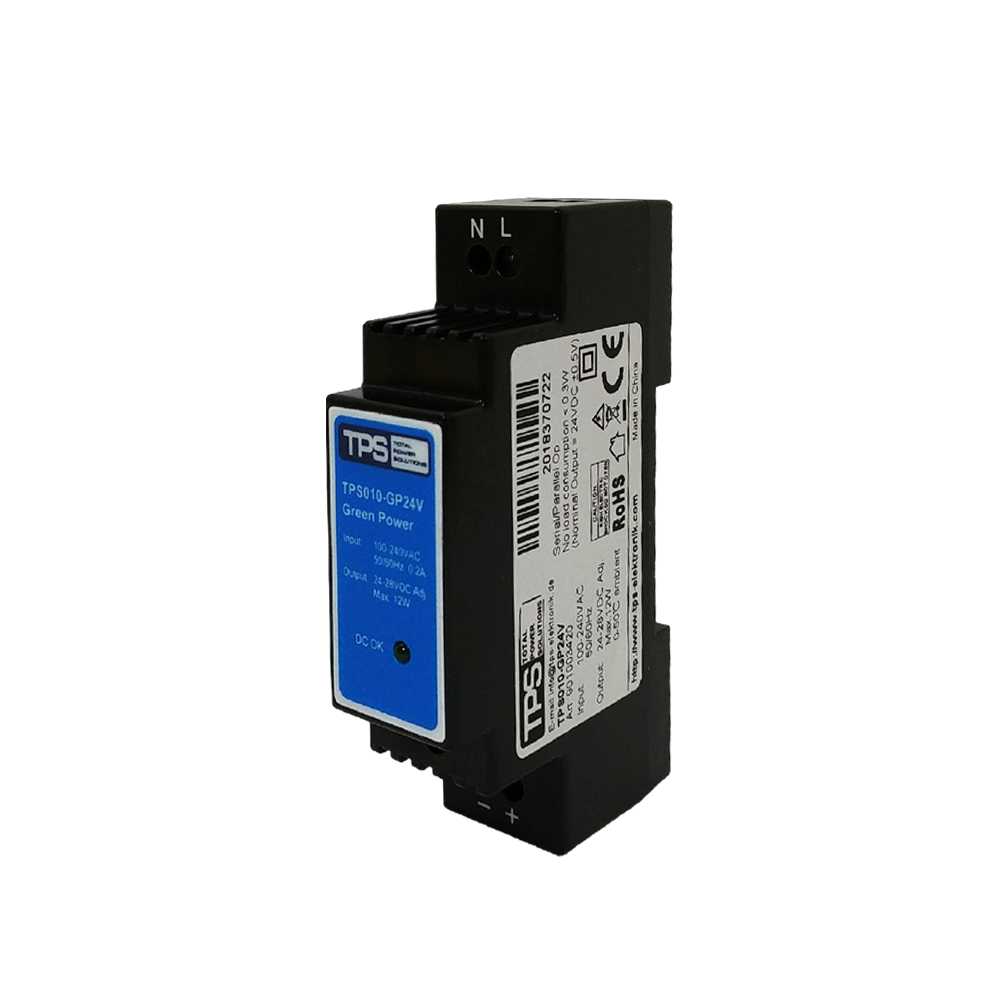
The unit mounts vertically on TS35/7.5 or TS35/15 DIN rail. Input and output terminals accept AWG 26–14 conductors (0.15–2.5 mm²), with a stated 300 VAC terminal rating. The front provides a DC-OK indicator and output-voltage adjustment. Before releasing the panel drawing, check terminal accessibility, bend radius, segregation of AC and SELV/PELV circuits as applicable, service access and the clearance required by the installation instructions.
Natural convection eliminates a fan and its maintenance burden, but airflow remains part of the design. The data-sheet curve holds full rated current to 50 °C ambient, then requires derating; it indicates approximately 60% current at 60 °C and approaches zero at 70 °C. Treat the actual hot-spot temperature beside the supply as the relevant ambient. Adjacent contactors, drives and other supplies can raise that temperature significantly above the value measured outside the enclosure.
The practical design sequence is simple: estimate PSU losses, add heat from neighboring devices, model or measure the enclosure temperature, apply the derating curve, and repeat the current-margin check. In series production, validate representative worst-case panels rather than only an open-bench prototype. Use suitable upstream overcurrent protection and switching, observe national wiring requirements, and have qualified personnel perform installation. The product’s IP20 construction means it belongs inside an enclosure that provides the final level of protection required by the application.
Compliance, reliability and qualification evidence
The series data sheet states CE compliance with the Low Voltage Directive 2014/35/EU and EMC Directive 2014/30/EU, RoHS compliance, certification to EN 61347-2-13, and references IEC/EN/CSA/UL safety standards including EN 60601-1, EN 62368-1, EA 55011-A and EN 55032-A. It also states electromagnetic susceptibility testing aligned with IEC 801 parts 2–6, Level 3, and power-quality references EN 61000-3-2 and EN 61000-3-3. Procurement teams should request the current declaration, certificate and exact applicability for the ordered article number rather than assuming that every listed standard automatically covers the final equipment.
The stated MTBF is greater than 350,000 hours at full load and 25 °C. MTBF is a statistical reliability metric under defined assumptions—not a guaranteed service life. For supplier comparison, evaluate it alongside operating temperature, component stress, warranty, traceability, change control and availability. The stated five-year warranty is valuable, but the commercial quotation should confirm the applicable warranty terms, delivery schedule and after-sales route for the destination market.
Recommended qualification file
- Current data sheet and ordering-code confirmation for TPS010-GP12V / manufacturer code 901003419.
- Applicable CE declaration, RoHS evidence and relevant third-party certificates.
- Panel schematic, wire schedule, protection concept and thermal calculation.
- Load/inrush evidence and measured voltage at the most distant load.
- Final equipment risk assessment and system-level compliance records.
Best-fit applications—and where to step up
The product is well aligned with building automation controllers, alarm and safety interfaces, environmental monitoring, access systems, compact industrial automation nodes and selected constant-voltage LED loads. It can also support laboratory or medical-related equipment only where the final design and approval strategy accept the exact component certification scope. The supply is not automatically a complete certified medical power subsystem merely because a referenced standard appears in a family data sheet.
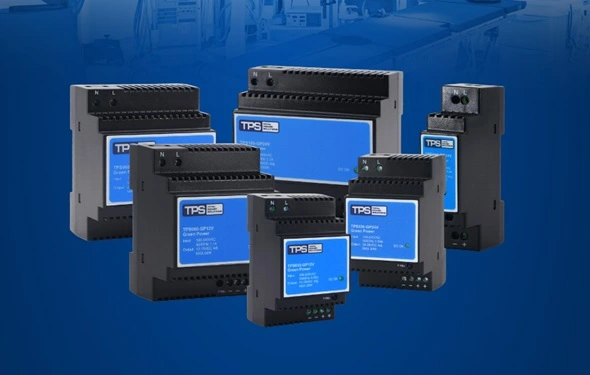
For system integrators, the strongest use case is a distributed 12 V load with predictable current and limited rail space. For panel builders, the 23 mm width supports dense layouts. For procurement, the standardized GP family offers a path to related 30 W, 60 W and 100 W variants. For electrical engineers, adjustable output, DC-OK indication, wide input and documented derating simplify design review. If the project requires 24 VDC, substantially more current, higher efficiency or a defined short-duration boost, use the TPS DIN rail portfolio overview to choose the correct family.
Why engage TPS before freezing the BOM
A component becomes a project solution only after voltage, current, thermal, mechanical, compliance and supply-chain conditions align. TPS Elektronik GmbH can support that alignment with product selection, equivalent-solution evaluation, documentation review, integration consultation and project-level coordination for global B2B customers. This is particularly useful when one cabinet platform will be shipped to several regions or when engineering wants a scalable family rather than a one-off supply.
Use the TPS010-GP12V product page to review the orderable item, and contact TPS when price alone does not answer the design question. For production projects, share target quantity, annual demand, delivery destination, required date, load data, operating environment and documentation needs. TPS can then determine whether the specified unit, another GP model, or an alternative DIN rail solution is the most defensible choice.
RFQ checklist for a faster technical and commercial response
Nominal and tolerance voltage, continuous current, peak current/duration, load type, cable length, AC or DC input.
Rail type, available width, enclosure size, adjacent heat sources, minimum/maximum temperature, ventilation.
Prototype and series quantities, target delivery, destination country, required declarations/certificates, forecast and service expectations.
A complete RFQ lets TPS return a technically relevant proposal instead of a generic price. For a standard item, check the TPS010-GP12V order page. For selection, customization, integration or an equivalent solution, use the DIN rail solution contact route.
Ready to validate the 12 V design?
Send TPS your load list, cabinet conditions, quantity and compliance requirements.
Frequently asked questions
Is TPS010-GP12V suitable for a continuous 0.85 A load?
0.85 A is the rated output current under specified conditions. A robust design should include tolerance, temperature, transient and expansion margin. If the calculated worst-case load is close to 0.85 A, ask TPS to review a higher-power option.
Can I adjust the output above 12 V?
Yes. The specified adjustment range is 12–15 VDC. Confirm the setpoint against every connected device and verify voltage at the load under maximum current.
Can this power supply operate above 50 °C?
The data sheet specifies operation from 0 to 50 °C at rated load and derating up to 70 °C. Apply the published curve using the local enclosure temperature and validate the thermal design.
Does the listed compliance certify my complete machine?
No. Component documentation supports the end-product compliance process, but the machine or device still requires its own risk assessment, integration checks and applicable conformity evaluation.
What should I include in an RFQ?
Provide load current and peaks, input source, temperatures, enclosure and rail constraints, destination market, certificate needs, quantities and required delivery. This enables TPS to confirm the model or propose a better-fit equivalent solution.