

News Update: TPS Elektronik has officially expanded the capabilities of its accredited EMC laboratory to provide comprehensive compliance solutions for the most demanding sectors. For system integrators, panel builders, and procurement teams, navigating the regulatory landscape for medical, automotive, and industrial electronics is a high-stakes endeavor. A failed electromagnetic compatibility test during the final stages of product development can derail FDA or CE approvals, leading to catastrophic delays and budget overruns.
To mitigate these risks, TPS Elektronik’s upgraded facility now offers specialized medical device EMC testing to IEC 60601-1-2 standards, alongside advanced automotive and industrial screening. By integrating these testing capabilities directly into the R&D and manufacturing lifecycle, we ensure your products achieve compliance on the first pass.
Request a Quote for Your Electromagnetic Compatibility Test →
1. Medical Device EMC Testing: Navigating IEC 60601-1-2
The medical device industry operates under the strictest regulatory frameworks globally. The 4th Edition of the IEC 60601-1-2 standard significantly increased the immunity requirements for medical electrical equipment, reflecting the growing prevalence of wireless technologies (like smartphones and Wi-Fi routers) in clinical and home healthcare environments.
As a dedicated IEC 60601-1-2 EMC lab, TPS Elektronik provides rigorous medical electromagnetic compatibility testing. We evaluate essential performance criteria under severe electromagnetic disturbances. Our testing protocols include elevated Electrostatic Discharge (ESD) levels (up to 15kV air discharge) and increased radiated RF immunity fields (up to 28 V/m for specific communication bands).
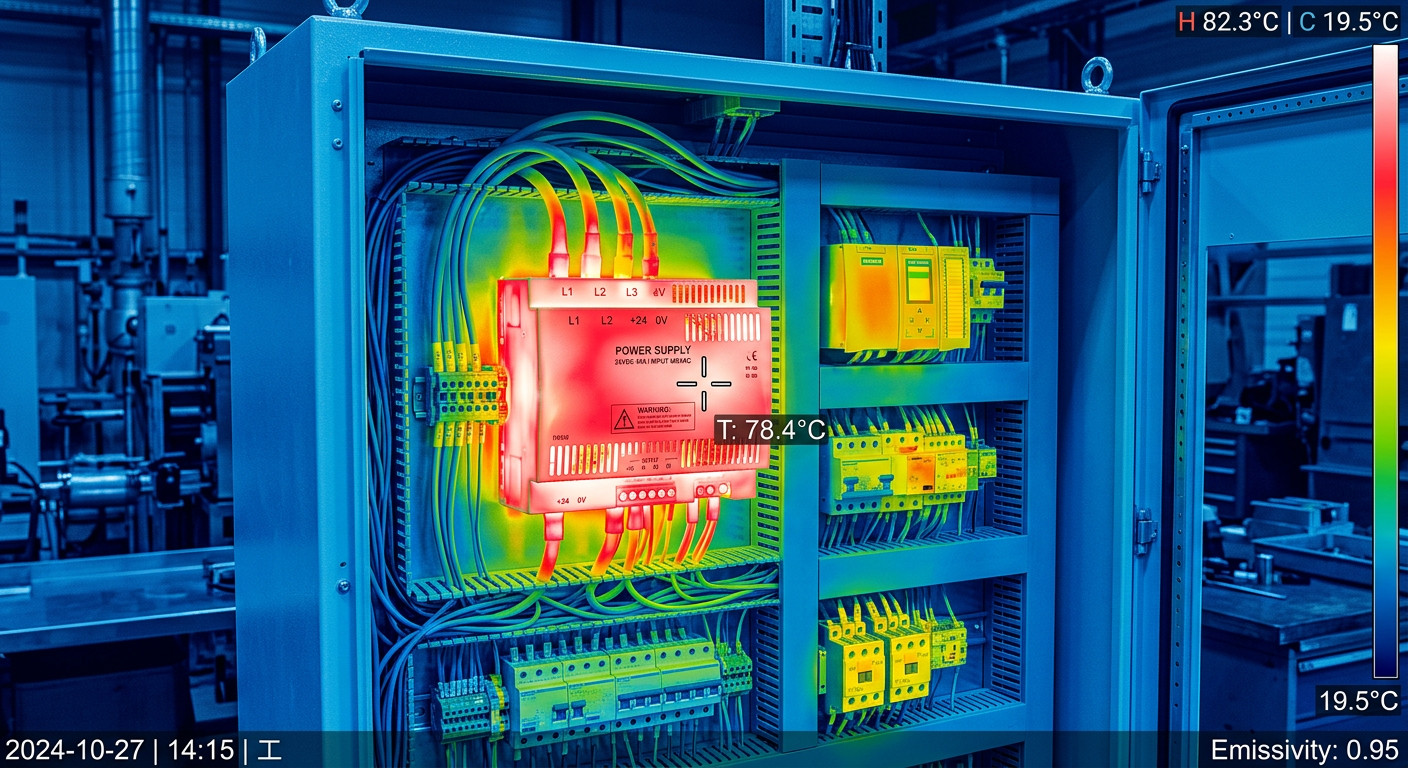
Industrial Power Supply Thermal Management
Industrie Netzteil Wärmemanagement
For procurement teams and electrical engineers, partnering with a lab that understands the nuances of medical collateral standards is critical. We don’t just run the tests; we help you define the “Essential Performance” of your device and tailor the test plan accordingly. Learn more about our approach in our guide on EMC lab and electrical safety testing for medical devices.
2. The Role of an Electromagnetic Compatibility Test in FDA & CE Approval
Whether you are submitting a 510(k) to the FDA or compiling a Technical File for CE marking under the Medical Device Regulation (MDR), a formal electromagnetic compatibility test report from an accredited laboratory is mandatory. Regulatory bodies scrutinize these reports to ensure that your device will neither emit intolerable electromagnetic interference nor succumb to it.
Our laboratory ensures that your documentation is flawless. We provide comprehensive test reports that align perfectly with the European EMC Directive and FDA consensus standards. By combining EMC testing with our electrical safety evaluations, we offer a streamlined path to market. Discover how we integrate these disciplines in our article on electrical safety testing and EMC compliance.
3. Automotive Electromagnetic Compatibility Testing & EV Infrastructure
Beyond medical devices, the rapid electrification of the automotive sector has created a massive demand for specialized testing. Modern electric vehicles (EVs) and their charging infrastructures operate at high voltages and high switching frequencies, creating harsh electromagnetic environments.
TPS Elektronik operates a state-of-the-art automotive EMC test facility. We serve as a premier CISPR 25 radiated emissions lab, evaluating electronic sub-assemblies (ESAs) for both OEMs and aftermarket suppliers. Our capabilities include rigorous automotive electromagnetic compatibility testing for transient emissions and immunity along supply lines (ISO 7637 and ISO 16750 series).
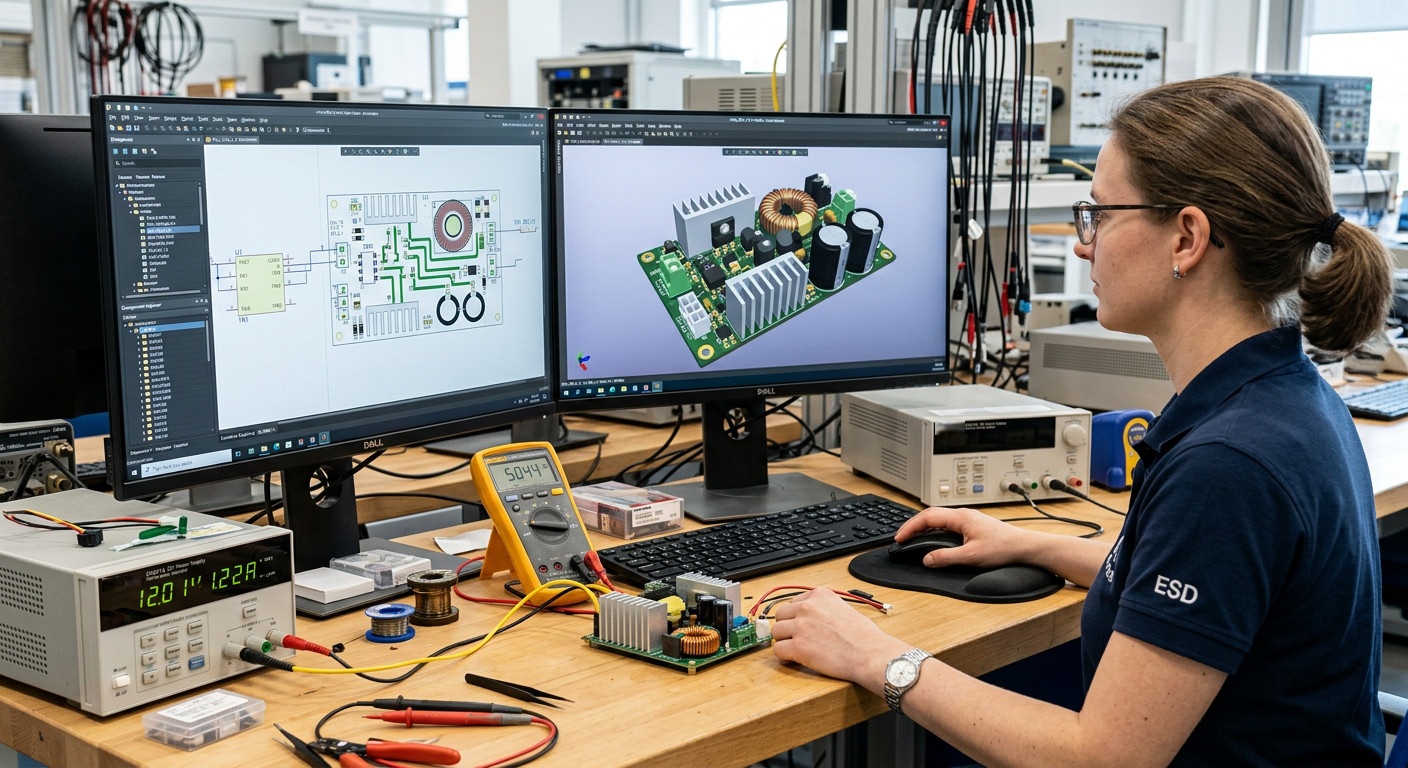
Furthermore, as the infrastructure for e-mobility expands, EV charging EMC testing has become a critical service. We test onboard chargers (OBCs) and external charging stations to ensure they do not disrupt vehicle communications or the local power grid. Read about our success in this sector in our electromagnetic compatibility testing customer case studies.
4. Industrial EMC Testing Lab & Product Development Screening
For panel builders and system integrators developing heavy industrial machinery, waiting until the final prototype to perform an electromagnetic compatibility test is a costly gamble. Industrial environments are notoriously noisy, requiring robust immunity to electrical fast transients (EFT) and heavy surges.
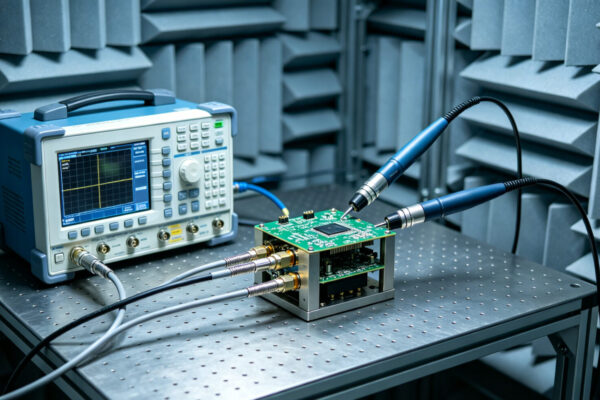
Our industrial EMC testing lab offers proactive product development EMC screening. Using near-field probes and spectrum analyzers, our engineers work alongside your R&D team to identify emission hotspots on the PCB level before the enclosure is even finalized. This pre-compliance approach allows for inexpensive layout changes or the strategic placement of ferrites and shielding, rather than expensive post-production retrofits.
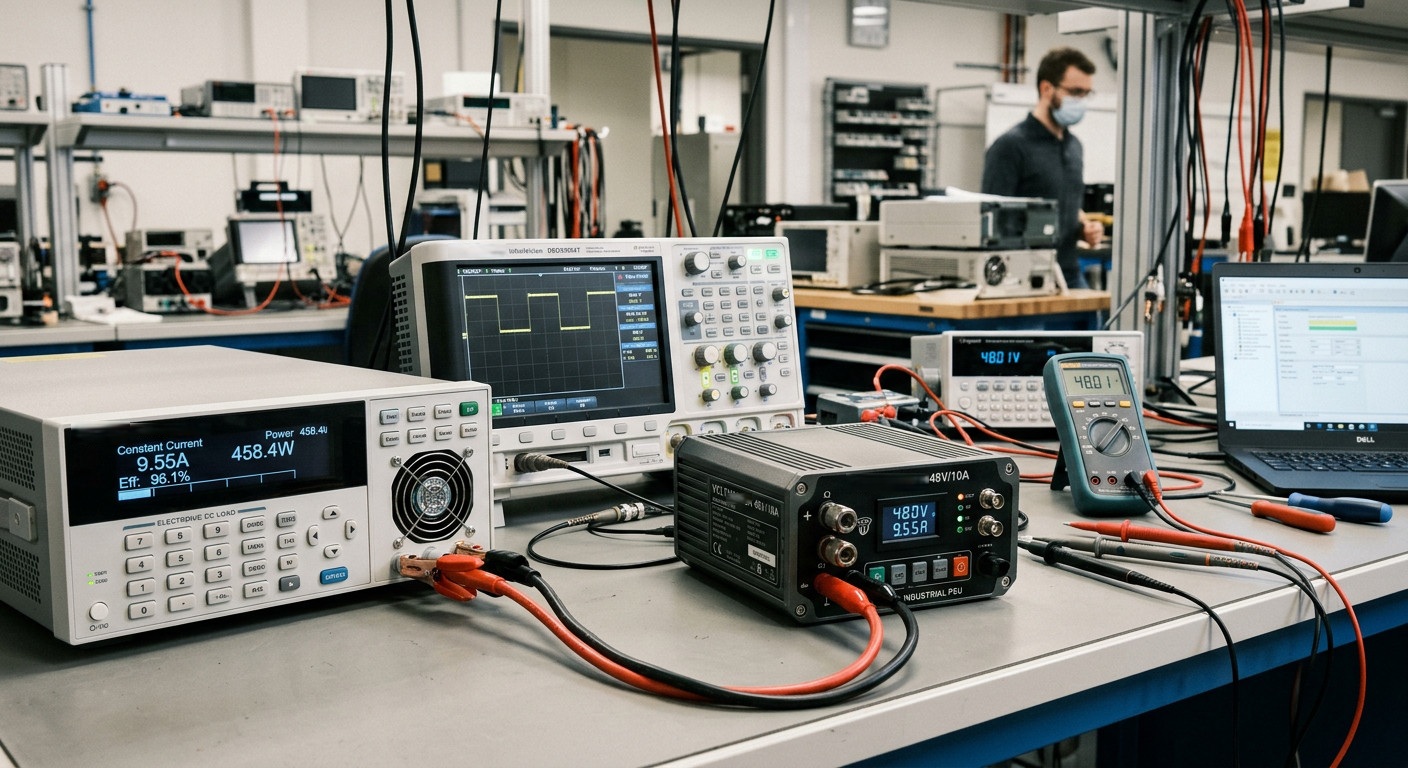
We guide you through the entire process, from initial design reviews to final certification. For a deeper understanding of our methodology, explore our comprehensive guide on how to test electromagnetic compatibility.
5. FAQ
Why is IEC 60601-1-2 testing mandatory for medical devices?
IEC 60601-1-2 is the internationally recognized collateral standard for medical electrical equipment. An accredited electromagnetic compatibility test to this standard is required by the FDA and European Notified Bodies to prove the device is safe and will not fail due to electromagnetic disturbances in healthcare environments.
What is product development EMC screening?
Product development EMC screening (or pre-compliance testing) involves evaluating a product’s electromagnetic behavior early in the design phase. It helps engineers identify and fix issues like radiated emissions at the PCB level, saving time and money compared to failing a formal certification test later.
Does your automotive EMC test facility handle EV charging stations?
Yes. Our automotive EMC test facility is fully equipped for EV charging EMC testing. We evaluate both the vehicle-side components (like OBCs) and the infrastructure-side charging stations to ensure compliance with CISPR and ISO standards.
How does EMC testing relate to electrical safety?
EMC and electrical safety are deeply intertwined. For example, adding a filter capacitor to solve an EMC emissions issue might increase leakage current, causing the device to fail electrical safety tests. TPS evaluates both simultaneously to ensure holistic compliance. See our customer case on electrical safety testing for medical devices for more details.