

In 1771, the Italian physician Luigi Galvani touched a brass hook to a dissected frog leg hanging from an iron railing. The leg twitched. Galvani believed he had discovered “animal electricity” – a vital fluid inherent to life itself. He was wrong about the fluid, but right about something deeper: living tissue speaks in voltage. Nearly a century later, Émile Du-Bois Reymond built the first device to measure that faint electrical whisper. And in 1903, Willem Einthoven gave us the string galvanometer – the first practical oscillograph for human hearts. The medical establishment dismissed it as a German curiosity. Today, no ambulance is without an ECG.
What is true for a heart is also true for a fuel pump. What is true for a neuron is also true for a crankshaft sensor. Every electrical system – biological or mechanical – leaves a trace. The problem has never been absence of information, but absence of instruments that see. For most of automotive history, technicians worked like medieval physicians: they listened to symptoms, tapped on things, and prescribed replacement parts. Sometimes it worked. Often it didn’t. And when the patient – a 2018 sedan with 80,000 kilometers – complained only of an “occasional hesitation,” the tools of the trade fell silent. A scan tool showed no codes. A multimeter showed 12.6 volts. The car was lying, and the mechanic had no way to call its bluff.
Take a breath. We will get to the modern solution – the Automotive Diagnostic Oscilloscope, the Portable Tablet Oscilloscope, the Deep Memory Oscilloscope that fits in a tool bag. But first, understand why this matters beyond specifications. Because the story of the oscilloscope is the story of a fundamental human urge: to see what our eyes cannot.
The Tyranny of the Average
A multimeter is an honest liar. It samples a signal hundreds of times per second, averages those samples, and displays a number. If you measure a healthy alternator, it shows 14.3 volts. If you measure a dying fuel injector that occasionally sticks open, it still shows 12.4 volts. The injector’s misbehavior might last only three milliseconds – a blink in the multimeter’s slow averaging process. The number looks normal. The car stalls at a red light. The mechanic replaces the spark plugs, then the coils, then the fuel filter. The customer pays. The problem returns.
This is not a failure of skill. It is a failure of instrumentation. A scan tool, for all its complexity, still only reports what the engine computer decides to broadcast. And the engine computer is not a truth-teller; it is a politician. It smooths, filters, and ignores signals that fall outside its expected patterns. A sensor can be sick – drifting, noisy, intermittently lazy – and the ECU will say “all good” because it has no baseline for comparison. The only witness to the crime is the voltage itself, changing a million times per second, never seen.
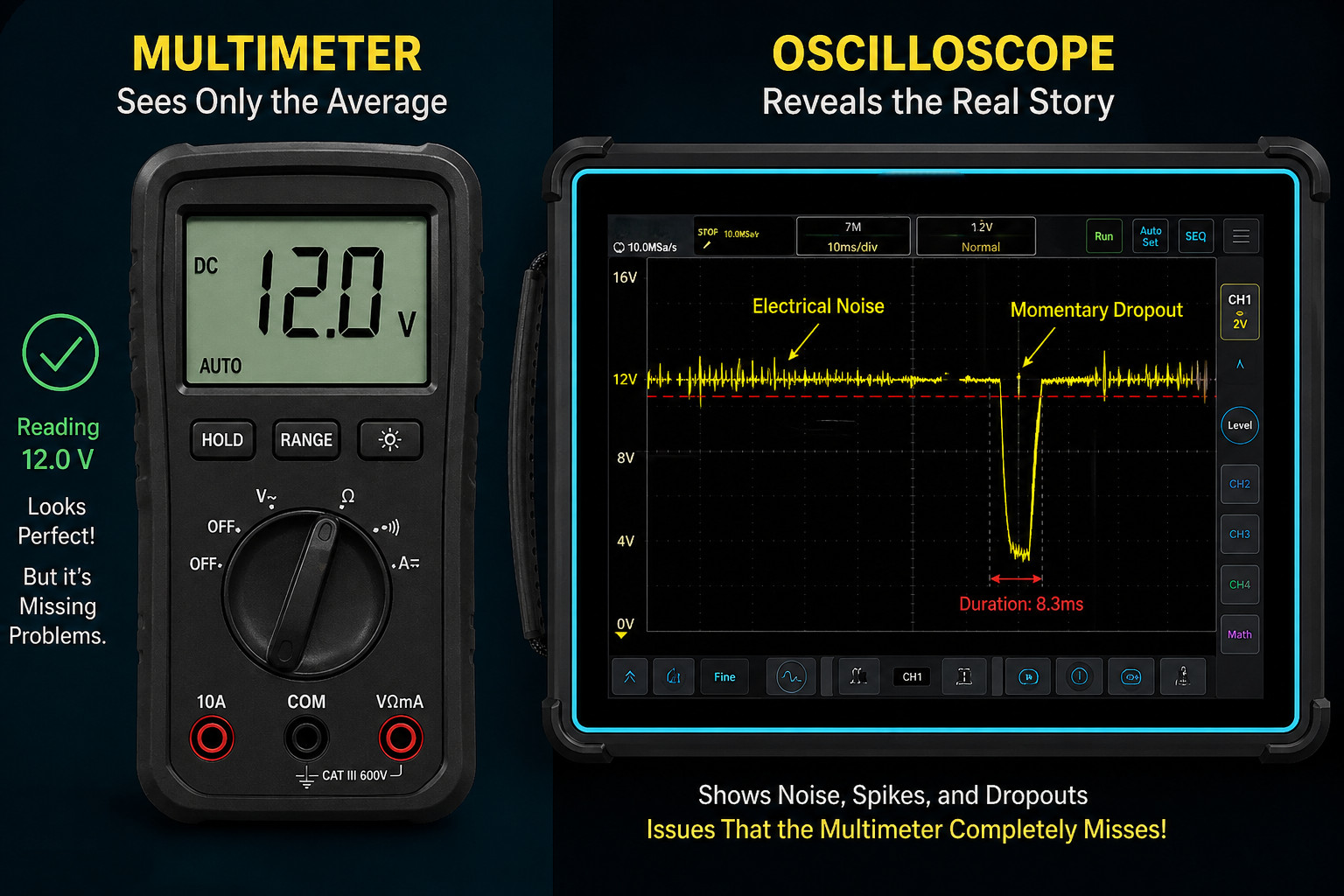
Enter the oscilloscope. The word itself is a hybrid: oscillare (Latin, “to swing”) and skopein (Greek, “to look”). An oscilloscope does not judge, average, or interpret. It simply draws the voltage as it travels through time. Every glitch, every droop, every jagged edge is preserved. To a technician who knows how to read, a waveform is a confession. The question “oscilloscope what is it good for?” receives a simple answer: everything that changes faster than a human can perceive. And that is almost everything in a modern car.
In Vino Veritas, In Forma Veritas
You should not be fighting menus, adjusting timebases, or wondering why the trigger is unstable. You should be watching the waveform and saying “ah, there – the camshaft signal is drifting at high RPM.” The instrument should be a pane of glass, not a puzzle. And for decades, oscilloscopes were puzzles. They had fifty knobs, cryptic menus, and required an electrical engineering degree to interpret. They lived on lab benches, not in service bays. That era is ending.
What changed? Two things. First, the Android Oscilloscope arrived – a device that runs a familiar operating system, responds to pinch-to-zoom, and connects to Wi-Fi for updates and remote viewing. Second, manufacturers like Micsig started building Automotive Scope models with Serial Bus Trigger and Serial Bus Decoding built in. No external adapter needed for CAN, LIN, or FlexRay. You select “CAN High” from a list, touch the screen, and the bus messages appear alongside the waveform. This is not innovation for its own sake. It is innovation born from a simple recognition: mechanics do not want to be oscilloscope experts. They want to fix cars.
The Deep Memory Paradox
Imagine you are looking for a single misspelled word in a 500-page novel. You are allowed to see only one page at a time, and you cannot turn back. That is a shallow-memory oscilloscope. You might catch the error, but probably not. Now imagine you can hold the entire book in your hands, flip back and forth, and zoom in on any paragraph. That is a Deep Memory Oscilloscope. The ATO series offers up to 220 million points of memory depth. Let me translate that from marketing language to reality: you can record several seconds of high-resolution waveform – even minutes of a slow signal – and then scroll through time to find the exact moment a sensor glitched. The fault that happens once every thirty seconds, only when the engine is warm? Capture it once. Scroll later. Find it. Fix it.
There is a reason this matters for Field Work Oscilloscope applications. In a workshop, you have the luxury of connecting probes and running tests repeatedly. On a roadside, or in a customer’s driveway, you have one chance. The deep memory acts as a time machine. It gives you the ability to diagnose after the event has passed. What are oscillascopes if not time machines for electrons? They store history. They allow playback. And in automotive work, history is the only witness that never lies.
Consider an intermittent communication fault on a CAN bus. The scan tool says “lost communication with transmission module.” But the transmission module powers on, the wiring looks clean, and the fault refuses to reappear in the shop. You can spend hours wiggling harnesses, or you can connect an oscilloscope with Serial Bus Decoding, set it to trigger on an error frame, and drive. The scope sits quietly, watching millions of bits. When the error occurs – a single corrupted bit, a voltage spike from a failing alternator – the scope stops and shows you exactly what happened, down to the microsecond. That is not diagnostics. That is forensics.
A Tablet, Not an Ordeal
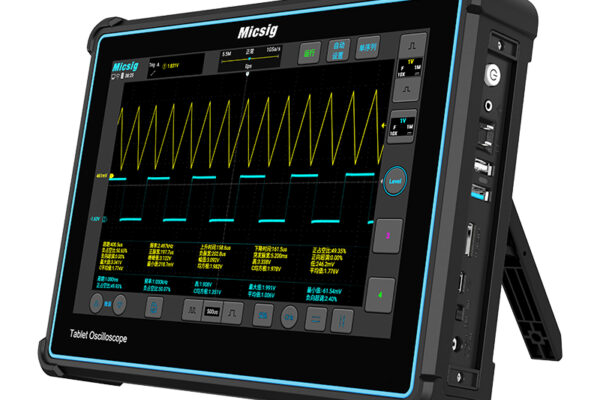
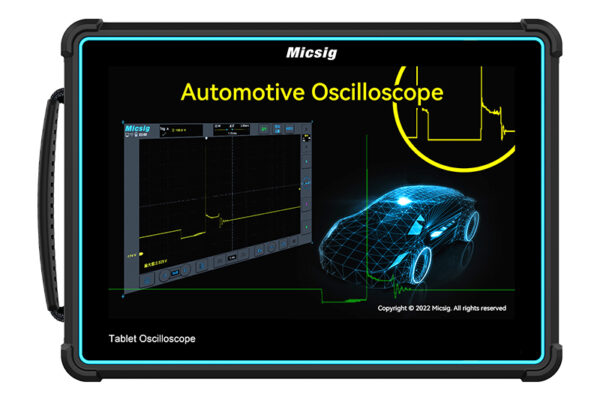
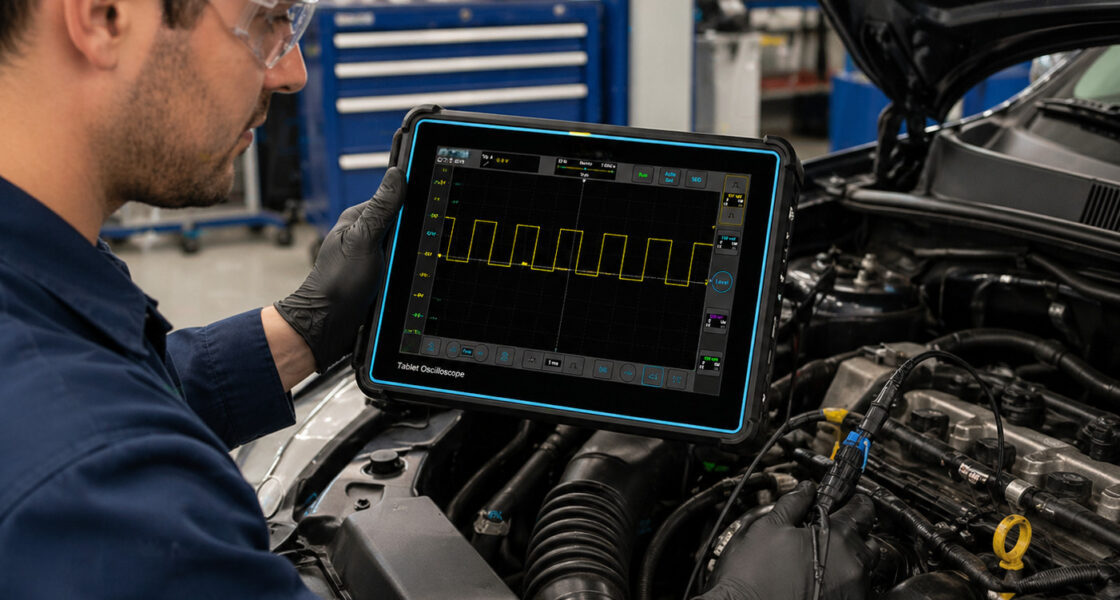
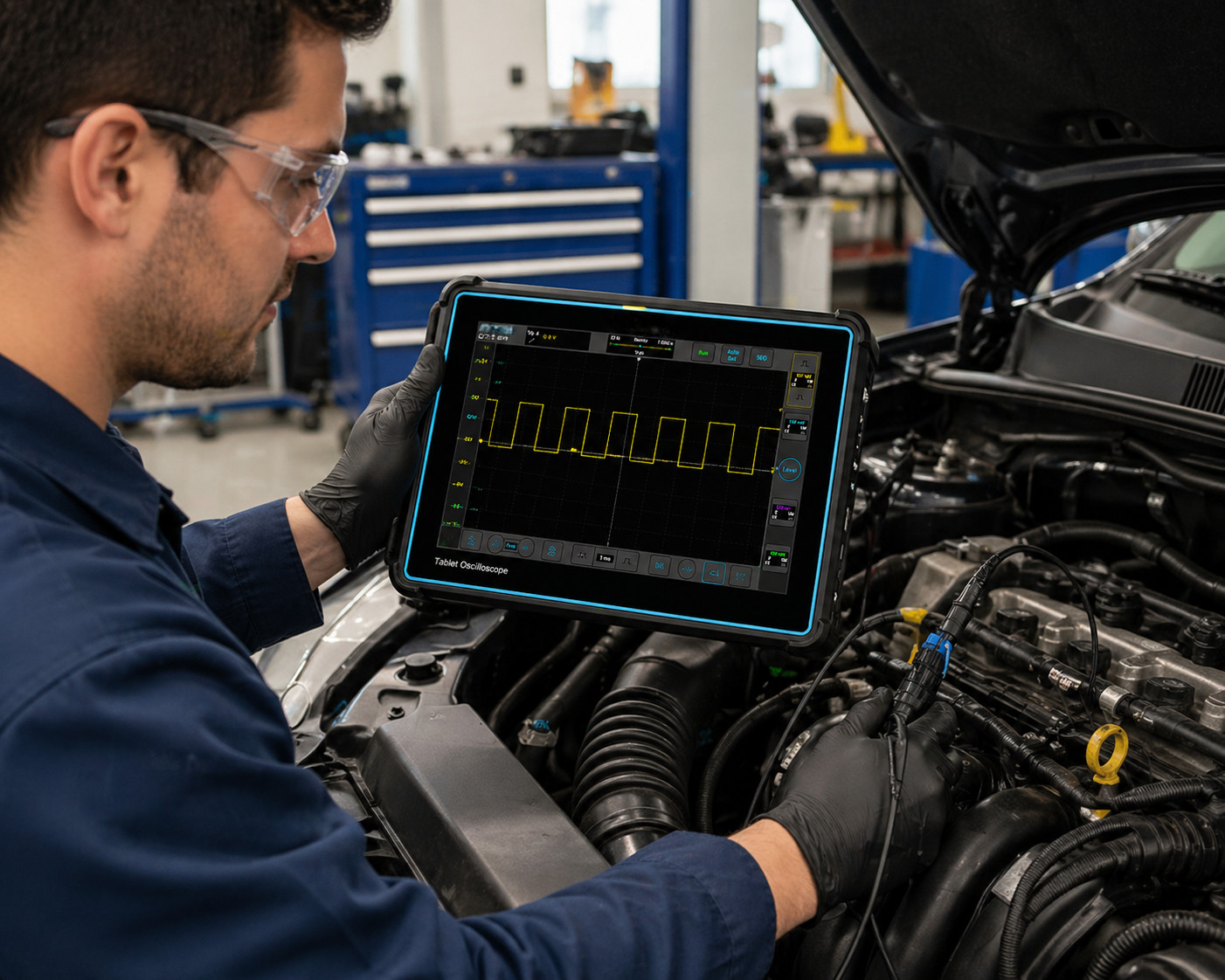
The Micsig ATO series is a Portable Tablet Oscilloscope. It weighs 1.9 kilograms – about as much as a 14-inch laptop. The screen is 10.1 inches, bright enough to read in direct sunlight. The battery lasts a full shift. It runs Android, so you can install other diagnostic apps, store screenshots, or share waveforms via email. It has HDMI output, so a trainer can project the screen to a classroom. And it comes with Automotive Diagnostic Oscilloscope presets: select “Injector (Petrol),” and the vertical scale, timebase, and trigger are set automatically. A novice can see a clean injector voltage spike within sixty seconds of opening the case.
But the real elegance is not the hardware. It is the oscilloscope is used for something that no other tool can do: it shows you the relationship between events. Connect channel 1 to the crankshaft sensor and channel 2 to the camshaft sensor. The waveform overlay immediately reveals if the timing chain has stretched. Connect a current clamp probe for oscilloscope to the fuel pump and a voltage probe to the pump relay – you can see the exact moment the relay contacts bounce. Connect a high voltage probe to a secondary ignition lead and watch the spark line. Too short? Weak coil. Too long? Lean mixture. The waveform is a conversation. Once you learn the grammar, the car tells you everything.
From Frog Legs to FlexRay
Galvani’s frog leg twitched because a voltage gradient existed between the brass and the iron. He did not know it, but he had built the world’s simplest electroscope. Two hundred years later, we are still chasing the same principle: voltage is information. The oscilloscope meaning has expanded from laboratory curiosity to essential diagnostic partner. No one questions the ECG in medicine. The flight data recorder in aviation is equally beyond dispute. And in automotive repair, the oscilloscope is finally shedding its reputation as a tool for “experts only.” The ATO series, with its touch interface, its deep memory, its bus decoding, and its portable battery-powered body, represents that democratization.
Knowing Ohm’s Law by heart is not required. Neither is calculating rise times. What you need is pattern recognition: this waveform looks like the reference; that one does not. And when it does not, you have located the problem. The Vehicle Oscilloscope is not a replacement for experience. It is a multiplier of it. A young technician with an ATO and a library of known-good waveforms can outperform a veteran who relies on symptoms and swap-and-guess. That is not a threat; it is a relief. It means the profession can finally move from art to evidence.
So, what is the oscilloscope is used for in 2026? Consider everything that happens between the time you turn the key and the time the engine idles. The 800 microseconds when a direct injector fires. The 50 milliseconds when a variable valve timing solenoid adjusts. Even the intermittent dropout that only occurs at 3,000 RPM on a humid day – all of this is visible on an oscilloscope. The oscilloscope sees these moments. It freezes them. And it hands them to you as undeniable proof.
The Only Question That Remains
We do not ask whether a hospital should own an ECG. We ask how many. The same question is arriving at workshop doors: how many Automotive Diagnostic Oscilloscope units should you have? One for each bay? One for the diag specialist? The answer depends on your work volume, but the premise is fixed: you cannot afford not to have one. The complexity of vehicle electronics doubles every few years. The old methods – test light, multimeter, scan tool – are necessary but insufficient. They give you the average. The truth lives in the waveform.
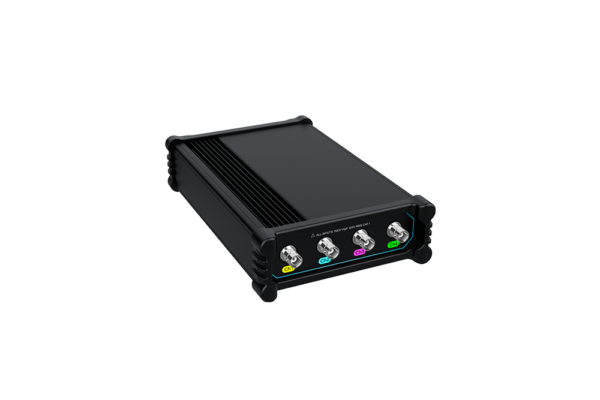
The ATO series, whether the 2-channel ATO2002 or the 300MHz 4-channel ATO3004, offers a Deep Memory Oscilloscope experience in a Portable Tablet Oscilloscope package. Serial Bus Trigger and decoding for CAN, CAN FD, LIN, FlexRay, and K‑line come built in. The ATO also works with oscilloscope current probe accessories, high voltage differential probes, and standard test probe sets. And as an Android Oscilloscope, it updates over Wi‑Fi and exports directly to PDF. But none of those features matter as much as this: it lets you stop guessing.
The car has been trying to tell you all along. Now you have a machine that finally listens.