

For system integrators, panel builders, and engineering-driven procurement teams, specifying an ESD workstation for an SMT placement line is not the same as specifying a repair bench.
An SMT line workstation touched by multiple operators across three shifts, loaded with boards, magazines, stencils, and tools, cleaned with solvents. And often positioned next to a conveyor that carries charged boards and carriers. The grounding path must survive all of that—not just the first article inspection.
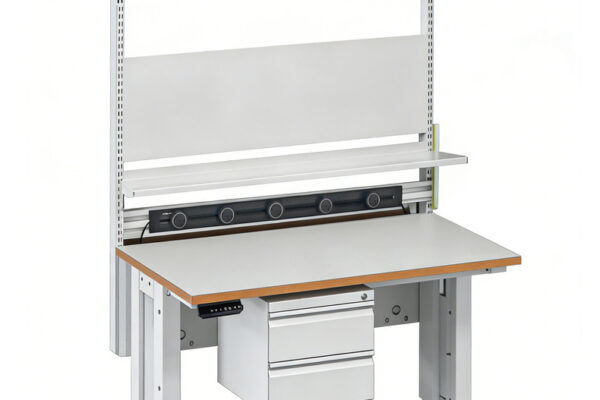
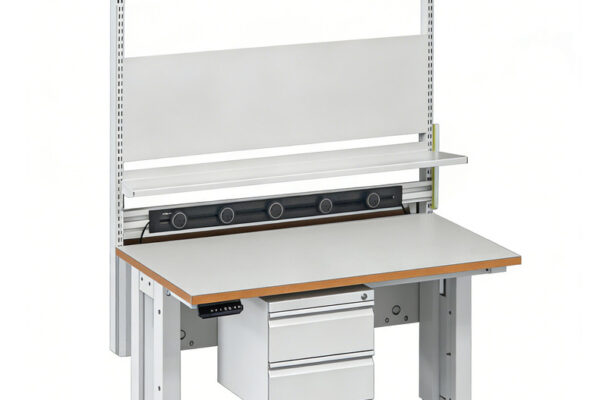
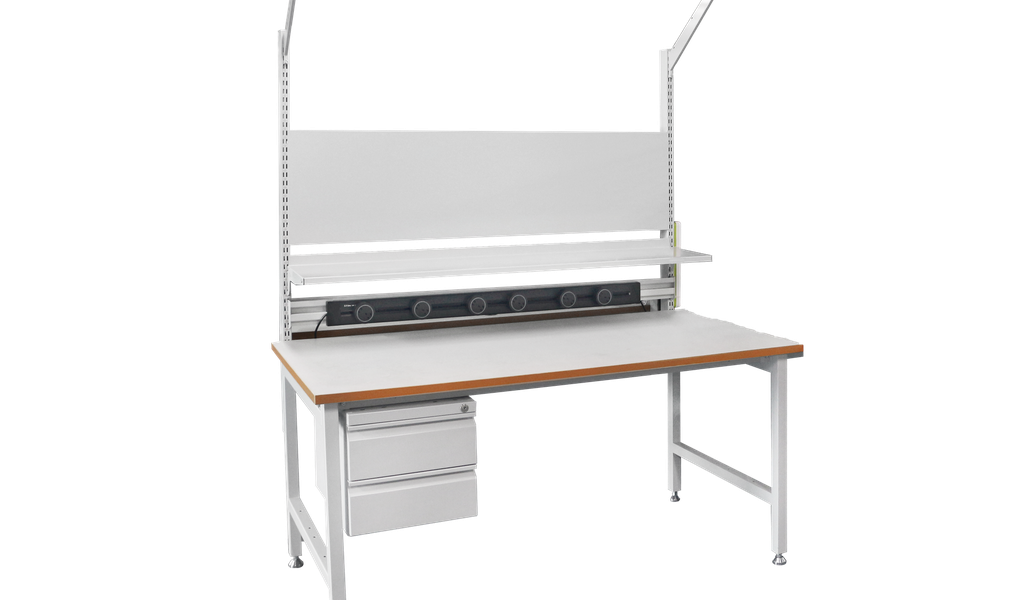
The TPS Fixed-1575 electrostatic discharge ESD Workstation is a fixed-structure, industrial-grade ESD workbench with a 25 mm HPL ESD laminated top, 1550 × 750 × 760 mm dimensions, 500 kg uniform static load capacity. And compliance with IEC 61340-5-1:2016 across 10–60% relative humidity. It provides a groundable structure, wrist strap grounding point compatibility, and an accessory system that can configured for SMT line use. This article explains how to build the station so that grounding continuity holds through continuous production—and where the optional electric frame and monitoring choices have to be defined in the RFQ.
View the TPS electrostatic discharge ESD workstation range →
1. Why an SMT line ESD workstation is different from a repair bench
A repair bench used by one operator at a time, with a small number of boards, and often located in a separate room. An SMT line workstation is a shared asset in a protected area, and its ESD performance exposed to a wider range of mechanical and human stress.
1.1 The loads and contacts a line station sees
On a placement line, the workstation typically holds board magazines, stencils, feeders, splice tools, inspection aids, and sometimes a microscope or a conformal coating dispenser. The load is not uniform, and it changes with the product mix. The 500 kg uniform static load rating of the Fixed-1575 is well above these loads, but the rating assumes a uniform distribution—point loads from a magazine stack or a heavy fixture should be reviewed in the layout.
The contacts are also different. Operators lean on the front edge, slide magazines across the surface, and place hot tools on the bench. The worktop must resist abrasion and cleaning chemicals without losing its static-dissipative properties, and the edges must not chip in a way that exposes a non-dissipative substrate.
1.2 Where grounding continuity actually fails
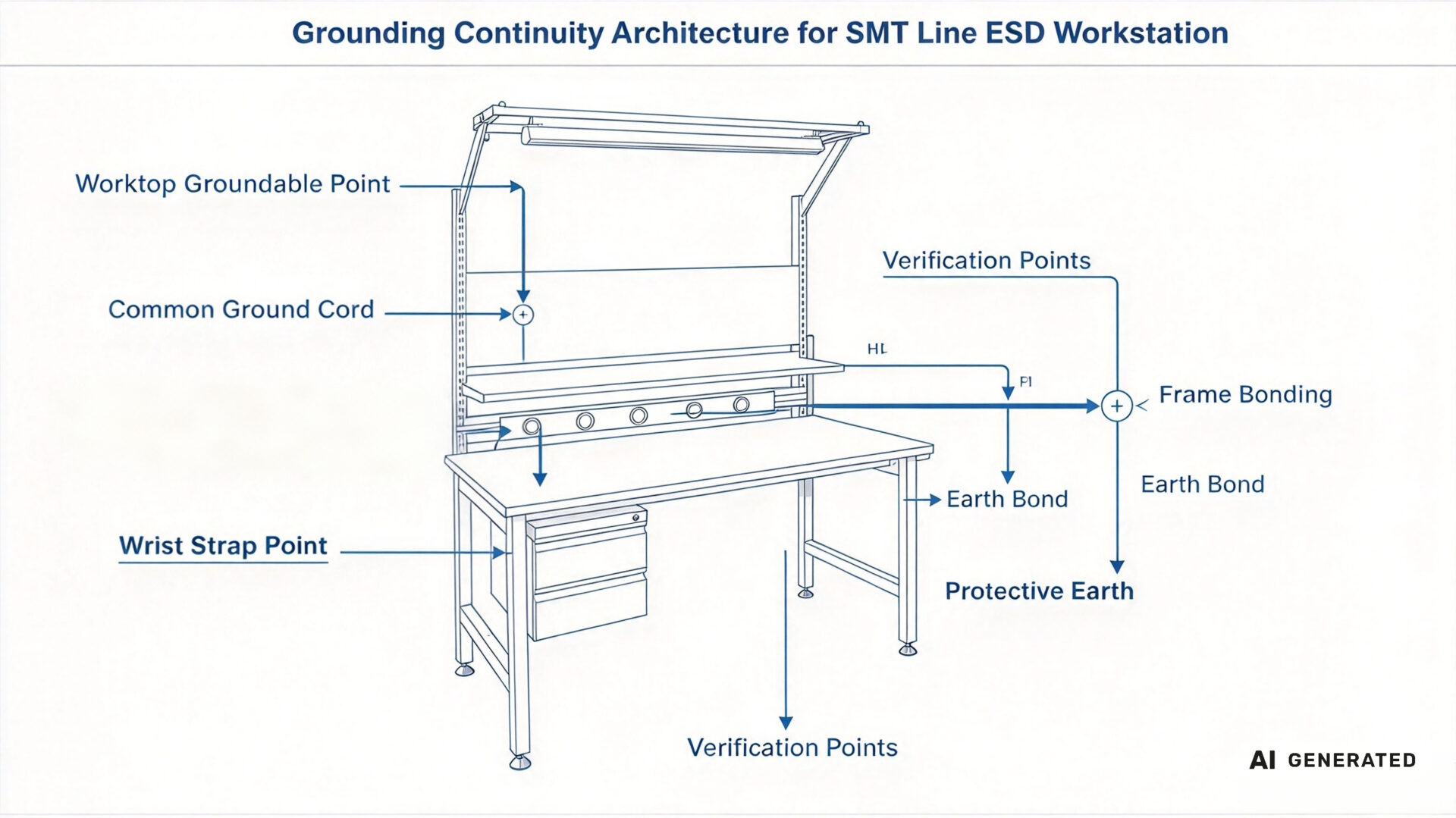
Grounding continuity rarely fails at the earth bond on day one. It fails later, at one of five points: the wrist strap cord or its resistor, the worktop groundable point where the screw loosens, the common ground cord connector, the bond between a movable part and the frame, and the earth connection at the panel or building earth bar. A line station with three shifts and multiple operators exercises all five points continuously.
This is why the design of the station must make each of those points inspectable and testable without dismantling the bench, and why the ESD control plan must define the verification interval for each one.
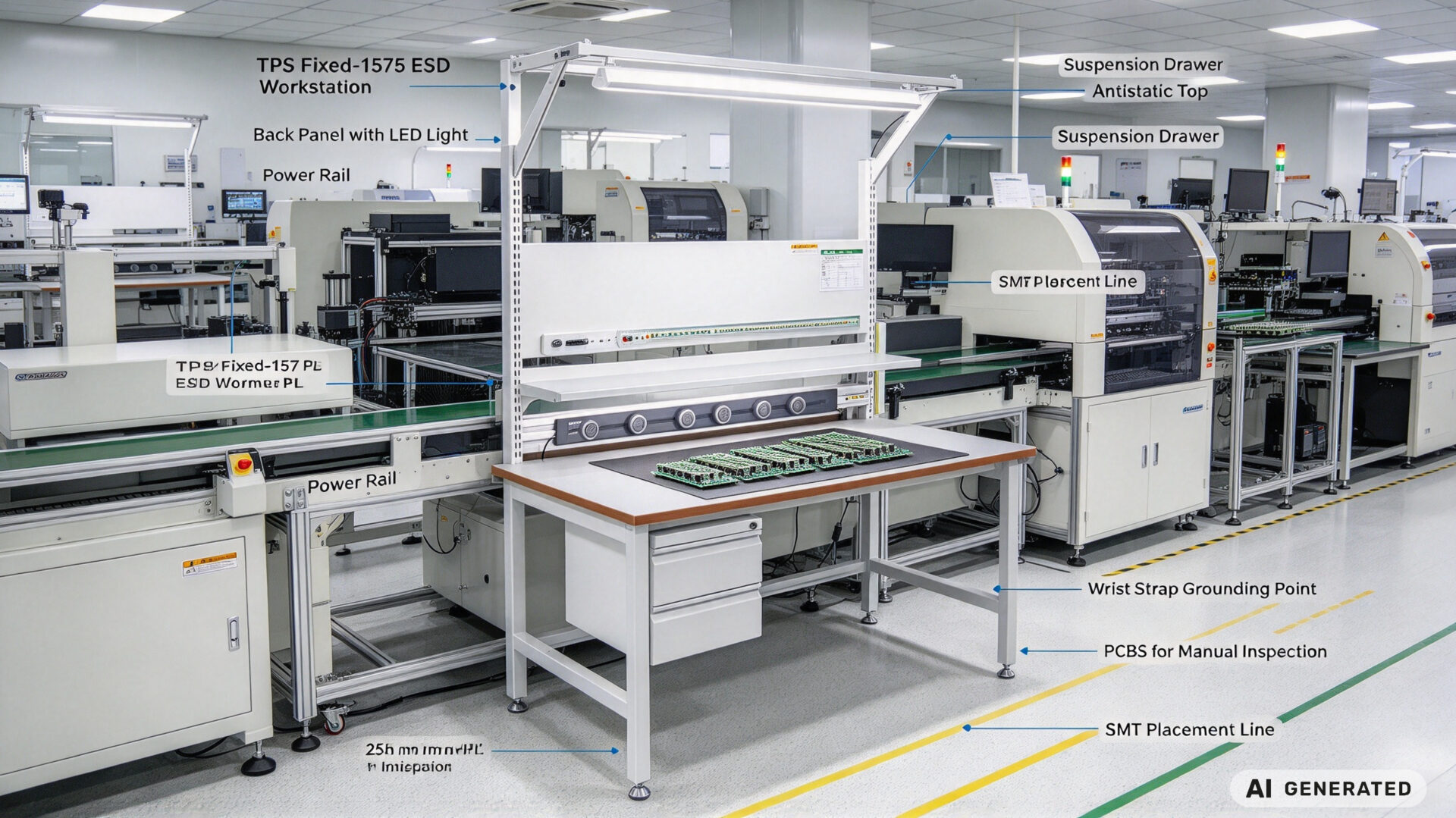
2. What the Fixed-1575 provides as the line platform
The Fixed-1575 is a fixed-type bench designed for electronics assembly, repair, quality control, and rework. Its value on a placement line is the combination of a stable frame, a compliant worktop, and a modular accessory system that can configured for the line’s specific inspection and handling tasks.
2.1 Dimensions, worktop, and load capacity
The bench measures 1550 mm in length, 750 mm in depth, and 760 mm in fixed height. The 25 mm HPL ESD laminated top in RAL 7035 provides a durable, cleanable work surface. The frame supports a uniform static load of up to 500 kg, which accommodates magazines, fixtures, and test equipment without deflection.
The 760 mm height is a standard industrial work height. On an SMT line, operators may seated or standing depending on the task. The Fixed-1575 is not height-adjustable as standard. TPS offers an optional electric frame for height adjustment, and the travel range, load rating, and bonding method for that frame must confirmed in the RFQ. If the line requires frequent height changes between seated and standing tasks, the electric frame should specified from the start rather than added later.
2.2 IEC 61340-5-1 compliance and humidity range
The bench specified to meet IEC 61340-5-1:2016, with tested point-to-point resistance and surface resistivity performance stable across 10–60% relative humidity. The humidity range is part of the specification because dissipative materials change resistance with moisture. A line located in a dry cleanroom or a humid loading area must be checked against that range. If the facility operates outside 10–60% RH, the ESD control plan needs additional measures and the bench performance should re-verified.
The bench also provides a groundable structure with wrist strap grounding point compatibility and an ESD-flooring-compatible design. Which are the two interfaces the line’s ESD control plan depends on.
3. Designing the grounding continuity architecture
The bench is one element of the grounding architecture. The continuity that matters in production is the continuity of the whole path, from the worktop surface and the operator’s wrist to the protective earth.
3.1 The grounding path from worktop to protective earth
The worktop groundable point connects to a common ground cord, and the common ground cord connects to a dedicated earth bond at the panel or building earth bar. The wrist strap connects to the same common ground point. The frame bonded to the same path, so that a charged object touching the frame—not just the worktop—is also drained.
Each connection should have a visible, labeled test point. The worktop-to-earth and wrist-strap-to-earth measurements then performed at those points, without removing panels or cables. The measured values and the limits defined by the facility’s ESD control plan, consistent with IEC 61340-5-1.
3.2 Bonding movable parts: drawers, shelves, and the optional electric frame
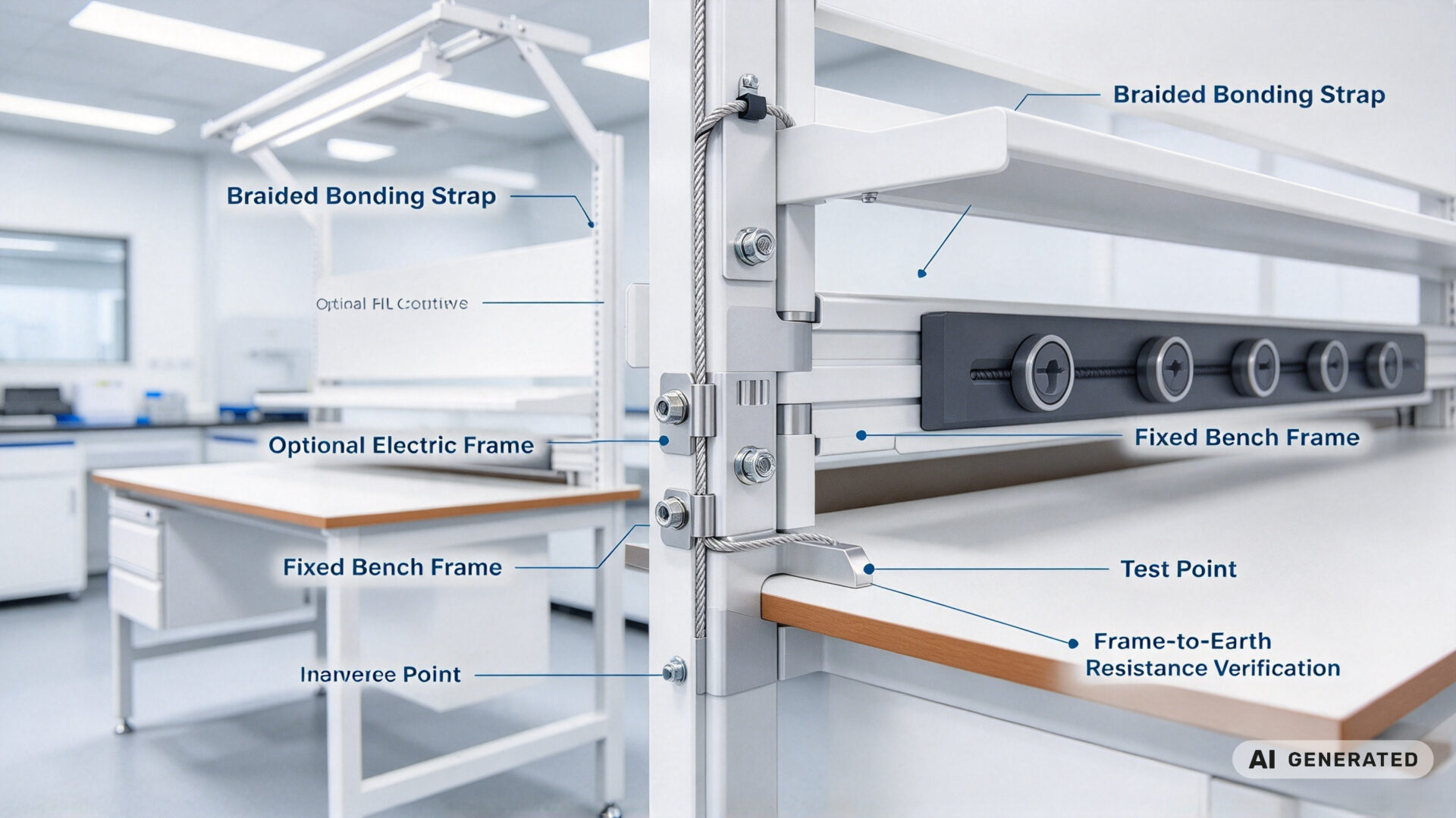
Movable parts are the weak link in a line station. A suspension drawer that slides on plastic runners, a shelf that repositioned, or an electric frame that moves up and down can lose its bond to the frame if the bonding strap is omitted, worn, or disconnected during maintenance.
For the Fixed-1575, the accessory system is designed to be compatible with back panels, antistatic steel shelves, suspension drawers, LED lighting, and power rails. Each of these should be bonded to the frame with a defined strap or contact, and the bond should be included in the verification plan. For the optional electric frame, the bonding method must accommodate the full travel of the frame without straining the strap; this is a design detail that has to be confirmed with TPS in the RFQ, not assumed.
3.3 Verification versus continuous monitoring
IEC 61340-5-1 expects a verification regime, not necessarily continuous monitoring. A line station can verified daily with a wrist strap tester and a worktop resistance meter, and the results recorded. Continuous monitoring—a device that alarms when the wrist strap or worktop connection is lost—is an additional layer that some facilities adopt for high-value lines. If continuous monitoring required, the monitoring points, the alarm logic, and the interface to the line control system must be defined in the RFQ; it is not part of the standard bench configuration.
4. Maintaining continuity through continuous production
A line station runs for months without being rebuilt. The continuity plan has to account for what changes during that time: the operators, the cords, the worktop surface, and the movable parts.
4.1 Shift handover and daily verification
The most practical control is a daily verification at shift start: wrist strap test for each operator, worktop-to-earth resistance check, and a visual check of the ground cord and the bonding straps on movable parts. The results recorded on a log that the ESD coordinator reviews. This takes a few minutes per station and catches the majority of continuity failures before a board handled.
4.2 Wear, cleaning, and replacement intervals
The worktop surface wears at the front edge where operators lean and slide magazines. Cleaning solvents can leave residue that changes surface resistance. The ESD control plan should define the cleaning agent, the inspection interval for the worktop, and the criteria for replacement. Wrist strap cords and resistors have a finite life and should replaced on a defined interval or when the daily test shows drift, not only when they fail outright.
For a multi-shift line, the practical approach is to assign each station a fixed verification time, so that the check not skipped when the line is under pressure. The record is also the evidence an ESD auditor will ask for.
5. Configuring the station for SMT line use
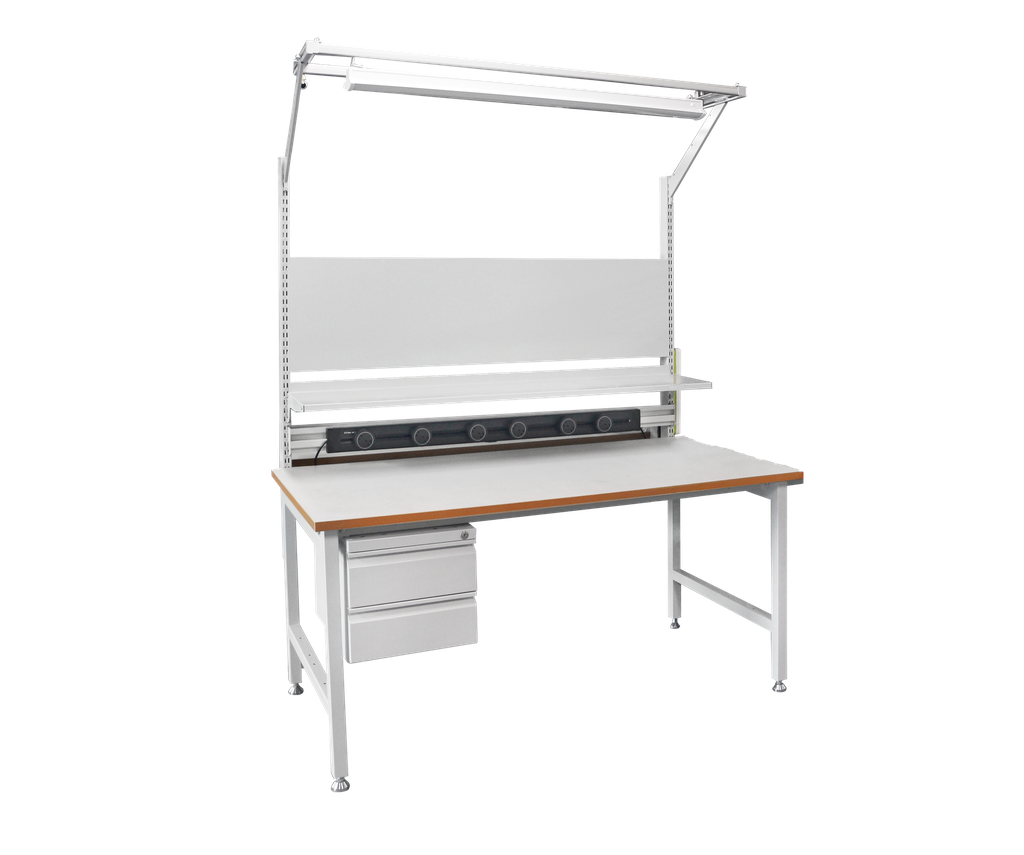
The Fixed-1575 electrostatic discharge esd workstation accessory system allows the bench to configured for the specific tasks beside a placement line. A typical configuration includes:
- Back panel to mount the LED light and to separate the workstation from the conveyor.
- Antistatic steel shelf for magazines, stencils, and inspection aids, bonded to the frame.
- Suspension drawer for tools and small parts, with a bonding strap to the frame.
- LED light bar positioned to illuminate the inspection area without shadow from the operator’s hands.
- Power rail for the microscope, inspection camera, and bench instruments.
- Optional electric frame if the line requires height adjustment between tasks; travel, load, and bonding to confirmed in the RFQ.
The configuration should defined together with the ESD control plan, because each added accessory creates another bonding point that must be verified.
6. Product specifications
| Parameter | TPS Fixed-1575 |
|---|---|
| Type | Fixed ESD workbench |
| Dimensions (L × D × H) | 1550 × 750 × 760 mm |
| Height adjustment | Fixed 760 mm; optional electric frame (travel and load to be confirmed in RFQ) |
| Worktop | 25 mm HPL ESD laminate, RAL 7035 |
| Uniform static load | Up to 500 kg |
| ESD standard | IEC 61340-5-1:2016 |
| Humidity range | 10–60% RH |
| Grounding | Groundable structure, wrist strap grounding point, ESD flooring compatible |
| Accessory system | Back panel, antistatic steel shelves, suspension drawers, LED lighting, power rails, electric frame |
The table separates what is standard from what is optional: the electric frame is an add-on, and its bonding and travel must be specified, not assumed.
7. RFQ checklist
To get a usable quotation and configuration for an SMT line ESD workstation, provide:
- Line position: Where the bench sits relative to the conveyor, and whether boards loaded or inspected at the station
- Operator posture: Seated or standing, and whether height adjustment is required between tasks
- Load profile: Magazines, stencils, fixtures, microscope, and total weight, including point loads
- Grounding architecture: Common ground cord, wrist strap points, earth bond location, and verification points
- Movable parts: Drawers, shelves, electric frame—and the required bonding method for each
- Monitoring: Whether continuous monitoring required, and the alarm interface if so
- Accessory list: Back panel, shelf, drawer, LED light, power rail, electric frame
- Documentation: ESD compliance certificate, grounding verification procedure, and accessory bonding plan
Providing these details prevents the common mismatch: a fixed bench ordered for a line that needs height adjustment, or an electric frame added without a defined bonding method.