

They lose time when released material cannot be approved quickly, variants drift late in the program, or finished devices wait in the wrong warehouse while the customer expects staged deliveries.
This anonymized customer case shows how TPS Elektronik used Additional Services to reduce those RFQ risks with one coordinated workflow: incoming goods inspection report routines, inventory management of raw materials and finished goods, variant management services, and international shipping for electronics.
1. Why this customer case mattered at RFQ stage
To protect confidentiality, the customer name, product family, and exact rollout volumes remain undisclosed. What can be shared is the operational pattern: a multi-variant electronics program serving several end destinations, with procurement, assembly, warehousing, and shipping handled across multiple handoffs.
For the customer, the technical product was not the real bottleneck. The bottleneck was the layer around it: incoming approvals, stock visibility, release readiness, packaging status, and shipment coordination. Procurement needed fewer exceptions. Engineering needed cleaner change control. Logistics needed shipment-ready devices without repeated re-picking. That is exactly where TPS positioned its Additional Services.
This made the topic highly relevant for BoFu buyers. By the time a system integrator or panel builder reaches vendor selection, the question is rarely “Can you build the electronics?” It is more often “Can you stabilize the operational interfaces around the electronics so our project ships on time?” In this case, the answer depended on a documented workflow spanning inspection, warehousing, variant handling, and delivery preparation.

TPS already frames these services as part of a broader supply-chain and fulfillment path, covering purchasing support, warehousing, picking, late configuration, customs support, and worldwide shipping. If you need the wider context, the related TPS pages on supply chain solutions and complete electronic design solutions show how these operational layers connect back to the full project chain.
2. Starting point: where the anonymous customer was losing control
Before TPS intervention, the customer did not have one catastrophic failure. Instead, it had a cluster of manageable problems that repeatedly delayed release decisions:
- No consistently structured incoming goods inspection report package for fast material approval
- Limited visibility into raw-material status versus assembly demand
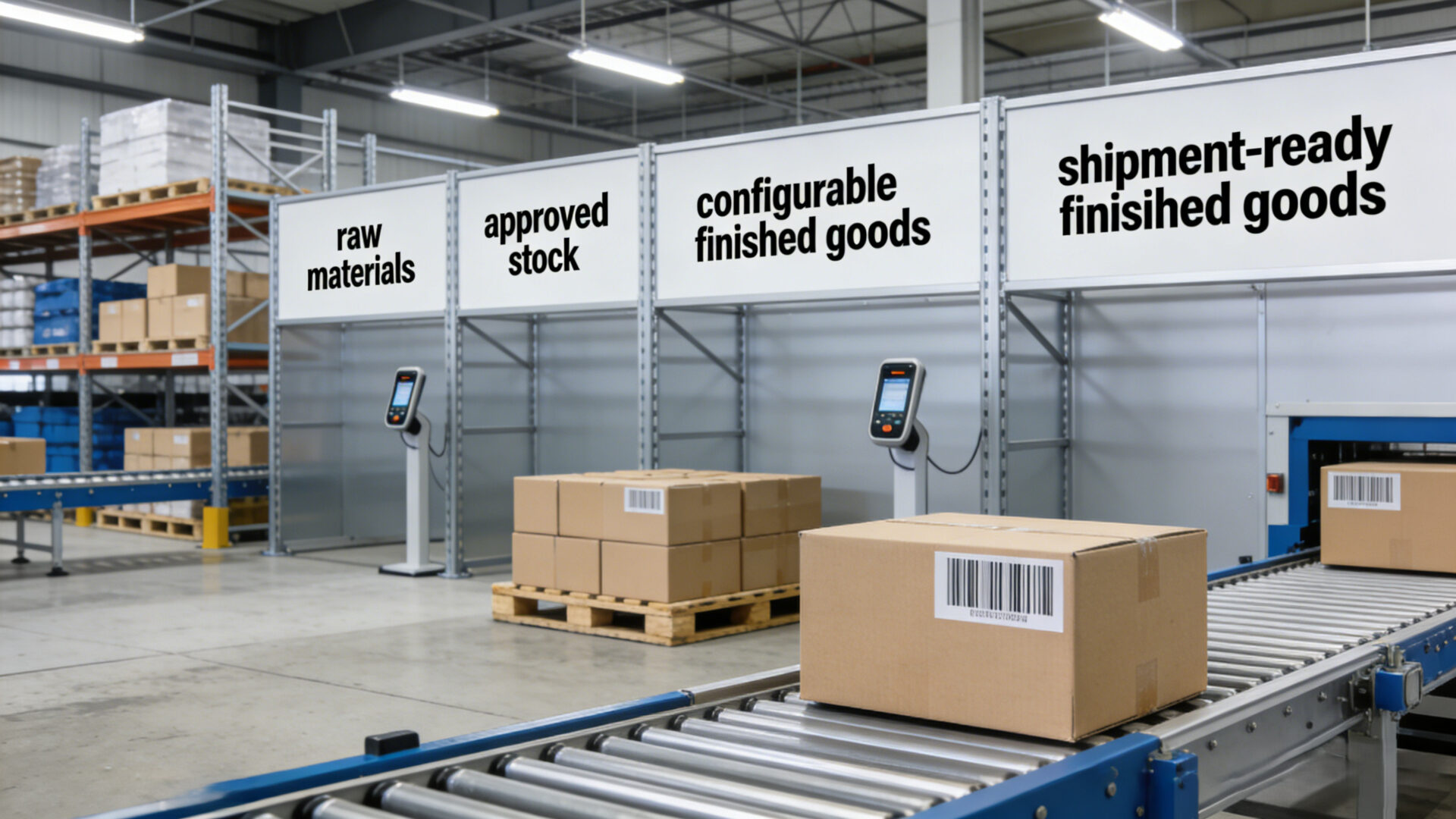
- Finished units stored without a clean distinction between approved, configurable, and shipment-ready stock
- Variant-specific labels, accessories, or firmware handled too late and too manually
- International shipment preparation dependent on scattered email chains rather than a controlled release path
In other words, the customer did not just need “more warehouse space.” It needed better control logic. The commercial problem showed up in RFQs: longer clarification cycles, more risk notes, and more uncertainty around lead time confidence. The operational problem showed up on the floor: re-checking, re-picking, exception handling, and avoidable waiting between departments.
This situation mirrors issues discussed in TPS content on procurement solutions and the case study on improving incoming goods inspection. The lesson is straightforward: when operational documentation is weak, procurement and production both become slower.
3. What TPS built around the core product
3.1 Incoming goods inspection report as a release gate
The first improvement was to treat the incoming goods inspection report not as paperwork after the fact, but as a release gate that supports procurement, warehouse, and quality decisions at the right moment. For this customer, a useful report needed more than a pass/fail note. It needed lot identity, supplier reference, received quantity, packaging condition, inspection status, deviation notes, and a clear disposition path such as accept, quarantine, or return.
Where attribute sampling applied, the logic could align with ISO 2859-1. Where ESD-sensitive items were involved, handling discipline could follow an IEC 61340-5-1 style control program. The point in this customer case was not to advertise standards. The point was to create a reliable, repeatable approval route so material status no longer lived inside private inboxes.
For related background, TPS also covers this operational layer in its article on electronics fulfillment services and in the broader production-efficiency pages on incoming goods inspection and line optimization.
3.2 Inventory management of raw materials and finished goods
The next step was better inventory management of raw materials and finished goods. In practice, this meant separating three different planning realities that often get mixed together:
- What has arrived physically
- What has been approved for use
- What is allocated to a specific build, shipment window, or customer destination
For electronics programs, that distinction matters. Raw materials may exist in stock but still be blocked by inspection. Finished goods may exist physically but still lack a destination label, final accessory kit, or country-specific documentation. TPS content on component stock optimization and inventory management and packaging services reflects this reality well: visibility is useful only when it matches operational status.
3.3 Finished goods inventory management for staged deliveries
In this project, finished goods inventory management was not about building a large finished-goods pile. It was about managing finished goods inventory against release dates, destination labels, variant combinations, and project milestones. Some units needed to wait as configurable stock. Some needed immediate dispatch. Others needed to be buffered for phased installation waves.
That distinction reduced confusion between “built,” “approved,” and “ready to ship.” It also helped procurement and project management communicate more clearly with the end customer. Instead of a vague stock answer, the customer could distinguish between material status, assembly status, and shipment status.
3.4 Variant management services and late configuration
The customer also needed stronger variant management services. This is where many “almost identical” products become expensive. A cable set changes. A firmware revision changes. A country label changes. A packing insert changes. If those differences are controlled too early, inventory fragments. If they are controlled too late, picking errors increase.
TPS addressed this with a late-configuration mindset: hold the common base as long as possible, then apply destination-specific or customer-specific differences close to release. For integrators, that can reduce unnecessary stock duplication and make engineering changes easier to absorb.
It is also the right place to clarify the word mnemonic. Some buyers search broad phrases such as “what is the mnemonic,” “electron configuration mnemonic device,” or “mnemonic device used in electron configuration.” In this operational context, a mnemonic is simply a short internal code or naming logic used to identify variant families, accessory packs, firmware levels, or destination-specific builds. It is not the classroom-style device used for electron configuration; it is a practical control tool for variant clarity.
3.5 International shipping for electronics
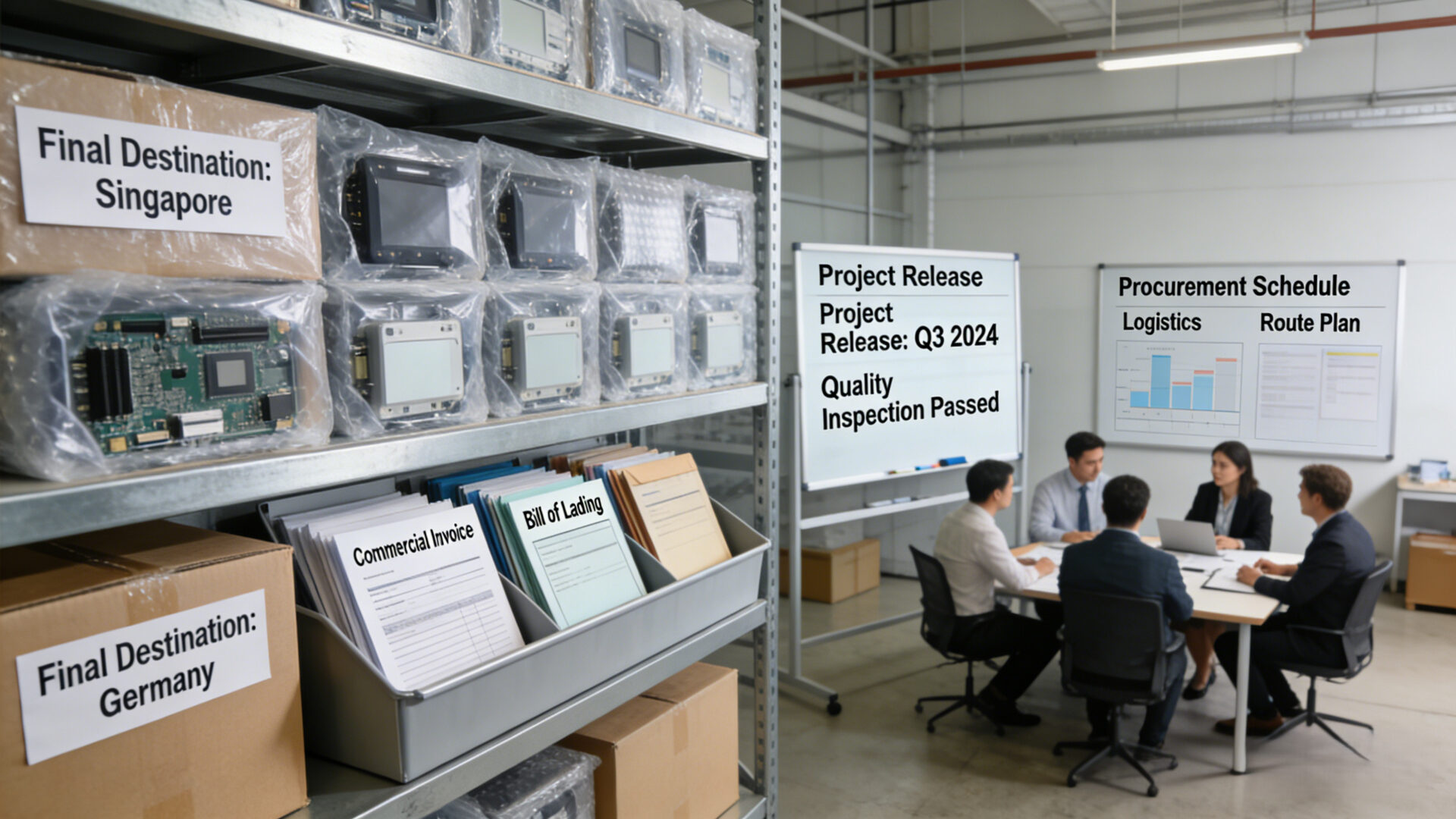
Finally, the program needed dependable international shipping for electronics. This covered more than forwarding cartons. The shipment package had to match the build status, labeling, documentation, and destination requirements. Packaging had to protect assemblies in transit. Picking accuracy mattered. Customs paperwork had to follow the agreed release path.
If a shipment includes battery-backed assemblies or lithium-powered subsystems, air-freight preparation may also need to reflect current IATA battery shipping guidance. Again, the practical buying question is not whether a courier exists. It is whether the electronics program can leave the warehouse as a controlled commercial handover.
Talk to TPS about inspection, inventory, variants, and shipping →
4. Why procurement, engineering, and logistics aligned faster
One reason this anonymous case is useful for BoFu readers is that the benefit was cross-functional. Procurement gained clearer acceptance status and fewer supplier exceptions. Engineering gained a more stable path for change control and late-stage differentiation. Logistics gained a cleaner handover from “configured” to “ready for dispatch.”
This is also why TPS internal content tends to connect fulfillment topics with broader supply-chain and design services. The same logic appears across the related pages on supply chain solutions, complete solutions, and the customer case on inventory management for electronics. Better operational control improves commercial confidence.
In this case, the RFQ itself became easier to evaluate because TPS was not only quoting manufacturing capability. It was showing how documentation, warehouse buffering, variant staging, and delivery preparation would be governed once the program started.
5. What changed operationally after rollout
Because the customer requested anonymity, exact public KPIs are not disclosed here. Still, the operational direction was clear. After the workflow was stabilized, the customer had a more structured path from receipt to release:
- Material approvals became easier to trace and escalate
- Procurement had fewer open loops around part status
- Warehouse teams spent less time interpreting exception cases
- Finished units were easier to distinguish by real shipment readiness
- Variant-specific work was moved closer to release, reducing stock fragmentation
- International deliveries were prepared with clearer ownership and documentation
That combination matters because BoFu decisions are made on risk, not only on price. A supplier that can support inspection discipline, warehouse logic, and shipping readiness can reduce the hidden cost of project friction after PO award.
If your current workflow still treats these tasks as separate afterthoughts, the cost usually appears later as expediting, rework, delayed approvals, or confused staging. That is why this case is best read not as a warehouse story, but as an RFQ-risk story.
6. What to include in your RFQ
If you want a supplier proposal that reflects real operational effort, your RFQ should cover more than the BOM and delivery date.
Scope and product status
- Raw materials, semi-finished assemblies, or completed systems
- Expected annual volume and staged-delivery pattern
- Release logic for approved, configurable, and shipment-ready stock
Inspection requirements
- Required content for the incoming goods inspection report
- Sampling expectations, photos, measurements, or quarantine rules
- ESD or sensitive-handling requirements where relevant
Inventory and variant requirements
- Whether you need inventory management of raw materials and finished goods
- How finished goods inventory management should be separated by destination or milestone
- Variant logic for labels, firmware, cables, manuals, or accessories
Shipping and handover
- Destination countries and shipment frequency
- Packaging, labeling, and document requirements
- Any special handling for batteries, customs, or end-customer site delivery
FAQ
What should an incoming goods inspection report include?
At minimum, it should identify the supplier, part or assembly, received quantity, packaging condition, inspection method, findings, and disposition status such as accept, quarantine, or return. In electronics projects, traceability and fast release decisions usually matter more than generic paperwork.
What is the difference between inventory management of raw materials and finished goods and finished goods inventory management?
Inventory management of raw materials and finished goods covers the full status chain from receipt through storage and allocation. Finished goods inventory management is narrower: it focuses on completed units and how they are buffered, released, staged, or shipped.
Why do variant management services matter for integrators?
Because many electronics programs share a common base product but differ in labels, firmware, accessories, cables, or destination-specific documentation. Variant management services help keep the common base stable while applying differences at the right time.
What does “international shipping for electronics” really involve?
It includes shipment-ready packaging, picking accuracy, labeling, export or customs-related documentation, and release coordination. For battery-backed devices, air-freight rules may also require specific preparation.
What is the mnemonic in this context, and is it the same as the “electron configuration mnemonic device”?
No. Some users search phrases like “what is the mnemonic,” “what is mnemonic device in electron configuration,” or “device used for electron configuration.” In this industrial case, a mnemonic is simply a short internal naming code used to distinguish variants and avoid release mistakes.