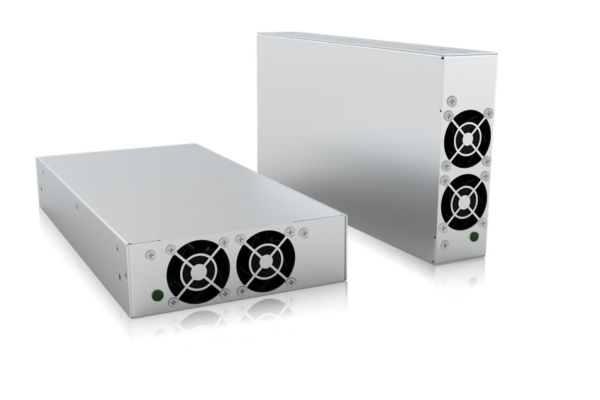


For system integrators and procurement teams in the electric vehicle supply chain, the on‑board charger (OBC) is no longer a simple AC‑to‑DC converter. It is a bidirectional energy gateway that must deliver high efficiency. Which meet stringent automotive safety standards, and operate reliably across extreme temperature and vibration conditions. When a Tier‑1 supplier selects the power stage for a next‑generation 6.6 kW OBC, the decision hinges on a single component: the automotive power module.
The TPS Automotive Power Module, based on the TPS‑BM142400SI platform. Which engineered precisely for this application. It combines an active power factor correction (PFC) front end, a high‑efficiency isolated DC‑DC converter. And advanced digital control into a compact, thermally optimized package. With support for bidirectional operation, the module not only charges the high‑voltage battery from the grid but also enables vehicle‑to‑grid (V2G) and vehicle‑to‑load (V2L) functionality. Which making it a future‑proof choice for modern EV platforms.
Why the on‑board charger power module defines EV charging performance
An on‑board charger converts AC mains power into regulated DC voltage to charge the traction battery. In a typical 6.6 kW OBC, the power module must deliver 14 V to 16 V DC at over 400 A to the battery pack. While drawing a nearly sinusoidal current from the grid with a power factor above 0.99. This demands a power stage that combines a totem‑pole PFC rectifier and a resonant DC‑DC converter. All controlled by a high‑speed digital signal processor.
The efficiency of this power module directly affects the vehicle’s range and charging speed. A 1 % efficiency improvement at 6.6 kW saves 66 W of dissipation. Which reduces the burden on the vehicle’s thermal management system and extends the driving range. The TPS‑BM142400SI achieves up to 91.5 % AC‑DC efficiency, with a SiC‑based variant capable of exceeding 94 %. This high efficiency maintained across the wide input voltage range of 176–264 V AC, adapting to single‑phase grids worldwide. For further technical background on power conversion in demanding environments, see the TPS services overview.
TPS‑BM142400SI: the bidirectional automotive power module platform
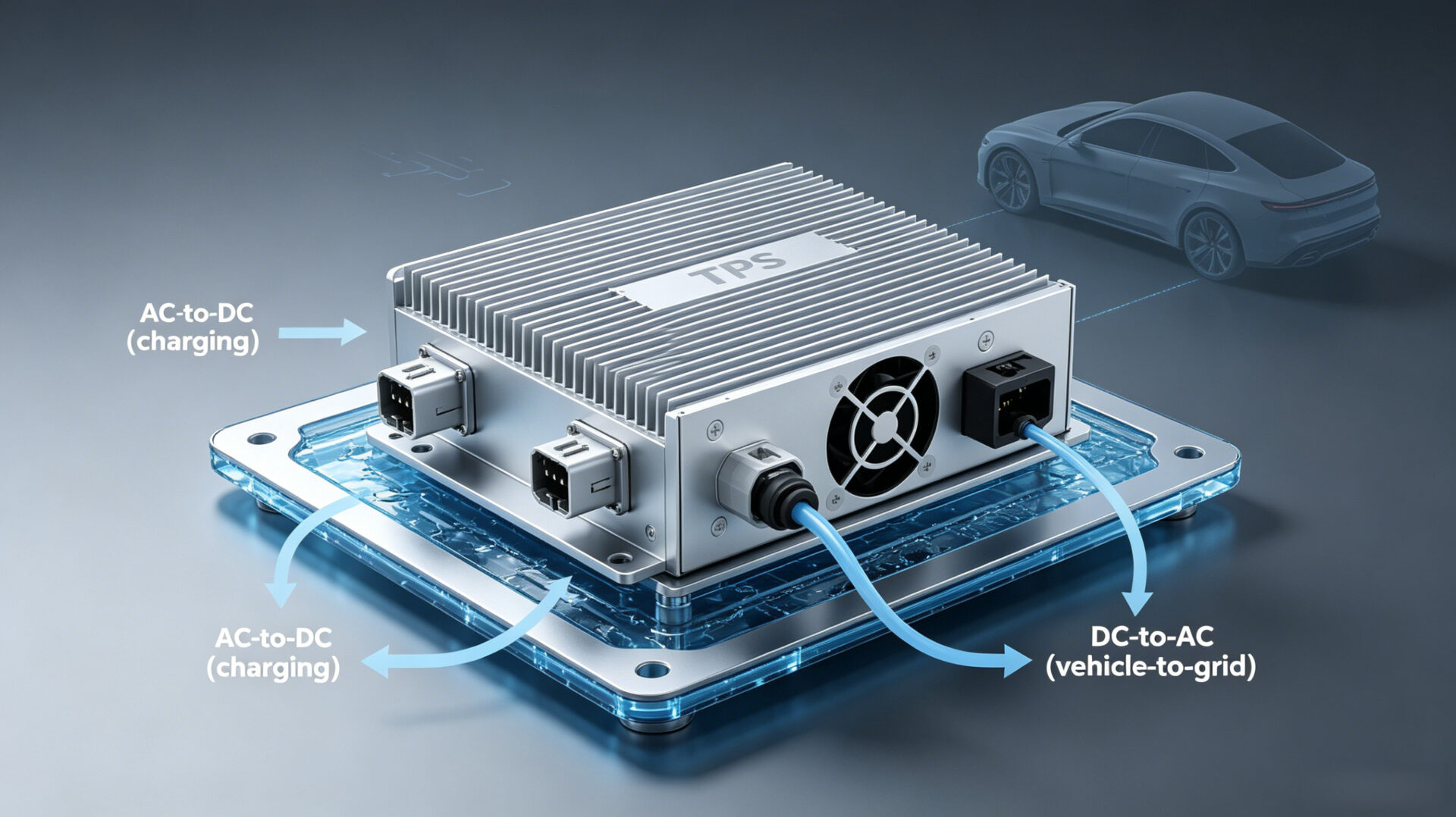
The TPS‑BM142400SI is a 2400 W bidirectional power module that can configured as a single‑phase OBC power stage for 3.3 kW applications. Or two modules can be interleaved for a 6.6 kW OBC. The module incorporates advanced soft‑switching technology (zero‑voltage switching on the primary side and zero‑current switching on the secondary side) to minimize switching losses and electromagnetic interference.
Key hardware features include a 176–264 V AC input with ≤15 A AC current, a 14 V DC output at 171 A (or 15 V DC input at 112 A for reverse operation). And a fast mode‑switching time of less than 10 ms between rectifier and inverter modes. This rapid transition is essential for V2G applications, where the OBC must seamlessly switch from charging to discharging when the grid demands power. The module’s power density and control flexibility are described in more detail in the TPS news and insights technical archive.
Electrical performance: efficiency, PFC, and power quality
Power quality is a critical metric for any grid‑connected charger. The TPS‑BM142400SI achieves a power factor greater than 0.99 and total harmonic distortion of input current (THDi) below 5 % at 220 V AC full load, assuming grid voltage THD ≤2 %. These figures exceed the requirements of IEC 61000‑3‑2 Class A for harmonic emissions, which ensuring that the OBC will not cause excessive harmonic distortion on the local grid.
On the DC side, the module provides an output voltage accuracy of ±0.5 % and a ripple voltage of 500 mV peak‑to‑peak. Which ensuring stable charging current to the battery management system. The digital control loop employs a combination of average current‑mode control for PFC and peak current‑mode control for the DC‑DC stage, with adaptive dead‑time adjustment to maximize efficiency across the load range. The module’s performance parameters and typical application circuits further explored in the TPS power modules product category.
Thermal design and reliability for automotive environments
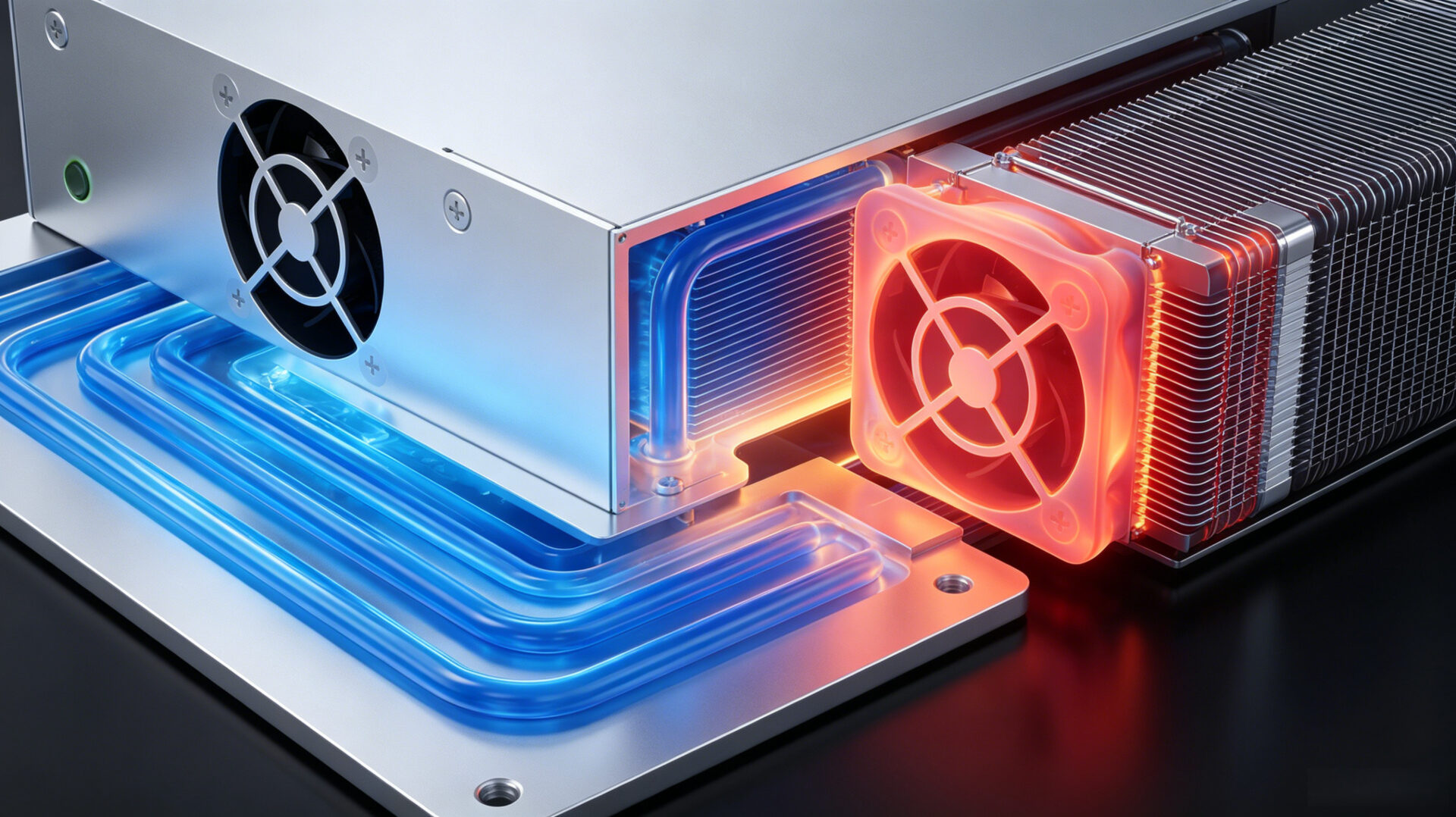
Automotive electronics must operate reliably from −40 °C cold‑start conditions to +85 °C ambient under the hood. The TPS‑BM142400SI rated for full‑load operation from 10 °C to 45 °C, with linear derating to 80 % load at 55 °C–60 °C. The module uses an intelligent forced‑air cooling system (front inlet, rear outlet default) with a variable‑speed fan controlled by internal temperature sensors.
For integration into sealed OBC enclosures, the module’s baseplate designed to couple thermally to a liquid‑cooled cold plate, enabling silent, fanless operation. The mechanical design also addresses automotive vibration and shock requirements per ISO 16750‑3, with all power semiconductors soldered directly to the PCB or sintered to a DBC substrate for maximum thermal cycling reliability. The internal fault protection includes over‑temperature shutdown, input under‑voltage lockout, output over‑voltage protection, and cycle‑by‑cycle over‑current limiting.
Scalability: parallel operation for higher power OBCs
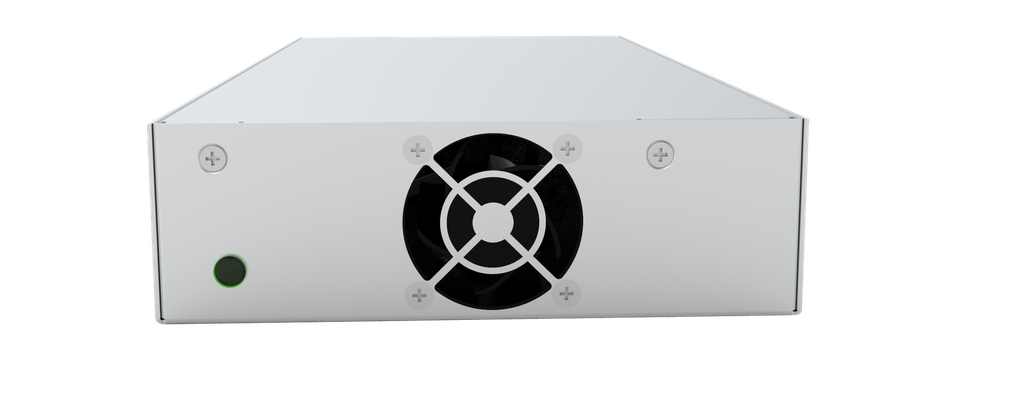
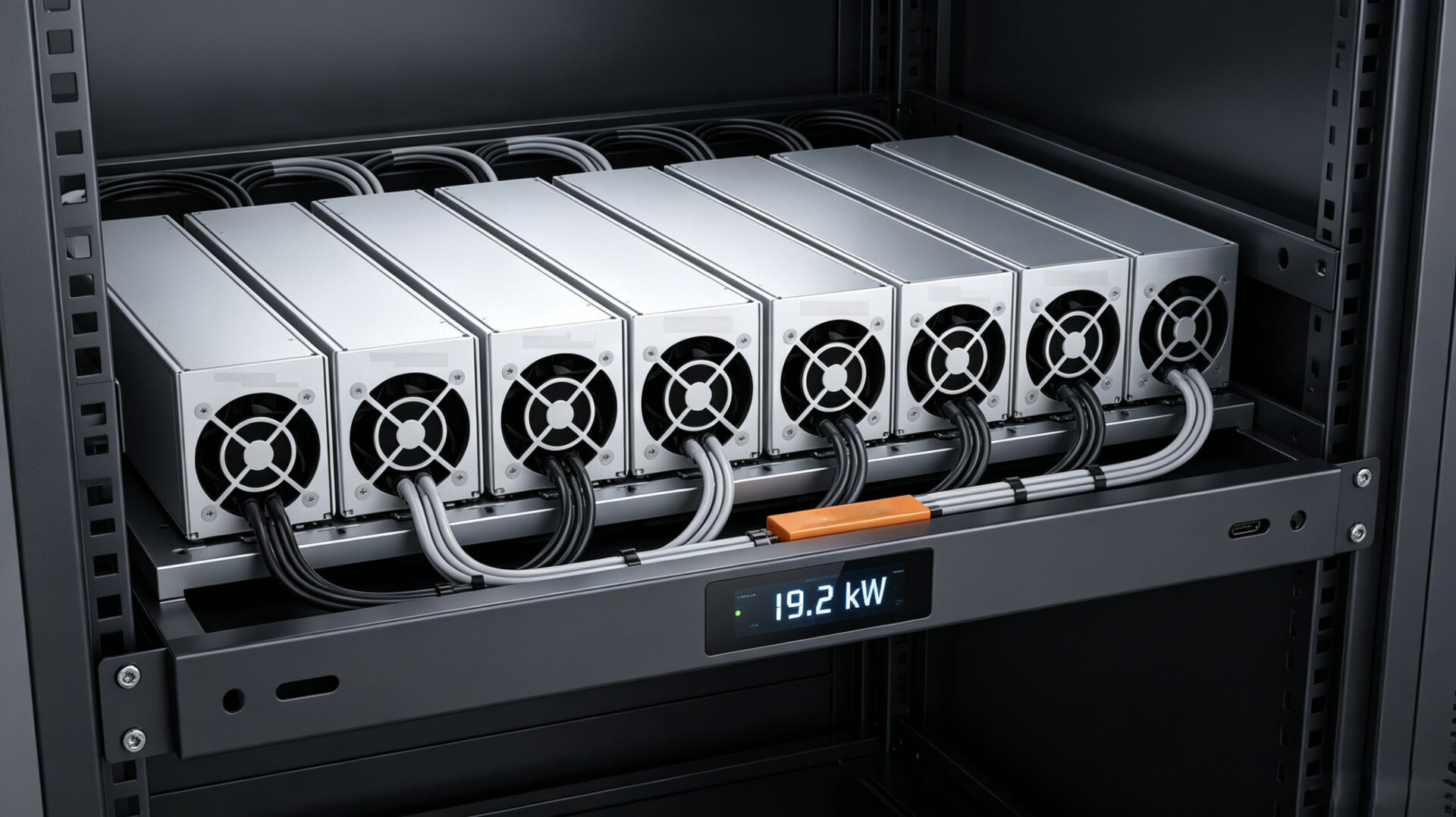
As EV battery capacities increase, so does the demand for higher charging power. The TPS‑BM142400SI supports up to eight modules in parallel with a current‑sharing imbalance of less than 5 %. Which enabling scalable power from 2.4 kW to 19.2 kW in a single OBC enclosure. This scalability allows Tier‑1 suppliers to design a single OBC platform that can be configured for different vehicle classes. From compact cars with 3.3 kW chargers to luxury SUVs with 11 kW three‑phase chargers — simply by changing the number of modules and the input phase configuration.
The parallel control strategy uses a digital communication bus that synchronizes the switching frequencies of all modules and adjusts the output current of each module to achieve balanced load sharing. Droop control is implemented as a backup in case of communication failure. Which ensuring graceful degradation rather than a complete system shutdown.
Automotive compliance: IEC 61851, ISO 16750, and EMC
Any power module used in an on‑board charger must comply with a suite of international standards. The TPS‑BM142400SI designed to meet the requirements of IEC 61851‑23 (DC electric vehicle charging station). Which governs the electrical safety and performance of conductive charging systems. For environmental durability, the module’s design references ISO 16750‑2 (environmental conditions) and ISO 16750‑3 (mechanical loads).
EMC compliance is critical, because an OBC is both a source and a victim of electromagnetic interference. The module meets EN 55032 Class B (CISPR 32) for radiated and conducted emissions. And it designed to pass the immunity tests of IEC 61000‑4‑2 (ESD), IEC 61000‑4‑3 (radiated RF), and IEC 61000‑4‑4 (electrical fast transients). The module is eligible for UL/CE/TUV certification, simplifying the OBC supplier’s own certification process.
Application scenarios: OBC, V2G, and test systems
While the primary application of the TPS‑BM142400SI is the on‑board charger, its bidirectional capability makes it suitable for several other automotive‑related applications:
- Vehicle‑to‑Grid (V2G) and Vehicle‑to‑Load (V2L): The module can discharge the traction battery back to the grid or to a local load. Which enabling grid stabilization services and emergency backup power.
- Cell formation and battery testing: In manufacturing, the module can used as a bidirectional power supply for charging and discharging battery cells during formation, with energy recovered from the discharging process and returned to the grid. Which achieving up to 88.5 % DC‑AC efficiency in reverse mode.
- Power bidirectional aging tests: For reliability testing, the module can configured in a back‑to‑back arrangement where one module charges a battery and another discharges it. Which recycling energy and dramatically reducing the electricity cost of long‑duration tests.
For all of these applications, the module’s fast mode switching (<10 ms) and high‑accuracy output voltage (±0.5 %) are critical enablers.
RFQ checklist for automotive power modules
- OBC power level: 3.3 kW, 6.6 kW, or other; single‑phase or three‑phase input.
- Bidirectional requirement: Is V2G/V2L functionality required?
- Cooling method: Liquid‑cooled baseplate, forced air, or a combination.
- Automotive certifications: Target standards (IEC 61851, ISO 16750), required AEC‑Q qualification level.
- Communication interface: CAN bus, LIN, or other for system integration.
- Volume and schedule: Prototype quantity, series production ramp, and annual forecast.
Frequently Asked Questions
Can the TPS‑BM142400SI be used directly in a 6.6 kW OBC?
Yes, by interleaving two modules, each operating at 3.3 kW, a 6.6 kW OBC power stage can be built. The modules share a common DC output bus and are synchronized via the digital communication interface.
Does the module include the control software for OBC operation?
TPS provides the hardware platform and reference control firmware. The customer can adapt the firmware to their specific BMS communication protocol and charging profile requirements.
What is the expected lifetime of the module in an automotive application?
With proper thermal management (keeping baseplate temperature below 85 °C), the module designed for a service life of 15 years or 300,000 km, consistent with automotive reliability targets. Detailed lifetime calculations can provided based on the customer’s specific mission profile.
Where can I find detailed technical documentation?
Visit the TPS power modules product page or contact TPS sales through the TPS services page to request a full datasheet and application note.