

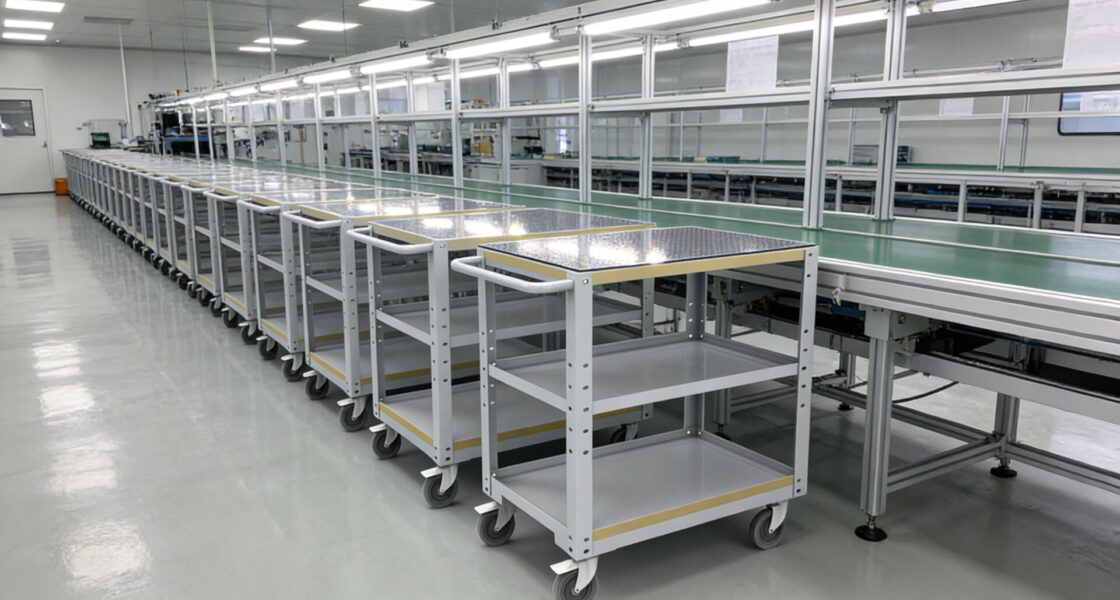
Electrostatic discharge (ESD) is a common but often underestimated risk in electronics manufacturing. While it is rarely visible, it can affect sensitive components throughout the production process—from initial PCB handling to final assembly and transport.
Even relatively low discharge levels, below human perception, may damage modern electronic components. In many cases, this damage is not immediately detectable and may only appear later as reduced reliability or premature failure.
For this reason, ESD protection is an integral part of quality assurance in electronics production.
Key Takeaways
- ESD can affect sensitive electronic components at voltage levels below human perception.
- Latent ESD damage may not be detected during production but can impact long-term reliability.
- Effective ESD protection requires a continuous grounding concept across all handling stages.
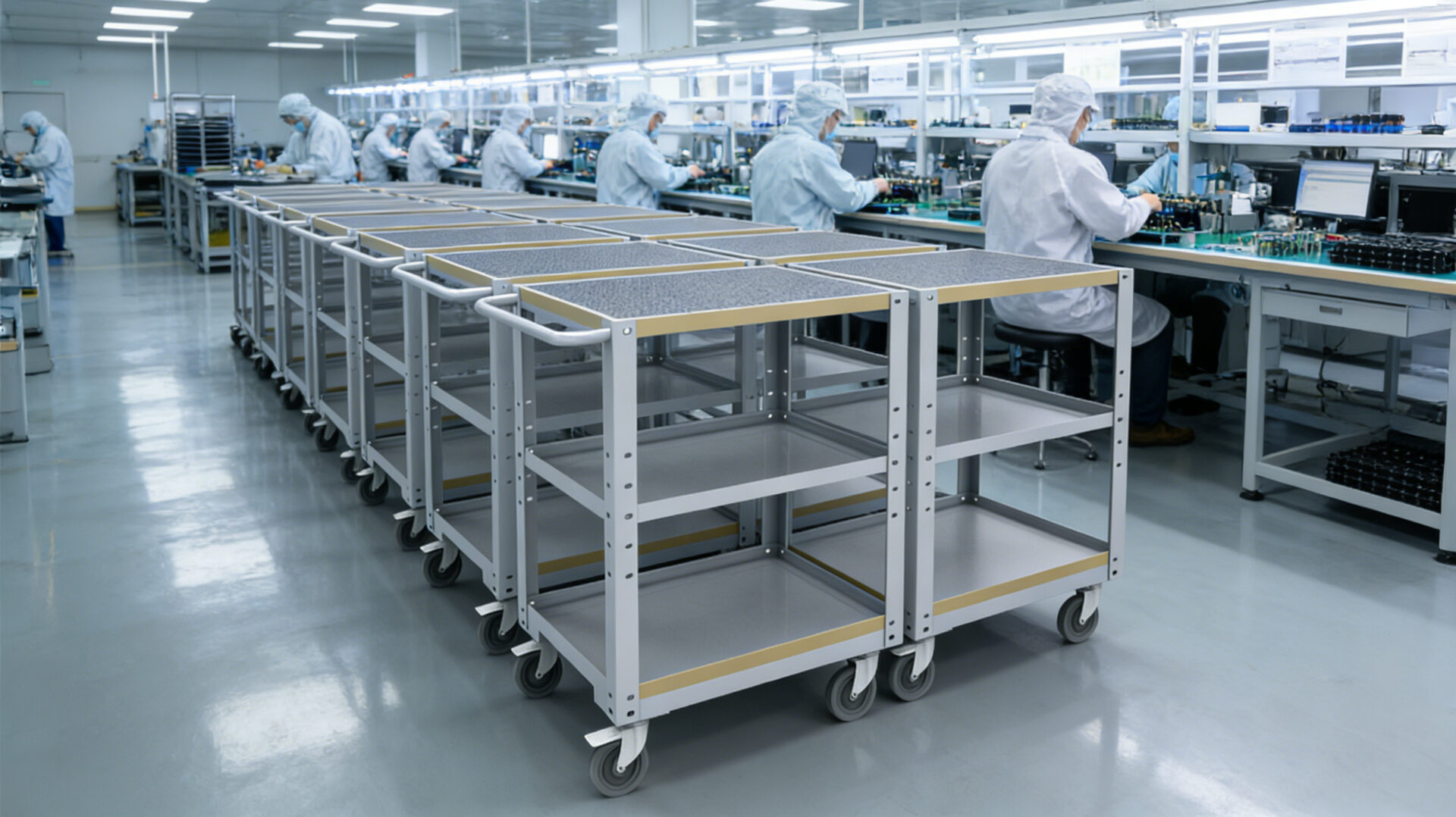
- ESD carts, PCB racks, and transport systems support controlled material flow in ESD-protected areas (EPA).
- Proper material selection and maintenance are essential for consistent ESD performance.
1. Why ESD Matters in Electronics Manufacturing
Modern electronic components are increasingly compact and sensitive. As a result, they are more susceptible to electrostatic discharge than earlier generations.
A key challenge is latent failure. Components affected by ESD may continue to function during testing but fail later in operation. This makes ESD control essential not only for immediate yield but also for long-term product reliability.
ESD protection is therefore implemented as part of a broader ESD control program, typically aligned with standards such as ANSI/ESD S20.20 or IEC 61340-5-1.
2. Controlled Material Flow in Production
Throughout manufacturing, printed circuit boards (PCBs) and components are transported between multiple process steps:
- Incoming inspection and storage
- Surface-mount technology (SMT) assembly
- Manual assembly and integration
- Testing and inspection
- Final assembly and packaging
At each stage, ESD-safe handling and transport are required.
Typical ESD transport solutions include:
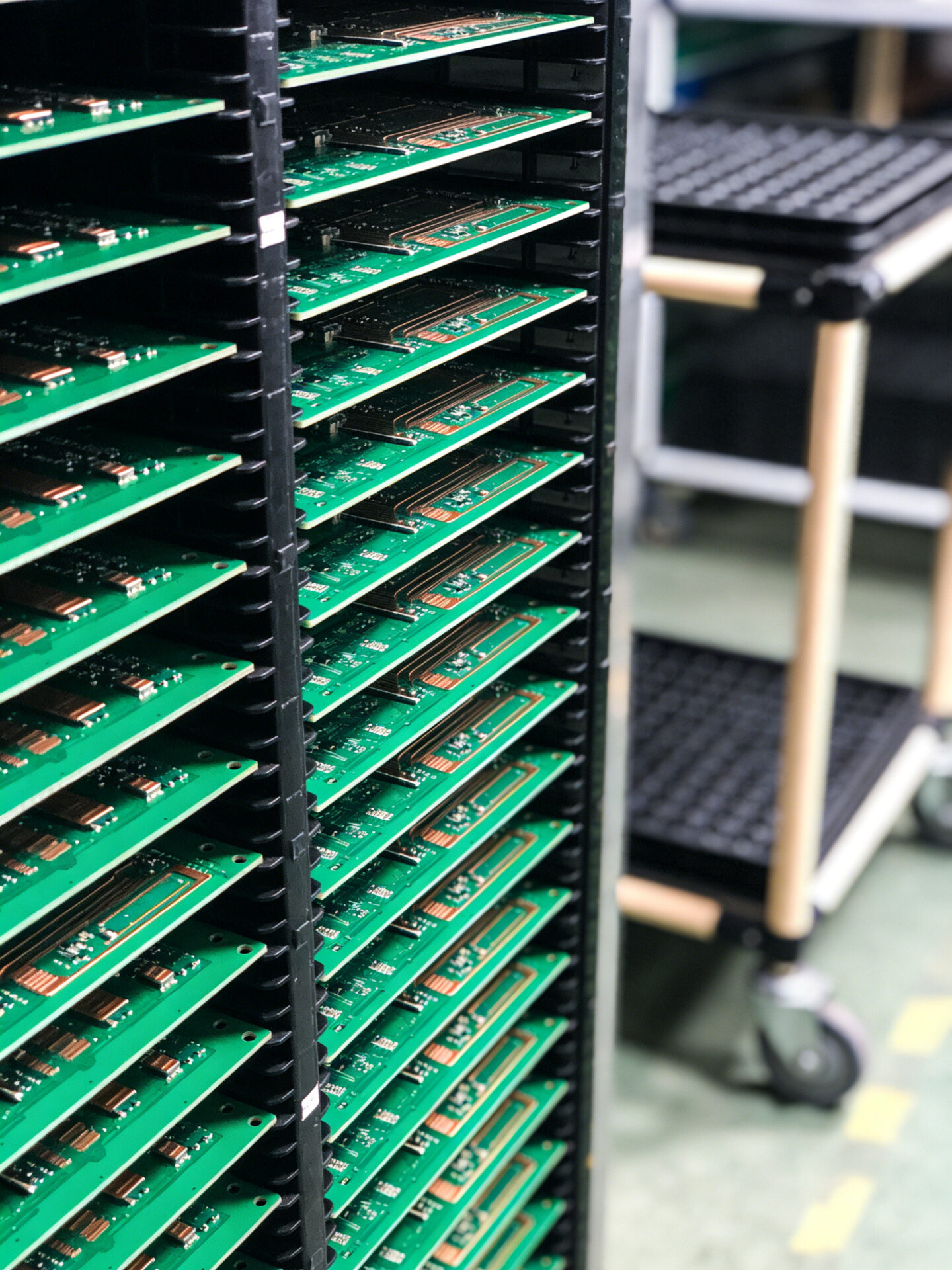
- PCB racks for structured storage and separation
- ESD trays with conductive or dissipative materials
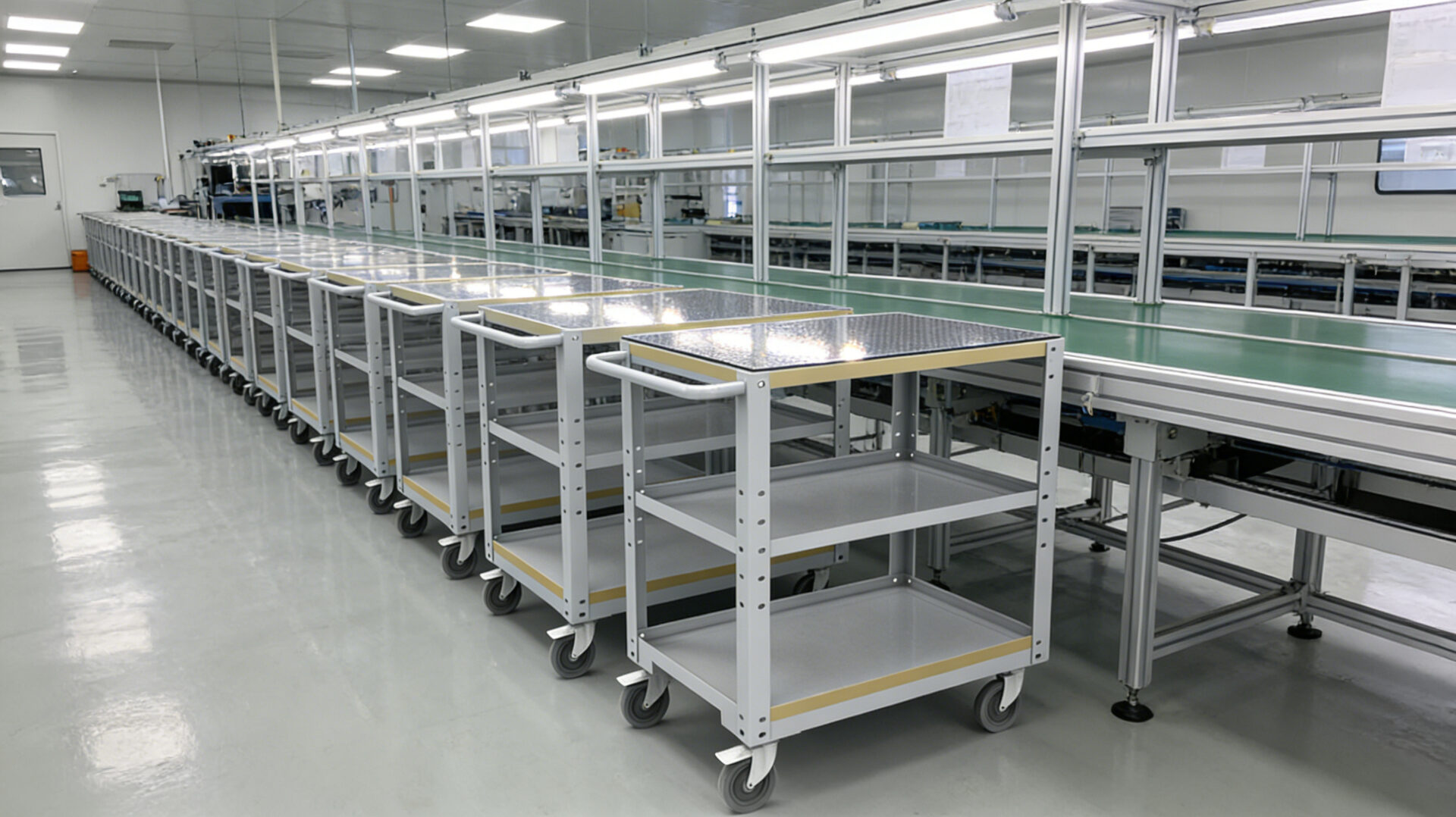
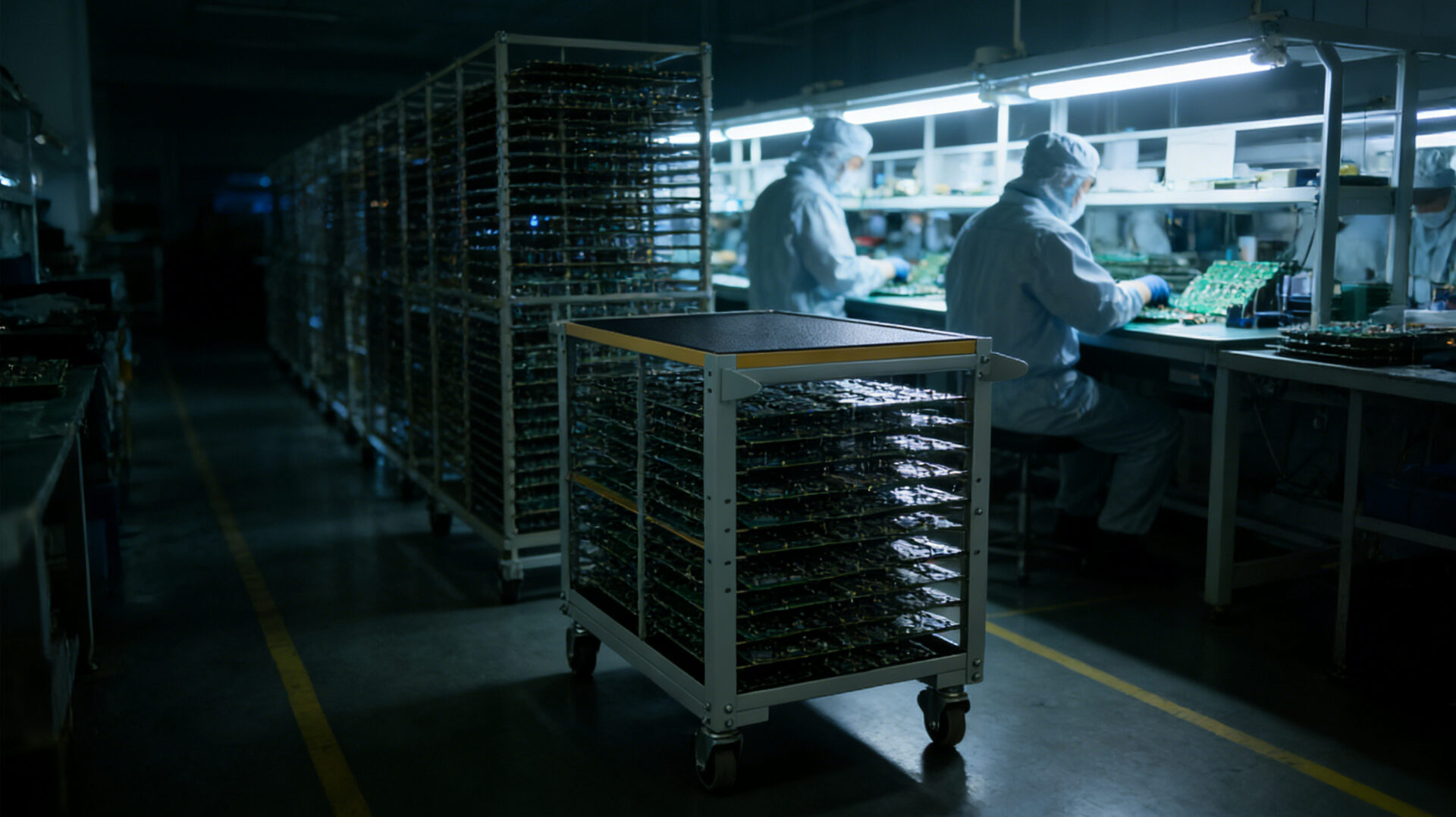
- ESD carts and trolleys for mobile handling within the production area
These systems help maintain a controlled environment and reduce the risk of charge accumulation.
3. Function of ESD Carts in the Production Environment
ESD carts are designed to support safe and efficient transport of sensitive components within an ESD-protected area (EPA).
Key functions include:
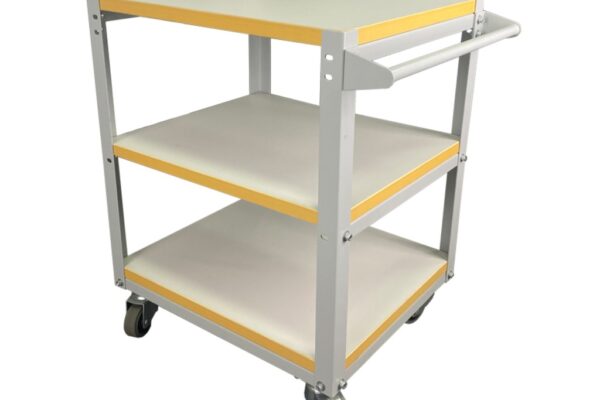
- Providing a dissipative work surface (e.g., ESD laminate top)
- Maintaining a continuous path to ground via frame and wheels
- Enabling controlled mobility without generating static charge
In practice, ESD carts are used at multiple stages:
- Moving finished assemblies to testing or packaging areas
- Transporting PCB racks between storage and SMT lines
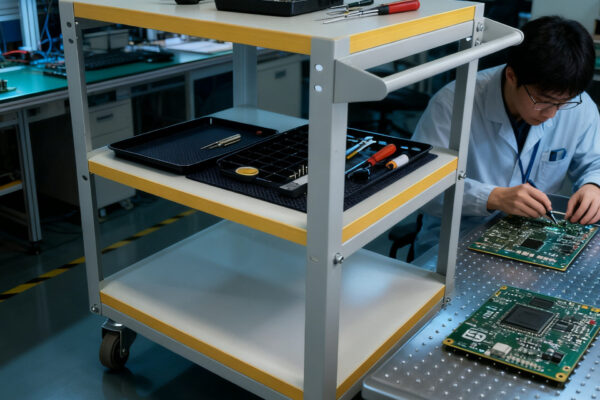
- Supporting manual assembly processes
4. Design Characteristics of ESD Carts
The effectiveness of an ESD cart depends on its materials and construction.
Core elements include:
1. Frame and coating
- Metal frame with conductive or dissipative coating (e.g., ESD powder coating)
- Supports controlled charge dissipation
2. Work surfaces
- ESD laminate or dissipative shelves
- Designed to prevent charge accumulation on components
3. Wheels and mobility
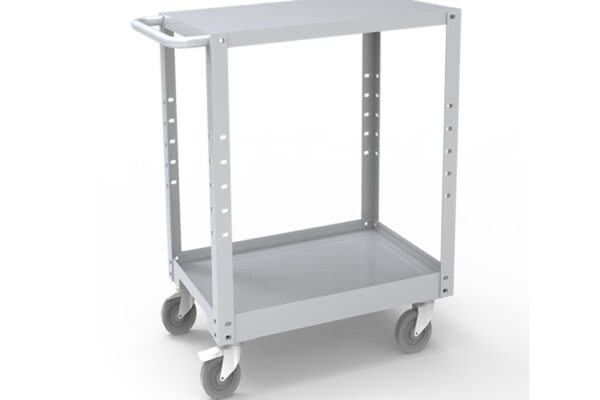
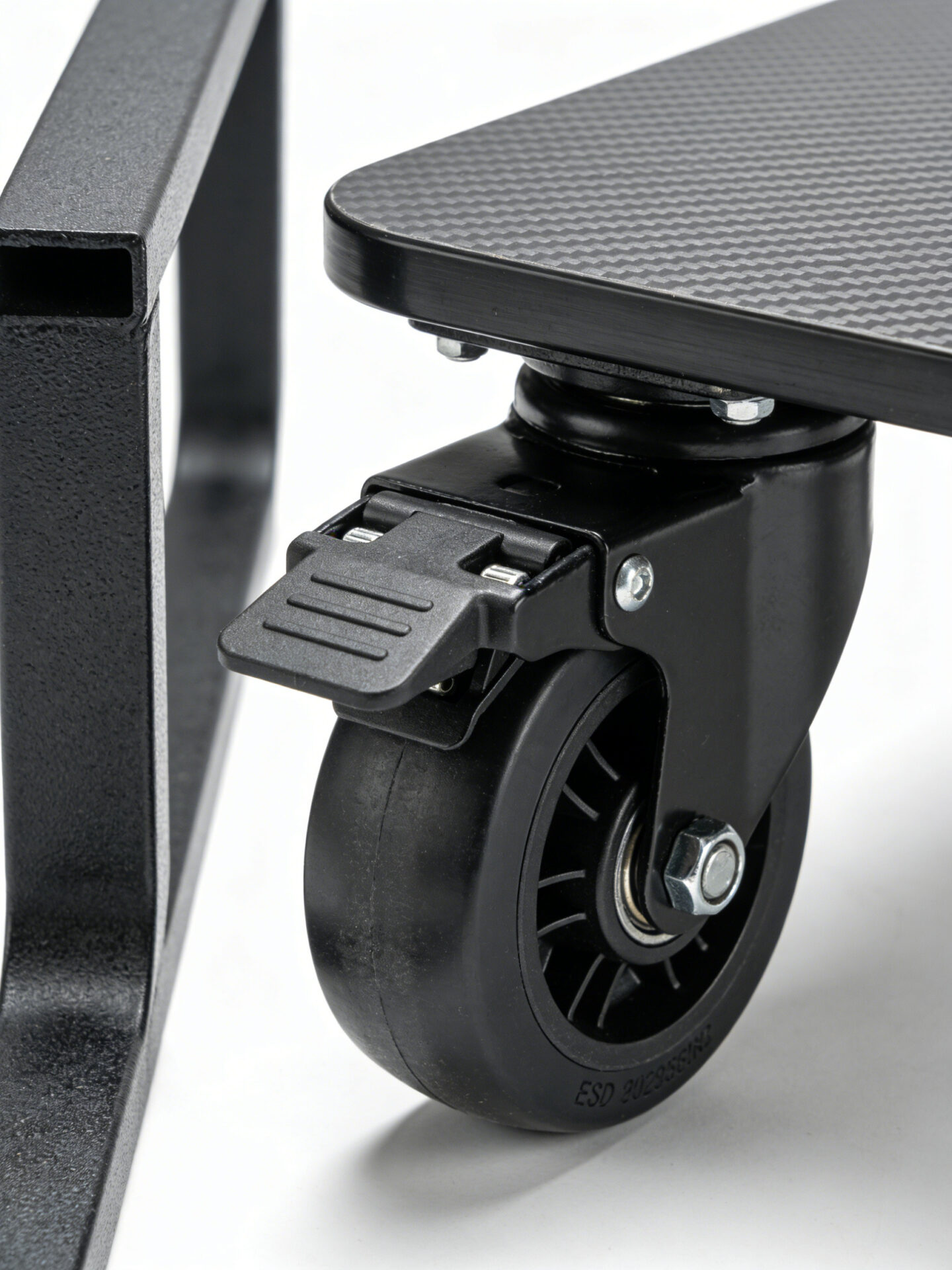
- Conductive or dissipative casters (ESD wheels)
- Locking mechanisms for stable positioning
4. Grounding concept
- Continuous electrical path from surface → frame → wheels → floor
Typical surface resistance values for ESD materials fall within 10⁶ to 10⁹ ohms, depending on application and standard requirements.
5. Application-Specific Cart Configurations
Different production steps require different cart configurations:
- PCB transport carts: designed for PCB magazines or racks
- Workstation carts: mobile benches for manual assembly
- Component handling carts: for reels, trays, and small parts
- Service carts: used in repair and rework environments
- Transport carts for finished goods: often with protective surfaces or covers
Selecting the appropriate configuration helps optimize workflow and maintain ESD protection throughout the process.
6. Use Beyond Manufacturing
ESD-safe transport solutions are also used outside of production environments:
- Repair and service centers
- Research and development laboratories
- Testing facilities
In these contexts, components may be exposed again, making ESD control equally important.
7. Selection Criteria for ESD Carts
When selecting an ESD cart, the following factors should be considered:
- Load capacity: depending on transported components
- Dimensions: compatibility with workspace and aisles
- ESD performance: compliance with relevant standards
- Mobility: quality of casters and locking mechanisms
- Configuration: shelves, racks, or additional accessories
Customizable solutions may be useful for specific production requirements.
8. Maintenance and Verification
To ensure consistent performance, ESD carts require regular inspection and maintenance:
- Check wheels and casters for wear and conductivity
- Clean ESD surfaces with suitable, non-insulating agents
- Verify electrical continuity within the grounding path
- Inspect mechanical components such as locks and shelves
Documented maintenance supports internal quality processes and audits.
9. ESD Protection as Part of Quality Assurance
ESD protection is not a standalone measure but part of a comprehensive quality strategy in electronics manufacturing.
A structured approach can contribute to:
- Reduced risk of latent defects
- More stable production processes
- Improved long-term product reliability
While ESD effects are not always immediately visible, their impact can be significant if not properly controlled.
10. Conclusion
Electrostatic discharge is an inherent challenge in modern electronics manufacturing. Although it is not directly visible, it can influence product quality and reliability across the entire lifecycle.
ESD carts, PCB racks, and handling systems play a supporting role by enabling controlled transport within ESD-protected areas. When combined with appropriate procedures and maintenance, they form an essential part of a consistent ESD control concept.