

TPS supports 19-inch cabinet and cabinet-solution projects for B2B customers with a clear commercial focus: customizable design, UL 508A-oriented cabinet capability where required, and high-safety architecture for demanding industrial applications.
1. Why this matters in BoFu-stage cabinet RFQs
By the time a buyer reaches the bottom of the funnel, the question is no longer “What is a 19-inch cabinet?” The real question is: which supplier can deliver the right cabinet concept with the right configuration, the right safety level, and the right documentation for the project?
For system integrators, panel builders, procurement teams, and electrical engineers, a cabinet decision affects wiring routes, internal accessibility, thermal behavior, installation stability, maintenance workflow, and supplier comparison. If the cabinet is under-specified, the result is usually the same: rework, delayed commissioning, unclear cost comparison, and avoidable project risk.
TPS positions this category around project suitability rather than catalog-only selection. That matters because many customers do not simply need a rack cabinet. They need a cabinet that can be adapted to application conditions, integrated with distribution functions, or developed into a higher-safety cabinet solution when the project scope requires it.
2. Customization first: why standard dimensions are not enough
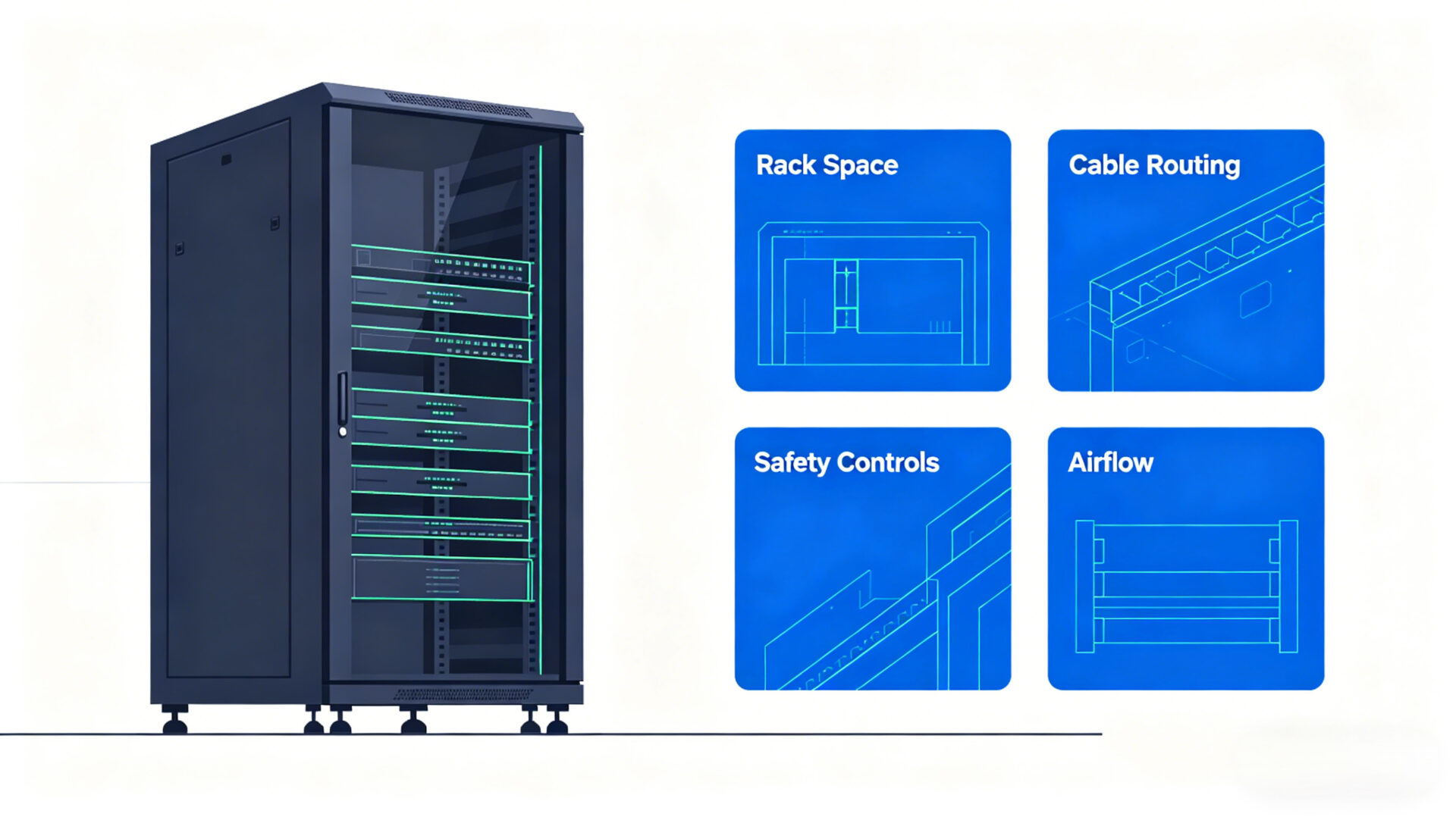
One of the biggest mistakes in cabinet sourcing is treating the cabinet as a simple commodity defined only by height. In reality, many projects need a cabinet that is mechanically and functionally adapted to the installation concept.
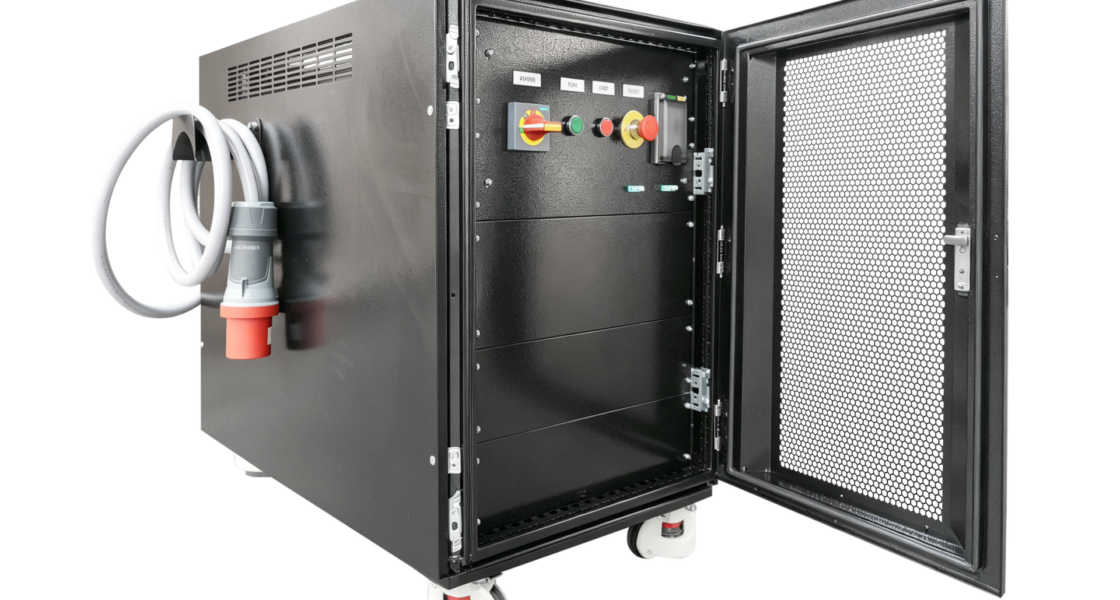
TPS’s cabinet solution materials explicitly point to customization by customer requirement. The Sentinel range describes customizable control and display functions, configurable power-module arrangements, and customer-specific technical parameters. It also shows that the cabinet and rack can be arranged for more effective use of rack space and project-specific layout logic. That is highly relevant for buyers who need more than an empty enclosure.
In commercial terms, customization usually affects:
- usable rack height and internal layout,
- door concept and access logic,
- distribution section arrangement,
- control and display interface positioning,
- temperature, humidity, alarm, and monitoring options,
- mechanical stability and mounting strategy.
That is why BoFu users should not ask only for “one 19-inch cabinet.” They should ask whether the supplier can support the cabinet as a project platform. TPS can support this discussion naturally through the target product page here, and through concrete cabinet formats such as the 15U cabinet, 24U cabinet, and 42U cabinet.
3. When UL 508A matters for a 19-inch cabinet project
Not every 19-inch cabinet project needs UL 508A. But when the cabinet becomes part of a pre-wired industrial control or power distribution solution for North America, UL 508A becomes a key supplier-selection issue.
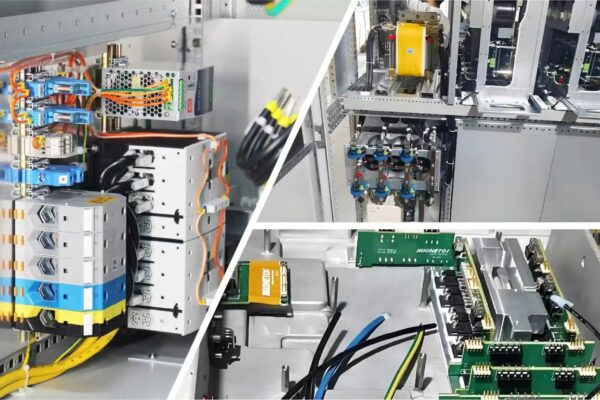
TPS’s Sentinel Power Cabinet Series is described as custom-wired and certified according to UL 508A, with permanent SCCR nameplate marking and a design framework referencing UL 508A together with related electrical and safety standards. The materials also describe the solution as fully labeled and documented for the North American market.
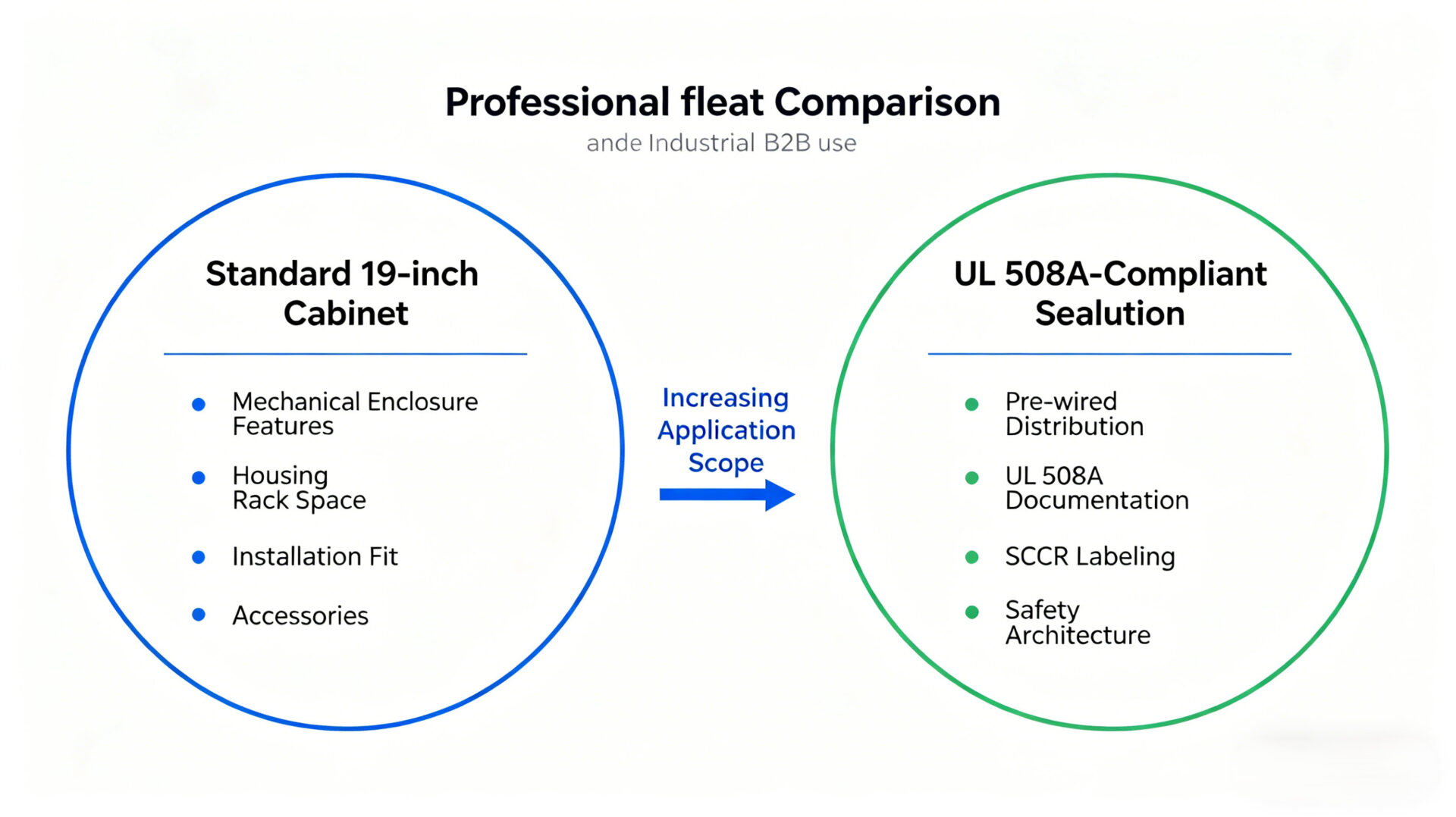
For procurement, this matters because it changes the offer scope. A purely mechanical cabinet quote is not equivalent to a cabinet solution quote that includes:
- pre-wired architecture,
- documented SCCR marking,
- component selection aligned to UL requirements,
- safety-circuit design,
- higher responsibility for system-level compliance.
If your application may move into cabinet-level distribution or control integration, bring that up early. This helps TPS evaluate whether the requirement belongs in the standard 19-inch cabinet range or in a more advanced UL 508A-oriented cabinet solution discussion.
4. High safety: what serious buyers should verify
Safety is where weak cabinet sourcing becomes expensive. In complex industrial systems, a cabinet is part of the risk-control strategy, not merely the outer shell.
The Sentinel materials show a safety-oriented architecture that includes UL 489 molded-case circuit breakers, branch protection per module, dual-channel E-stop, door interlock monitoring, and a PILZ safety relay. They also reference ISO 13849 Cat. 4 / PL d for the safety circuit category and performance level.
For higher-fault environments, the documentation also states a standard 10 kA SCCR with an optional 65 kA SCCR configuration at 480 V AC, supported by current-limiting protection strategy. In addition, the cabinet is described as engineered to withstand high-energy fault events.
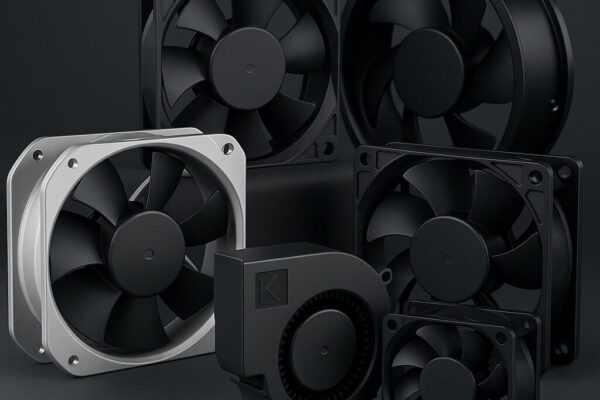
On the operational side, TPS also presents safety-related thermal and power-quality measures such as high-pressure fan architecture, active temperature monitoring, soft-start sequencing, and phase balance. These are the kinds of details that matter to engineers evaluating system reliability instead of only enclosure appearance.
The practical takeaway is simple: if safety architecture matters, your RFQ should ask about cabinet safety functions explicitly. Do not assume every supplier is quoting the same risk-control level.
5. Selecting 15U, 24U, and 42U for real integration needs
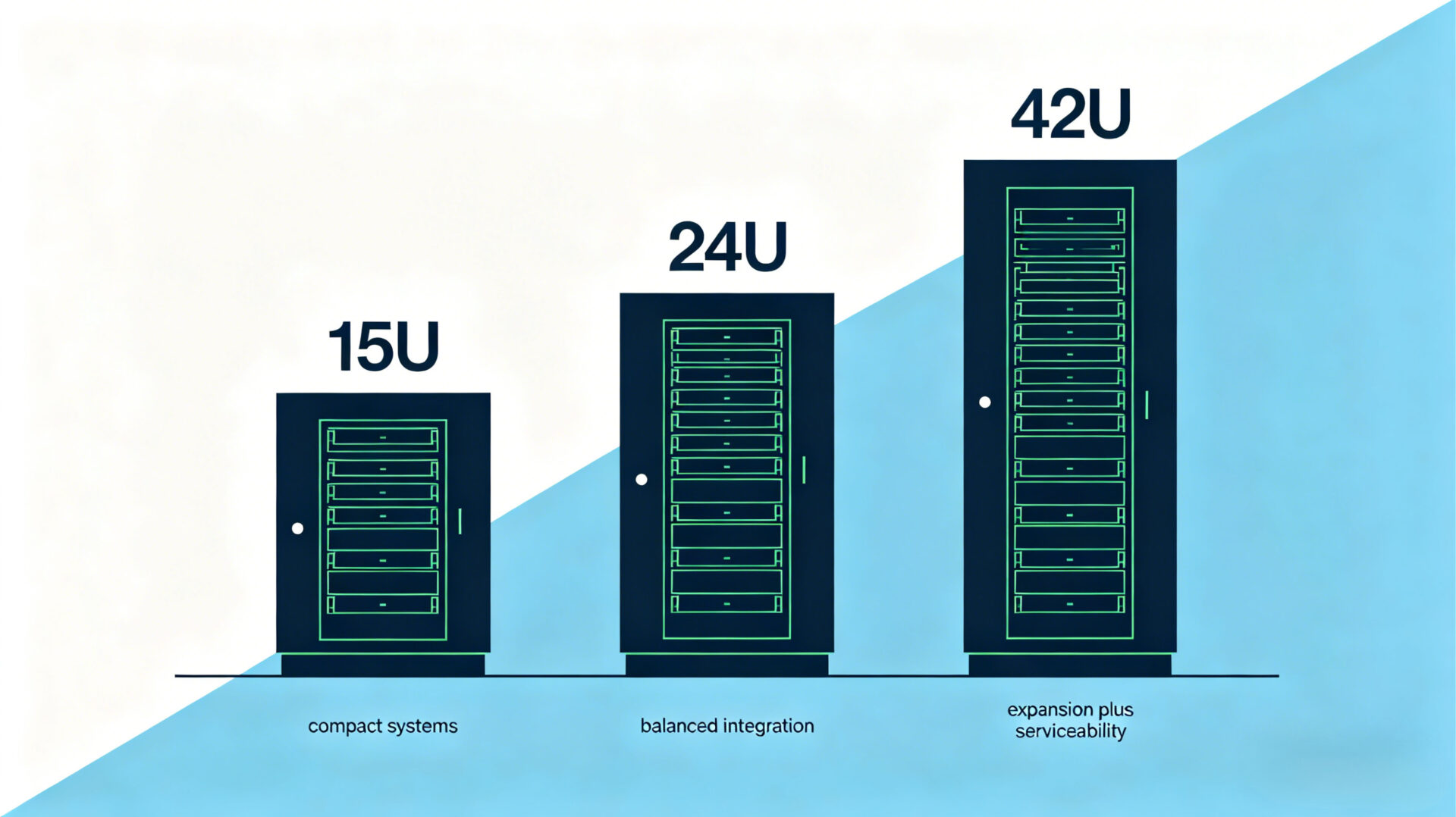
Height selection should still be handled carefully. For compact builds, a 15U cabinet often makes sense when the application is space-sensitive and functionally compact. A 24U cabinet is often the best balance for projects that need better cable discipline and moderate expansion reserve. A 42U cabinet is the more appropriate choice when serviceability, vertical segregation, and future growth become important.
In the broader TPS cabinet-solution materials, enclosure heights are shown from 15U up to 48U, which supports the idea that cabinet height should be tied to application complexity, not to habit.
6. Why TPS fits project-driven cabinet sourcing
TPS is commercially relevant because the company can support both sides of the sourcing conversation:
- standard 19-inch cabinet selection for network, server, telecom, and industrial integration, and
- advanced cabinet-solution capability for projects that require higher safety, pre-wired distribution, and UL 508A-oriented execution.
That combination is especially useful for BoFu users who do not want to switch suppliers when the project scope becomes more technical. A program may start with a cabinet selection discussion and later require stronger safety functions, documentation, or control integration. TPS is positioned to support that progression.
For initial review, use the main category page here. For early size screening, use the 15U, 24U, and 42U links already listed above. For cabinet-solution conversations involving North American control or power requirements, the RFQ should explicitly mention UL 508A expectations, safety logic, and any required documentation set.
7. What to include in your RFQ
To get a quote that is actually usable, include:
- preferred cabinet size or required usable rack space,
- application type: mechanical cabinet only or cabinet solution,
- need for customization in layout, access, control, display, or environmental monitoring,
- country of installation and whether UL 508A or higher safety scope is required,
- expected SCCR, safety functions, and wiring/distribution scope if applicable,
- drawings, internal layout sketches, and quantity by phase.
The clearer the RFQ, the faster TPS can align the recommendation to your actual project and reduce back-and-forth during technical clarification.
FAQ
Can a 19-inch cabinet be customized for project-specific control and layout needs?
Yes. TPS’s cabinet-solution materials explicitly describe customizable control/display functions, configurable module arrangement, and customer-specific technical parameters for cabinet projects.
Does every 19-inch cabinet automatically mean UL 508A?
No. UL 508A becomes relevant when the project scope includes an industrial control or pre-wired distribution cabinet solution for North America. That scope should be clarified in the RFQ.
What safety features should I ask about in a serious cabinet RFQ?
Ask about door interlock, E-stop, safety relays, SCCR, protective devices, thermal monitoring, and whether the supplier can explain the cabinet’s safety architecture rather than only its dimensions.
Which size is best: 15U, 24U, or 42U?
15U is usually best for compact systems, 24U for balanced integration, and 42U for complex installations with more service space and future expansion.