

System integrators, panel builders, and procurement teams in factory automation rarely lose production because the PLC logic is wrong. They lose it when a short voltage dip resets a PLC, an industrial PC reboots mid-process, or an HMI drops out during a weld cycle — and the plant-wide UPS quote that would cover every load comes back larger than the line it is meant to protect.
A European machine builder (name withheld under NDA) faced exactly this trade-off: nuisance resets on three production lines, a utility supply with recurring 100–300 ms dips, and a plant-wide UPS quotation that would have required a new battery room, additional floor space, and a capital commitment out of proportion to the problem.
TPS Elektronik’s additional services (uninterruptible power supply sale) were used to segment the load, protect only what needs protecting, and validate the result on the line.
1. The customer challenge: resets, dips, and an oversized UPS quote
The customer operated three automated assembly lines fed from a utility connection shared with a resistance welding area. Voltage dips of 100–300 ms were occurring several times per week, and the depth reached 55–65% of nominal. The PLCs were resetting, the industrial PCs were rebooting, and the HMIs were losing communication. Each event cost between 20 and 90 minutes of lost production plus scrap.
The first proposal from a UPS vendor was a plant-wide system sized for the entire facility load: drives, heaters, conveyors, and lighting included. The quotation was technically correct and commercially unworkable. It required a dedicated battery room, a reinforced floor, additional ventilation, and a capital commitment several times the annual cost of the downtime it would prevent.
The procurement team asked a different question: which loads actually need to ride through the dip, and for how long? That question reframed the project from “buy a bigger UPS” to “define the ride-through requirement per load group” — the scope TPS was engaged to deliver.
2. Why plant-wide UPS oversizing is the wrong answer
A plant-wide UPS is the right architecture when the process cannot tolerate any interruption and the load is homogeneous. In a machine-building plant with mixed loads, it usually produces three avoidable problems.
2.1 Runtime mismatch and cost per protected kilowatt
The PLC, the industrial PC, and the network switch need to ride through a 300 ms dip and, in the worst case, complete a controlled shutdown over 2–5 minutes. The drives and heaters need nothing of the kind — they can drop and restart. Sizing a single UPS for the sum of all loads means paying for battery capacity and conversion hardware that protects loads which do not need protection.
The cost per protected kilowatt therefore rises sharply with the size of the UPS, while the benefit stays concentrated in a small group of loads. Segmenting the load reverses that ratio.
2.2 The single-point-of-failure problem
A plant-wide UPS concentrates the continuity of the entire facility in one asset. A battery string failure, a bypass event, or a maintenance window affects every line at once. Distributed panel-level backup keeps the failure domains small: one panel’s backup module failing affects one line, not the plant.
There is also a practical maintenance argument. Panel-level 24V DC backup modules are replaced in minutes by a maintenance technician. A plant-wide UPS battery bank is a planned outage.
3. The TPS approach: segmented ride-through instead of plant-wide backup
TPS did not manufacture the backup modules. The scope was to define the requirement, specify and source the modules, integrate them into the control panels, and validate the result against measured dip profiles. That integration role is the core of TPS’s comprehensive electronic design and integration services.
3.1 Step 1 — Load mapping and ride-through requirements
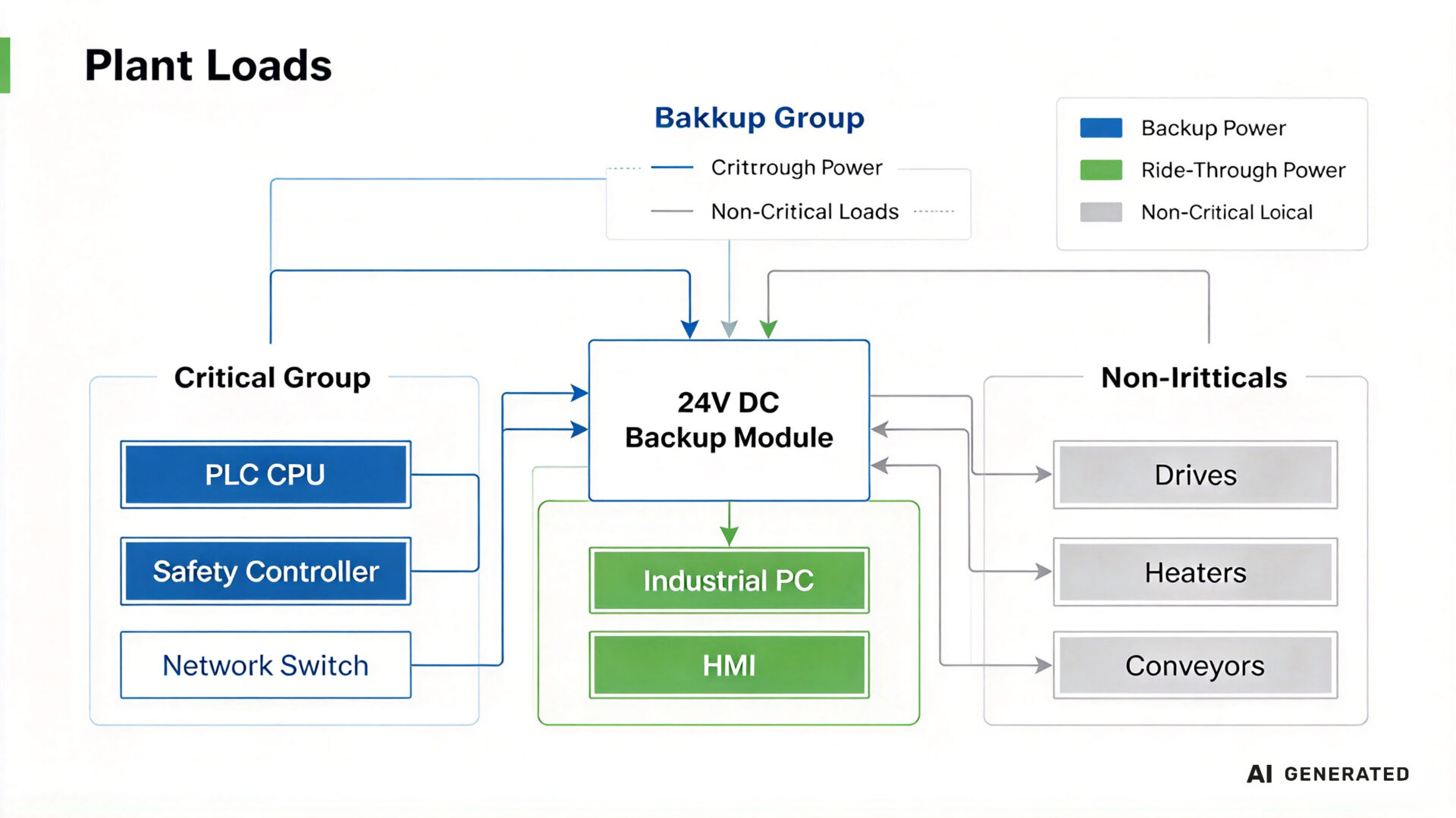
The first deliverable was a load map, not a product list. Every load in the three lines was classified into three groups:
- Critical: PLC CPU, safety controller, network switch. Requirement: ride through 300 ms and remain in run state.
- Ride-through with controlled shutdown: industrial PC and HMI. Requirement: ride through 300 ms, then execute a defined shutdown sequence within 3 minutes.
- Non-critical: drives, heaters, conveyors, lighting. Requirement: none. Allowed to drop and restart under the line’s existing restart procedure.
The classification was agreed with the customer’s engineering and operations teams, because it defines what the line will and will not do during a dip. That agreement is the part that prevents later scope creep.
3.2 Step 2 — Panel-level 24V DC backup and DC-input IPC
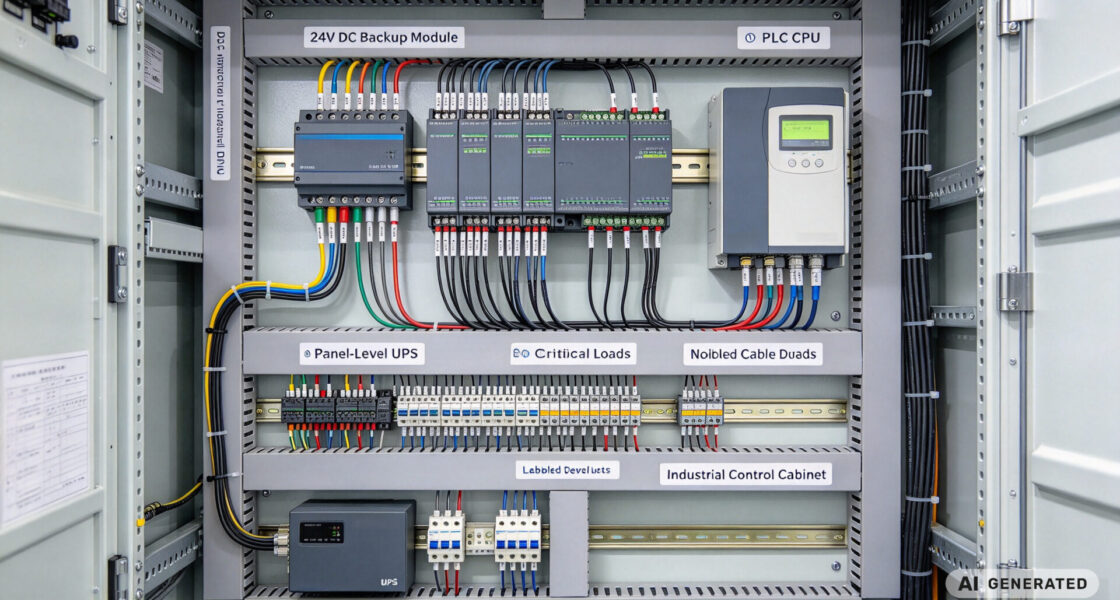
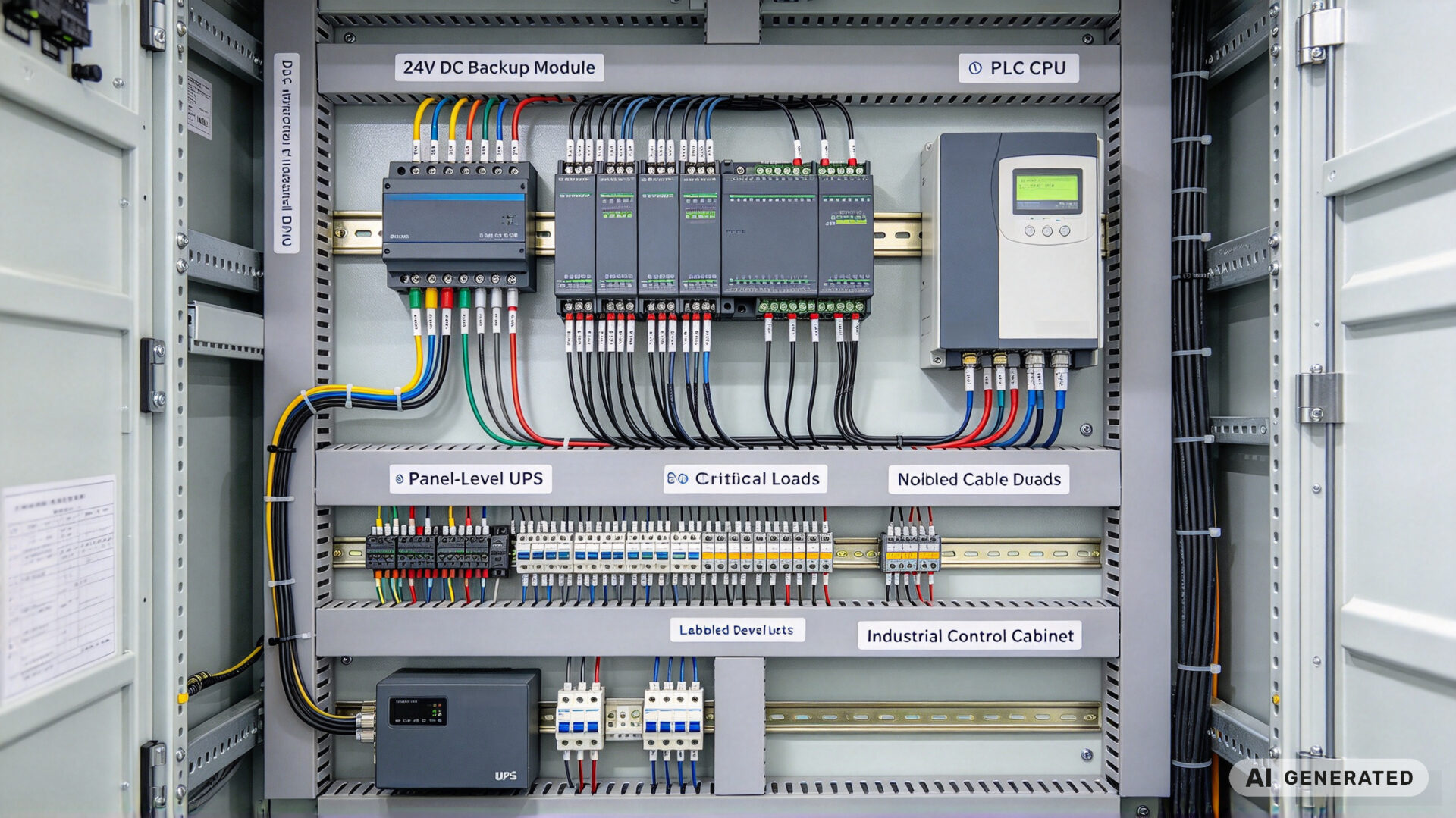
For the critical group, TPS integrated a 24V DC backup module into each control panel, sized from the measured PLC and network load plus the hold-up requirement. The module maintains the 24V rail during the dip and switches back automatically on recovery.
For the industrial PC, TPS specified a DC-input unit rather than an AC-input PC behind a small UPS. This removes one conversion stage, reduces the panel footprint, and gives the shutdown software a direct view of the DC rail voltage. The PC’s shutdown sequence is triggered by the backup module’s status contact, not by a separate UPS interface.
For panels where a panel-level AC UPS was already installed, TPS kept it and re-scoped it to the critical group only, which reduced the required VA rating and allowed the existing unit to be retained instead of replaced.
3.3 Step 3 — Dip injection and validation
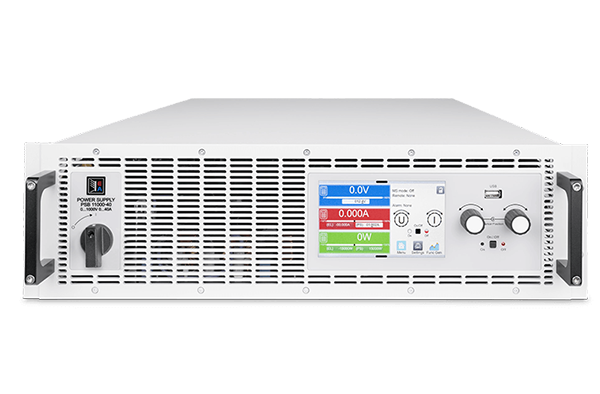
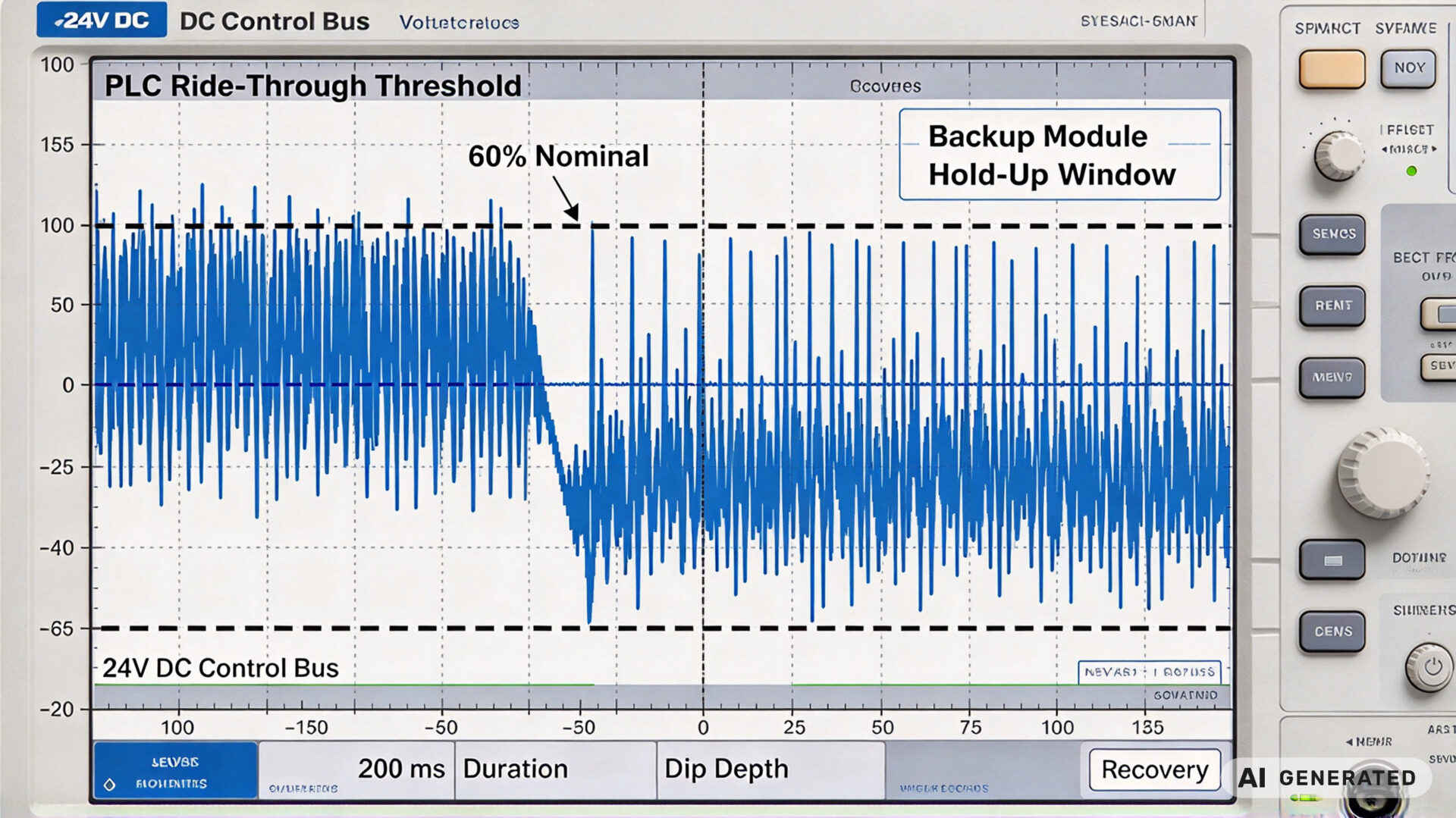
Validation used a programmable AC source to inject dip profiles matching the measured utility events: 60% residual voltage for 200 ms, 55% for 300 ms, and a 0% interruption for 20 ms. The PLC was monitored for run state, the IPC for reboot events, and the HMI for communication loss.
The test also covered the recovery transition: the backup module must return to normal operation without causing a second reset, and the IPC shutdown sequence must not trigger on a dip that the PLC rode through successfully. Both behaviours were verified and documented in a test report that the customer attached to the line’s technical file.
4. Measured results and customer outcome
The segmented approach delivered the continuity result without the plant-wide UPS. Measured outcomes on the three lines:
- PLC resets during dips: reduced from several per week to zero across a six-month observation period covering more than 40 recorded dip events.
- Industrial PC reboots: eliminated; the IPC now completes a controlled shutdown when the dip exceeds the ride-through window.
- Protected load: reduced from the entire facility load to the critical and ride-through groups — a small fraction of the original plant-wide UPS rating.
- Capital cost: the panel-level scope avoided the battery room, the floor reinforcement, and the oversized conversion hardware of the plant-wide proposal.
- Maintenance: backup modules are replaced at panel level, with no planned plant outage.
The customer subsequently applied the same load-map method to two additional lines. The load map and the validation report became the standard documents for new line specifications, which is the outcome that matters for procurement: a repeatable scope, not a one-off fix.
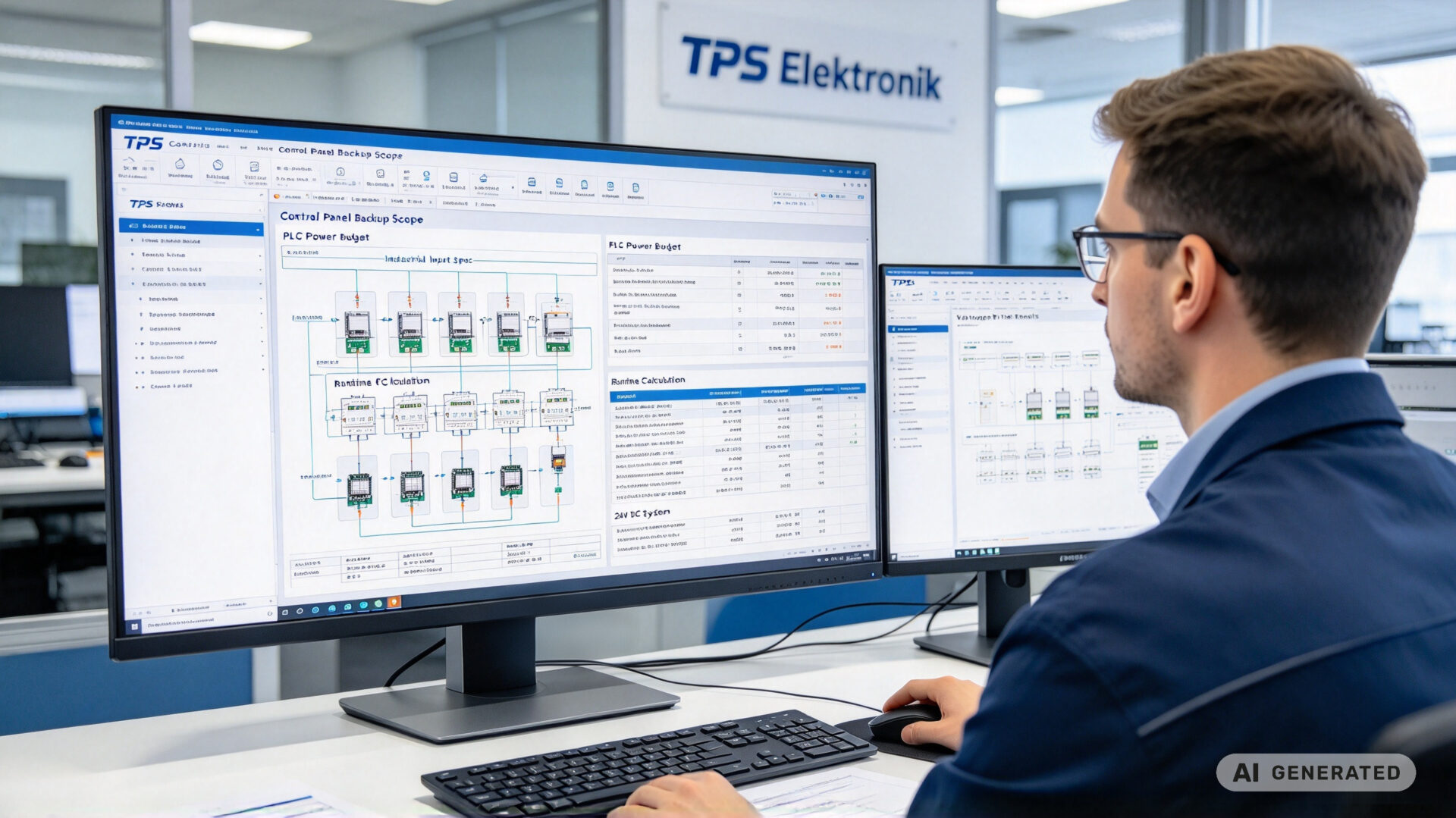
Related TPS additional services used in the project include incoming goods inspection for production line efficiency and inventory management for electronic components, which kept the backup module and IPC stock aligned with the line build schedule.