


Key Takeaways
- The 19 inch chassis (482.6 mm width) ensures global compatibility across industries.
- Steel chassis offer maximum strength and EMC shielding, ideal for industrial environments.
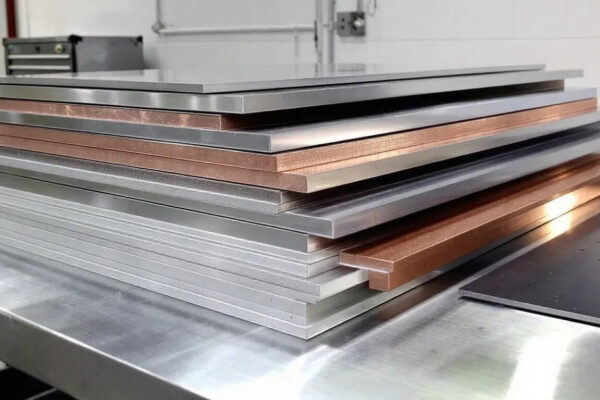
- Aluminium chassis provide lightweight construction and excellent heat dissipation.
- Surface finishes like powder coating, anodising, and nickel plating improve durability and performance.
- Understanding front plates, side plates, ventilation, and handles helps you choose the right enclosure.
- Specialised types include server, power supply, and industrial chassis.
- Customisation (cut-outs, colours, custom cooling patterns) is essential for many OEM applications.
- Future trends include advanced cooling technologies, smart chassis, and sustainable materials.
The 19-inch chassis standard has become the global foundation for mounting and protecting electronic equipment—from servers and network hardware to industrial control systems and power distribution units. Although these enclosures seem simple at first glance, their materials, finishes and construction methods have a major impact on durability, EMC performance, thermal behaviour and long-term reliability.
This guide gives you a clear, practical overview of 19-inch industrial chassis design, the differences between steel and aluminium, key finishing methods, and what to consider when selecting or customising an enclosure for your application.

What Makes the 19-Inch Standard So Important?
The 19-inch form factor dates back to early telecommunications infrastructure. Today, it is formalised in global standards like EIA-310 and IEC 60297, ensuring mechanical compatibility across manufacturers.
Key standard dimensions:
- Width: 19 inches (482.6 mm between mounting rails)
- Rack unit (U): 1U = 44.45 mm height
- Mounting pattern: defined hole spacing and depth
This consistency allows equipment from different vendors to be installed in the same rack—critical for data centres, industrial automation, broadcasting, test equipment and more.
Steel vs. Aluminium: Choosing the Right Material
Material selection directly affects structural strength, weight, EMC performance, thermal management and cost.
Steel Chassis – High Strength & Strong EMC Performance
Steel is the preferred material when maximum durability is required.
Advantages:
- Excellent mechanical strength, ideal for heavy components
- Natural electromagnetic shielding (good EMC performance)
- High resistance to vibration and mechanical impact
- Affordable and widely available
Typical use cases:
- Industrial control systems
- Power electronics
- Heavy 19-inch modules
- Environments with EMI/EMC requirements
Galvanised steel versions add a zinc coating for improved corrosion resistance.
Aluminium Chassis – Lightweight & Thermally Efficient
Aluminium is the material of choice when weight reduction and heat dissipation are primary priorities.
Advantages:
- Approx. ⅓ the weight of steel
- High thermal conductivity—excellent for cooling
- Naturally corrosion-resistant
- Easy to machine and customise
Typical use cases:
- High-performance computing
- Power electronics with high heat generation
- Mobile or weight-restricted installations
- LED and signal processing equipment
Anodised surfaces improve corrosion resistance and aesthetics.
Surface Treatments & Protective Finishes
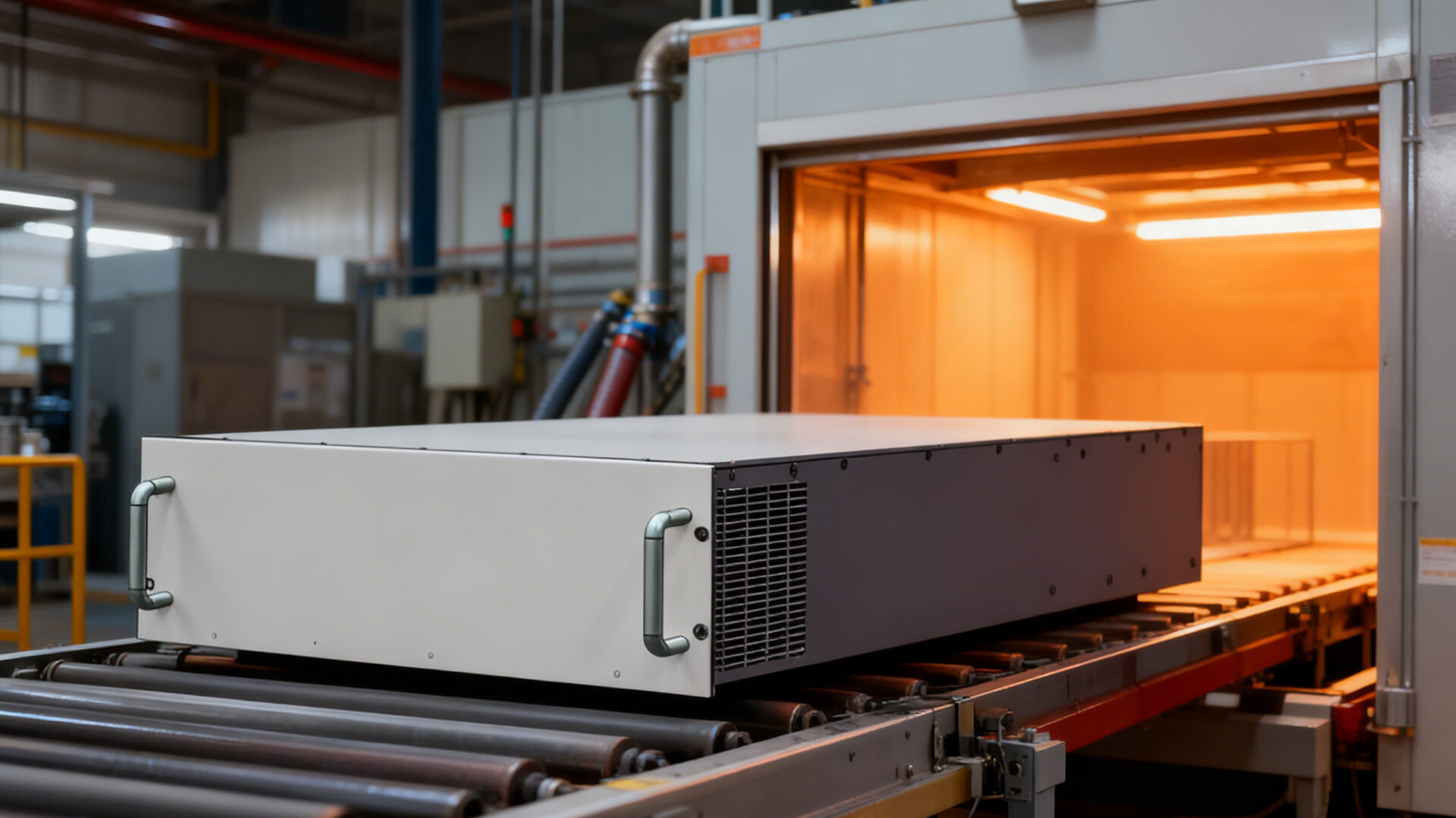
Metal alone is rarely enough for long-term performance. Proper finishing ensures corrosion resistance, scratch protection, EMC continuity and a professional appearance.
Powder Coating – The Industry Standard
Powder coating is the most common finish for both steel and aluminium.
Benefits:
- Very durable and scratch-resistant
- Strong protection against moisture and chemicals
- Wide range of colours and textures
- Uniform and thick protective layer (60–120 μm)
This method is ideal for both standard and custom-coloured chassis.
RAL 7035 – The Classic Industrial Look
RAL 7035 (Light Grey) has become a de-facto standard in professional electronics because it:
- Fits visually into labs and control rooms
- Hides small scratches and dust well
- Maintains a clean, neutral appearance
- Matches existing systems from different manufacturers
For branding or functional colour coding, custom RAL or Pantone colours are also possible.
Nickel-Coated Rear Panels – Optimised for Conductivity
Rear panels often require better electrical conductivity for grounding and EMC connections.
Nickel coating provides:
- Strong corrosion resistance
- Stable electrical contact points
- High hardness and wear resistance
This is particularly important for power modules, RF equipment and systems where connectors are frequently plugged in.
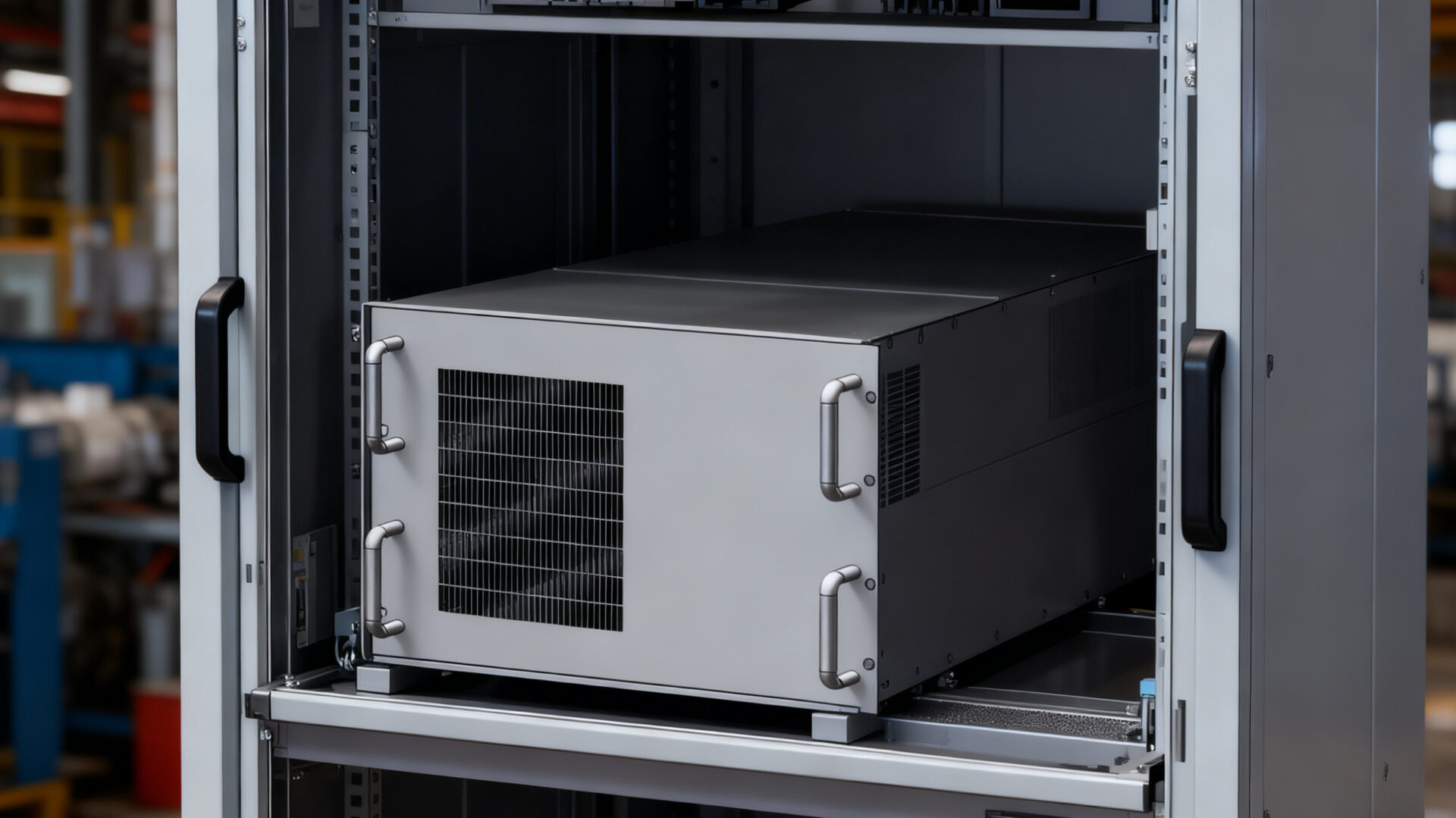
Key Components of a 19-Inch Chassis
A well-designed chassis consists of several carefully engineered elements.
Front Plate
- Provides structural stiffness
- Houses displays, LEDs, push-buttons, handles and connectors
- Can integrate airflow openings
- Supports branding and labelling
Side Plates
- Form the main enclosure body
- Provide rigidity and EMC shielding
- May include cooling perforations or heat-sink structures
- Can be extruded aluminium for advanced thermal performance
Handles
- Critical for safe and ergonomic installation
- Available in recessed or extended versions
- Designed to support the full load of the chassis
Specialised Chassis Types
Different applications require different chassis designs.
Server Chassis
Optimised for airflow, density and serviceability.
Common features:
- 1U to 4U height
- Hot-swap fans
- Redundant PSUs
- Defined airflow paths
- High perforation (with EMC measures)
Power Supply Chassis
Built for safety and heat management.
Typical characteristics:
- Reinforced internal structure
- Separation between high- and low-voltage sections
- Large heat sinks
- Heavy-duty terminal blocks
- Enhanced cooling solutions
Industrial Chassis
Designed for extreme conditions.
Typical properties:
- Thick steel plates
- High IP protection (IP54–IP66)
- EMC + environmental seals
- Corrosion-resistant coatings
- Options for sealed or filtered cooling
Customisation Options
Standard enclosures cover many needs, but specialised systems often require modifications.
Custom Colour Chassis
Useful for:
- Corporate branding
- Safety and function identification
- Clear grouping of subsystems
Modified Front & Side Plates
Custom machining supports:
- Special connectors or interfaces
- Touch displays and HMI units
- Custom airflow patterns
- Reinforced mounting points
- Heat-sink integration
These modifications usually begin with 3D CAD design and, for complex designs, structural simulations.
Future Trends in 19-Inch Chassis Design
Several developments are shaping the next generation of enclosures:
1. More advanced thermal management
- Liquid cooling
- Hybrid air/liquid solutions
- Immersion-ready designs for high-density computing
2. Smart chassis with integrated electronics
- Temperature and vibration sensors
- Predictive-maintenance data
- Embedded monitoring modules
3. Sustainable materials and coatings
- Recycled aluminium and steel
- Low-emission powder coatings
- Designs optimised for end-of-life recycling
These trends reflect growing demands for higher performance, energy efficiency and environmental responsibility.
Conclusion: Choosing the Right 19-Inch Chassis
Selecting the optimal enclosure depends on balancing several factors:
- Mechanical strength: steel vs aluminium
- Thermal behaviour: airflow, heat sinks, material conductivity
- Environmental protection: coatings, IP ratings, corrosion resistance
- EMC performance: shielding, grounding, rear panel treatment
- Customisation needs: colour, cut-outs, handles, cooling patterns
- Application: server, power electronics, industrial automation
A well-chosen chassis helps ensure long-term reliability, simplified integration and safe operation of your electronic systems.
If you need support in selecting or customising a 19-inch chassis, TPS Elektronik GmbH can assist you with technical guidance, tailored modifications and prototype development. Our engineering team helps you find the right enclosure solution for your mechanical, thermal and EMC requirements.
FAQ
1. What exactly is a 19-inch chassis?
It is a standardised enclosure with a 482.6 mm mounting width. This ensures equipment from multiple manufacturers fits into the same rack.
2. What is the difference between 1U, 2U and 4U?
These refer to height units.
- 1U = 44.45 mm
- 2U = 88.9 mm
- 4U = 177.8 mm
Higher units allow more components, cooling, and power density.
3. When should I choose steel over aluminium?
Choose steel when you need:
- high durability
- strong EMC shielding
- resistance to vibration
Choose aluminium when you need:
- low weight
- excellent thermal conductivity
- easy machining or customisation
4. What is RAL 7035 and why is it used so often?
RAL 7035 (light grey) is the industry standard colour because it:
- looks professional
- hides dust and scratches
- matches equipment from different suppliers
5. What surface treatment is best for corrosion resistance?
- Powder coating for steel or aluminium (general use)
- Galvanisation for harsh industrial or outdoor conditions
- Anodising for aluminium with higher wear and scratch resistance
- Nickel plating for rear panels requiring conductivity
6. Can I customise a 19-inch chassis?
Yes. Common customisations include:
- Special cut-outs for connectors
- Custom front plate design
- Custom cooling patterns
- Branding (colours, logos)
- Reinforced mounting points
7. What industries use 19-inch chassis?
- Data centres and IT infrastructure
- Industrial automation
- Telecommunications
- Test & measurement
- Power electronics
- Military and aerospace
8. What’s the most important factor when choosing a chassis?
Match the chassis to the environment and thermal requirements.
Heat, EMC, and durability matter more than appearance.