

Key Takeaways
- A structured incoming goods inspection program—supported by a clear incoming goods inspection procedure, a maintained incoming goods inspection checklist, and a standardized incoming goods inspection form—can improve production efficiency by preventing defects before they reach the line.
- Targeted production line efficiency improvement typically results from bottleneck analysis, takt balancing, and fast feedback loops such as hourly KPIs, first-pass yield tracking, and standardized downtime codes.
- Practical, low-investment methods to improve manufacturing productivity and efficiency include SMED for changeovers, standard work, error-proofing, and data-supported maintenance routines.
- Our “Additional Services” bundle combines quality engineering, industrial engineering, and supplier quality support to help organizations address production efficiency and line performance in a structured, measurable way.
- When teams align around shared procedures, forms, and dashboards, plants often improve productivity and efficiency while reducing rework and material shortages.
Operations leaders regularly face the question of how to improve production efficiency without large capital expenditure. In practice, progress often comes from disciplined fundamentals: reliable incoming quality, focused line diagnostics, and repeatable countermeasures. Our Additional Services are designed to integrate these elements into existing workflows and support sustainable production line efficiency improvement.
Part 1 — Incoming Goods Inspection: Catch Problems Before They Hit the Line
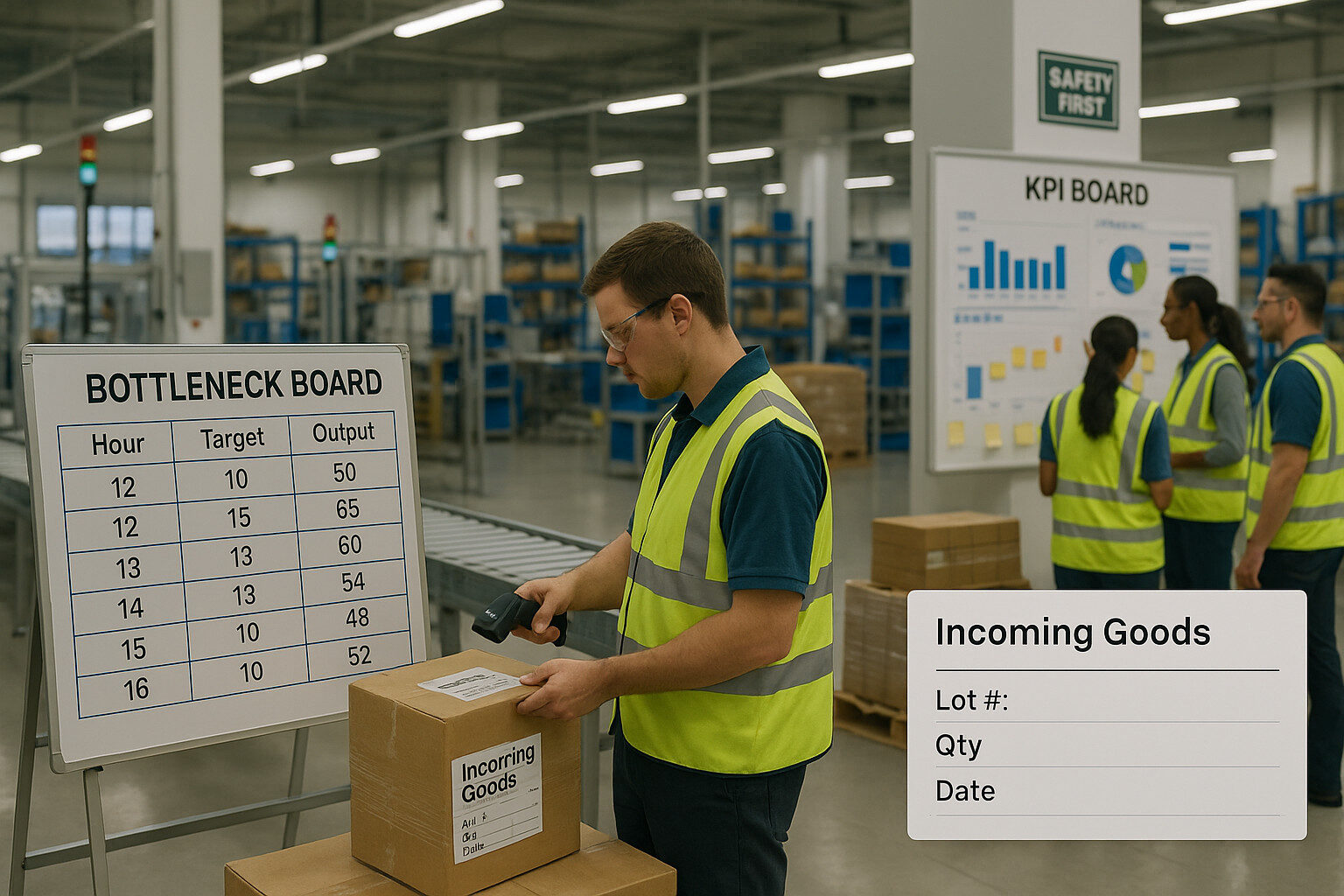
Efficient production starts with consistent input quality. A structured incoming goods inspection helps identify issues early, before they disrupt downstream processes. Our supplier quality team supports the setup of an incoming goods inspection procedure that is practical for daily use and sufficiently robust to contain non-conforming material.
The workflow relies on a standardized incoming goods inspection form and a continuously updated incoming goods inspection checklist. This ensures inspectors consistently record critical information such as lot or serial numbers, revision status, quantities, visual criteria, key dimensions, and sampling results.
Why this approach helps
Clear disposition rules and structured documentation can reduce line interruptions, minimize MRB inventory, and protect available capacity—contributing directly to improved operational efficiency.
Where to start
- Risk-rank suppliers and components
- Define appropriate AQL sampling levels
- Link each inspection characteristic to a defined measurement or go/no-go method
Sample Incoming Goods Inspection Checklist
- PO, part number, and revision match supplier label
- Quantity verification and packaging integrity; ESD or moisture controls where applicable
- Critical dimensions (with gauge reference or photo); cosmetic standards
- Certificates (e.g. CoC/CoA, material specification, RoHS/REACH where required)
- Sampling plan and results recorded on the incoming goods inspection form
Part 2 — Production Line Efficiency Improvement: A 5-Day Sprint
Our rapid assessment shows ways to improve manufacturing productivity and efficiency without new machines. In five days, we baseline, rebalance, and lock in wins.
A focused assessment can reveal opportunities to improve manufacturing productivity and efficiency without adding equipment. In a typical five-day engagement, teams establish a baseline, address constraints, and stabilize improvements.
Day 1 – Baseline
Value-stream mapping and data collection (cycle time, changeover time, OEE, first-pass yield).
Day 2 – Bottlenecks
Time studies and root-cause analysis to identify constraints related to layout, skills, material flow, or supply.
Day 3 – Countermeasures
Implementation of SMED for changeovers, standard work definitions, line balancing, and visual WIP limits.
Day 4 – Stabilization
Error-proofing measures, targeted maintenance actions, and structured training with job instruction sheets.
Day 5 – Control
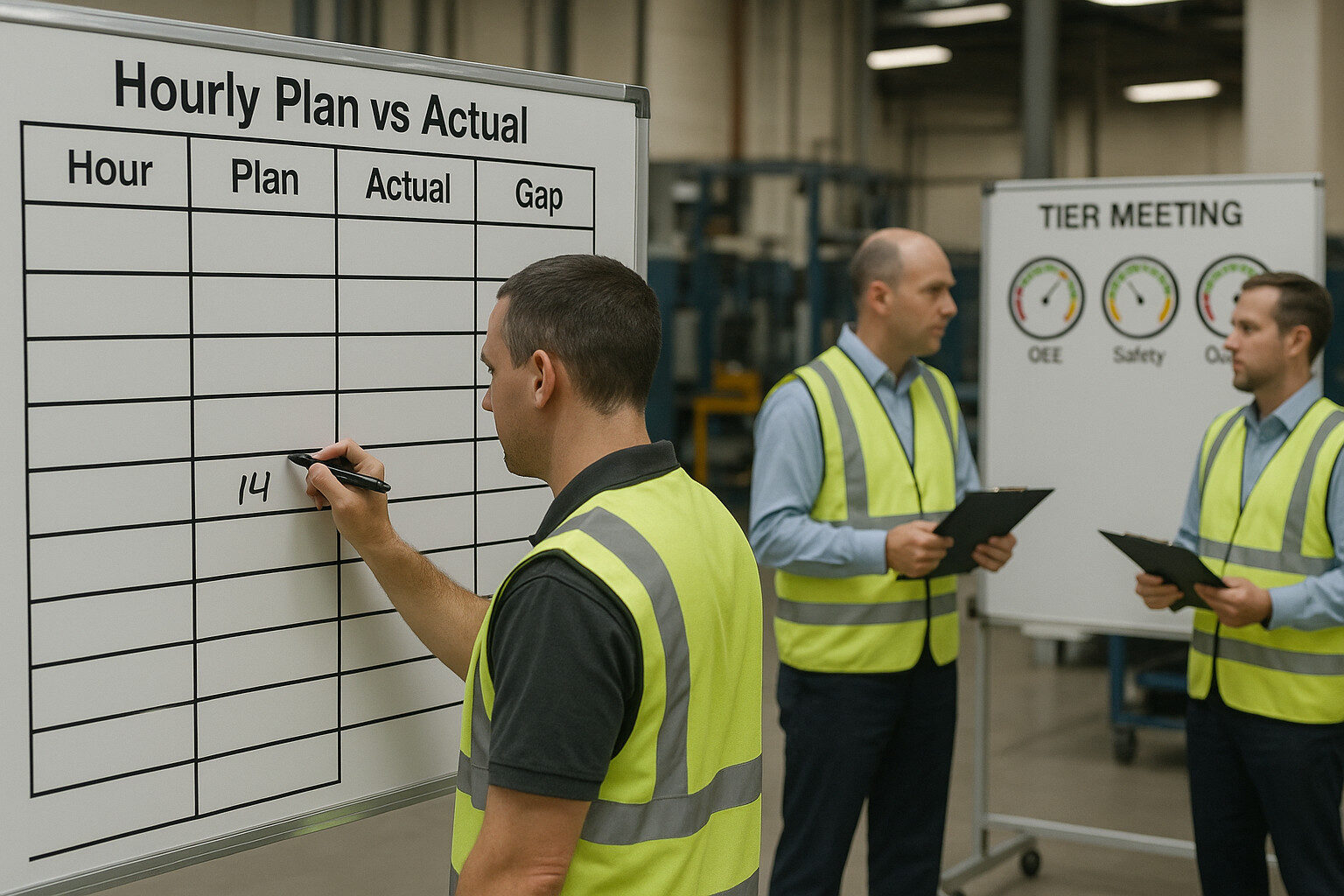
Introduction of hourly tracking boards and tiered huddles to support ongoing production line efficiency improvement
Part 3 — How to Improve Production Efficiency: The Daily Operating System
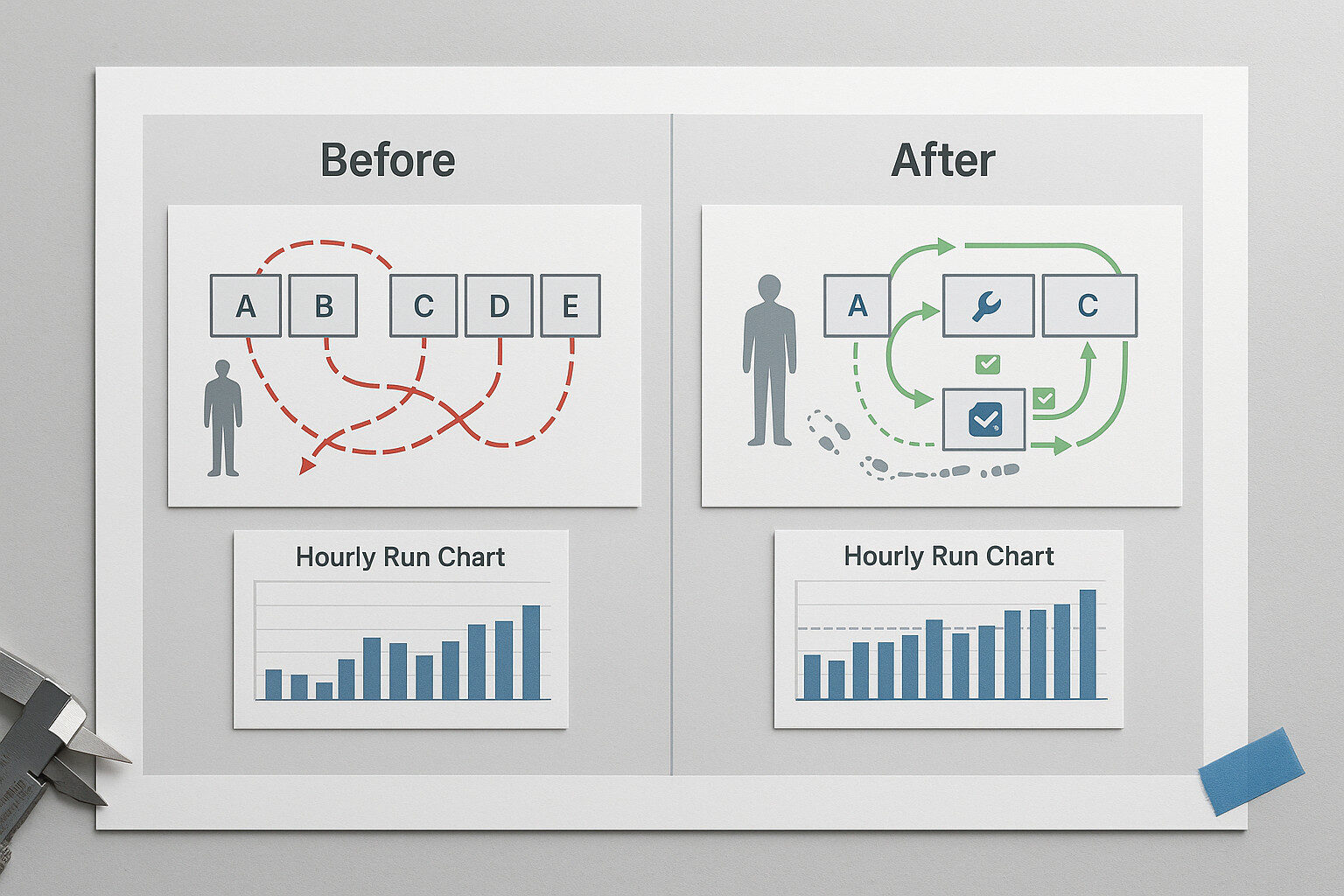
Sustainable efficiency depends on consistent daily practices. The following operating rhythm helps teams improve productivity and efficiency in day-to-day operations:
- Tiered huddles: Short, structured start-of-shift reviews covering safety, quality, delivery, and cost
- Visual controls: Hourly plan-versus-actual tracking, standardized downtime codes, and andon escalation
- Standard work: Documented best methods at each station, reviewed and audited regularly
- Maintenance cadence: Daily operator checks combined with weekly preventive maintenance
- Skills matrix: Cross-training to increase flexibility and reduce vulnerability to absences
Download-Ready Templates (Included With the Service)
- Incoming goods inspection checklist (editable): characteristics, sampling rules, gauges, accept/reject criteria
- Incoming goods inspection form: AQL calculation support, barcode fields, photo attachments
- Line efficiency toolkit: time-study sheets, SMED worksheets, hourly run charts, and skills matrices
These shared documents support collaboration between engineering, quality, and production teams and help reduce ambiguity during execution.
Case Snapshot: Throughput Improvement Within One Month
Following the introduction of structured incoming inspection, SMED activities, and hourly performance controls, a mid-volume, high-mix electronics assembly line reduced average changeover time by approximately 30% and improved first-pass yield by several percentage points. The combination of supplier containment and line balancing contributed to higher throughput without additional equipment investment, illustrating established methods to improve manufacturing productivity and efficiency.
FAQ
Q1. We are resource-constrained—where should we start?
Begin with incoming goods inspection. A simple, well-defined inspection gate can stabilize the line and create the conditions for targeted bottleneck improvement.
Q2. How quickly can results be observed?
Many organizations observe measurable improvements in changeover time or defect rates within a few weeks, depending on product mix and baseline maturity.
Q3. What if our production mix changes daily?
SMED, a skills matrix, and clearly defined standard work help stabilize quality and enable labor flexibility in high-mix environments.
Q4. Do templates really add value?
Shared checklists and forms reduce interpretation differences and simplify audits. A clear incoming goods inspection procedure supported by consistent documentation can shorten disposition times and protect capacity.
Q5. Can this approach scale across multiple sites?
Yes. Keeping core methods and documentation consistent while allowing local adjustment of takt, staffing, and layout supports scalability across a production network.
TPS Elektronik offers hands-on additional services to support production efficiency improvement, including supplier quality setup, focused line assessments, daily management systems, and structured documentation. A pilot on a selected value stream can help teams assess applicability, effort, and expected impact in their specific production environment.