

In today’s competitive manufacturing environment, improving production efficiency while maintaining consistent quality has become a central operational challenge. Increasing output alone is no longer sufficient. Sustainable efficiency requires stable processes, reliable input materials, and transparent data across the entire production chain.
From production line optimization to structured incoming goods inspection, each stage of the manufacturing process contributes to productivity, repeatability, and cost control.
Improving Manufacturing Productivity and Efficiency
Manufacturers are increasingly adopting structured, methodical approaches to improve productivity and operational efficiency. Typical focus areas include automation, workforce qualification, lean manufacturing principles, and the use of digital tools for planning and monitoring.
Improving production efficiency is not limited to cycle-time reduction. It also involves minimizing waste, improving material flow, reducing rework, and ensuring that information is available where operational decisions are made. Cross-functional coordination between production, quality, and procurement plays a key role in achieving these objectives.
Advanced analytics and real-time monitoring systems support these efforts by identifying bottlenecks, enabling condition-based maintenance, and improving overall equipment effectiveness (OEE). When applied consistently, such systems help stabilize production processes and support continuous improvement initiatives.
Production Line Efficiency Improvement
Production line efficiency improvement is a core element of operational stability. By analyzing workflow data, standardizing work steps, and introducing flexible automation concepts, manufacturers can improve throughput without compromising quality requirements.
Typical measures include optimizing machine layout, aligning production schedules with actual demand, and using software-based planning tools to reduce idle time and unnecessary changeovers. In addition, providing operators with digital dashboards and visual performance indicators supports faster response to deviations and improves coordination between production units.
Rather than relying on isolated improvements, production line efficiency benefits most from a systematic approach that considers equipment, processes, and human interaction together.
Incoming Goods Inspection as a Quality Foundation
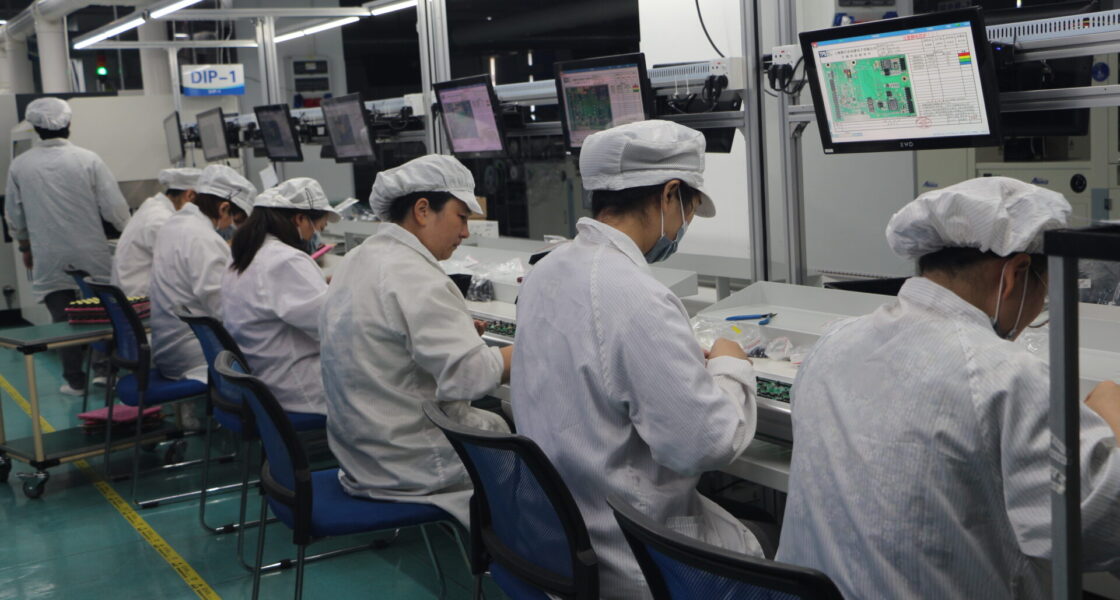
Consistent product quality starts with reliable incoming materials. A structured incoming goods inspection process ensures that components and raw materials meet defined specifications before entering production. This early verification helps prevent defects from propagating through downstream processes.
Clearly defined inspection procedures enable inspectors to identify deviations at an early stage and reduce the risk of production interruptions, scrap, or rework. To ensure repeatability, many manufacturers rely on standardized tools such as an incoming goods inspection checklist and an incoming goods inspection form.
These documents typically guide inspectors through essential verification steps, including dimensional checks, surface inspection, documentation review, and batch traceability. When applied consistently, incoming goods inspection supports supplier accountability and contributes to stable production conditions.
Linking Inspection Data with Process Optimization
The full value of inspection activities is realized when inspection data is systematically integrated into production and quality management systems. Incoming goods inspection results can be analyzed to identify recurring deviations, assess supplier performance, and support corrective actions.
By linking inspection data with production metrics, manufacturers gain better visibility into process stability and material-related risks. This enables informed adjustments to process parameters, improved planning reliability, and more targeted supplier communication.
Such integration supports reductions in unplanned downtime, lower scrap rates, and improved product consistency across production batches—contributing to both efficiency and quality objectives.
Conclusion
From improving production efficiency to implementing structured incoming goods inspection procedures, manufacturers increasingly rely on data-driven methods to support continuous improvement. Investments in production line efficiency improvement, standardized inspection documentation such as incoming goods inspection checklists and forms, and digital collaboration tools provide a practical foundation for operational excellence.
As manufacturing environments continue to evolve, the combination of effective process control and reliable inspection practices remains a key factor for achieving sustainable, scalable, and resilient production performance.