

Key Takeaways
- Compact 350 W switching power supply designed for small PCs and industrial systems
- ATX12V v2.4 design with EPS12V v2.92 compatibility for modern platforms
- Active PFC and an 82/85/82 efficiency design targeting reduced heat and standby losses
- Standard ATX rail set (+3.3 V, +5 V, +12 V, −12 V, +5 VSB) with specified ripple and noise limits
- Integrated protection functions suitable for continuous-operation systems
- 80 mm fan cooling and defined operating temperature range for enclosed installations
When a system is expected to operate continuously—whether as an industrial controller, network appliance, or compact workstation—the power supply becomes a functional part of overall system reliability. The FSP350-50SAC is designed with this context in mind, focusing on stable outputs, defined protections, and predictable thermal behavior for real-world enclosures.
Compact 350 W ATX PSU for Space-Constrained Systems
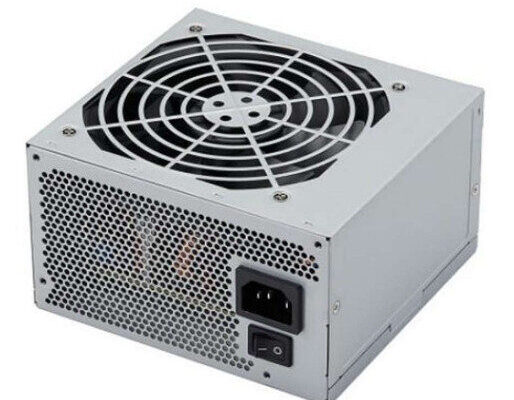
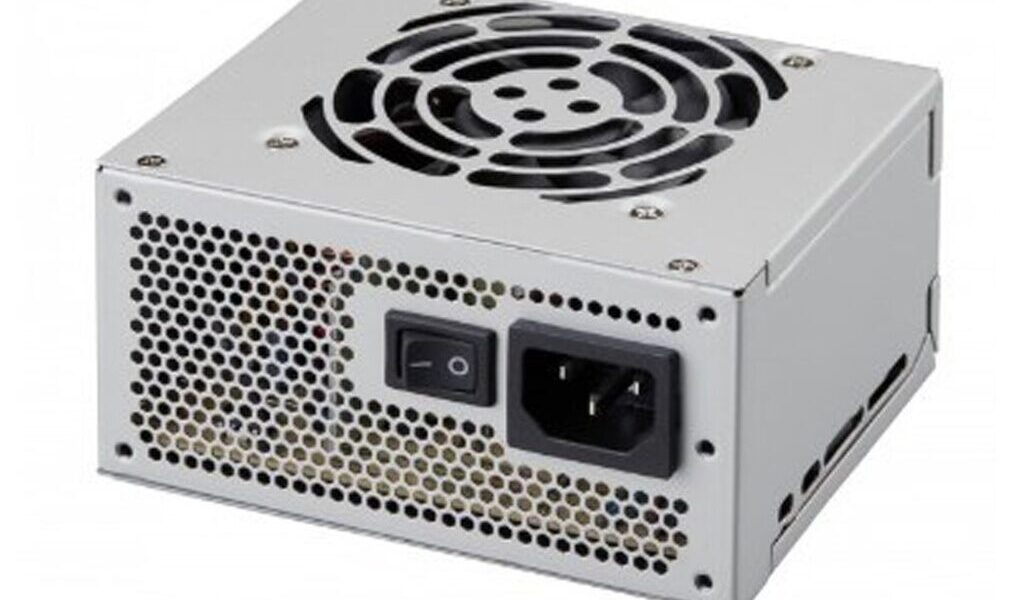
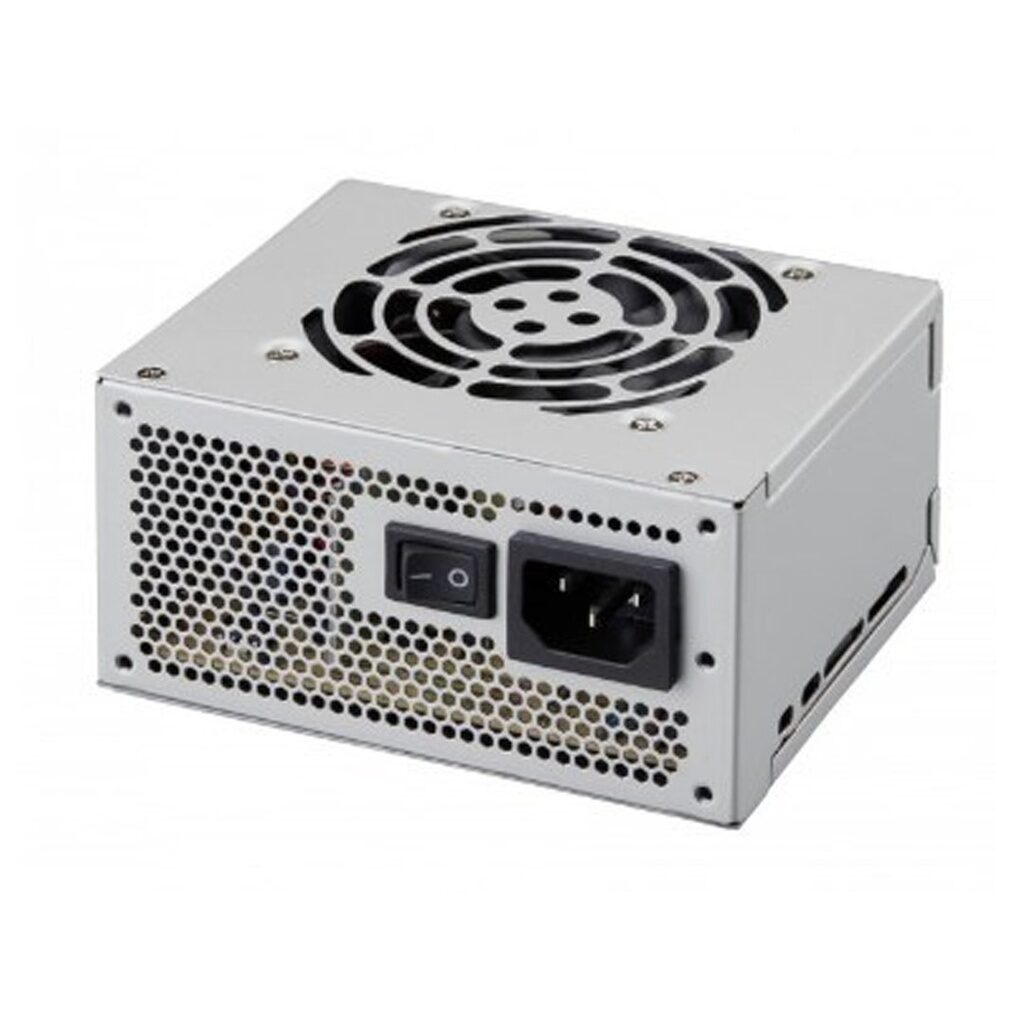
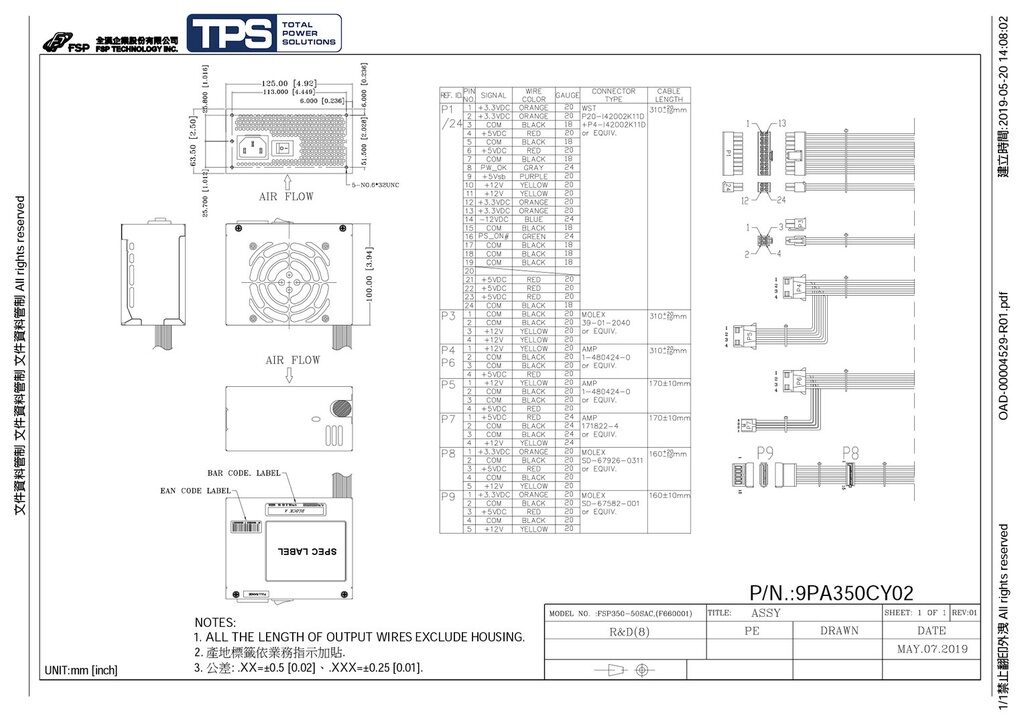
The FSP350-50SAC is positioned as a compact 350 W ATX power supply for small PCs and industrial systems. It combines a metal enclosure measuring 100 × 125 × 63.5 mm, a standard C14 AC inlet, and an integrated 80 mm cooling fan—a practical configuration for systems with fixed airflow paths and limited internal space.
For regulated environments, the product documentation references common compliance expectations such as RoHS, CE, UL, WEEE, and UKCA, supporting smoother procurement and system-level qualification workflows.
Electrical Architecture and Efficiency Targets
According to the published specification, the FSP350-50SAC is an AC-line powered switching power supply featuring:
- Active power factor correction (PFC)
- ATX12V v2.4 compliance
- EPS12V v2.92 compatibility
The internal architecture derives the +5 V and +3.3 V rails from the +12 V rail using DC-DC conversion, a common approach in modern PSU designs to support tighter voltage regulation under dynamic load conditions.
Efficiency performance is documented using an 82/85/82 design target across light, typical, and full load conditions. Standby behavior aligns with ErP-era requirements, which is relevant for systems that spend extended periods in low-load or standby states.
On the input side, the PSU supports a wide AC input range and maintains a high power factor at full load—an important consideration in installations where line loading and harmonics must be managed.
Output Rails and Signal Quality
The power supply provides a standard ATX rail configuration:
- +3.3 V
- +5 V
- +12 V
- −12 V
- +5 VSB
This rail set supports typical PC and embedded system loads, including logic circuitry, storage devices, cooling fans, peripherals, and standby-powered functions. Combined load limits are defined in the specification, including shared budgets for the +3.3 V and +5 V rails and a high-current capability on the +12 V rail.
For signal integrity, the PSU specifies ripple and noise limits measured at the load-side connector using the defined test configuration:
- 50 mV p-p on +3.3 V, +5 V, and +5 VSB
- 120 mV p-p on +12 V and −12 V
These limits are relevant for systems using high-speed storage, communication modules, or sensitive I/O interfaces.
Protection Functions
To support stable operation in industrial and commercial systems, the FSP350-50SAC includes the following protection mechanisms:
- Over-voltage protection (OVP)
- Over-current protection (OCP)
- Short-circuit protection (SCP)
- Over-power protection (OPP)
Short-circuit events are specified to trigger a latch-off shutdown, while over-power conditions initiate shutdown when output exceeds the defined operating window. These functions are intended to help limit the impact of wiring faults or abnormal load conditions.
Thermal Management and Environmental Conditions
Thermal management is handled by an integrated 80 mm fan, powered from the internal 12 V rail. Acoustic behavior is specified under defined load conditions.
The documented environmental limits include:
- Operating temperature: +0 °C to +40 °C
- Storage temperature: −20 °C to +70 °C
These ranges are typically suitable for industrial PCs, control cabinets, and edge systems installed in ventilated enclosures.
Reliability and Timing Characteristics
For long-term planning, the specification references a mean time between failures (MTBF) exceeding 100,000 hours, calculated using the MIL-HDBK-217 methodology at full load and 25 °C ambient temperature. This positions the unit for applications where continuous operation is expected.
System-level timing behavior is also defined, including Power Good signal timing and hold-up time, supporting predictable system startup and tolerance to brief input interruptions.
Typical Application Areas
The FSP350-50SAC is commonly considered for:
- Compact industrial PCs and embedded controllers
- Small workstations and edge compute systems with limited airflow
- Network appliances and always-on equipment requiring controlled standby behavior
Integration and Sourcing Support
For projects involving industrial PC builds or regulated deployments, TPS Elektronik can support product selection, documentation review, and sourcing of the FSP350-50SAC. Additional guidance on harnessing, airflow planning, and protection behavior during system validation can also be provided.
FAQ
Is the FSP350-50SAC compatible with standard ATX and EPS motherboards?
Yes. It is specified as an ATX12V v2.4 power supply with EPS12V v2.92 compatibility, making it suitable for many PC and industrial PC platforms.
What does active PFC mean in this context?
Active PFC improves power factor and reduces input current distortion, supporting cleaner interaction with the AC supply, especially in always-on or multi-system installations.
What efficiency level is specified?
The PSU follows an 82/85/82 efficiency design target across light, typical, and full load conditions.
Is it suitable for low standby power applications?
It is positioned as an ErP 2013–aligned power supply, which is relevant for systems operating in standby or low-load modes.
Which output rails are available?
The unit provides +3.3 V, +5 V, +12 V, −12 V, and +5 VSB rails in a standard ATX configuration.
What protection features are included?
OVP, OCP, SCP, and OPP are implemented to help manage fault and overload scenarios.
How is cooling handled?
Cooling is provided by an integrated 80 mm fan, designed for use in compact enclosures with defined airflow paths.
Is it appropriate for 24/7 operation?
Based on the specified MTBF and operating limits, it is positioned for systems intended to run continuously under defined conditions.