

Key Takeaways
- End-to-end PCB design and assembly covering SMT, through-hole (THT), and RoHS-compliant lead-free builds.
- Rapid prototyping that transitions into structured quick-turn and series production.
- Documented processes including stencil control, reflow profiling, AOI, and X-ray inspection for BGA components.
- Transparent quoting with clear visibility of cost, lead time, and risk trade-offs.
- Coordinated PCB fabrication and assembly through a vetted manufacturing network.
Whether you are moving from a protoboard to first articles or preparing for regulated production, selecting an EMS partner that combines speed with process discipline is critical. This guide outlines what to evaluate when comparing PCB assembly providers and navigating the industrial PCB manufacturing process.
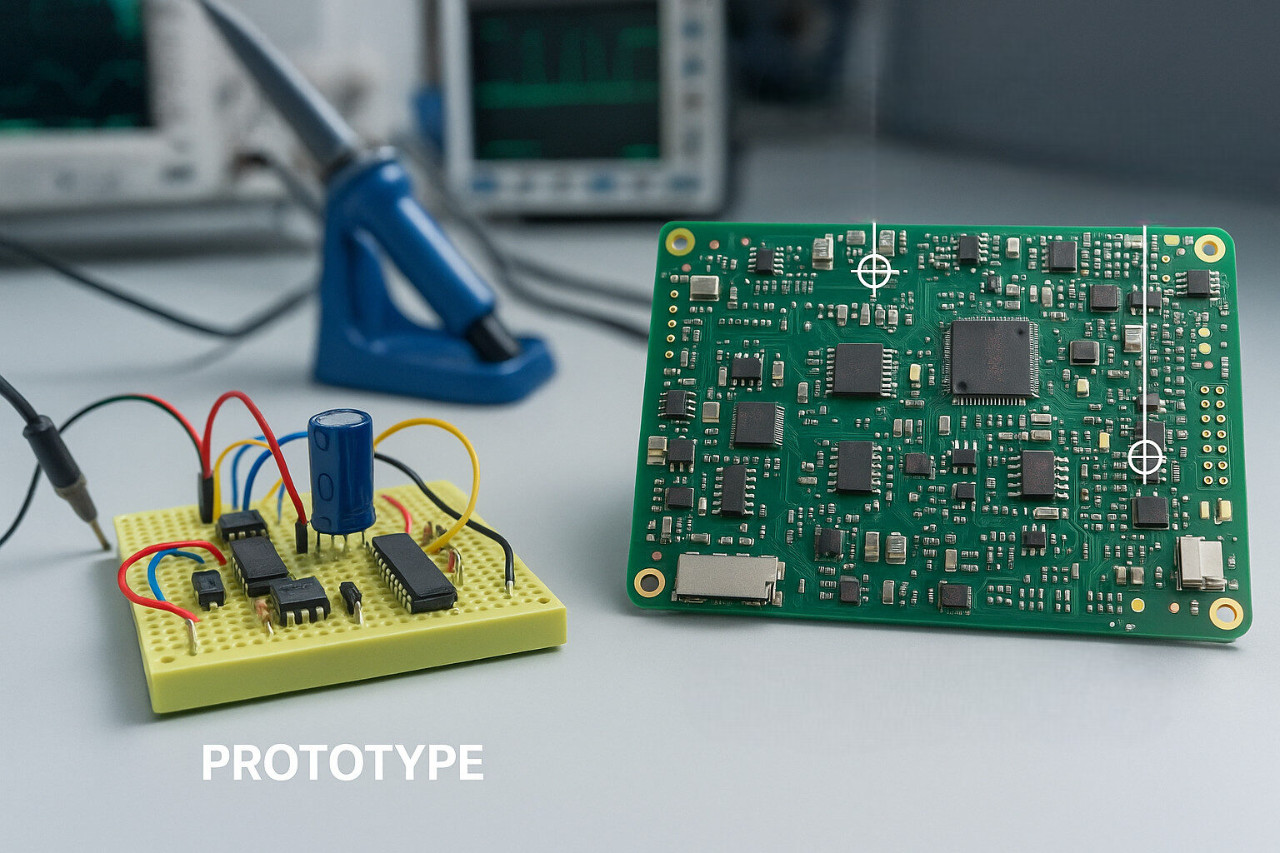
From Protoboard to Production
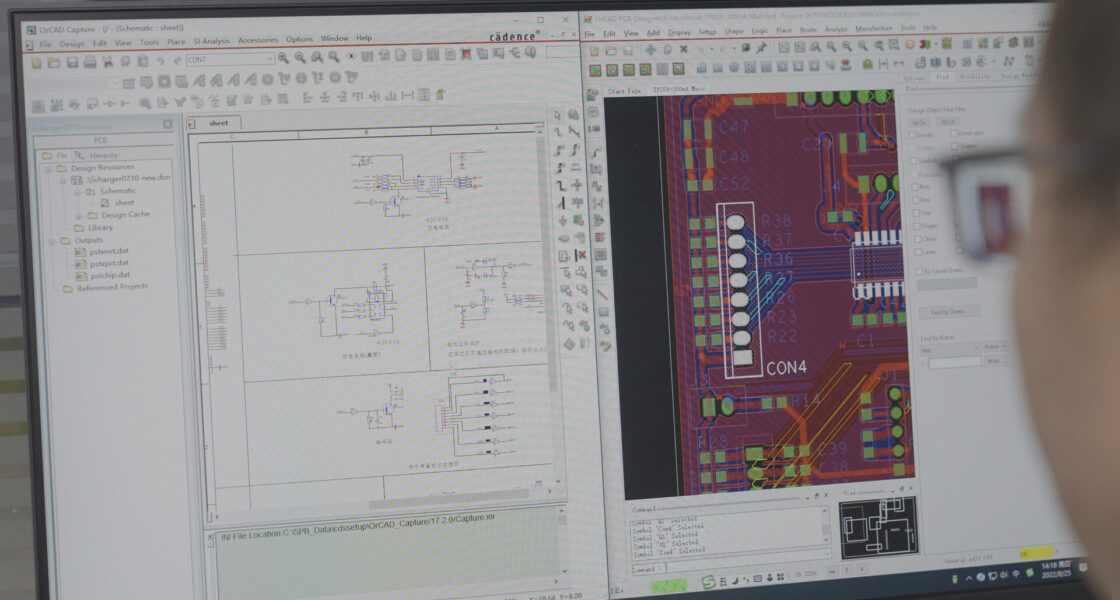
Early concepts often begin on a protoboard. Production reliability, however, starts with structured DFM (Design for Manufacturability) and DFT (Design for Testability).
Typical early-stage checks include:
- Component availability and lifecycle status
- Thermal management and copper balance
- Test-point accessibility
- Rework access for fine-pitch components
- Panelization suitability
Addressing these factors before release reduces iteration cycles and supports a smoother transfer into production.
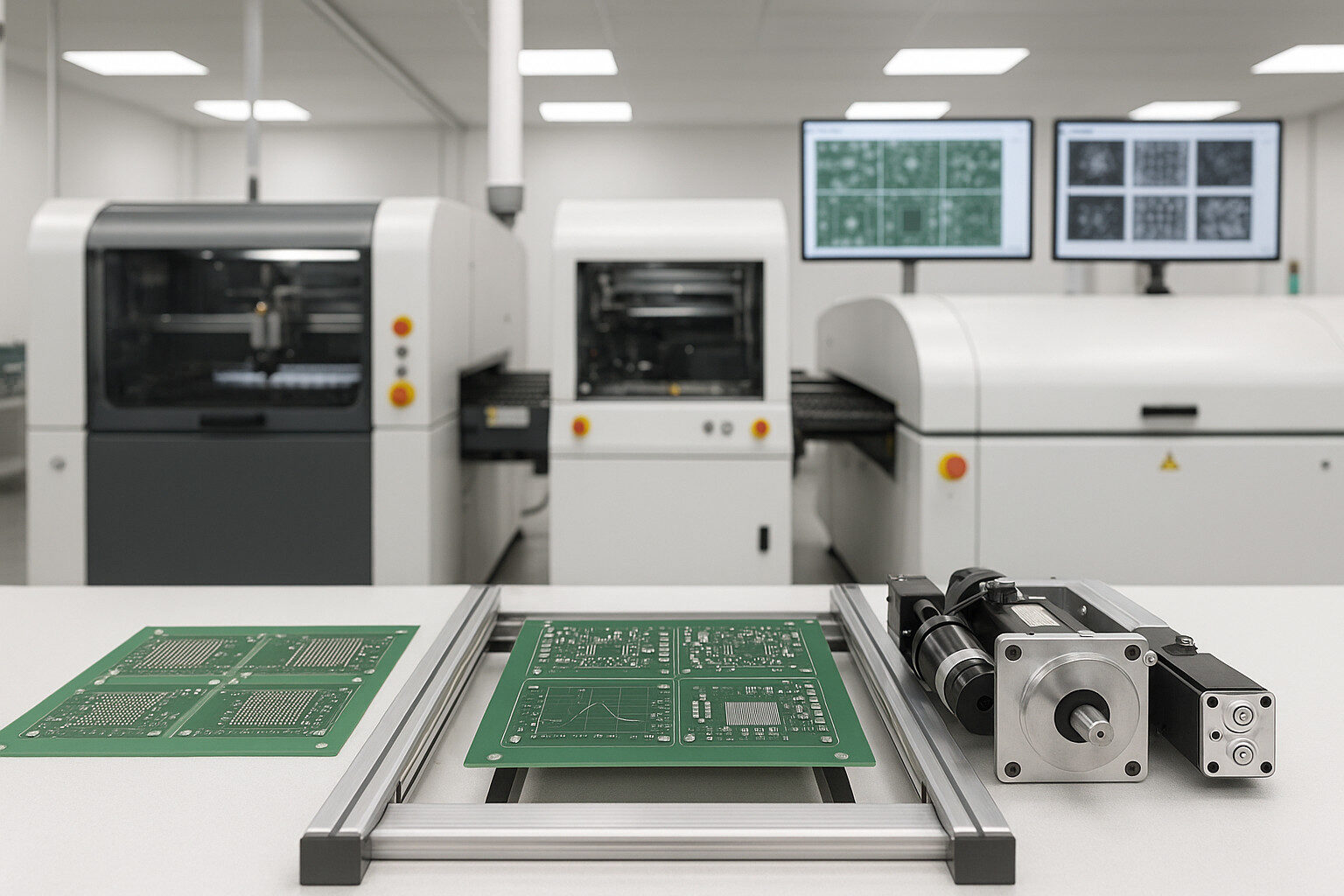
Inside the Assembly Line: SMT, THT, and BGA Control
SMT (Surface-Mount Technology)
SMT forms the backbone of modern PCB assembly. A controlled SMT process typically includes:
- Stencil design and paste volume verification
- Pick-and-place programming
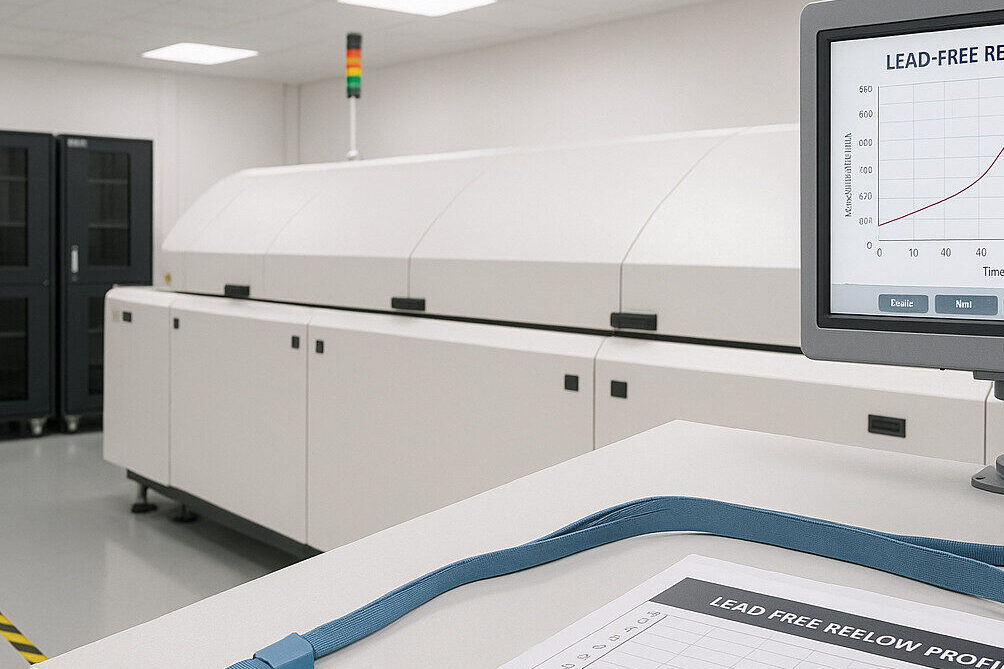
- Reflow profile validation
- Automated Optical Inspection (AOI)
- Statistical Process Control (SPC)
Appropriate equipment selection—balancing high-speed chip placement with fine-pitch flexibility—supports repeatability across prototype and volume builds.
Through-Hole Assembly (THT)
Through-hole assembly remains relevant for:
- High-power components
- Mechanically stressed parts
- Connectors and user interfaces
Selective soldering and post-solder AOI help maintain joint consistency, especially on mixed-technology boards.
BGA and Advanced Packages
BGA components require additional process control. Typical measures include:
- Paste volume management
- Controlled reflow atmosphere
- X-ray inspection for hidden joints
- Use of thermal coupons for profile verification where required
Such controls are particularly important in regulated sectors such as medical and automotive electronics.
Rapid Prototyping and Quick-Turn Production
A structured prototyping service focuses on speed without sacrificing documentation. This may include:
- Rapid stencil approval
- Accelerated machine programming
- Basic functional or flying probe testing
For time-sensitive projects, quick-turn PCB assembly can bridge prototypes directly into low-volume production using controlled changeover procedures.
In regulated healthcare environments, additional documentation and lot traceability are typically required. These should be clarified before production release.
Coordinating PCB Fabrication and Assembly
Custom PCB manufacturing can involve multiple stakeholders. Effective coordination aligns:
- Stack-up design
- Surface finish selection
- Panelization strategy
- Assembly constraints
A structured EMS partner typically manages this interface to reduce revision loops and avoid mismatches between fabrication and assembly requirements.
Quoting with Clarity: Cost, Speed, and Risk
A structured PCB cost evaluation should consider:
- Package density (e.g., QFN, BGA)
- X-ray inspection requirements
- Test coverage level (ICT, functional test, flying probe)
- Stencil complexity
- Component sourcing risk
While low-cost assembly options may appear attractive, total lifecycle cost should also account for rework probability, field returns, and documentation needs—particularly in regulated industries.
Selecting a PCB Assembly Partner
When evaluating PCB assembly companies, focus on evidence rather than marketing language. Relevant indicators include:
- Documented process capabilities
- Inspection methods used
- Yield tracking and process data
- Sample traveler documentation
- Experience in comparable product categories
Comparing multiple providers is advisable, but decisions should be based on technical alignment and risk transparency.
Compliance and Process Discipline
In the European B2B environment, compliance and traceability are essential. Typical process elements include:
- RoHS-compliant lead-free assembly
- Moisture Sensitive Device (MSD) handling
- ESD control systems
- Batch traceability
- Documented reflow profiles
Such measures align with common industry practices within the PCB manufacturing sector.
Services Overview
Prototyping
- Rapid PCB prototyping
- Design feedback loops
- Fast transition to pilot builds
Quick-Turn Production
- Short lead-time assembly lanes
- Controlled changeover procedures
- Optional documentation packages for regulated sectors
Core Processes
- SMT assembly
- Through-hole assembly (THT)
- Selective soldering
- Conformal coating
Advanced Packages
- BGA soldering with X-ray verification
Testing & Tooling
- ICT fixtures
- Functional testing
- Flying probe
- Boundary scan
- Audit-ready documentation
FAQ
1. How should I compare low-cost and quality-focused PCB assembly offers?
Evaluate total cost of ownership, not just unit price. Consider inspection depth, process control, documentation level, and rework risk.
2. What files are required for quick-turn PCB assembly?
Typically required:
- Gerber or ODB++ data
- BOM with approved alternates
- Pick-and-place (centroid) file
- Assembly drawings
- Test requirements
- Programming data (if applicable)
For medical or regulated builds, additional traceability and acceptance criteria are usually required.
3. Can a protoboard concept be transferred to production?
Yes, provided DFM/DFT adjustments are implemented. This typically includes adding fiducials, test pads, thermal relief structures, and defined keep-out zones.
4. What most influences lead time?
Component availability is often the primary driver, followed by stencil release, programming time, reflow profile validation, and inspection requirements such as X-ray.
5. Is lead-free assembly supported?
RoHS-compliant lead-free processes are standard in European B2B manufacturing environments. Handling procedures for MSD and ESD-sensitive components should be documented.