

Industrial test environments often face recurring challenges: inconsistent lab-to-field correlation, repeated test adjustments, and the need for standardized equipment across teams and sites.
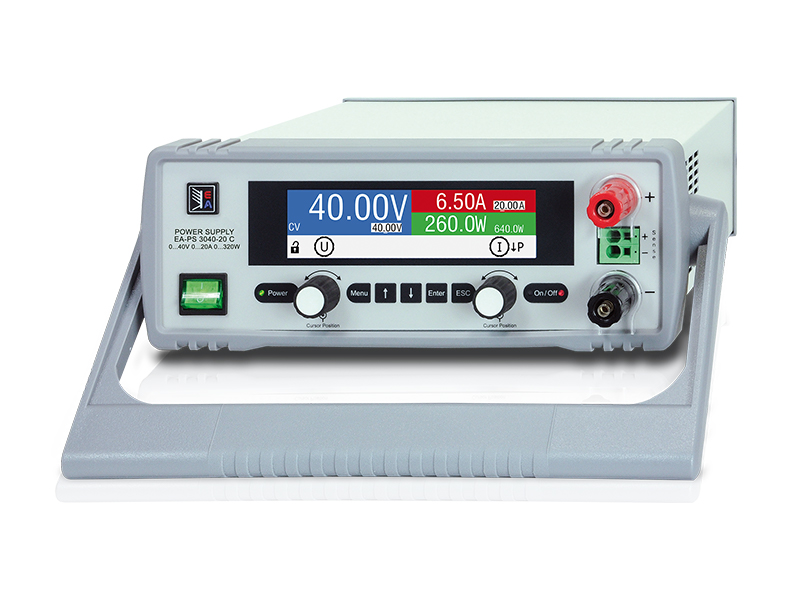
The EA-PS 3200-02 C is a compact, programmable DC power supply designed for controlled and repeatable industrial testing. It combines a wide AC input range (90–264 Vac with active PFC), an auto-ranging output stage, integrated protection functions, and support for automated test environments via SCPI and Modbus RTU.
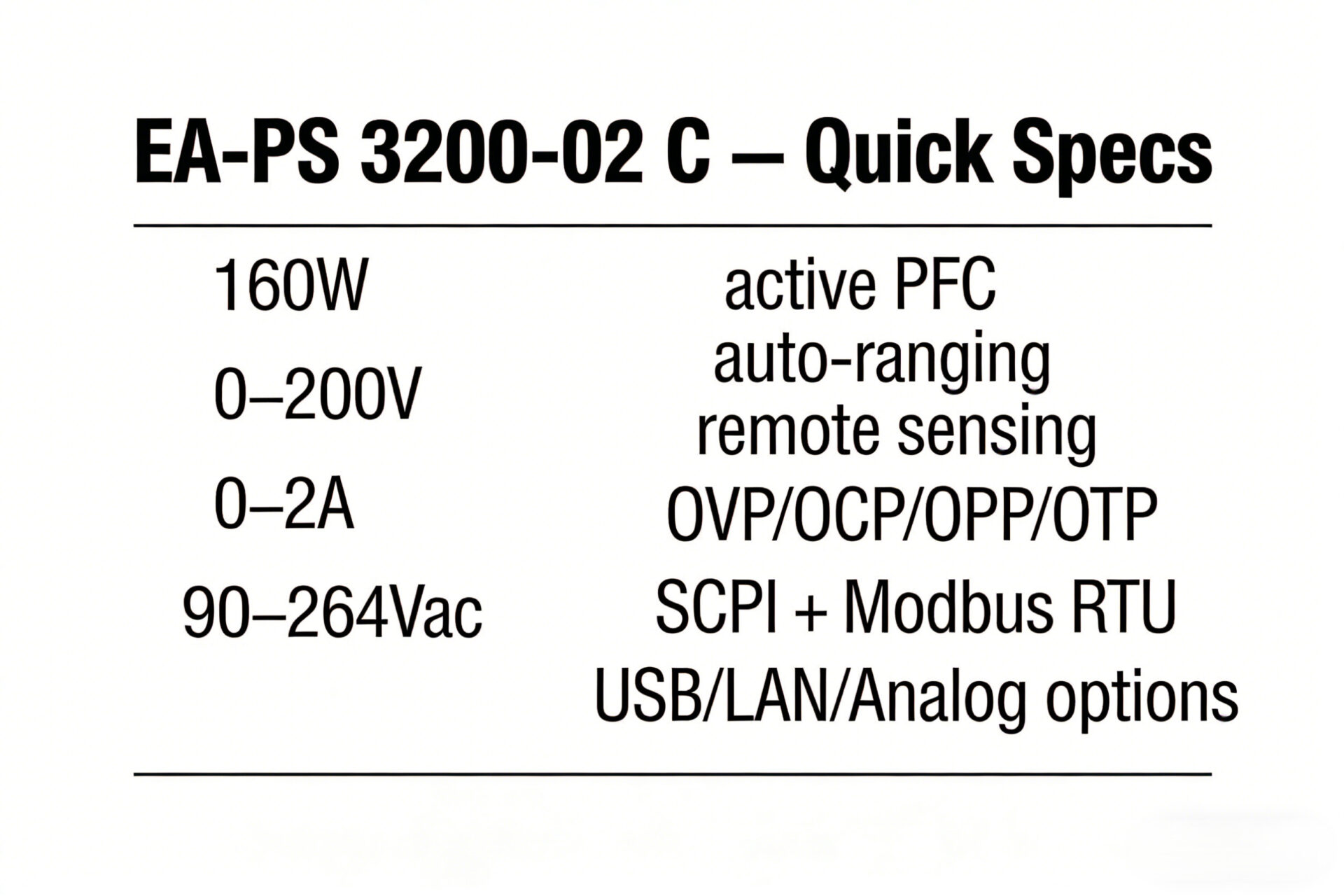
Quick specification overview
The EA-PS 3200-02 C belongs to the EA-PS 3000 C series and is suited for high-voltage, low-current applications:
- Output: 0–200 V, 0–2 A (0–160 W, auto-ranging)
- Input: 90–264 Vac, 45–66 Hz, active PFC
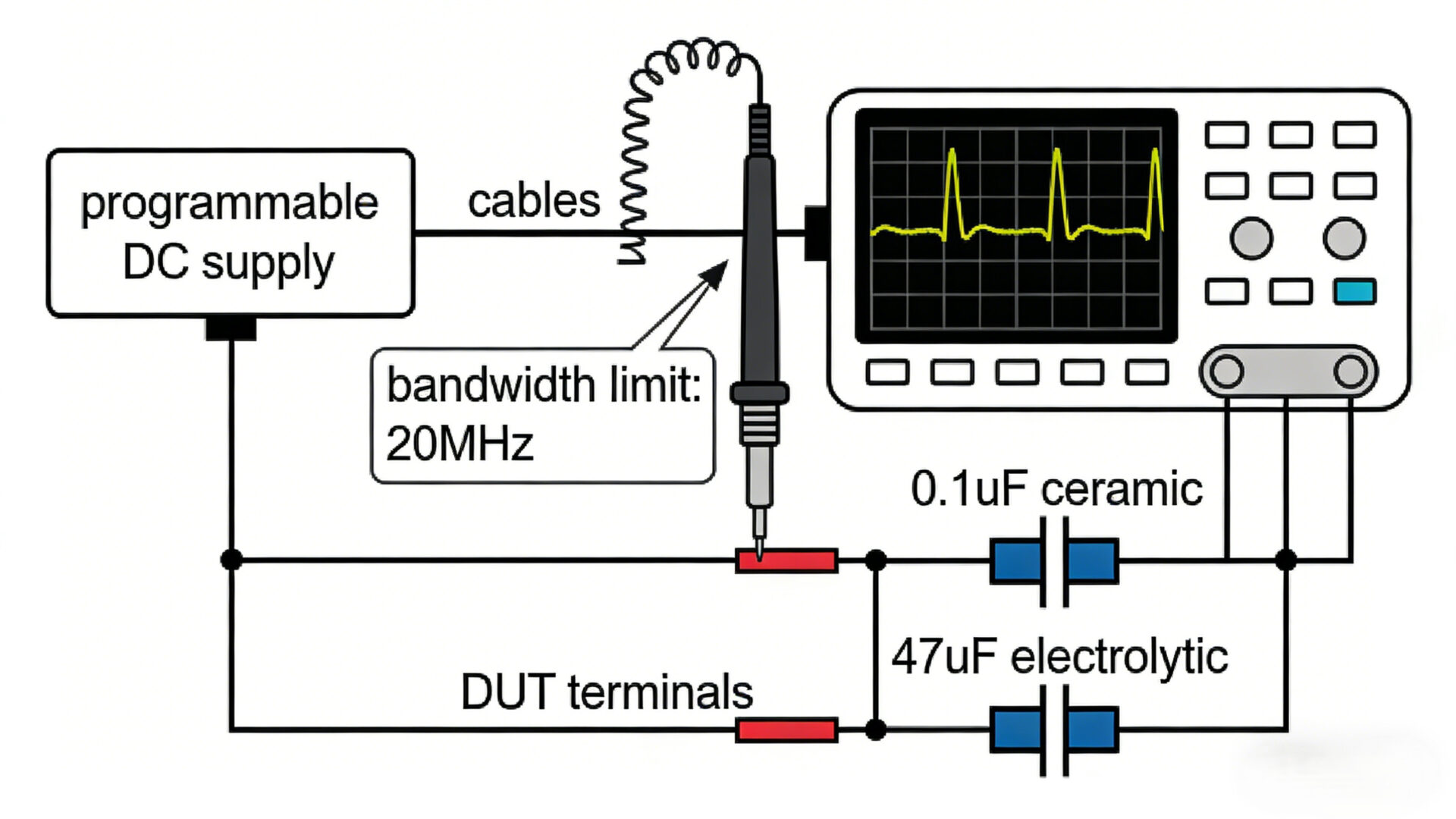
- Ripple: 70 mVpp / 13 mVrms
- Dimensions: 308 × 103 × 323 mm
- Weight: ~4 kg
Key functional features
- Auto-ranging output: flexible voltage/current coverage within the power limit
- Remote sensing: voltage regulation directly at the DUT
- Protection functions: OVP, OCP, OPP, OTP
- Automation support: SCPI and Modbus RTU
- Interface options: USB, LAN, analog (optional)
- Discharge circuit: reduces output voltage below 60 V within ≤10 s
Auto-ranging explained
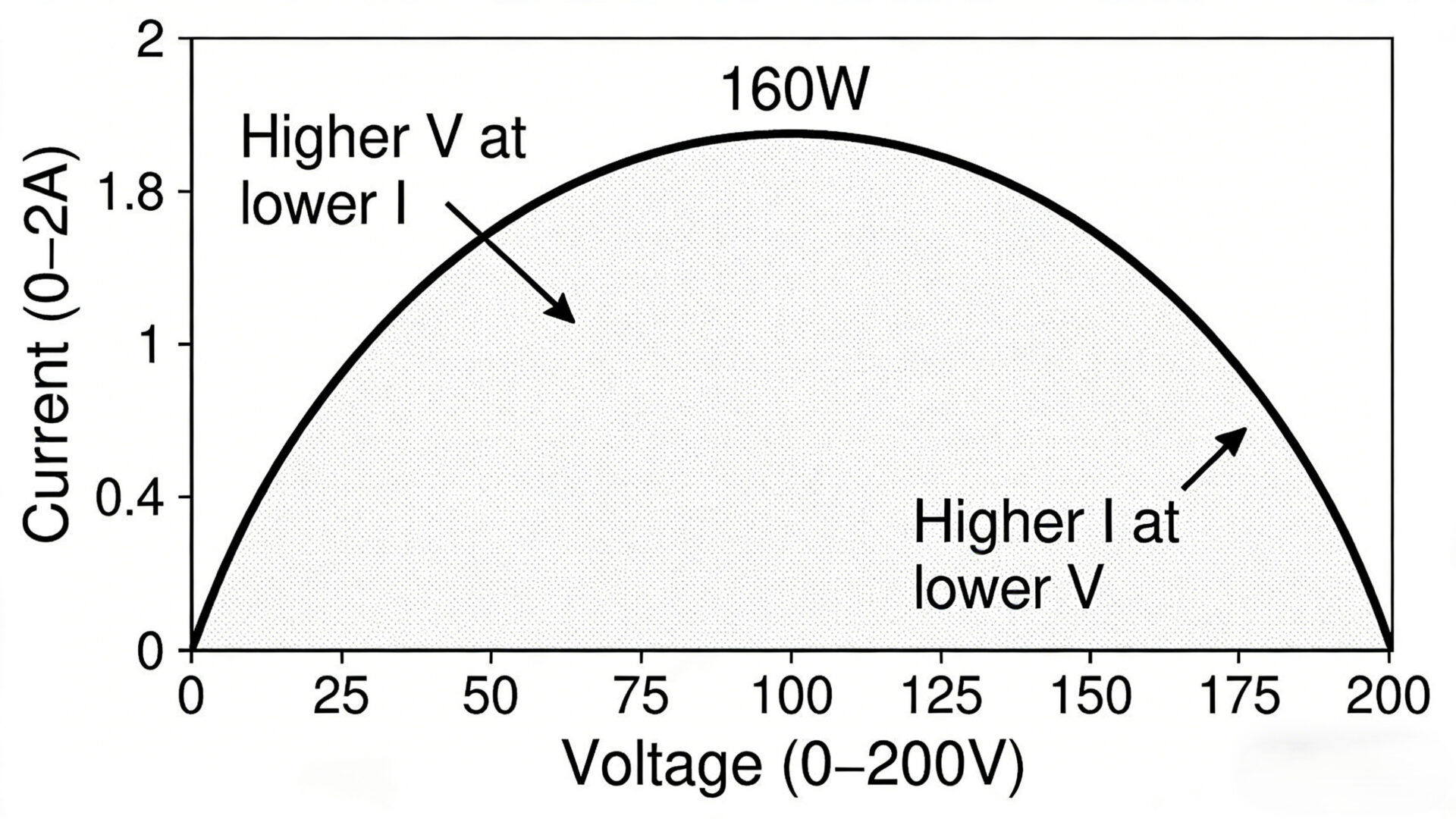
Auto-ranging allows the power supply to operate within a constant power envelope, rather than a fixed voltage/current range.
This means:
- Higher voltage at lower current, or
- Higher current at lower voltage
…without changing equipment.
In practice, one unit can support multiple test scenarios, such as:
- High-voltage bias testing
- Functional testing at lower voltage with higher current
For procurement and test engineering, this can help reduce the number of required device variants and simplify test setups.
Accuracy, regulation, and ripple
For industrial testing, measurement consistency is essential for reliable validation.
The EA-PS 3000 C series specifies:
- Voltage accuracy: <0.1% of rated value
- Current accuracy: <0.2% of rated value
- Regulation response: <2 ms (10–100% load step)
These parameters support stable operation when testing:
- Analog circuits
- Communication modules
- High-voltage bias networks
Ripple and noise are specified as:
- 70 mVpp / 13 mVrms
When comparing measurements, ensure alignment with datasheet conditions (e.g. bandwidth, filtering), as different setups may produce higher apparent values.
A temperature-controlled fan contributes to predictable thermal behavior during extended operation.
Protection and discharge behavior
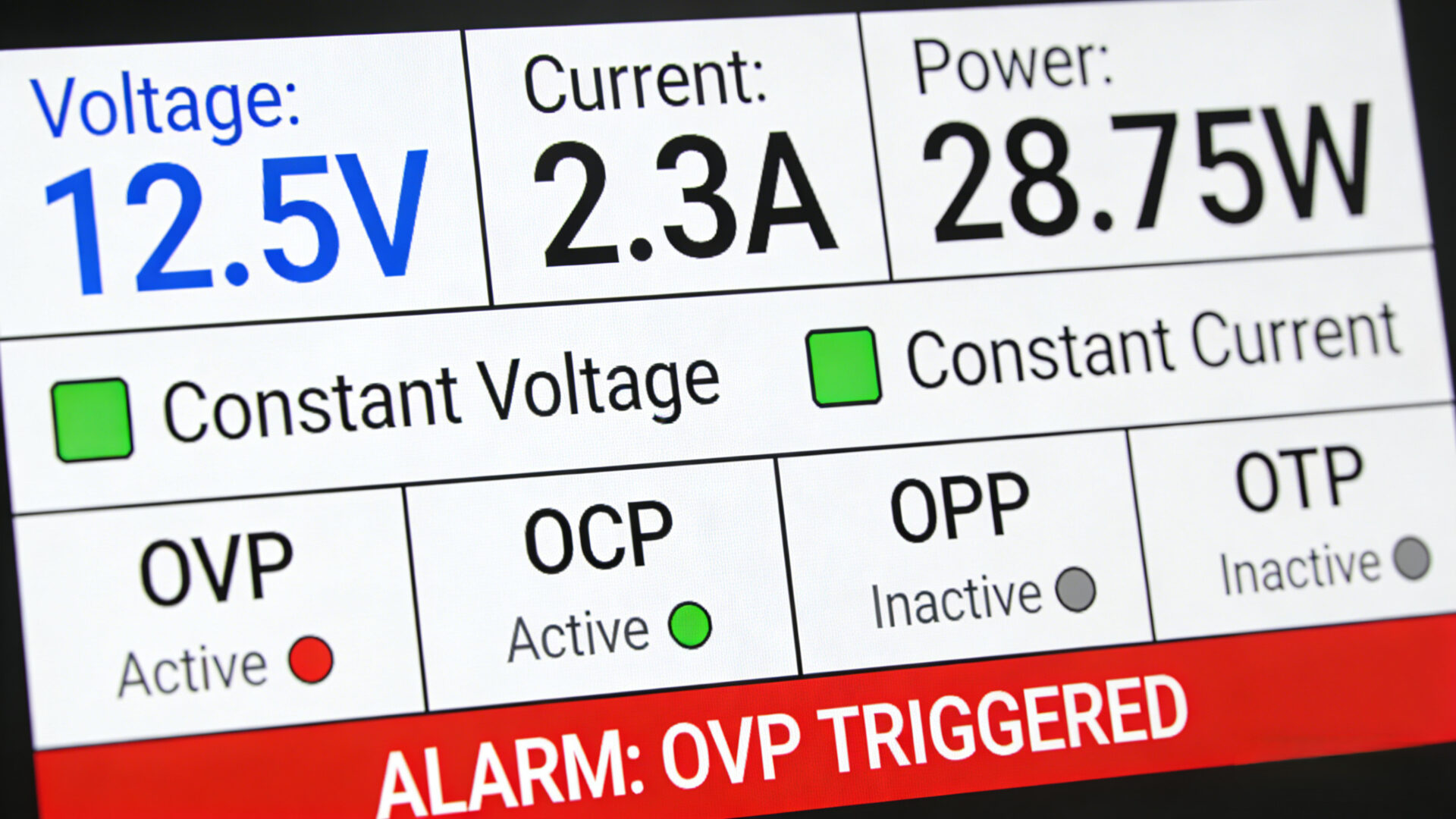
The device includes configurable protection mechanisms:
- Overvoltage protection (OVP)
- Overcurrent protection (OCP)
- Overpower protection (OPP)
- Overtemperature protection (OTP)
If a threshold is exceeded, the output is typically disabled and an alarm is indicated.
Discharge function
For higher-voltage applications, the integrated discharge circuit reduces output voltage:
- Uout < 60 V within ≤10 s
This can support:
- Safer handling during test changes
- Reduced waiting times between test steps
Remote sensing
Remote sensing enables voltage regulation directly at the device under test (DUT) rather than at the power supply terminals.
This compensates for voltage drops caused by:
- Cable length
- Connectors
- Fixture resistance
The EA-PS 3000 C series includes automatic detection of sense connections and adjusts regulation accordingly.
This is particularly relevant for:
- Long cable runs
- Distributed test setups
- Cross-site test consistency
Interfaces and automation
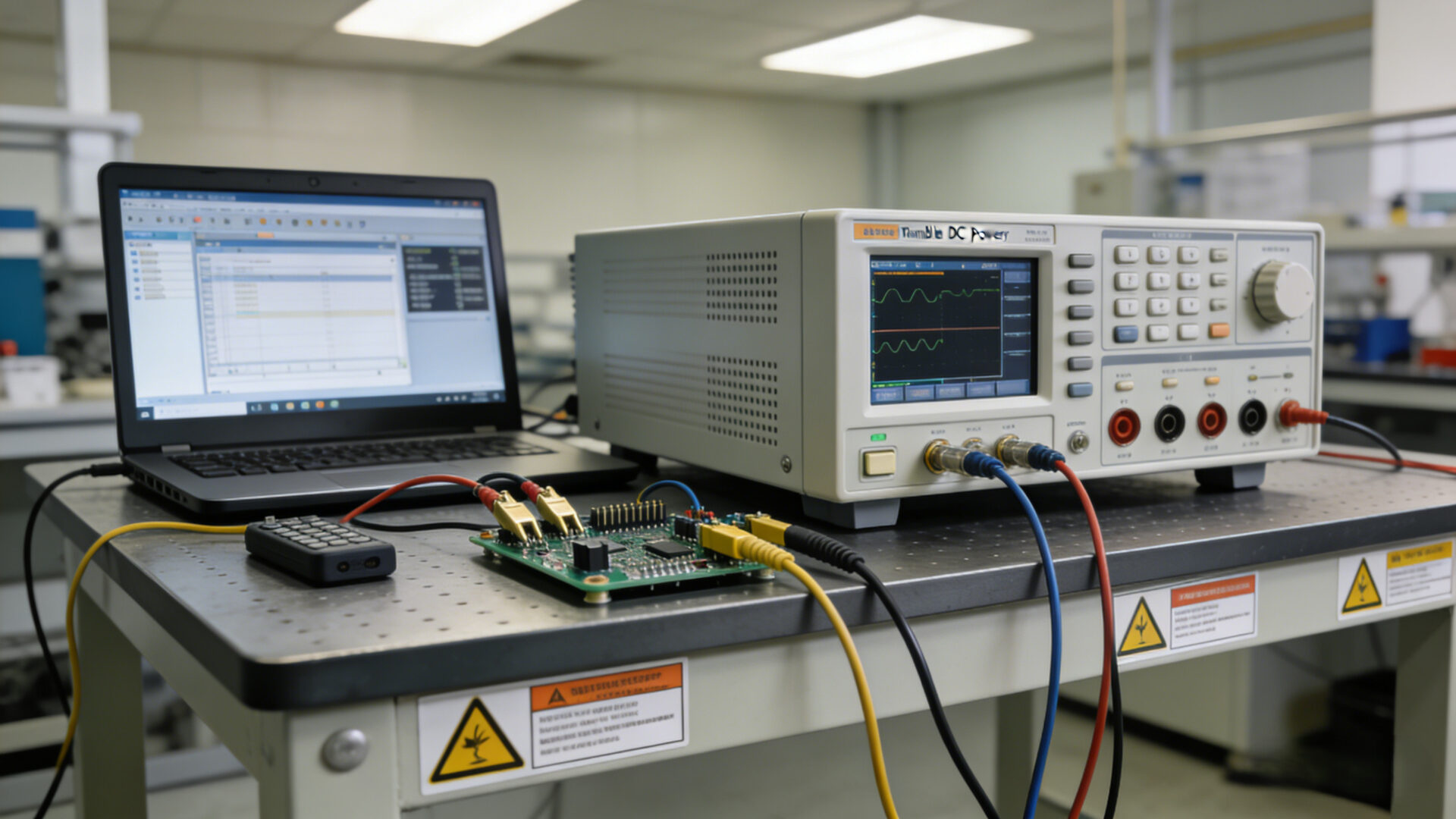
The EA-PS 3200-02 C is designed for integration into automated environments.
Supported control interfaces
- SCPI
- Modbus RTU
Optional interface modules
- USB
- USB + Ethernet (RJ45)
- USB + analog (galvanically isolated, 0–5 V / 0–10 V selectable)
Software support
- EA Power Control software (Windows)
- CSV-based test sequencing
- Optional multi-device control (license-based)
- LabVIEW VI support
This enables integration into:
- Automated test benches
- Production test systems
- Engineering validation workflows
Typical application areas
The EA-PS 3200-02 C is suitable for applications such as:
- Industrial automation testing
- Communication equipment validation
- High-voltage bias and subsystem testing
- Engineering verification and characterization
- Production and end-of-line testing
RFQ checklist
To streamline procurement, consider including:
- Quantity and rollout plan (prototype → series)
- Required interface option (USB / LAN / analog)
- Control method (SCPI, Modbus RTU, analog)
- Use of remote sensing and cable lengths
- Calibration and documentation requirements
- Confirmation of included vs optional accessories
When to consider alternatives
A programmable desktop supply is typically used for testing and validation.
For continuous operation in the field, alternatives may be more appropriate:
-
DIN-rail power supplies
TPS010 GP Series,
TPS030 PRO Series,
TPS100 Peak DR-Plus -
Industrial IPC / ATX power supplies
FSP300-70PFL-SK,
FSP700-80PSA-SK,
FSP300-50UCB (1U)
FAQ
-
Is the EA-PS 3200-02 C suitable for automated testing?
Yes. It supports SCPI and Modbus RTU and offers optional interfaces for integration into automated systems.Why is auto-ranging relevant for a 160 W supply?
It allows flexible operation within a constant power range, reducing the need for multiple fixed-range devices.Is remote sensing necessary?
It is recommended when cable losses may affect voltage accuracy at the DUT.What should be clarified before ordering?
Interface configuration, calibration requirements, and included accessories.Does the device support safer handling at higher voltages?
The integrated discharge function (Uout < 60 V within ≤10 s) can support safer handling during operation.