

Key Takeaways
- We translate simulation results into commercial metrics—forecasting margin, lead time, and yield before quotations are issued.
- Our in-house materials and elements lab validates materials and assemblies using spectroscopy, microscopy, and mechanical characterization based on established materials engineering practices.
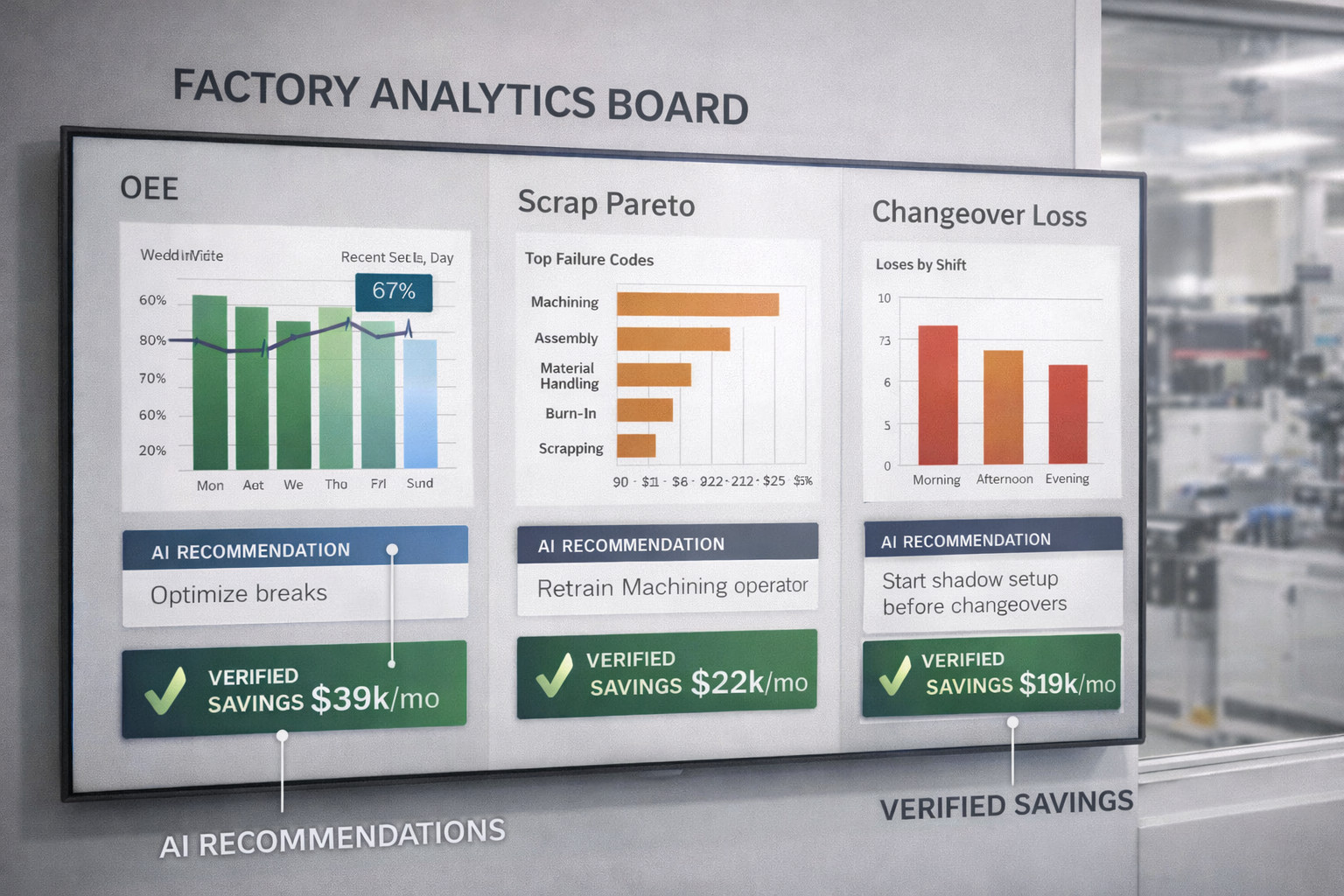
- We apply AI-supported cost optimization in manufacturing to identify inefficiencies, optimize SMT/THT takt time, and reduce changeover losses—while maintaining defined quality assurance standards.
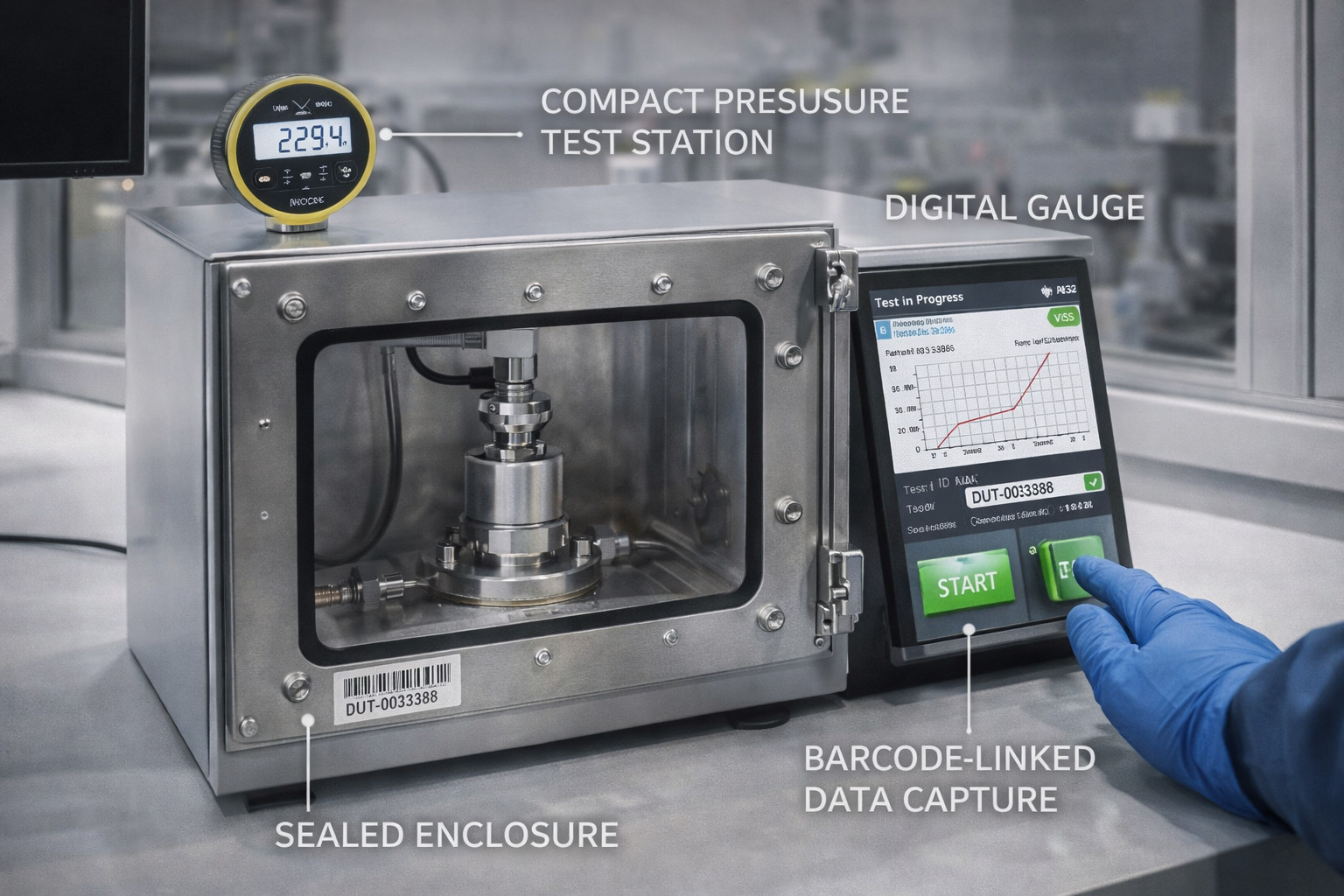
- Each program includes structured environmental and functional verification, including calibrated pressure testing where applicable.
- We interpret market terminology in RFPs—such as ultrasoc, ener, or br supply—and align it with suitable validation, sourcing, and qualification strategies.
Engineering Rigor as a Sales Enabler
Winning complex manufacturing programs requires linking engineering validation to commercial clarity.
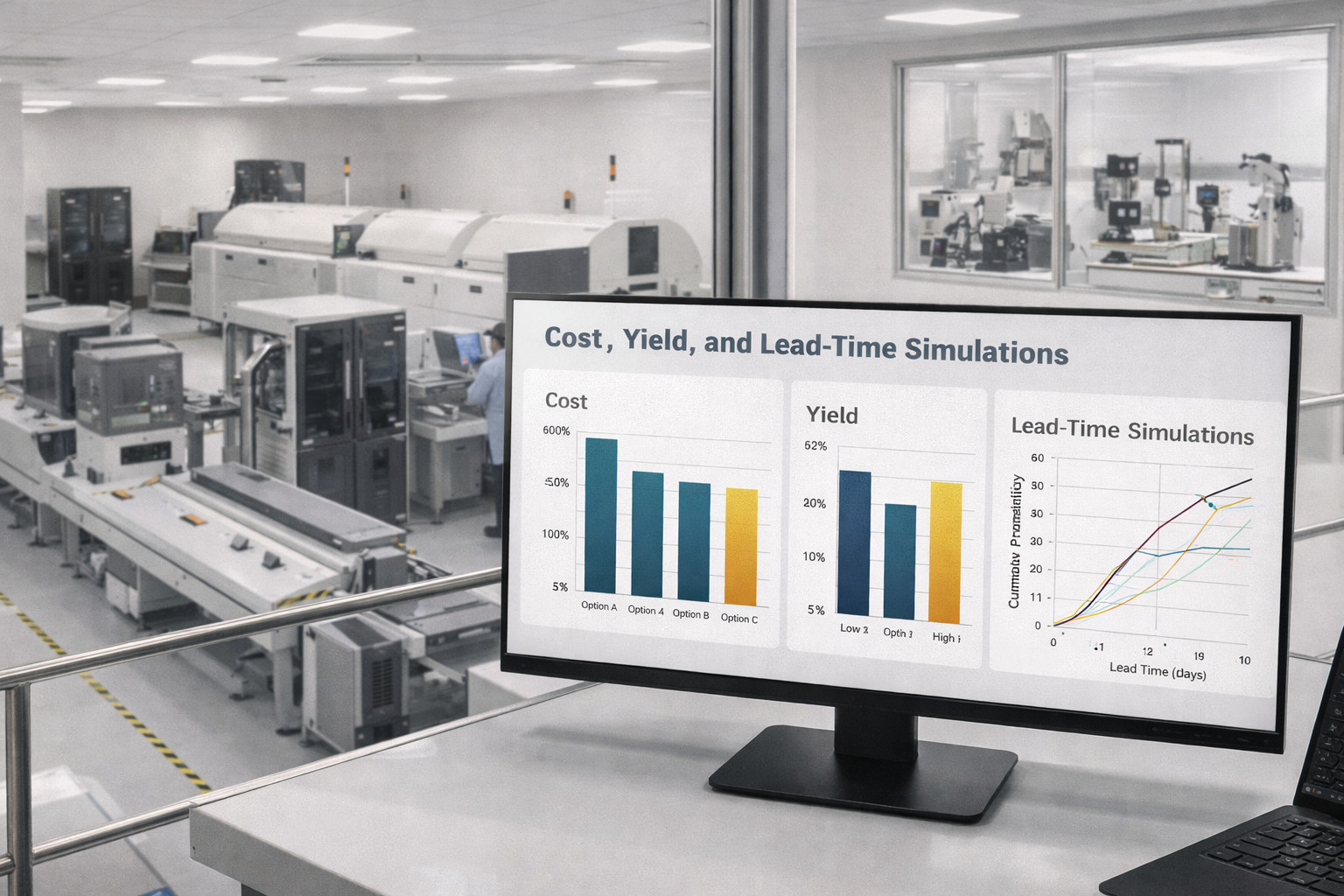
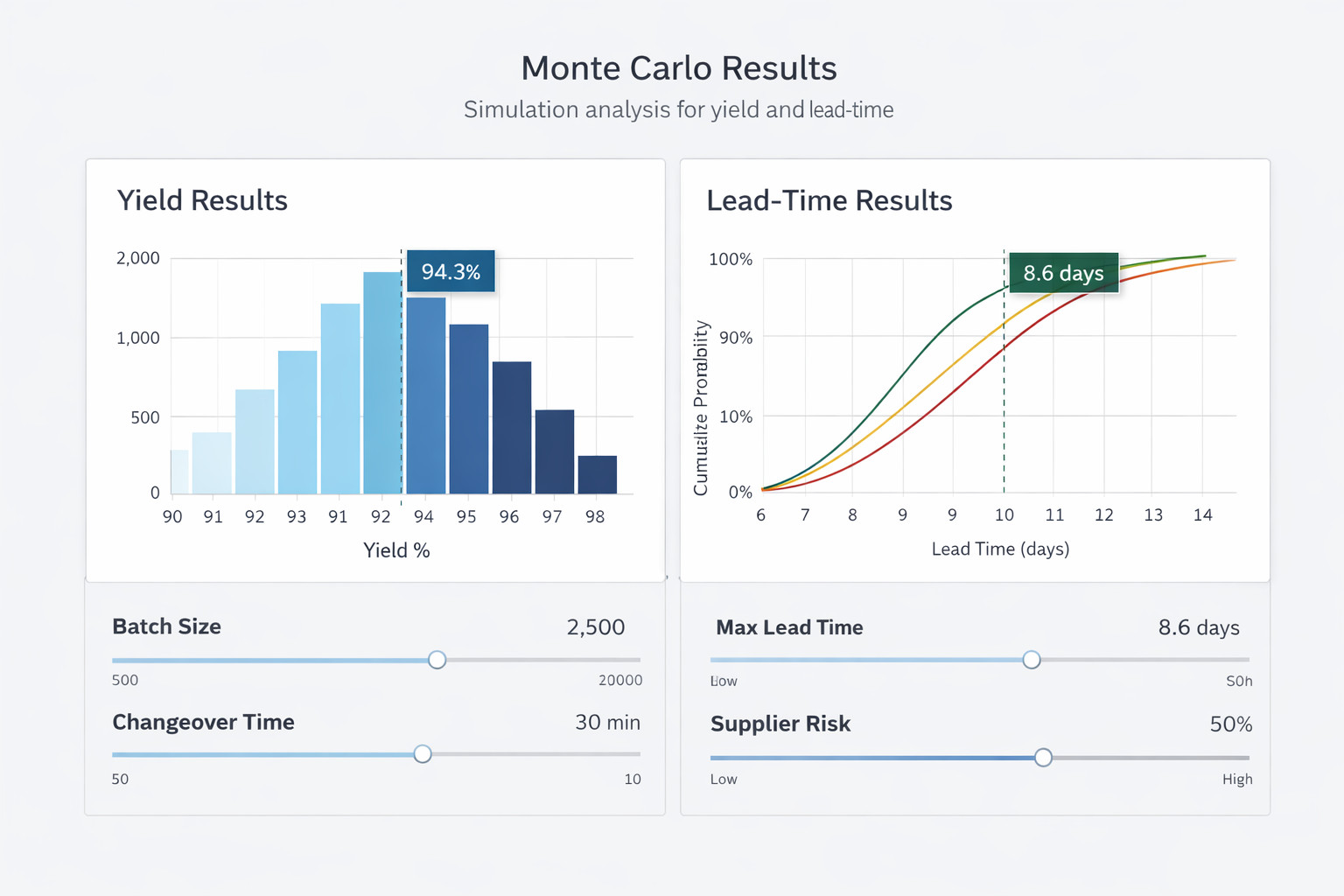
We start with a practical understanding of simulation: modeling demand scenarios, production flow, and potential failure modes early in the process. These projections are then translated into commercial parameters such as pricing structure, lead time expectations, and risk exposure.
Material and assembly validation follows in our in-house lab, where materials characterization and process verification provide structured technical evidence. Combined with AI-supported manufacturing analytics, this approach helps reduce uncertainty in early program phases while supporting defined quality assurance processes.
From Simulation to Quotation Metrics
Simulation is not treated as a theoretical exercise. It supports quoting and program planning.
Typical simulation outputs include:
- Process window definition
- Machine utilization modeling
- Supply chain risk sensitivity
- Predicted DPMO (Defects per Million Opportunities)
- Takt time and staffing scenarios
- Demand spike sensitivity analysis
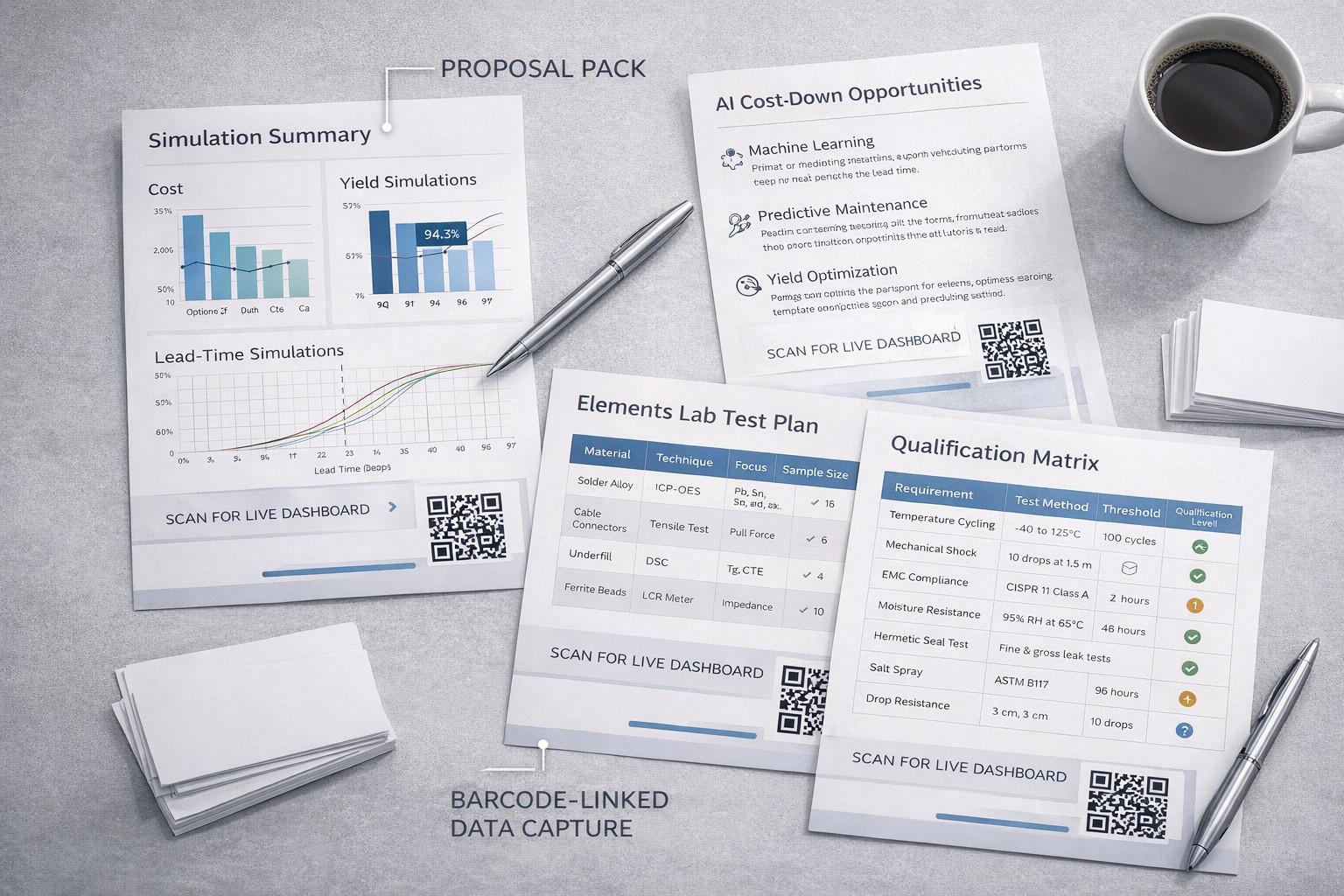
These results are summarized in a structured format that commercial teams can use to support pricing discussions and delivery planning. Buyers gain increased transparency regarding assumptions and trade-offs.
Materials & Elements Lab: Verification Before Commitment
Technical validation supports procurement decisions.
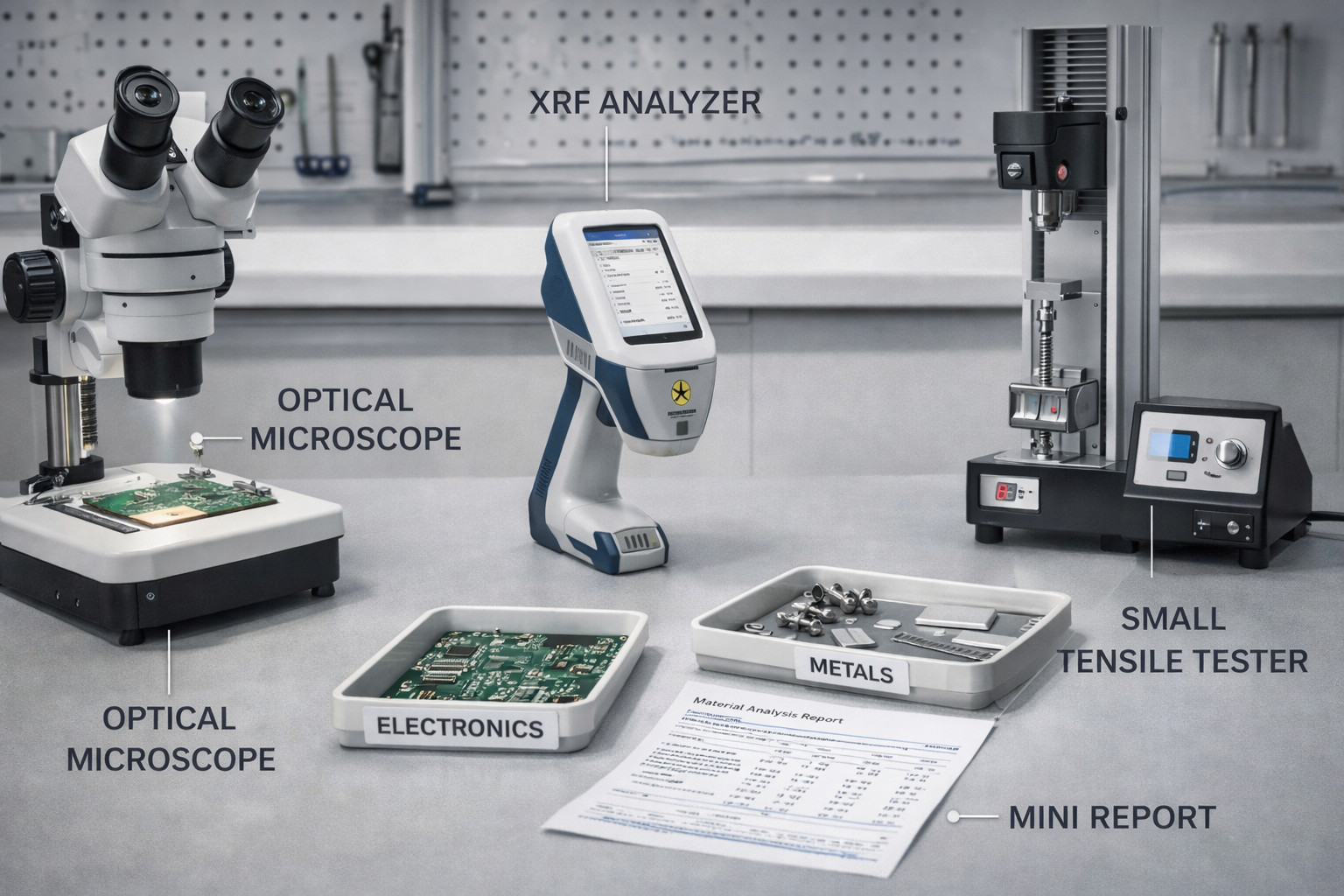
Our lab capabilities include:
- XRF / EDS for material composition analysis
- DSC / TGA for thermal behavior characterization
- Microscopy and microsectioning for solder joints and coatings
- Mechanical testing (e.g., tensile or peel testing) where required
- Failure analysis and process characterization
These workflows follow established materials science and engineering practices. The objective is to provide traceable technical documentation that supports qualification and supplier approval processes.
Qualification Strategy: Environmental and Functional Validation
Beyond standard inspection procedures, structured qualification reduces project risk.
Depending on the application, validation may include:
- Environmental screening
- Functional stress testing
- Calibrated pressure testing for sealed assemblies
- Life-cycle or reliability testing where applicable
Results are documented in a format suitable for customer qualification files and regulatory submissions, where required.
Interpreting Market Signals in RFPs
Procurement documents often contain shorthand terminology such as ultrasoc, ener, or br supply. These terms may indicate:
- Monitoring or debug-related IP requirements
- Energy or industrial sector applications
- Specific sourcing or distribution channels
We interpret these signals and align them with suitable test plans, firmware integration options, or supplier strategies. This ensures that proposals address the technical intent behind the terminology rather than responding with generic capability statements.
What You Receive at Program Start
On project initiation, we typically provide:
- A sales-ready simulation package, including sensitivity analysis for price, lead time, and yield
- A lab validation checklist with defined test plans, sample quantities, and acceptance criteria
- Identified cost-optimization levers aligned with quality assurance requirements
- A qualification matrix covering environmental and functional validation steps
This structured approach supports informed decision-making across engineering, procurement, and commercial teams.
Conclusion
Connecting simulation, materials validation, and structured quality assurance with AI-supported manufacturing analytics creates a more transparent and data-driven foundation for commercial discussions.
Rather than separating engineering and sales processes, this approach integrates them—helping teams align technical feasibility, cost structure, and qualification planning from the outset of a program.