

Overview
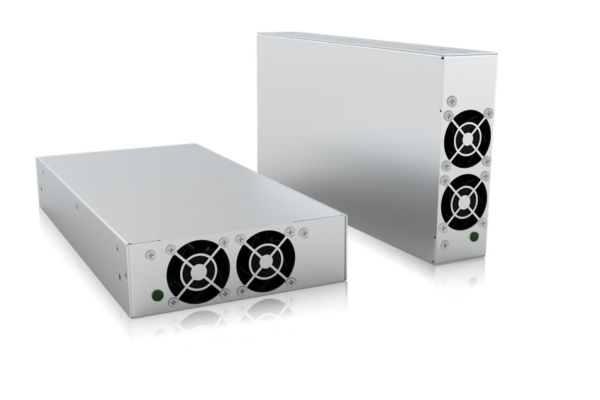
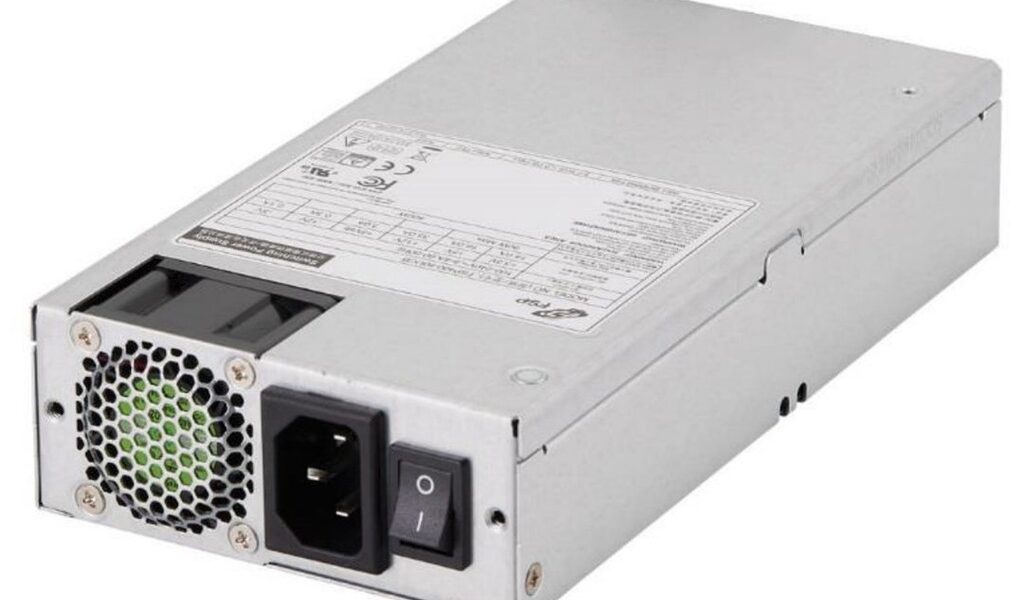
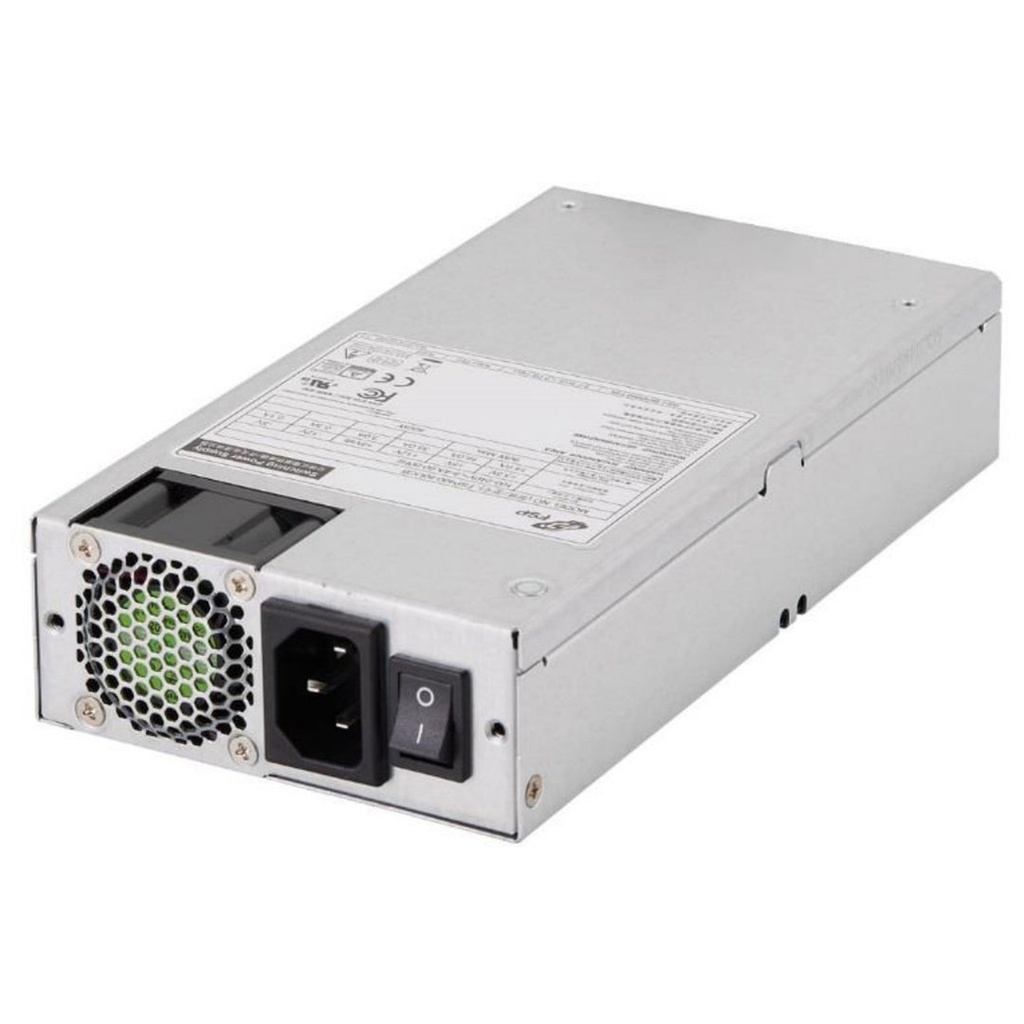
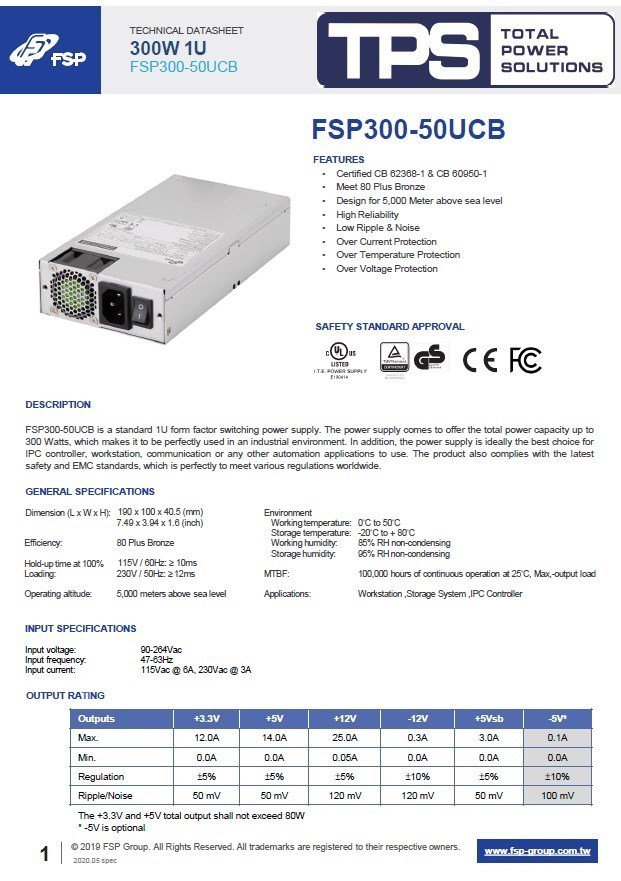
The FSP300-50UCB is a 300W 1U switching power supply designed for space-constrained industrial chassis and rack-mounted systems. It addresses typical requirements of IPC controllers, 1U workstations, and storage platforms where mechanical height, thermal management, and stable output rails are key design factors.
The unit combines a universal AC input range, specified 80 PLUS Bronze efficiency, and integrated protection functions suitable for continuous industrial operation.
Key Features
- Form factor: 1U (40.5 mm height)
- Rated power: 300 W
- AC input: 90–264 VAC, 47–63 Hz
- Efficiency: 80 PLUS Bronze (as specified)
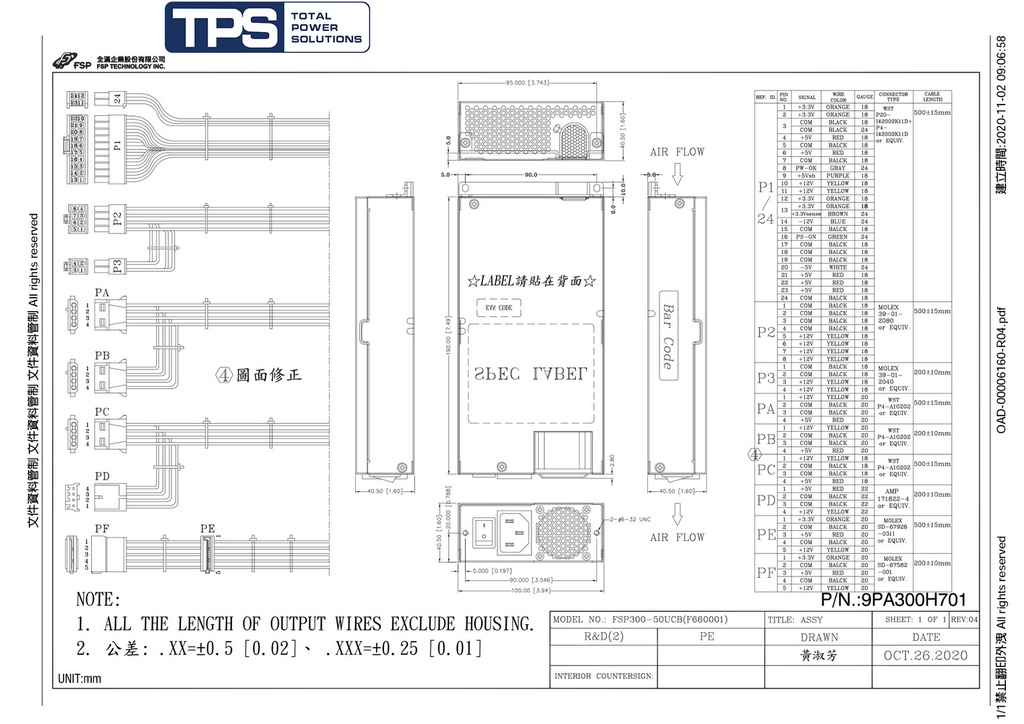
- Output rails: +3.3 V / +5 V / +12 V / −12 V / +5Vsb (optional −5 V)
- Protection functions: OCP, OVP, OTP, short-circuit protection
- MTBF: 100,000 h (25 °C, full load; statistical value per datasheet)
- Dimensions: 190 × 100 × 40.5 mm
- Safety approvals (per datasheet): CB 62368-1 and CB 60950-1
Electrical Characteristics
Universal Input for International Deployment
The input range of 90–264 VAC at 47–63 Hz supports operation under varying grid conditions. For system integrators, this may simplify global deployment strategies by reducing the need for region-specific PSU variants.
80 PLUS Bronze Efficiency
Efficiency is specified according to the 80 PLUS Bronze program. In compact 1U enclosures, improved efficiency can contribute to lower internal heat generation, which is relevant for airflow-limited designs.
Output Stability for IPC and Storage Applications
The FSP300-50UCB provides standard voltage rails commonly used in IPC and server-adjacent systems. According to the datasheet, defined ripple and noise limits include:
- 50 mV (p-p) on +3.3 V and +5 V
- 120 mV (p-p) on +12 V
Controlled ripple and noise levels are particularly relevant in systems with SSD arrays, communication cards, and mixed I/O configurations, where voltage instability can affect system behavior.
Protection Features for Continuous Operation
Industrial installations are exposed to real-world stress factors such as:
- restricted airflow,
- aging cooling components,
- peripheral short circuits,
- cable wear,
- dynamic load changes.
The power supply includes:
- OCP (Over Current Protection)
- OVP (Over Voltage Protection)
- OTP (Over Temperature Protection)
- Short-circuit protection with shutdown behavior
These mechanisms are designed to manage fault conditions in a controlled manner at the PSU level.
Reliability and Environmental Specifications
The datasheet specifies an MTBF of 100,000 hours at 25 °C and full load. MTBF is a statistical reliability indicator under defined test conditions and does not represent a guaranteed service life.
- Operating temperature: 0 °C to +50 °C
- Storage temperature: −20 °C to +80 °C
These ranges are consistent with typical industrial cabinet installations and controlled IT environments.
Typical Application Areas
The 300W 1U switching power supply is suitable for:
- IPC controller systems in automation and control cabinets
- 1U industrial workstations or short-depth chassis
- Storage systems (e.g., NAS or server platforms) requiring defined voltage stability
System suitability should be evaluated against project-specific electrical and thermal requirements.
FAQ
Is the FSP300-50UCB suitable for global installations?
The input specification of 90–264 VAC and 47–63 Hz supports use across multiple grid standards, which may facilitate standardized PSU selection for international projects.
Why is it used in IPC and storage systems?
Relevant characteristics include specified ripple and noise limits, 80 PLUS Bronze efficiency, and integrated protection functions. These align with common requirements in 24/7 industrial computing environments.
Is the unit certified for regulated markets?
According to the datasheet, the power supply carries CB certification to IEC 62368-1 and IEC 60950-1. Project-specific regulatory requirements should be verified during system qualification.
Availability and Integration Support
For projects requiring a 300W 1U switching power supply, TPS can provide support with:
- documentation alignment,
- integration planning, and
- sourcing coordination.
Technical evaluation and compliance assessment remain the responsibility of the system integrator.