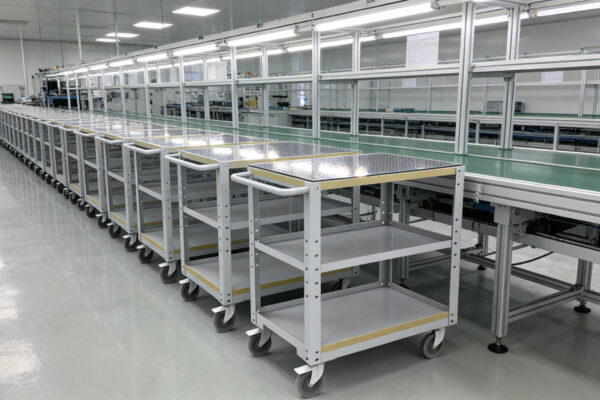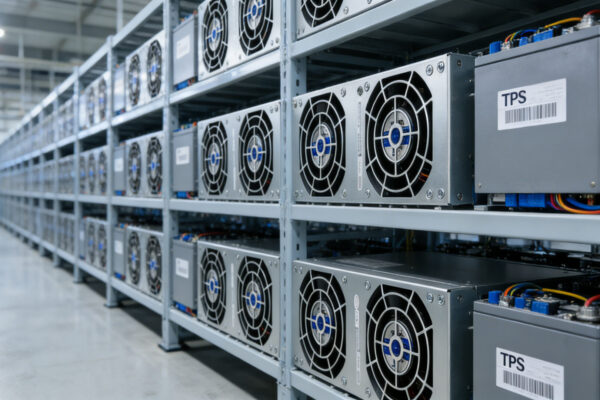


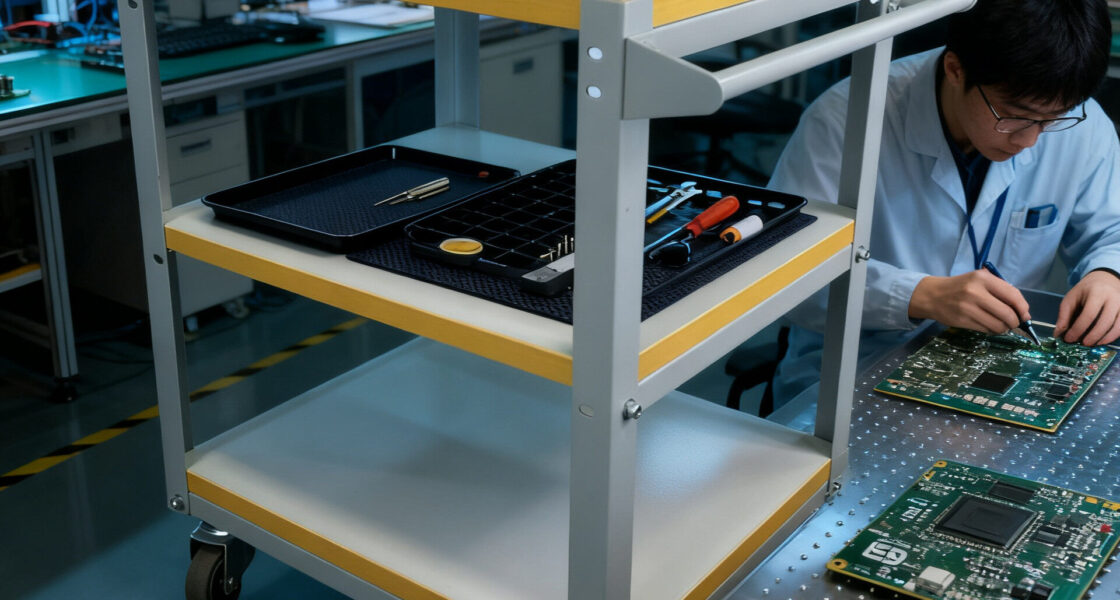
In electronics repair, assembly, and handling, controlling electrostatic discharge (ESD) is an essential requirement. ESD trolleys—also referred to as ESD carts or anti-static trolleys—support the safe transport, storage, and handling of static-sensitive components within an Electrostatic Discharge Protected Area (EPA).
This guide provides a structured overview of ESD trolleys, focusing on their design principles, typical applications, and selection criteria. It explains how mobile ESD workstations can support organized workflows and contribute to consistent ESD control in field service, laboratory, and production environments.
Key Takeaways
- An ESD trolley is a mobile component of an EPA, designed to support the handling and transport of ESD-sensitive devices.
- Effective ESD-safe transport solutions use conductive or dissipative materials combined with grounding concepts and modular accessories.
- Selecting an ESD mobile cart involves evaluating load capacity, workspace requirements, mobility, and compliance with applicable ESD standards.
- Modular cart systems, such as the TPS RV and TV series, are commonly used in electronics assembly, repair, and component logistics.
- Regular inspection and testing of grounding and work surfaces are necessary to maintain consistent ESD protection.
Electrostatic discharge can cause immediate damage or latent defects in electronic components. While fixed ESD workbenches remain the foundation of many EPAs, mobility is often required in practical workflows. An ESD utility cart addresses this requirement by providing a grounded, organized platform that can be moved to where it is needed.
Chapter 1: Understanding ESD and the Role of Mobile Workstations
Electrostatic Discharge (ESD) describes the sudden transfer of electrical charge between objects at different potentials. Modern electronic assemblies are increasingly sensitive to ESD events, even at low voltage levels. Mobile ESD workstations help reduce this risk during transport and temporary handling outside fixed workstations.
1.1 Impact of ESD
ESD damage can be either immediate or latent, with failures sometimes occurring only after extended operation. An ESD-protected cart supports risk reduction by keeping components within a controlled, grounded environment during handling and movement.

1.2 Why Mobile ESD Solutions Are Needed
Fixed workstations alone are often insufficient for dynamic workflows. Typical applications for ESD trolleys include:
- Field service and repair: Compact, grounded carts allow technicians to transport tools and spare parts to equipment.
- Assembly and rework: Sub-assemblies can be moved between workstations using ESD-safe carts with PCB racks.
- Laboratory environments: Engineers can organize test equipment and components on ESD rolling carts.
- Internal logistics: Warehouses and production areas benefit from ESD-safe transport of sensitive devices.
Chapter 2: Components of a Standard ESD Trolley
An ESD trolley combines mechanical stability with defined ESD control features.
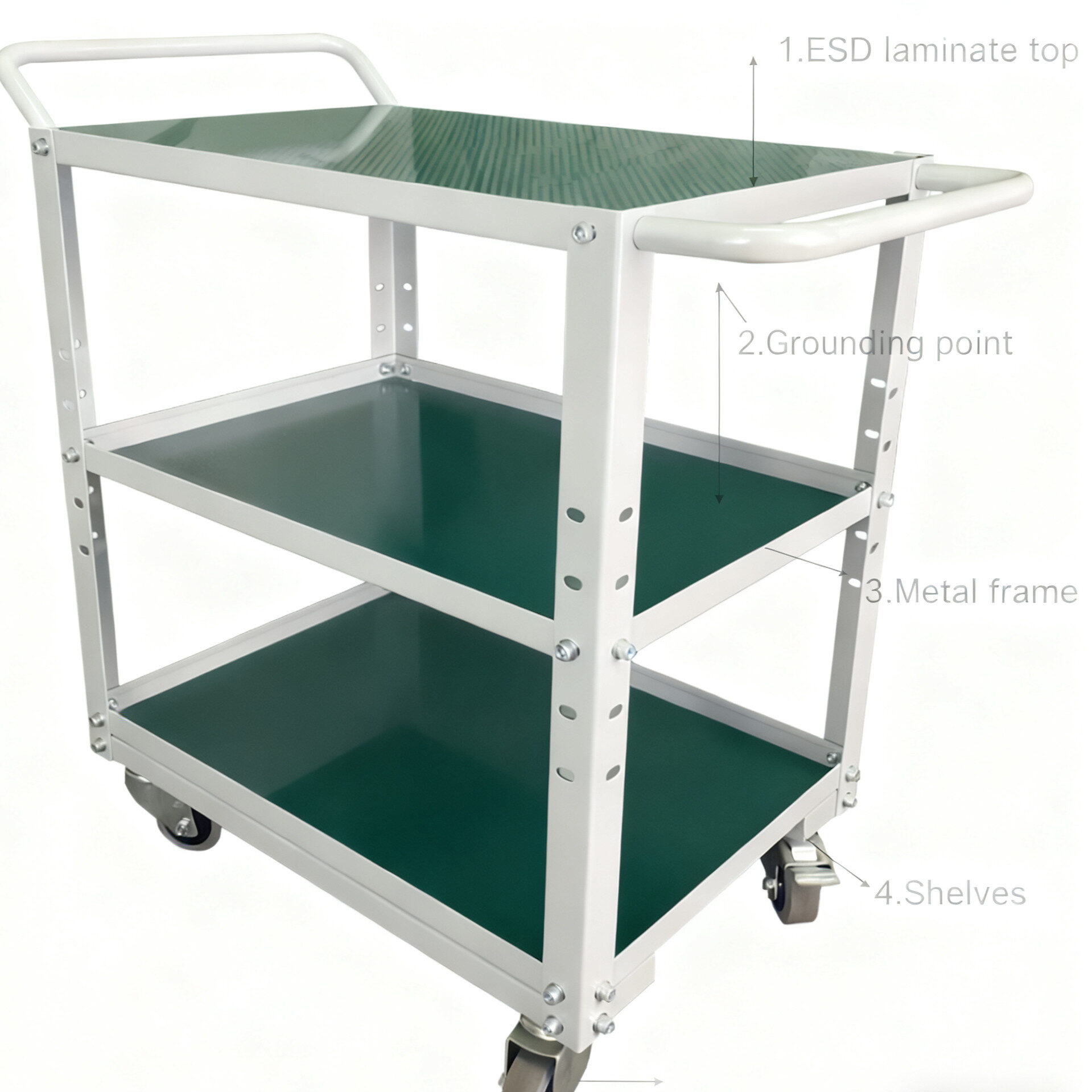
2.1 Frame and Materials
The frame of a static control trolley is commonly manufactured from steel with an ESD-compatible powder coating. This surface finish provides controlled dissipation of electrostatic charge. All-steel designs, such as the TPS-RV03, are typically used where higher mechanical robustness is required.
2.2 Work Surface and Grounding
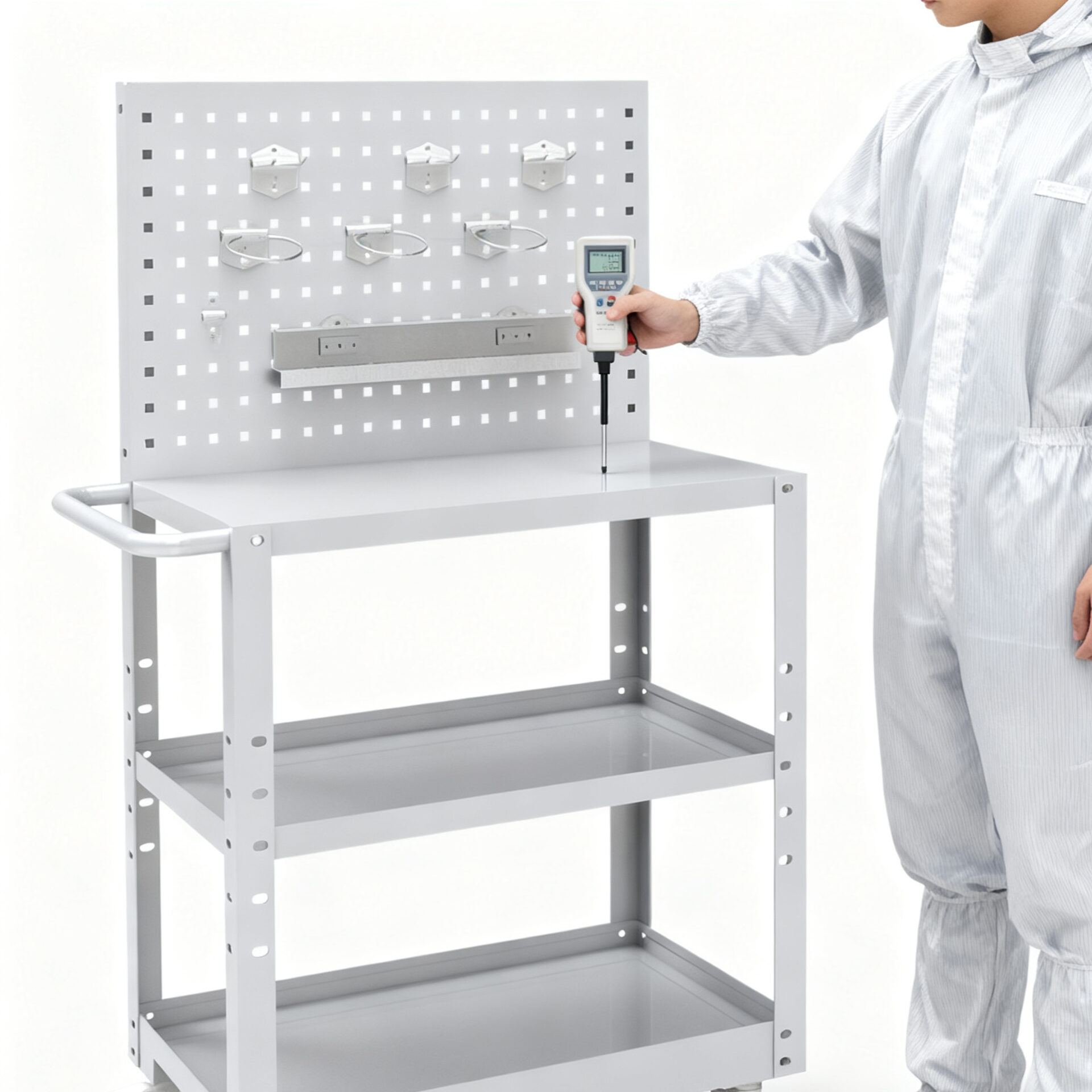
The main work surface is usually made of ESD laminate or dissipative material. It is connected to a defined grounding point, which can be linked to the facility ground via a coil cord. Regular verification of grounding continuity is recommended as part of EPA maintenance.
2.3 Storage and Accessories
Modular accessories increase flexibility and organization. Common options include:
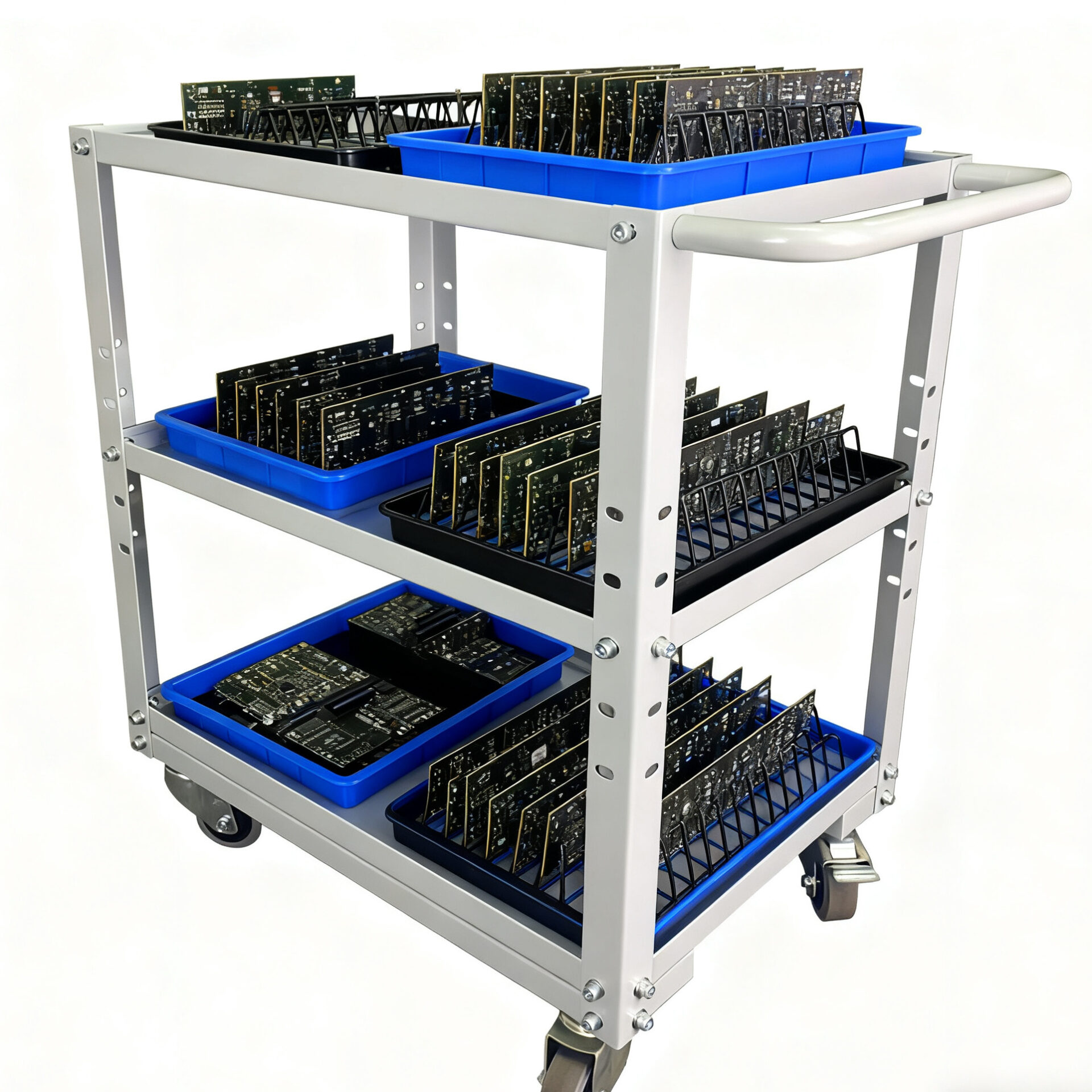
- ESD trays and bins for component sorting
- PCB racks and ESD racks for circuit boards
- Tool holders and accessory rails
2.4 Mobility Features
ESD-safe casters enable controlled movement of the cart. Typical configurations include four swivel wheels, with two lockable casters to ensure stability during use.
Chapter 3: How to Choose an ESD Trolley
Selecting an appropriate ESD trolley depends on the intended application and working environment.
3.1 Matching the Cart to the Task
- General repair and transport: A cart such as the TPS-RV01, with a solid laminate work surface and defined load capacity, supports a wide range of tasks.
- Assembly and kitting: Multi-shelf carts like the TPS-RV02 or TPS-RV03 allow organized storage of components and ESD trays.
- Storage and logistics: Simple, robust carts can be used primarily for ESD-safe transport within EPAs.
3.2 Key Selection Criteria
- Load capacity: Refer to manufacturer specifications (e.g., up to 150 kg per cart for TPS RV series).
- Dimensions and mobility: Standard sizes such as 600 × 500 × 750 mm are common.
- ESD compliance: Ensure materials and grounding concepts align with relevant ESD standards.
- Mechanical durability: Construction quality and material choice influence long-term usability.
Chapter 4: TPS ESD Trolley Product Overview
To illustrate these general selection principles in practice, the following section outlines typical ESD trolley configurations available from TPS.
4.1 Product Specifications
The following table outlines key models from the TPS RV and TV series, based on the provided ordering information:
| Article No. | Article Name | Loading Capacity | Size (L*W*H)(mm) |
|---|---|---|---|
| WESD00088 | TPS-RV01 | 150kgs/cart | 600x500x750 |
| WESD00089 | TPS-RV02 | 50kgs/shelf, 150kgs/cart | 600x500x750 |
| WESD00070 | TPS-RV03 | 50kgs/shelf, 150kgs/cart | 600x500x750 |
| WESD00071 | TPS-TV01 | 150kgs/cart | 650x450x750 |
| WESD00072 | TPS-TV02 | 150kgs/cart | 650x450x1160 |
| WESD00073 | TPS-TV03 | 150kgs/cart | 650x450x750 |
These models provide structured options for implementing mobile ESD workstations within an EPA.
4.2 Application Example
In an SMT production environment, a TPS-RV02 trolley can be used to support machine setup or minor rework tasks. ESD trays, tools, and PCBs stored on multiple shelves allow technicians to access required items efficiently while maintaining ESD control.
Chapter 5: Proper Use and Maintenance
Correct integration and routine checks are necessary to maintain the effectiveness of an ESD rolling cart.
5.1 Integration into Your EPA
-
Connect the cart to a verified facility ground before use.
-
Periodically measure surface resistance and grounding continuity using appropriate test equipment.
-
Train users to connect the grounding cord whenever the cart is used for ESD-sensitive work.
5.2 Maintenance Checklist
- Cleaning: Use ESD-compatible cleaning agents.
- Visual inspection: Check work surfaces, grounding cords, and accessories for damage.
- Functional testing: Document regular resistance and continuity measurements.
- Caster inspection: Ensure wheels and locking mechanisms operate correctly.
Conclusion: A Practical Element of ESD Control
An ESD trolley is a practical element of electrostatic discharge control in electronics manufacturing, repair, and service environments. By providing a mobile, grounded workspace, it supports organized workflows and consistent handling conditions.
Selecting an ESD trolley with appropriate load capacity, dimensions, and configuration—such as models from the TPS RV or TV series—supports the structured implementation of mobile ESD protection within an EPA. When properly integrated and maintained, ESD-protected carts contribute to stable processes and reduced risk for sensitive electronic components.