

Key Takeaways
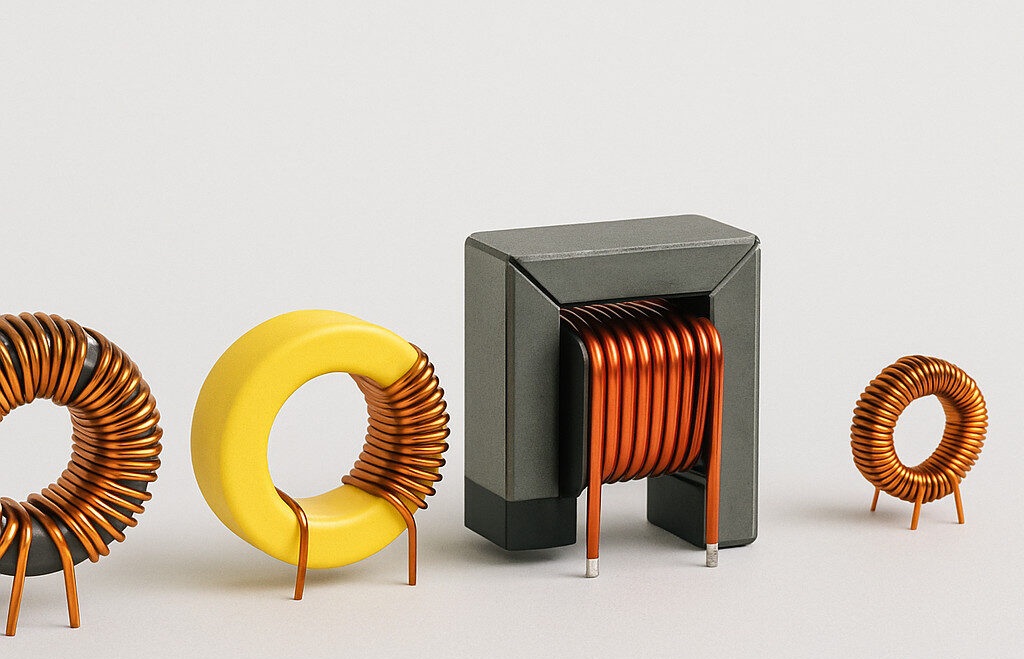
- Toroidal coil geometry supports low stray fields and high inductance density in compact coils and transformers. Depending on frequency range and saturation behavior, ferrite cores, iron-powder cores, or coreless air coils may be selected.
- For inverter outputs and motor drives, a properly specified dV/dt choke can reduce voltage edge rates, limit bearing currents and EMI effects, and help protect cables and insulation systems.
- Repeatable quality in EMS programs depends strongly on the winding equipment used. Modern toroidal coil winding machines with programmable tension, pitch control, and inline testing support consistent and scalable production.
- Integrated finishing processes—such as impregnation, potting or overmoulding, labeling, and traceability—support series production and assembly. Optional visual features, including color-coded or decorative wire sheathing, can aid harness identification.
- A qualified supplier ecosystem for winding equipment and manufacturing partners enables efficient transitions from prototype builds to volume production.
- From EV chargers and industrial drives to medical power modules, winding goods must balance electrical performance, thermal headroom, and manufacturability. This guide outlines how EMS providers specify and produce toroidal coils, dV/dt choke assemblies, and production-grade coils and transformers.
Toroidal Coils vs. Air Coils: Where Each Shines
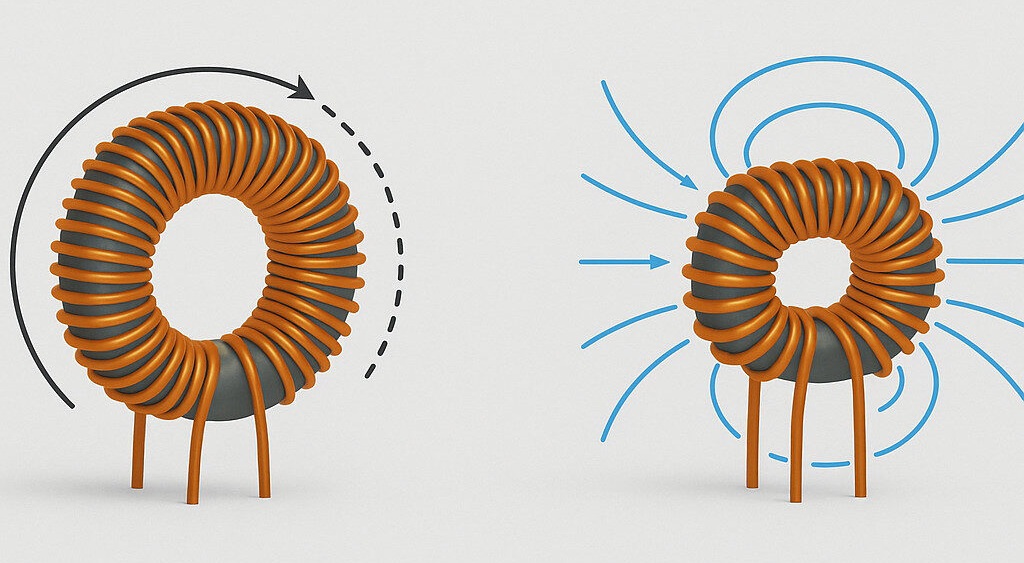
Toroidal coils confine magnetic flux within the core, helping to reduce EMI and achieve higher inductance per turn—well suited for compact filters and power-conversion stages.
Air coils, which use no magnetic core, eliminate core losses entirely. They are preferred for RF, sensing, or highly linear inductors, typically at the expense of increased size.
Iron-powder cores tolerate higher DC bias due to their distributed air gap and more gradual saturation behavior.
Ferrite cores offer lower core losses at higher switching frequencies and are commonly used in power supplies and inverters.
The dV/dt Choke: Quieting Fast Edges
In PWM inverters and variable-frequency drives, modern power semiconductors generate steep voltage transitions. A dV/dt choke—often implemented as a series toroidal inductor—can slow voltage rise times.
Typical effects include:
- reduced stress on cable insulation,
- lower common-mode currents,
- mitigation of motor bearing currents and wear.
EMS manufacturing focuses on balanced designs, considering window utilization, copper temperature rise, voltage drop, and acoustic behavior.
Manufacturing Discipline: From Winding to Finish
Winding
Programmed pitch and controlled tension on a toroidal coil winding machine support uniform turns and reproducible coupling.
Insulation System
Tape build-up, sleeving, and creepage distances are documented and aligned with applicable end-use standards.
Terminations
Options include solder lugs, leadframes, or flying leads. Color-coded or decorative wire sheathing may be applied for identification, abrasion resistance, or assembly support.
Finish
Impregnation, potting, or overmoulding can improve vibration resistance, moisture protection, and acoustic performance.
Equipment Matters: From Prototype to Scale
Process repeatability starts with suitable equipment. Manufacturing partners for toroidal transformer winding machines support fast changeovers, automated taping, and inline measurement of Rdc, L, and Q.
Both engineering samples and series production benefit from application-specific machine setups, including fixtures, tension systems, and optical inspection.
Quality & Test: What Accompanies Each Lot
- Electrical testing (as specified): inductance (L), DC resistance (Rdc), turns ratio (for transformers), and hipot testing.
- Optional environmental and acoustic screening for high-stress applications.
- Documentation: travelers, serial labels, and traceable material data covering coils and transformers.
Buyer’s Checklist
- Electrical targets: inductance, bias current, temperature rise (ΔT), frequency range (note dV/dt choke operation).
- Core & conductor: ferrite, iron-powder, or air coil; wire gauge; insulation class; outer sheathing.
- Finish & environment: impregnation or potting, conformal coating, vibration profile, humidity or cleaning exposure.
- Standards & tests: hipot, surge, partial discharge, and acceptance criteria per drawing.
FAQ
Q1. Are “toroidal coil” and “toroid coil” different?
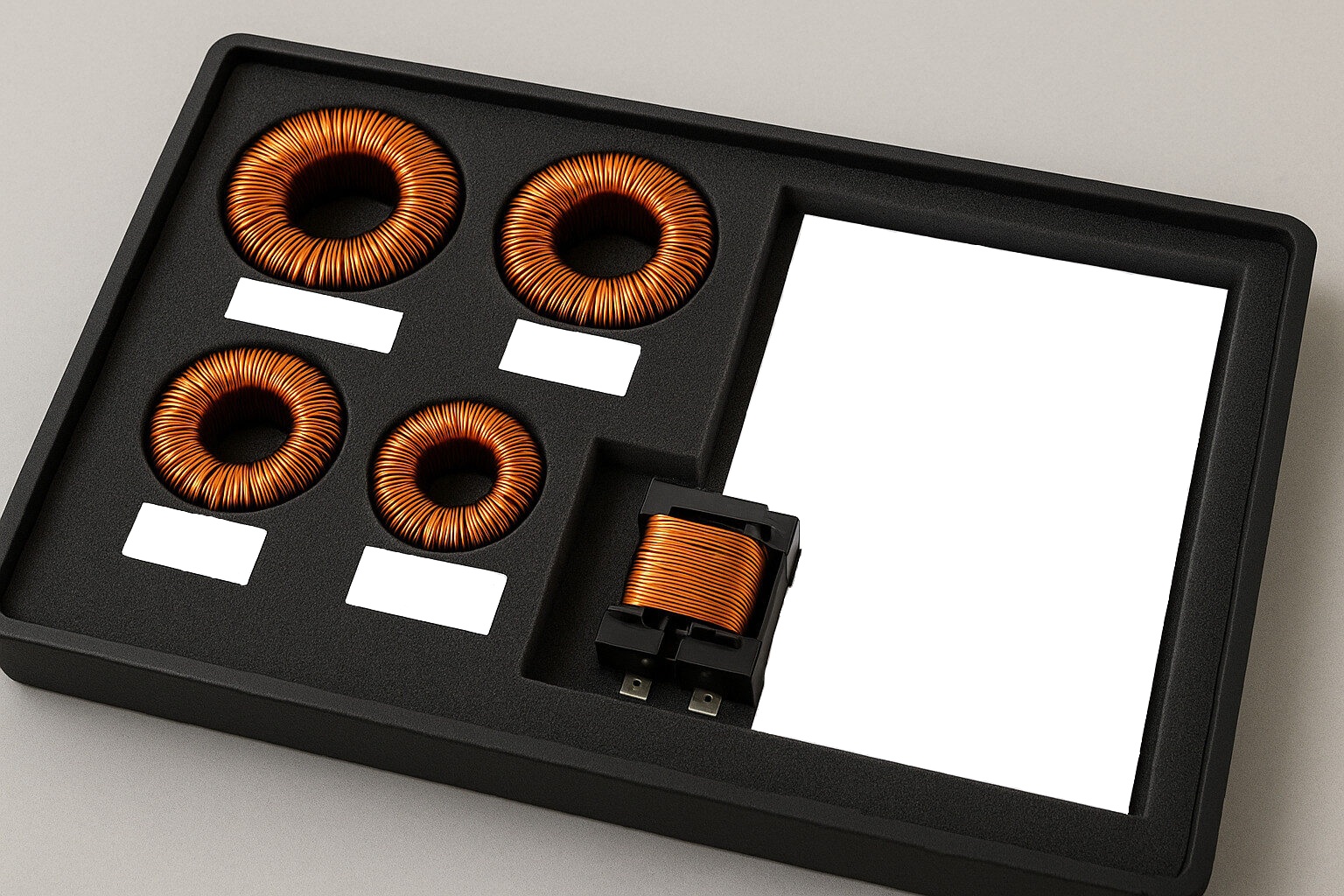
A: They’re used interchangeably. Both describe a coil wound on a torus-shaped core; we standardize the term in drawings to avoid confusion.
Q2. When should I pick an air coil over a core?
A: Choose an air coil for high linearity and no core loss (RF, sensing). Use a core for higher inductance density and smaller size in power applications.
Q3. What features matter on a toroidal coil winder?
A: Programmable tension, pitch control, auto-taping, and inline tests. A capable toroidal coil winding machine boosts repeatability and throughput.
Q4. Can you color-code leads and jackets?
A: Yes—our finishing includes decorate wire sheathing, heat-shrink coding, and printed labels for assembly clarity.
Q5. Do you build complete coils and transformers?
A: Absolutely. We deliver turnkey coils and transformers—from design support and prototypes to volume runs—leveraging our toroidal transformer winding machine manufacture network for capacity.
TPS Elektronik designs and manufactures toroidal coils, dv dt choke assemblies, and production coils and transformers with full test and documentation—ready for your next EMS program.