

Initial Situation
A company in the heavy industrial automation sector approached TPS Elektronik to modernize an aging electrical protection platform used in power distribution cabinets.
The existing circuit breaker panel design had been in operation for more than 20 years and no longer met current technical and operational requirements.
Key challenges included:
- The protection concept no longer aligned with current safety and monitoring expectations.
- Mechanical components showed wear, limiting functional expansion.
- The embedded control logic lacked scalability and structured fault handling.
- No digital documentation or design files were available; only one physical sample unit existed.
- The original supplier was no longer able to support production or upgrades.
TPS Elektronik was commissioned to execute a complete retrofit, covering electronics development, mechanical redesign, and embedded software modernization.
Technical Challenges
The project required coordinated redesign across several engineering domains:
1. Protection Architecture Redefinition
- Migration from legacy protection logic to a structured, modern control architecture.
- Introduction of a software-based circuit breaker pattern for controlled fault isolation and recovery.
- Integration of hardware-based fault interruption with software-level resilience concepts.
2. Electronics Redevelopment
- Development of a new protection controller with high-speed monitoring and control circuits.
- Redesign of the PCB layout using professional ECAD environments.
- Optimization of high-current routing and signal integrity for improved electromagnetic compatibility (EMC).
3. Mechanical Reconstruction
- Reverse engineering of the existing housing and actuation system.
- Redesign of mechanical components to improve maintainability and thermal behavior.
- Simulation of tripping and actuation mechanisms to validate functional reliability.
4. System Integration Constraints
- Mechanical compatibility with existing power distribution cabinets.
- Retrofit capability without major modifications to field wiring.
- Minimization of installation downtime.
Implemented Solution
TPS Elektronik delivered a complete system redesign covering electronics, firmware, and mechanical construction.
Electronic Design and PCB Layout
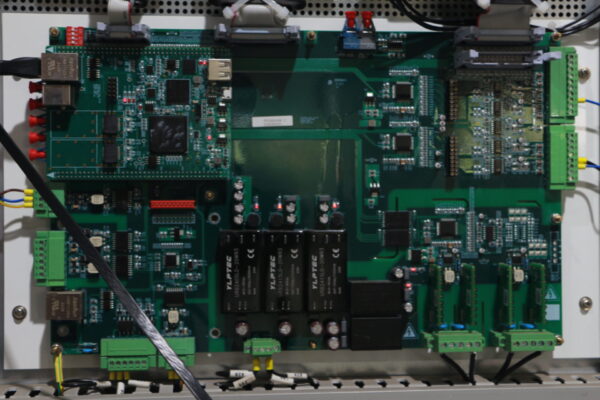
- Development of a new protection control board.
- Structured PCB layout in modern ECAD tools (including Altium Designer and Cadence Allegro environments).
- Optimization of high-current paths and signal separation to support EMC performance.
Embedded Software and FPGA Control
- Implementation of protection logic using FPGA-based control architecture.
- Deterministic fault detection and fast signal processing.
- Application of a circuit breaker software pattern in firmware and distributed monitoring software to isolate faults and maintain system stability.
Mechanical and Enclosure Design
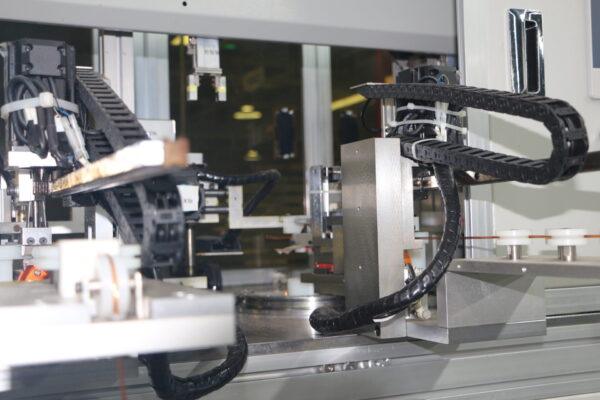
- Reconstruction of the breaker housing and actuation system using 3D CAD tools (e.g., SolidWorks).
- Thermal and mechanical validation of moving components.
- Design adjustments to facilitate servicing and long-term maintainability.
Retrofit Integration
- Mechanical and electrical integration into existing panels.
- Preservation of field wiring wherever possible.
- Structured validation prior to commissioning.
Project Outcomes
The modernization enabled the customer to continue operating its installed infrastructure while updating the protection platform.
Observed improvements included:
- Alignment with current industrial protection and monitoring requirements.
- Improved EMC behavior through optimized PCB routing and layout separation.
- Structured software fault handling to reduce the risk of cascading system disruptions.
- Extension of product lifecycle through retrofit integration.
- Reduced protection response time through FPGA-based signal processing (measured improvement compared to the legacy design).
All improvements were validated within the project scope and documented in coordination with the customer.
Conclusion
This project demonstrates TPS Elektronik’s ability to execute multidisciplinary modernization projects in the field of industrial protection systems.
By combining:
- Electronic system redesign
- FPGA-based embedded control
- Mechanical reconstruction and validation
- Structured software resilience concepts
TPS Elektronik supported the transition from a legacy protection platform to a scalable and maintainable system architecture.
The retrofit approach allowed the customer to modernize existing installations while preserving core infrastructure, reducing operational disruption during implementation.