

Initial Situation
A company operating in the healthcare technology sector approached TPS Elektronik with a regulatory and technical challenge. Its diagnostic device, originally developed more than ten years ago, had not undergone comprehensive electrical safety testing in line with current requirements and no longer aligned with updated national and international EMC standards.
The original supplier had ceased production, leaving the company with an outdated prototype and incomplete technical documentation. During an initial technical review, the device did not meet several electrical safety criteria and could not proceed within the intended conformity assessment pathway for CE marking.
The company was therefore seeking an experienced engineering partner to support electrical safety testing for medical devices, update the control electronics, and establish a structured testing and documentation framework suitable for use in regulated markets.
Key Challenges
The project involved several technical and organizational challenges:
- Legacy circuitry that no longer aligned with current electrical safety requirements for medical devices
- Limited access to suitable electrical safety test equipment for high-voltage and leakage current measurements
- No established test procedures according to IEC 60601-1 and related EMC standards
- Incomplete technical documentation and non-conforming product labeling
The TPS Solution
TPS Elektronik developed a structured modernization and compliance approach tailored to the device, its risk profile, and its intended medical application.
Redesign and System Analysis
- Conducted a technical risk analysis of the existing power supply and insulation concept
- Updated the electronics design to better align with applicable electrical safety testing requirements for medical devices
- Optimized insulation paths and protective measures to support patient and operator safety
Electrical Safety Testing
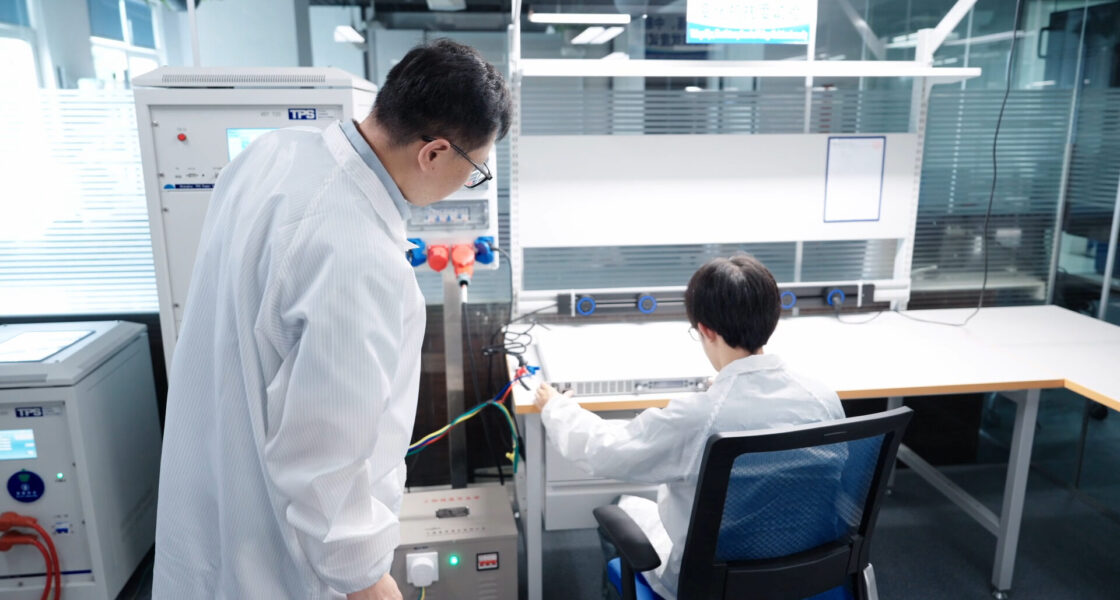
- Performed electrical safety tests based on applicable IEC and EN standards for medical devices
- Carried out insulation resistance, leakage current, dielectric strength, and protective earth continuity measurements
- Used calibrated electrical safety test equipment in accordance with defined test procedures
- Documented test results and generated structured test reports to support the conformity assessment process
Compliance Support and Documentation
- Supported the customer in preparing documentation relevant to electrical safety and EMC compliance
- Developed repeatable test procedures for electrical safety testing in serial production and future design revisions
- Coordinated EMC immunity and emission testing activities in line with applicable standards
Training and Knowledge Transfer
- Provided training for the customer’s technical staff on performing electrical safety tests using appropriate test equipment
- Supplied documentation templates to support traceability, testing records, and product lifecycle management
Results
The collaboration resulted in measurable technical and organizational improvements:
- Improved test readiness: The updated device design met the defined electrical safety test criteria during verification
- Structured compliance process: Electrical safety testing was integrated into the customer’s development and production workflows
- Documentation established: Test reports and procedures supported ongoing conformity and audit activities
- Design optimization: Updated components and insulation concepts contributed to lower measured leakage currents under defined test conditions
- Increased autonomy: The customer gained the capability to perform routine electrical safety testing for medical devices internally
Conclusion
This case study demonstrates TPS Elektronik’s role in supporting electrical safety testing for medical devices through engineering expertise, structured testing, and compliance-oriented documentation. By combining redesign activities, verification processes, and targeted training, TPS Elektronik assisted the customer in aligning an existing product with current technical and regulatory expectations.
From initial system analysis to documented electrical safety test results, the project addressed key aspects of electrical safety and EMC testing according to applicable national and international standards. In addition to improving the current device generation, the cooperation established a repeatable testing framework that supports future product updates and long-term compliance.