

Key Takeaways
- Aluminum heat sinks play a central role in many thermal management applications due to their material properties and design flexibility.
- Heat sink efficiency depends on the interaction between material choice (e.g., aluminum alloys such as 6063), geometry, and the cooling environment.
- Aluminum adapts to a wide range of applications—from compact SSD heat sinks to inverter cooling—often in combination with heat pipes or vapor chambers.
- Correct mounting and the use of thermal interface materials help reduce thermal contact resistance.
- Future thermal solutions increasingly combine aluminum structures with advanced two-phase cooling technologies.
In data servers, electric vehicles, and 3D printers alike, aluminum heat sinks are a common element of thermal management systems. Rather than acting as a simple accessory, they form a core part of how heat is transferred away from sensitive components.
This article examines how aluminum heat sinks work across different scenarios. It focuses on the underlying physics, material considerations, and design principles that influence performance, and outlines how aluminum structures are increasingly combined with technologies such as heat pipes and vapor chambers.
Foundational Principles: How Heat Sinks Work
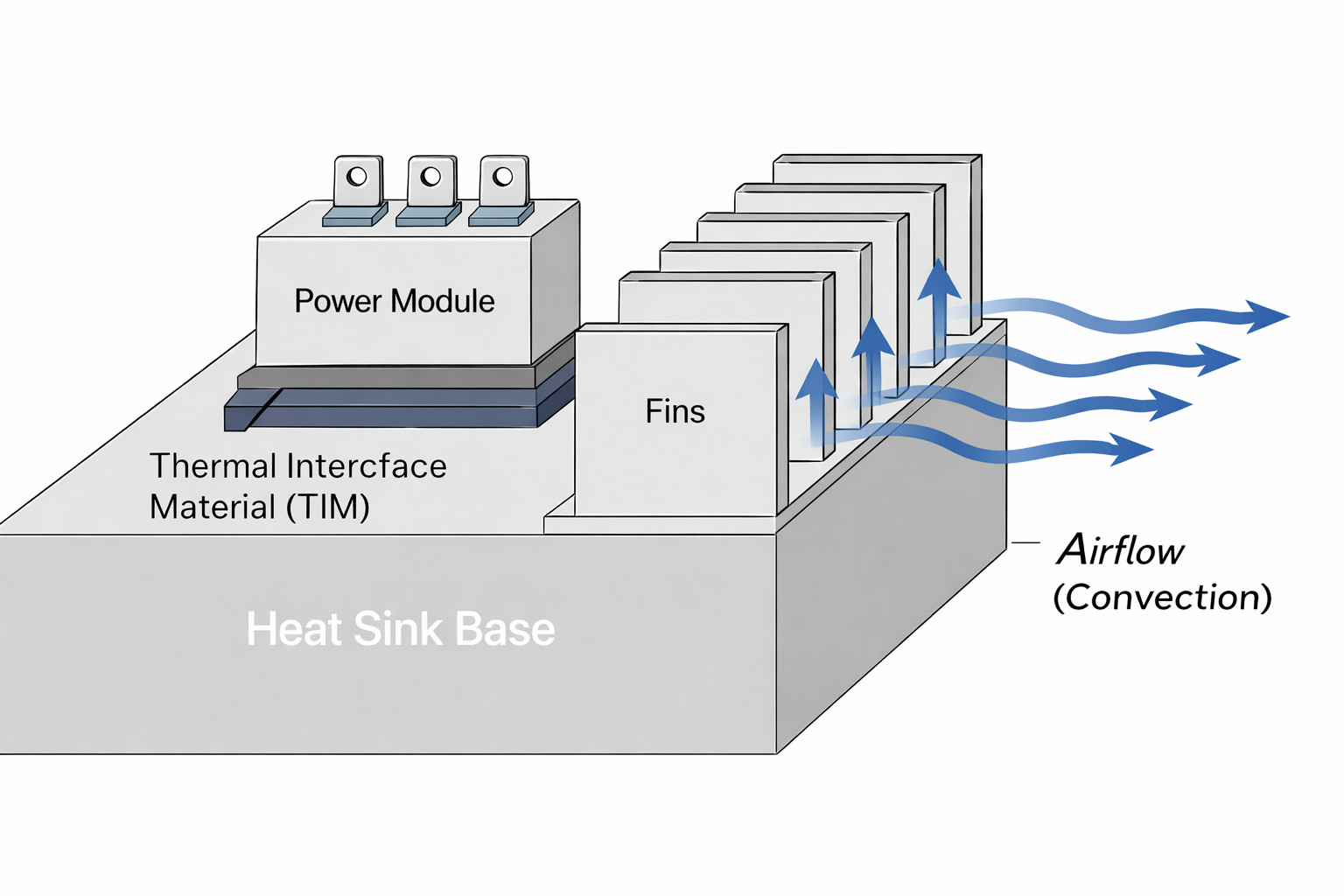
A heat sink is a passive heat exchanger that transfers thermal energy from a heat source to a surrounding fluid, most often air. Its operation relies on three heat-transfer mechanisms.
Conduction: Heat Transfer Within the Heat Sink
Heat conduction moves thermal energy from the component into the heat sink base. This process follows Fourier’s law and depends on the thermal conductivity of the material (W/m·K).
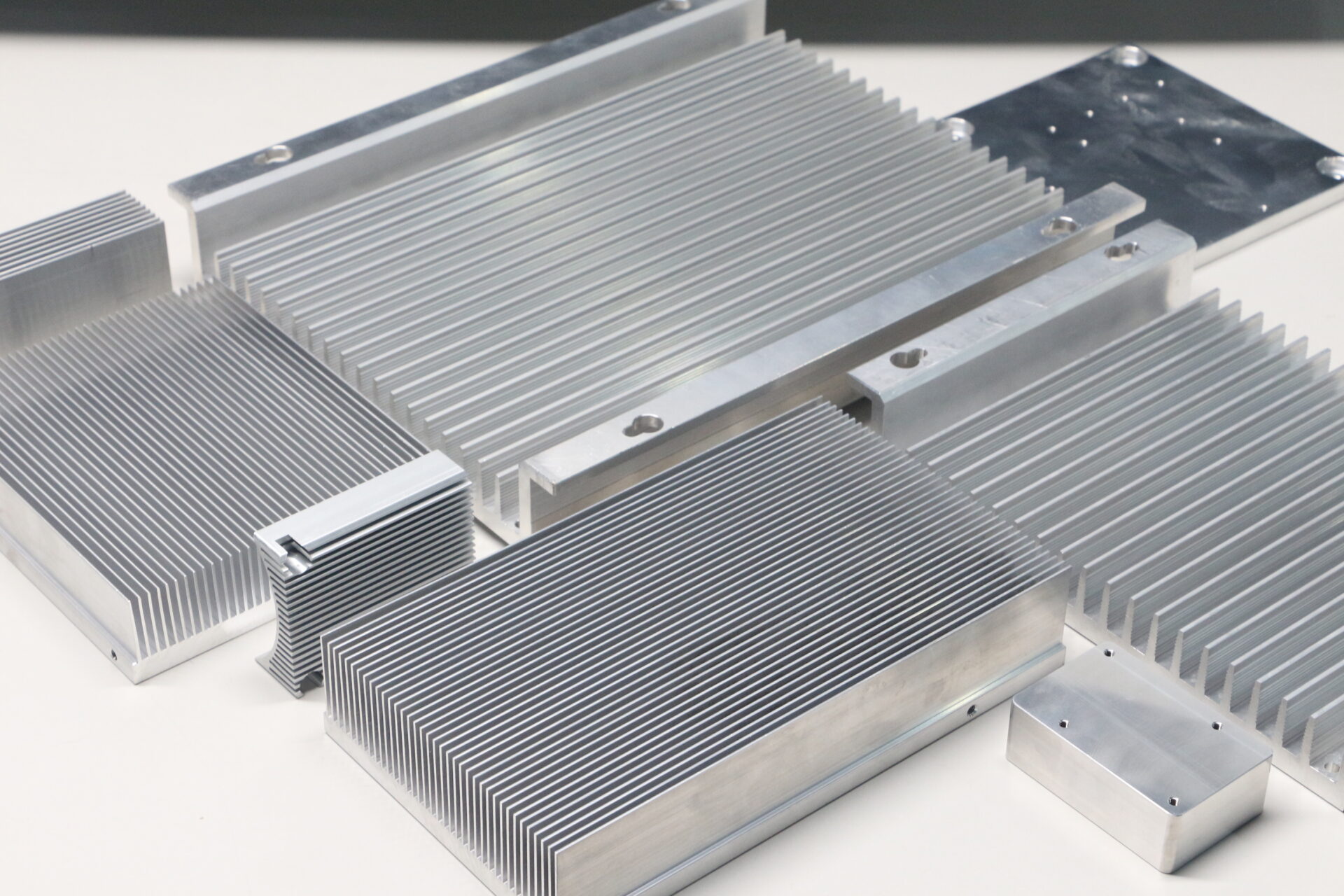
Aluminum alloys commonly used for heat sinks, such as 6063, offer a balance of thermal conductivity, manufacturability, and cost. These characteristics explain their widespread use in extruded and machined heat sink profiles.
At this stage, surface contact quality is critical. Microscopic air gaps between the device and the heat sink can increase thermal resistance. Thermal interface materials, such as heat sink compound or pads, are typically used to improve contact and reduce this resistance.
Convection: Heat Transfer to the Environment
Once heat reaches the fins, convection transfers it to the surrounding air. The effectiveness of this process depends on the convection coefficient h (W/m²·K), which varies with airflow conditions.
- Natural convection relies on buoyancy-driven airflow and typically favors wider fin spacing.
- Forced convection uses fans or blowers, allowing denser fin arrangements and higher heat transfer rates.
Radiation: A Secondary Contribution
Thermal radiation becomes more relevant at elevated surface temperatures. Surface finish influences emissivity, which affects how efficiently a surface emits heat.
Anodized aluminum generally has higher emissivity than untreated aluminum, which can support heat dissipation in applications dominated by natural convection. The exact contribution depends on operating temperature and system design.
Material Considerations: Why Aluminum Is Widely Used
Core Properties Relevant to Thermal Management
Aluminum is commonly selected for heat sinks because it combines several practical advantages:
- Low density, supporting lightweight designs
- Natural corrosion resistance due to its oxide layer
- Compatibility with surface treatments such as anodizing
- Good balance between thermal conductivity and manufacturability
Alloys such as 6063 are frequently used where extrudability and surface quality are important, making them suitable for both standard profiles and custom designs.
Manufacturing Approaches for Aluminum Heat Sinks
Extrusion, CNC Machining, and Fabrication
Aluminum extrusion is well suited for high-volume production of standard heat sink profiles. More complex or application-specific designs often require additional manufacturing methods.
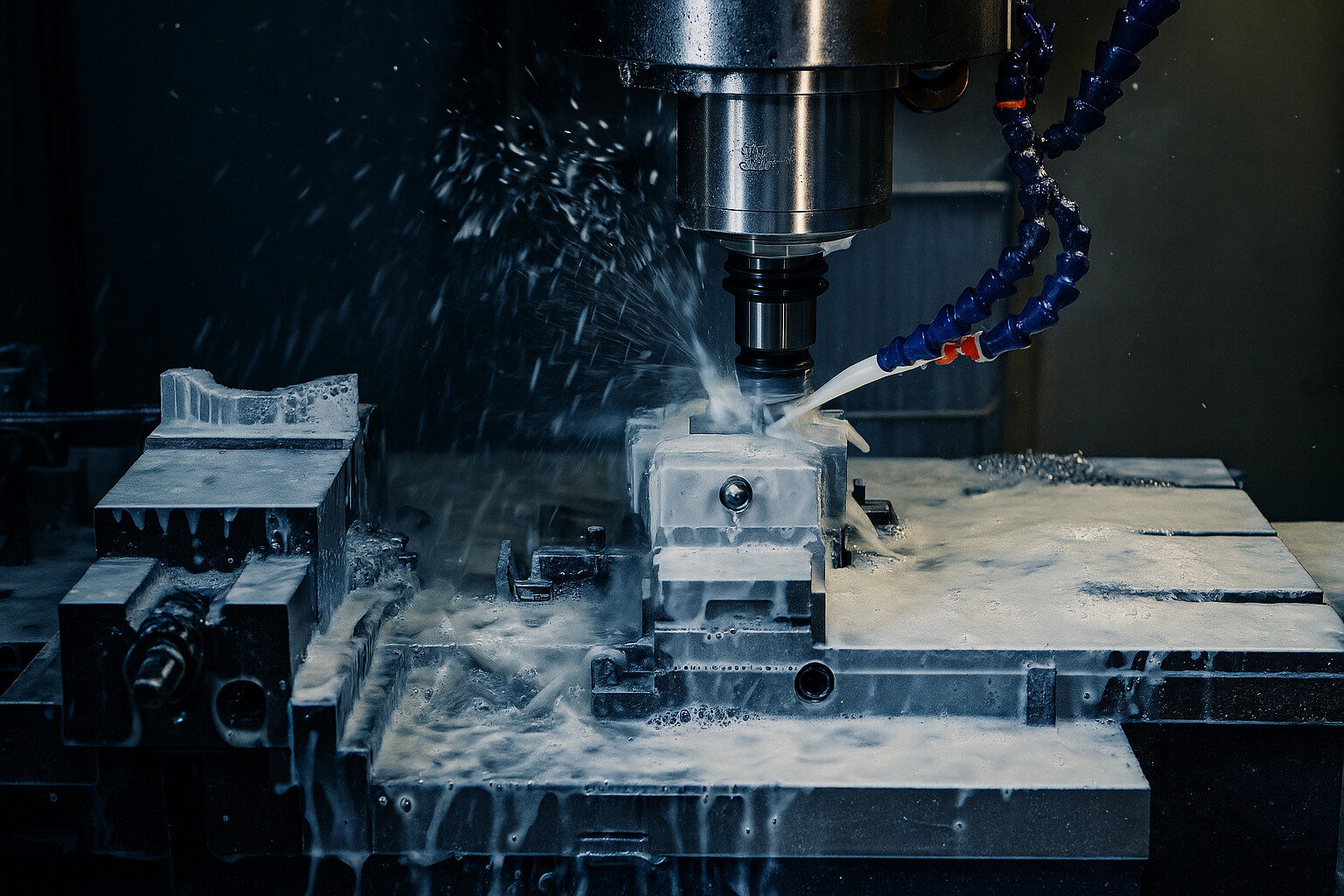
CNC machining is used where tighter tolerances, complex geometries, or flat mounting surfaces are required. Typical use cases include prototypes, low-volume production, and applications with high reliability requirements.
Sheet metal fabrication complements machined parts in certain designs:
- Stamped or folded fins can provide large surface areas.
- Ducts or shrouds help guide airflow and influence convection conditions.
- Hybrid assemblies combine machined bases with fabricated fin structures for cost and performance balance.
Together, these methods allow aluminum heat sinks to be adapted to a wide range of thermal and mechanical requirements.
Application Scenarios
1) Consumer Electronics and Computing
In CPUs, GPUs, and storage devices, heat sinks must manage high power density within limited space.
- CPU and GPU cooling commonly combines aluminum fin stacks with heat pipes or vapor chambers. Phase-change elements spread heat from small die areas to larger fin surfaces, while aluminum provides an effective structure for convective cooling.
- SSD heat sinks are typically compact aluminum parts with limited airflow. Here, surface area, surface finish, and mounting pressure play a key role in maintaining stable operating temperatures.
2) Industrial and Power Electronics
Industrial power supplies, motor drives, and inverters place emphasis on reliability and consistent thermal performance.
Key considerations include:
- Corrosion-resistant finishes for industrial environments
- Even pressure distribution for multi-chip power modules
- Fin geometries designed to balance airflow resistance and surface area
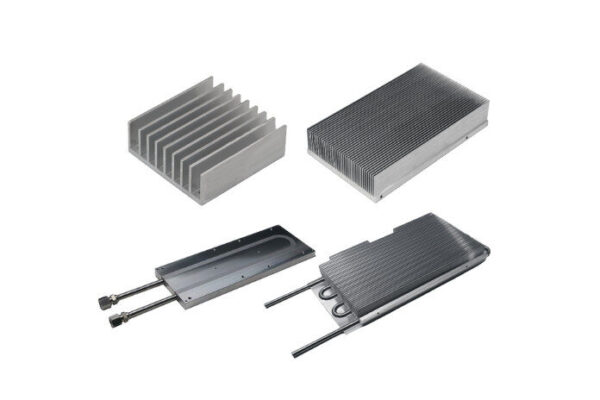
In some designs, aluminum heat sinks are paired with cold plates or liquid cooling systems, particularly where power density is high.
3) Automotive and E-Mobility
Electric vehicles introduce demanding thermal conditions, including vibration, temperature variation, and space constraints.
Traction inverters and onboard chargers often use aluminum cold plates, sometimes combined with embedded heat pipes or vapor chambers to manage localized hot spots. Aluminum’s low mass and machinability support compact designs suited to these applications.
4) Specialty and Niche Applications
3D printer hot ends illustrate the importance of targeted cooling. Small aluminum heat sinks with thin fins, combined with directed airflow, help prevent heat creep along the filament path.
LED lighting and telecom equipment also rely on aluminum structures. In these cases, the heat sink may form part of the enclosure, using natural convection and radiation for passive cooling.
Hybrid Thermal Systems: Aluminum and Two-Phase Cooling
As power densities increase, aluminum heat sinks are increasingly integrated with two-phase cooling technologies:
- Vapor chamber bases distribute heat laterally before transferring it to aluminum fin stacks.
- Embedded heat pipes within aluminum structures help move heat away from confined areas to regions with better airflow.
These hybrid approaches aim to improve temperature uniformity while retaining the mechanical and manufacturing advantages of aluminum.
Conclusion
The efficiency of an aluminum heat sink depends on more than material choice alone. Geometry, surface treatment, mounting quality, and the surrounding cooling environment all play a role.
Across applications—from compact electronics to industrial power systems—aluminum remains a widely used material due to its balanced thermal, mechanical, and manufacturing characteristics. As thermal requirements evolve, aluminum heat sinks are increasingly combined with advanced cooling technologies, supporting adaptable and application-specific thermal management solutions.