

Key Takeaways
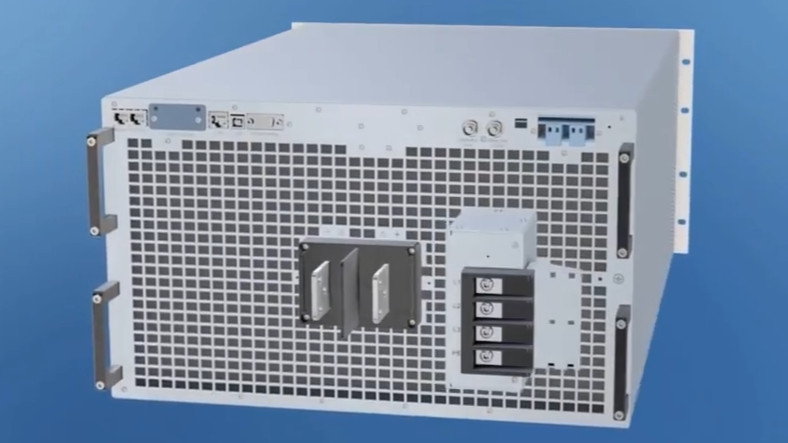
- A 6U chassis integrating up to 60 kW enables high power density in standard 19″ rack environments.
- Active power factor correction (PFC) supports a power factor of up to 0.99 and efficiency levels of up to 96% (depending on configuration).
- Supports CV, CC, CP, and CR operating modes with digital control and 16-bit resolution.
- Parallel operation of up to 64 units allows system scaling to several megawatts.
- Available in forced-air and optional water-cooled versions for demanding thermal environments.
From Laboratory Supply to Industrial Power Platform
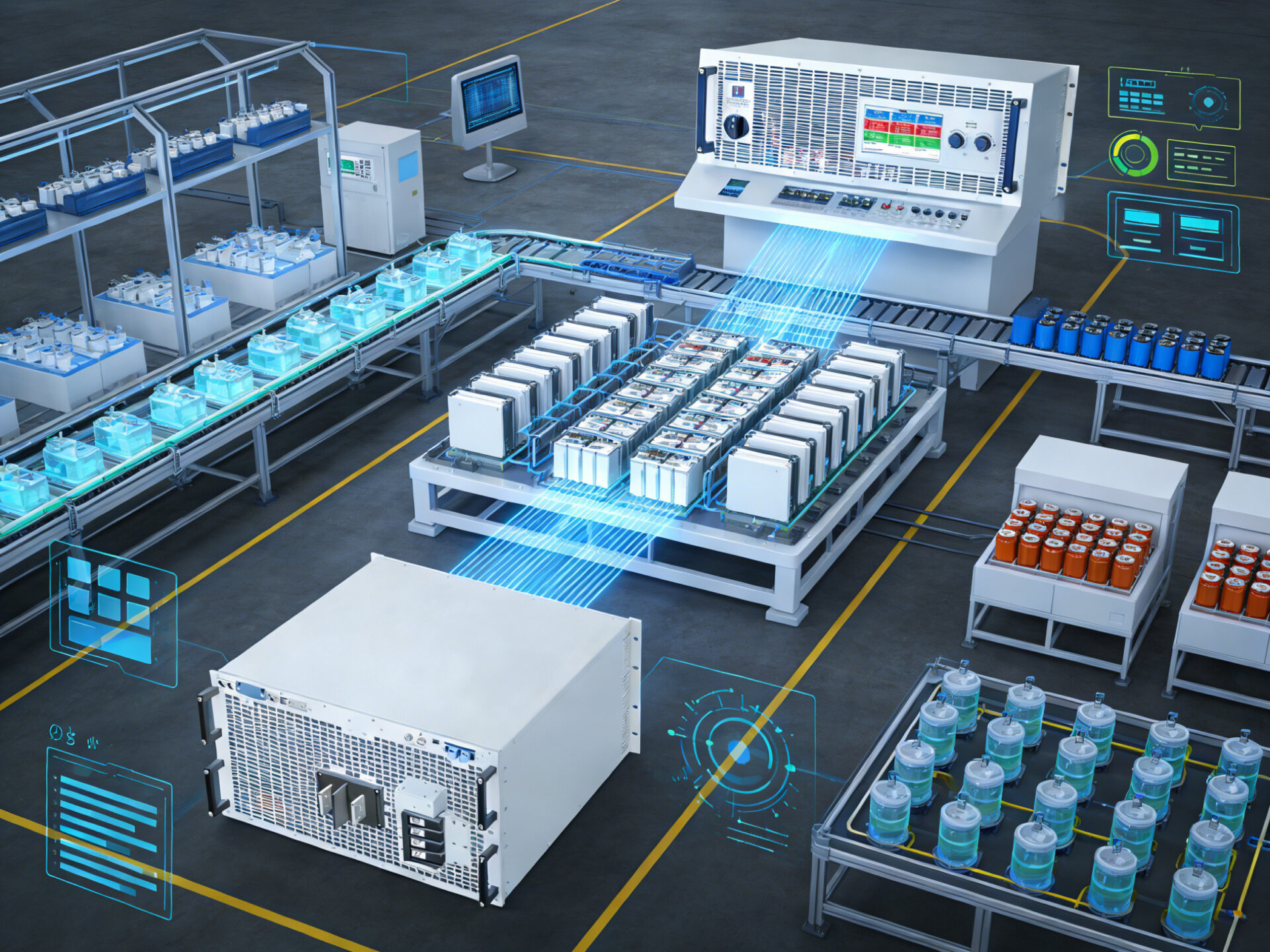
As electric vehicle production, grid-scale energy storage, and advanced manufacturing expand, power infrastructure requirements are increasing significantly. Traditional approaches often relied on combining multiple lower-power programmable DC power supplies in parallel racks. While functional, this architecture increases cabling complexity, control overhead, and maintenance effort.
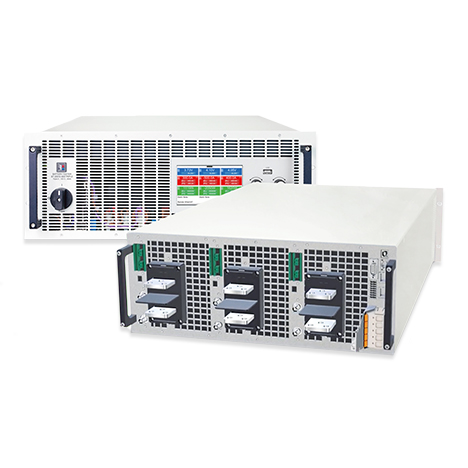
A 6U programmable DC power supply with up to 60 kW output power consolidates this structure into a single high-power building block. Instead of managing numerous smaller units, operators can deploy fewer high-density systems with centralized control.
This shift supports:
- Reduced rack footprint
- Simplified system integration
- Lower cabling complexity
- Streamlined control architecture
The 6U format positions programmable DC power supplies as core industrial infrastructure components rather than purely laboratory instruments.
System Architecture and Core Technologies
1. Three-Phase Input with Active PFC
Designed for operation on 380–480 V three-phase grids, the system integrates active power factor correction (PFC). A power factor of up to 0.99 helps reduce reactive power and improves grid utilization.
With efficiency levels of up to 96% (model-dependent), energy losses and thermal load can be reduced compared to lower-efficiency systems. This may contribute to lower cooling requirements and improved overall system efficiency.
2. Multi-Mode Operation with Digital Control
The platform supports standard programmable DC operating modes:
- CV (Constant Voltage)
- CC (Constant Current)
- CP (Constant Power)
- CR (Constant Resistance)
Fast and seamless mode transitions are managed by a digital control system with 16-bit resolution.
An autoranging output characteristic allows a wide operating window within a single model. For example, a configuration such as 0–500 V / 0–360 A enables flexible testing across different voltage and current ranges without changing hardware.
This flexibility can reduce the need for multiple dedicated power supplies in development and production environments.
3. Thermal Management Options: Air or Water Cooling
Delivering high power in a 6U form factor requires effective thermal management.
- Forced-air cooling is available as a standard solution for general industrial environments.
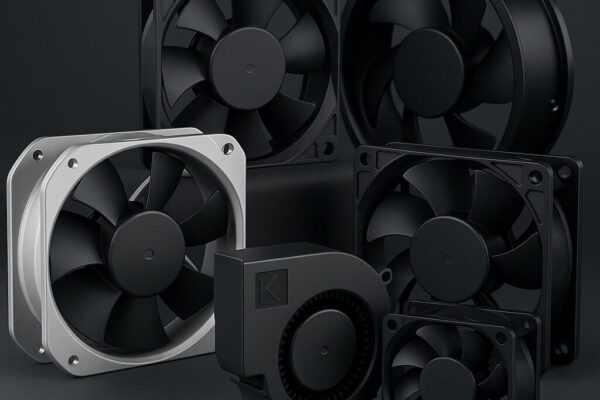
- Water cooling (optional) uses a cold-plate design to extract heat efficiently and can reduce acoustic emissions and HVAC load in high-density installations.
Water-cooled configurations are particularly suitable for:
- High-power continuous operation
- Test chambers with acoustic constraints
- Densely packed power cabinets
Actual performance depends on installation and environmental conditions.
Parallel Operation and System Scalability
A key feature of the 6U platform is its parallel capability. Using galvanically isolated Master-Slave and Share-Bus connections, up to 64 units can operate as a unified system.
This architecture enables:
- Precise current sharing
- Centralized system control
- Modular scaling from tens of kilowatts to multi-megawatt levels
From the operator’s perspective, the system can be configured to behave as a single programmable DC power supply. This reduces the need to coordinate multiple independent devices manually.
Typical Industrial Applications
Battery Testing and EV Production
Battery test systems require flexible control profiles and stable high-power output.
The 6U programmable DC power supply can be configured for:
- Charging simulations (CV/CP modes)
- Controlled discharge (CC mode)
- Long-duration cycling
Parallel configurations enable high-current systems suitable for large battery packs or production test lines. High efficiency may help reduce energy losses during continuous operation.
Power Supply for Electrolysis (Green Hydrogen)
Electrolysis systems require stable DC current over extended periods. Operating in constant current mode, high-power programmable supplies can support defined current density profiles.
Parallel systems allow scaling to multi-megawatt installations. Efficiency and thermal management can influence overall system energy consumption, depending on plant design.
Industrial DC Processes
High-current DC power is widely used in:
- Electroplating
- Surface treatment
- Plasma processes
- Resistive heating applications
Digital programmability allows recipe-based control and integration into PLC environments via industrial interfaces. Compared to legacy SCR-based systems, programmable supplies provide improved controllability and monitoring capabilities.
Software and System Integration
Industrial programmable power supplies require flexible communication and automation support.
Typical integration features include:
- PC-based control software for configuration and sequencing
- Data logging capabilities
- Programming libraries for automated test systems
- Analog interfaces for PLC integration
- USB connectivity for local configuration
The exact interface configuration depends on the selected model and options.
Total Cost of Ownership Considerations
When evaluating high-power DC platforms, total cost of ownership (TCO) typically includes:
1. Installation and Infrastructure
- Reduced rack count due to higher power density
- Potential reduction in cabling and switchgear complexity
2. Operational Efficiency
- High conversion efficiency (up to 96%) can reduce electrical losses
- Lower waste heat may decrease cooling demand
Actual savings depend on system size, duty cycle, and energy pricing.
3. Maintenance and Service
- Fewer high-power units instead of many small supplies
- Modular system architecture
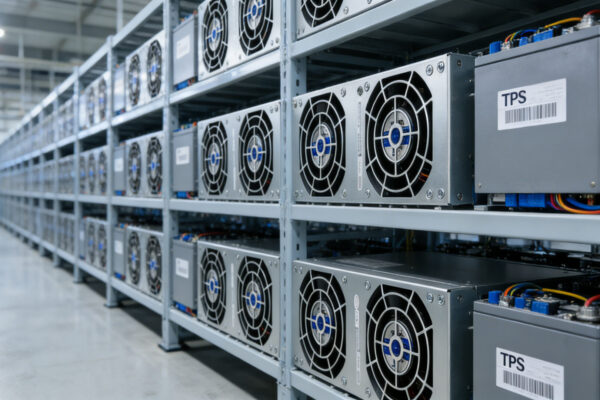
- Serviceable components such as fan modules (model-dependent)
Lifecycle performance depends on operating conditions and maintenance practices.
Conclusion
The 6U programmable DC power supply represents a high-density approach to industrial DC power generation. By combining up to 60 kW per unit, multi-mode control, scalable parallel operation, and flexible cooling options, it supports applications ranging from battery testing to industrial processing and electrolysis.
Rather than replacing laboratory power supplies, the 6U platform extends programmable DC technology into large-scale industrial environments. For facilities requiring scalable, digitally controlled high-power DC systems, it provides a structured and modular solution aligned with modern electrification demands.